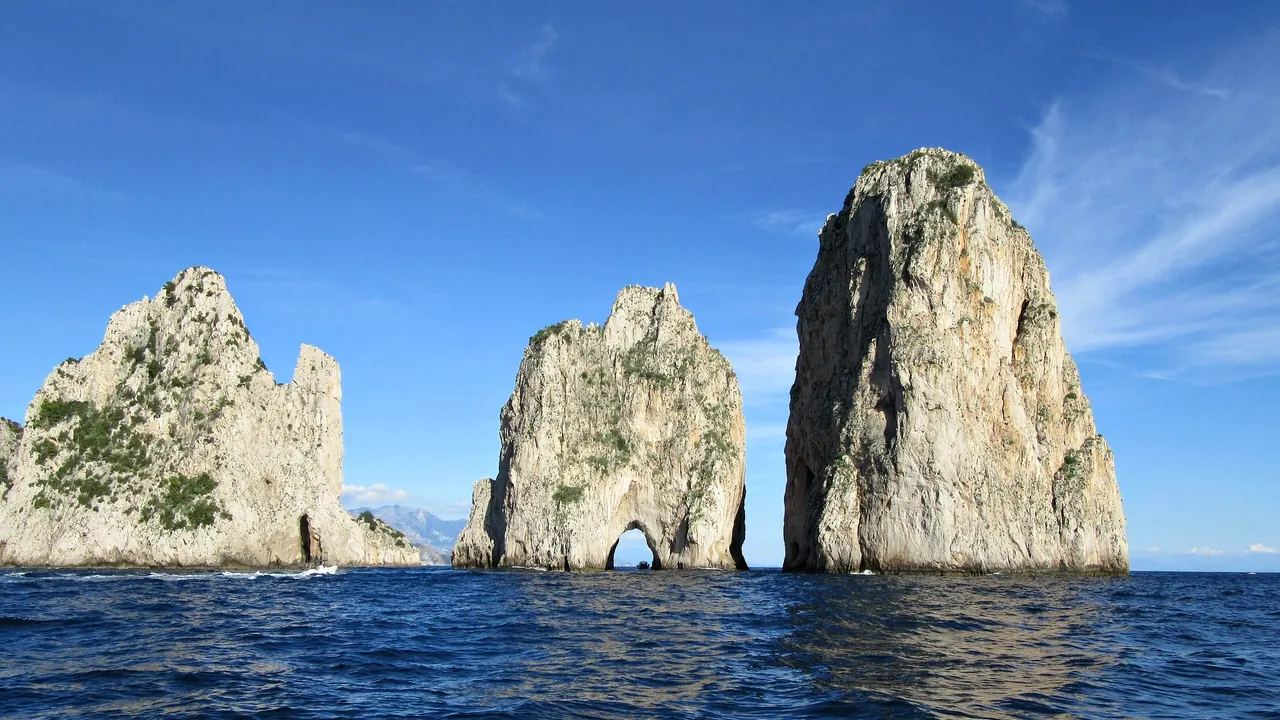
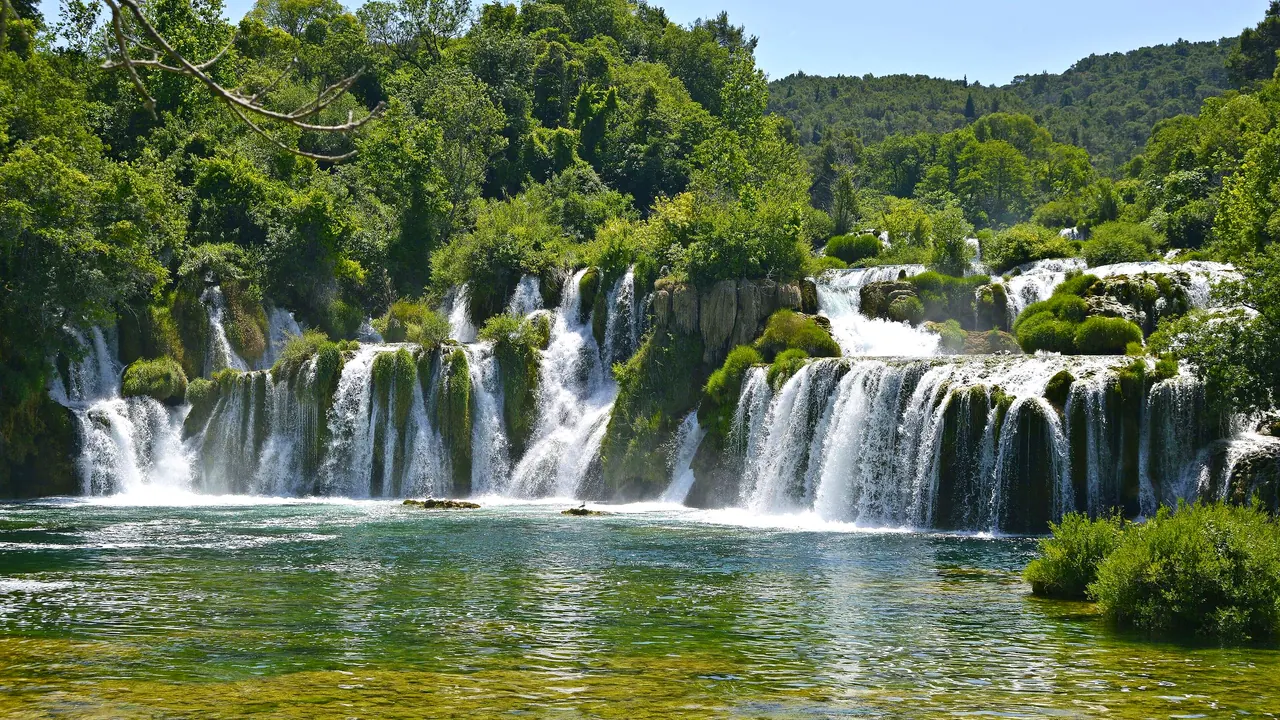
Photos: Capri by Sheeba Samuel, CC BY-SA 4.0, cropped; Krka by Alberto-g-rovi, CC BY 4.0, cropped.
Capri or Krka?
Our verdict in twelve categories, each scored against the same fixed benchmark cities, and the climate month by month, so you can choose for your trip.
Choose Capri for
- shopping
- nightlife
- beaches
Capri is the choice for a short, polished stay built around the sea. You come for deep blue water off the rocks and from boats, the famous cliffs and stacks, dressed-up evenings on the Piazzetta and luxury shopping on a few small lanes. It suits couples and adults with a generous budget who can stay a few nights, enjoy the island once the day crowds leave, and do not need anything laid on for children.
Choose Krka for
- prices
- families
- culture and sights
Krka works better as a region to drive around than as an island to settle on. The draw is a limestone canyon with waterfalls, monasteries on lakes and islets, Roman ruins and, at the river mouth, Šibenik's Cathedral of St James and fortress of St Nicholas, both UNESCO-listed. It all costs far less than Capri. Families, walkers and travellers who want gentle nature and Dalmatian towns within reach of one base will get more from it, though evenings are quiet and the beach is something you do in the afternoon.
Scoreboard
Twelve categories on one fixed scale from 0 to 100. The shaded stretch is the gap between the two.
Your match
Pick a travel style or drag the sliders, and both match scores follow your weighting.
Too close to call, level with your weighting
Wins on shopping and nightlife with your weighting.
Wins on prices and families with your weighting.
What matters to you?
Category by category
What the scores mean for a trip.
Beaches & swimming
Neither destination has sandy beaches, but swimming is central on Capri and only a side trip at Krka. On Capri you lower yourself from rock platforms and bathing clubs into very clear, deep water, or swim from a boat near the grottoes, and the pebble coves at Marina Piccola fill up fast in summer.
At Krka you cannot swim below Skradinski Buk, so the sea means Šibenik's pebble coves at Banj and Solaris, the bays around Primošten or the quiet rocky shores of Zlarin and Prvić. It is pleasant water, but you have to drive or take a ferry to reach it, rather than having it right below your room.
Food & drink
The two are much the same for eating out, and both have a short local repertoire rather than a food scene. Capri's dishes are light and lemony: insalata caprese, ravioli with marjoram, torta caprese and limoncello. The best meals are in Anacapri trattorias, away from the tourist-priced terraces around the Piazzetta.
Krka's cooking is heartier, with lamb and veal under the iron bell, Skradin's slow-cooked risotto and estuary mussels and oysters, served with the dark Babić red. Šibenik's old town has the better restaurants, so a car-based trip actually gives more variety than a stay on the island.
Culture & sights
Krka has more history spread across a wider area. There is the Franciscan monastery on the islet of Visovac, the Orthodox Krka Monastery with its catacombs and the Roman arches of Burnum, and then Šibenik's Cathedral of St James and the St Nicholas fortress, both UNESCO-listed, at the river mouth.
Capri's sights are fewer and more intimate: Tiberius's Villa Jovis on its headland, Villa San Michele in Anacapri, the Certosa and the Gardens of Augustus. They are well worth seeing, but two days covers them, while Krka's heritage can fill a longer trip if you are willing to drive between sites.
Nightlife
Capri has the livelier evenings, though neither has clubs. After the last ferries leave, the Piazzetta fills with people dressed up for aperitivo, and the piano taverns keep Neapolitan songs going late into the night through the summer season.
Krka's evenings are a long dinner by the water and a drink on Skradin's harbour, plus a few bars in Šibenik's old town lanes. If a glamorous night out matters to you, Capri wins easily, but both will run out of options quickly.
Nature & outdoors
Krka has the edge, and its landscape is a river rather than a coastline. You walk boardwalks through the spray and pools of Skradinski Buk, take boats through the gorge to Visovac and see the many small cascades at Roški Slap. There are also rim trails, plateau cycling, kayaking on the upper river and boats out to the bare Kornati islands.
Capri's scenery is sea cliffs and rock: the Faraglioni, the Arco Naturale, the chairlift up Monte Solaro and the Sentiero dei Fortini along the wild western coast. It is more dramatic in short bursts and better for snorkelling, but it is compact enough to see in a few days.
Day trips
Both make good bases, but you get around in different ways. From Capri everything goes by boat: Sorrento, Naples, Positano and Amalfi, Ischia, and Pompeii on a long day. All of it depends on calm seas and the summer timetables.
From Krka you drive, reaching walled Trogir, Split and Diocletian's Palace, Zadar's Roman forum and Primošten by road, with short ferries out to Zlarin and Prvić. Roads keep it more reliable in any weather, and the Bay of Naples offers bigger names.
Good for families
Krka is much better suited to children. The flat boardwalk loop over fish-filled pools and the boat rides from Skradin feel like an adventure, and families can stay in coast hotels near Šibenik with pools and shallow pebble shores.
Capri has nothing made for children, and its steps, pushchair-hostile lanes and swimming from ladders into deep water suit only older children who swim well. They will enjoy the island boat trip and the Monte Solaro chairlift, but with small children Krka is the easier trip by far.
Getting around
Capri is slightly easier without a car, because everything is close. The funicular, small orange buses and open taxis link the marinas, Capri town and Anacapri, though the slopes are steep and the summer queues are long.
Krka really needs a car. The motorway runs close to Lozovac and the park's own buses and boats link the falls, but without wheels the upper river and monasteries mean joining a tour. On Capri the problem is crowds. At Krka it is the distances between sites.
Shopping & style
Capri is the shopping destination of the two by a wide margin. Via Camerelle and the lanes off the Piazzetta hold a remarkable number of luxury boutiques for such a small place, and there are made-to-measure leather sandals, linen and island perfumes to take home.
At Krka, shopping comes down to olive oil, honey, figs and wine from small producers, plus Zlarin's coral work and a few craft shops in Šibenik. It is good for edible souvenirs, but nobody plans a trip around it.
Affordability
Krka is far kinder to your wallet. It costs about what the rest of Western Europe does, and an apartment inland or a meal in a konoba keeps costs moderate. The park entrance is the main expense and is lower outside July and August.
Capri is among the most expensive places in Italy, from hotel rooms to sunbeds, boat hire and cocktails with a view. The walks and buses are cheap, but staying in Sorrento to save money means missing the island's evenings, which are much of the point.
Live music & performing arts
Neither is a place to go for performances, but Krka offers a little more thanks to Šibenik. There are summer concerts in its fortresses, the long-running International Children's Festival, a small nineteenth-century theatre and klapa singing at village festivities.
Capri has the odd summer concert at the Certosa or Villa San Michele and late-night Neapolitan song in the piano taverns. For opera you have to take the boat to Naples.
Wellness & relaxation
Capri has a slight edge here because its upmarket hotels have real spas, though neither place has thermal springs or a bathing tradition. The catch is that the island's calm depends on the hour. Anacapri and the lanes above the town are peaceful and scented with lemon and jasmine early and late, but from late morning the day-trippers fill the centre. Unwinding there means staying several nights and keeping to gardens and terraces in the middle of the day.
Krka has hardly any pampering beyond a few resort hotels on the coast near Šibenik. Its quiet depends on where you stay instead. The stone villages inland stay silent all day and into the night, and only the falls themselves get crowded. Pick Capri for massages and hotel pools, and Krka if you would rather have peace than treatments.
When should you go?
Pick your month. The climate figures are measured averages, not a forecast.
Capri in July
Krka in July
Daytime high, °C
Rainfall in the month, mm
Where the figures come from
Capri has no rain gauge within 25 km of the centre, so its rainfall comes from a gridded climate dataset read at the destination rather than from a gauge further away.
Capri's sunshine is measured 58 km from the centre, at Grazzanise.
Krka's temperatures are measured 53 km from the centre, at Split / Marjan.
Krka has no rain gauge within 25 km of the centre, so its rainfall comes from a gridded climate dataset read at the destination rather than from a gauge further away.
Krka's sunshine is measured 53 km from the centre, at Split / Marjan.
Temperature and rainfall are climate normals, averaged over the years shown. Capri: 2005-2025 (sunshine 1991-2020, rainfall 1991-2020) normals, Capri (3.6 km from centre). Krka: 1991-2020 (sunshine 1971-2000) normals, Split / Marjan (52.9 km from centre).
Both are best for swimming from June to September, but Capri's sea stays warm for longer. It reaches about 26°C in August and is still comfortable into early October, while the Adriatic near Šibenik peaks a degree or two cooler and cools off sooner. Inland, Krka gets hotter in high summer, around 31°C in July and August, which makes the boardwalks and canyon paths heavy going at midday. Both places are very sunny and almost dry in July and August.
The autumn rain arrives in September at both and is heavier on Capri, where November is the wettest month at around 146mm. Spring suits Krka especially well, because the falls carry their fullest water and walking temperatures are mild. On Capri, May and June are the easiest months for walks, with warm days that are not yet too hot for the steep lanes. Winter is cool and damp at both, and neither is a beach destination then.
Which traveller are you?
On a beach and sun trip, Capri is the better pick. Its clear, deep water off the rocks at Punta Carena and from boats under the Faraglioni is the point of the island, whereas at Krka the sea means a drive down to Šibenik's coves.
On a family trip with children, Krka is far easier. The boardwalks over rushing water and the boat rides to Visovac delight children, and coast hotels near Šibenik have pools and shallow shores. Capri's steps, ladders into deep water and packed buses make hard work.
For a trip on a tight budget, Krka is clearly the more realistic choice. Apartments inland near Lozovac and konoba meals cost far less than Capri, where rooms, sunbeds and drinks are priced for the wealthy and even saving means sleeping on the mainland.
Before you go
| Measure | Capri | Krka |
|---|---|---|
| Official language | Italian | Croatian |
| Currency | Euro (EUR) | Euro (EUR) |
| Sockets | CFL230 V, 50 Hz | CF230 V, 50 Hz |
| Driving side | Right | Right |
| Time zone | UTC+1, UTC+2 in summer | UTC+1, UTC+2 in summer |
| Emergency number | 112 | 112 |
| Main airport | Naples International Airport (NAP)131 non-stop destinations | Split Saint Jerome Airport (SPU)69 non-stop destinations |
| Public holidays this year | 13 days | 14 days |
By the numbers
| Measure | Capri | Krka |
|---|---|---|
| Population | 12,903 | - |
| People per km² | 1,241 | - |
| Swim season, months above 21 °C | 5 months | 4 months |
Where else could you go?
Every comparison below shares a destination with this one, so you can follow Capri or Krka somewhere new.