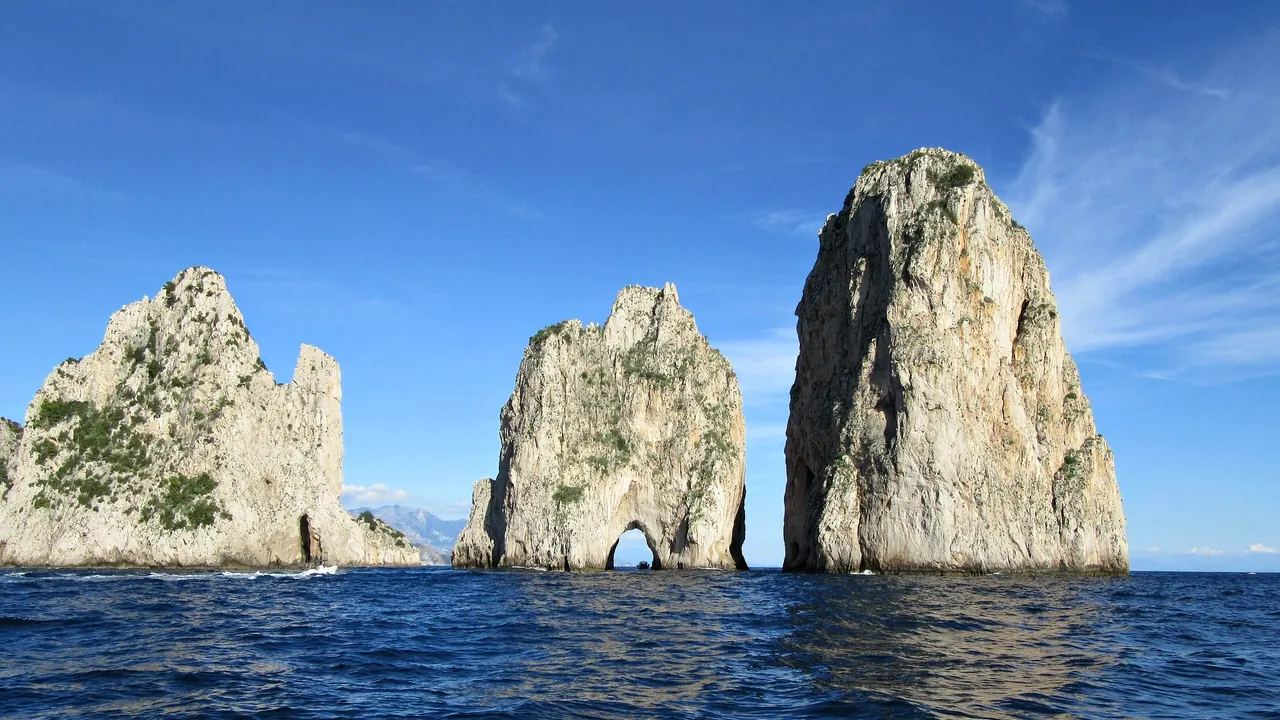
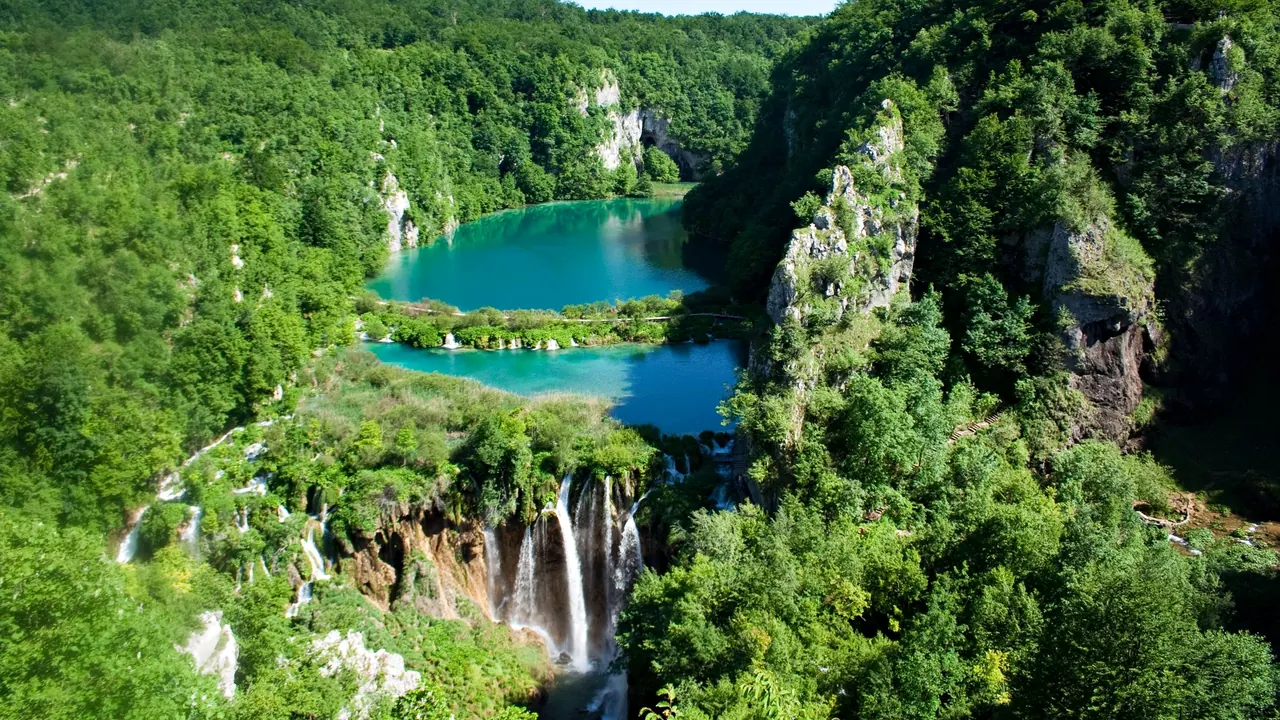
Photos: Capri by Sheeba Samuel, CC BY-SA 4.0, cropped; Plitvice Lakes by Pablo BM from London, England, CC BY 2.0, cropped.
Capri or Plitvice Lakes?
Our verdict in twelve categories, each scored against the same fixed benchmark cities, and the climate month by month, so you can choose for your trip.
Choose Capri for
- beaches
- shopping
- nightlife
Capri suits a dressed-up seaside stay. You get swimming off rocks in very clear water, evenings on the Piazzetta, boutique lanes, a few Roman and monastic sites, and boats across the Bay of Naples to Sorrento, Naples and Pompeii. It is best for couples and adults with a generous budget who want sea, style and a base for exploring the bay. It costs a great deal and offers little to families with small children.
Choose Plitvice Lakes for
- prices
- nature and the outdoors
- families
For a trip built around landscape, Plitvice Lakes is the better choice. Terraced lakes, waterfalls under the boardwalks and beech forest are on a far larger scale than Capri's cliff walks, and a village guesthouse costs much less than an island hotel. It suits walkers, photographers and families with school-age children who are happy to start early and go to bed early. In return it has no sea, little in the way of food and nothing to do in the evening, so many people stay a night or two on the way between Zagreb and the coast.
Scoreboard
Twelve categories on one fixed scale from 0 to 100. The shaded stretch is the gap between the two.
Your match
Pick a travel style or drag the sliders, and both match scores follow your weighting.
Wins on beaches and shopping with your weighting.
Wins on prices and nature and the outdoors with your weighting.
What matters to you?
Category by category
What the scores mean for a trip.
Beaches & swimming
Capri offers real sea swimming, though not beaches in the usual sense. You swim from the pebble coves at Marina Piccola and Marina Grande, from rock platforms with ladders, or off the rocks at Punta Carena, always into very clear, deep water that is warm from June. Space is tight in summer and there is almost no sand.
Plitvice Lakes has nothing like it. Swimming in the lakes is banned outright, so a summer swim means the cool green Korana river around Korana village or Slunj, and the sea is a two-hour drive over the mountains.
Food & drink
Neither is a food destination, but Capri offers more good eating. Its own dishes, such as insalata caprese, ravioli capresi with marjoram, torta caprese and lemon granita, appear alongside seafood and spaghetti with clams. The better meals are in the trattorias of Anacapri rather than the restaurants with views around the Piazzetta.
At Plitvice the food is Lika country cooking: spit-roast lamb and suckling pig, river trout, dishes slow-cooked under an iron bell, local cheeses and brandy. It makes one memorable dinner, but the choice is narrow and much of it is cooked for passing tour groups.
Culture & sights
Capri has a small but genuine set of sights. Tiberius's Villa Jovis stands above its sheer drop, Villa San Michele is full of antiquities, and the Certosa di San Giacomo and the Gardens of Augustus are worth the time. Together they make about two days of sightseeing.
Plitvice is protected for its landscape, not its buildings. The water mills of Rastoke, the ruined walls of Drežnik and the memorials to the first deaths of the 1990s war fill an afternoon at most.
Nightlife
Capri at least has evenings out. Once the last ferries leave, people take aperitivo at the Piazzetta tables, then move on to piano bars and taverns with Neapolitan song. It is dressed-up and expensive, has no clubs and lasts only from May to September. Plitvice has no nightlife at all: dinner at a guesthouse and an early night before the trails is the whole evening.
Nature & outdoors
Both are limestone landscapes, but Plitvice Lakes is the bigger natural draw. Sixteen terraced lakes linked by travertine barriers and waterfalls, crossed on boardwalks, look different in every season. Beyond them are beech and fir forest, the Barać caves, rafting on the Korana and the Una, and longer hikes on Velebit.
Capri's scenery is where the rock meets the sea: the Faraglioni, the Arco Naturale, the Sentiero dei Fortini along the west coast and the chairlift up Monte Solaro, with snorkelling and kayaking around the grottoes. It is spectacular but small, and a few days cover it.
Day trips
Capri is the better base for day trips, as long as the sea is calm. Sorrento, Naples, Positano, Amalfi and Ischia are all a boat ride away, and Pompeii and Herculaneum make a long day out via Sorrento.
Day trips from Plitvice mostly need a car. Rastoke and Bihać on the Una are within an hour, the Tesla centre at Smiljan makes a half day, and Zadar and Zagreb are at the limit of a day out. Most visitors pass through rather than tour from here.
Good for families
Plitvice Lakes is the easier choice with children, though not an easy one. School-age children love the boardwalks, the fish in the clear water, the electric boat and the little train, and the shorter circuits take only a few hours. Toddlers need holding on the narrow paths, which mostly have no railings, and swimming is not allowed.
Capri mainly suits older children who swim well, who will enjoy the boat trip round the island, snorkelling and the chairlift. Steps, swimming in deep water and packed buses make it hard work with small children.
Getting around
Capri is easy without a car. A funicular climbs from Marina Grande, small buses run to Anacapri, open-topped taxis fill the gaps and Capri town is largely pedestrian, though the steep slopes and summer queues take patience. Plitvice's park is simple to get around, with walking circuits, boats and trains, and some guesthouses are within walking distance of an entrance. For anything further, including Rastoke, you really need a car.
Shopping & style
For somewhere so small, Capri has serious shopping. Via Camerelle and Via Vittorio Emanuele are lined with luxury boutiques, and there are sandals made to measure, linen, ceramics and perfumes made on the island, none of it cheap. Plitvice has souvenir kiosks and farmers' stalls, and their cheese, honey and fruit brandy are the only things worth taking home.
Affordability
Plitvice Lakes is much the cheaper place to stay. Village guesthouses and country inns are reasonably priced. The main costs are the summer park fee and the hotels right at the gates, and both are easier to avoid in spring or autumn.
Capri is one of the most expensive places in Italy, with summer rooms, sunbeds and boat trips priced for the wealthy. The walks, buses and Anacapri bakeries cost little, and sleeping in Sorrento or Naples saves money, but you miss the island's evenings.
Live music & performing arts
Capri's music is a summer thing and mostly informal. There are occasional concerts in the Certosa cloisters, at Villa San Michele or in the gardens, and Neapolitan song late at night in the taverns. The island has no theatre, but opera is a boat ride away in Naples. Plitvice offers even less: a village festival with Lika folk music is the most you can hope for, and theatre means a drive to Zagreb or Zadar.
Wellness & relaxation
Neither has a tradition of thermal bathing, so how restful a stay is depends on timing. Capri has upmarket hotel spas and quiet mornings and evenings scented with lemon once the day-trippers leave. It is most peaceful from a base in Anacapri, and Ischia's thermal baths are across the bay.
Plitvice offers less: a few hotel saunas and the silence of a farmhouse guesthouse among meadows and fir forest. Its boardwalks are crowded and far from restful at midday in summer.
When should you go?
Pick your month. The climate figures are measured averages, not a forecast.
Capri in July
Plitvice Lakes in July
Daytime high, °C
Rainfall in the month, mm
Where the figures come from
Capri has no rain gauge within 25 km of the centre, so its rainfall comes from a gridded climate dataset read at the destination rather than from a gauge further away.
Capri's sunshine is measured 58 km from the centre, at Grazzanise.
Plitvice Lakes has no weather station within reach, so its figures come from a gridded climate model rather than a measured record, and read a broad area rather than one spot.
Temperature and rainfall are climate normals, averaged over the years shown. Capri: 2005-2025 (sunshine 1991-2020, rainfall 1991-2020) normals, Capri (3.6 km from centre). Plitvice Lakes: 2001-2020 normals, NASA POWER reanalysis grid, no weather station within 90 km.
Capri's season follows the sea. The water is warm enough to swim from June to early October and reaches about 26°C in August, but the driest, sunniest stretch is only June to August. July and August also reach about 30°C, which makes the island's steps and climbs hard work at midday. The rain returns in September and gets heavier through October and November. Winter is mild but grey.
Plitvice is inland in the mountains, and its seasons are more extreme. Winter highs are around 3°C, with snow and frozen waterfalls for anyone who wants to see them. Summer reaches about 27°C, which is comfortable for long days on the trails. It rains in every month, though, and September to November is the wettest period. Spring brings the fullest waterfalls and October the autumn colours. For walking as well as swimming, Capri is at its best in June and September, and Plitvice in late spring and early autumn.
Which traveller are you?
On a beach and sun trip, Capri is the only real option of the two. It has almost no sand, but the deep, clear water off its rocks and pebble coves is warm all summer. Swimming is forbidden in Plitvice's lakes, and the Adriatic is two hours away.
For an outdoors trip, Plitvice Lakes is the better pick. Boardwalks over waterfalls, beech forest trails, the Barać caves, rafting on the Korana and hikes on Velebit fill several days. Capri's cliff paths and Monte Solaro are spectacular but take only a few.
On a trip on a tight budget, Plitvice Lakes makes your money go much further. Village guesthouses and country inns are reasonably priced, especially outside summer. Capri's hotels and restaurants are priced for a wealthy crowd, and the main way to save is to sleep on the mainland.
Before you go
| Measure | Capri | Plitvice Lakes |
|---|---|---|
| Official language | Italian | Croatian |
| Currency | Euro (EUR) | Euro (EUR) |
| Sockets | CFL230 V, 50 Hz | CF230 V, 50 Hz |
| Driving side | Right | Right |
| Time zone | UTC+1, UTC+2 in summer | UTC+1, UTC+2 in summer |
| Emergency number | 112 | 112 |
| Main airport | Naples International Airport (NAP)131 non-stop destinations | Zagreb Franjo Tuđman International Airport (ZAG)66 non-stop destinations |
| Public holidays this year | 13 days | 14 days |
By the numbers
| Measure | Capri | Plitvice Lakes |
|---|---|---|
| Population | 12,903 | - |
| People per km² | 1,241 | - |
| Swim season, months above 21 °C | 5 months | - |
Where else could you go?
Every comparison below shares a destination with this one, so you can follow Capri or Plitvice Lakes somewhere new.
- Positanovs Capri
- Procidavs Capri
- Amalfi Coastvs Capri
- Ischiavs Capri
- Krkavs Plitvice Lakes
- Bračvs Plitvice Lakes