Croatia
Plitvice Lakes
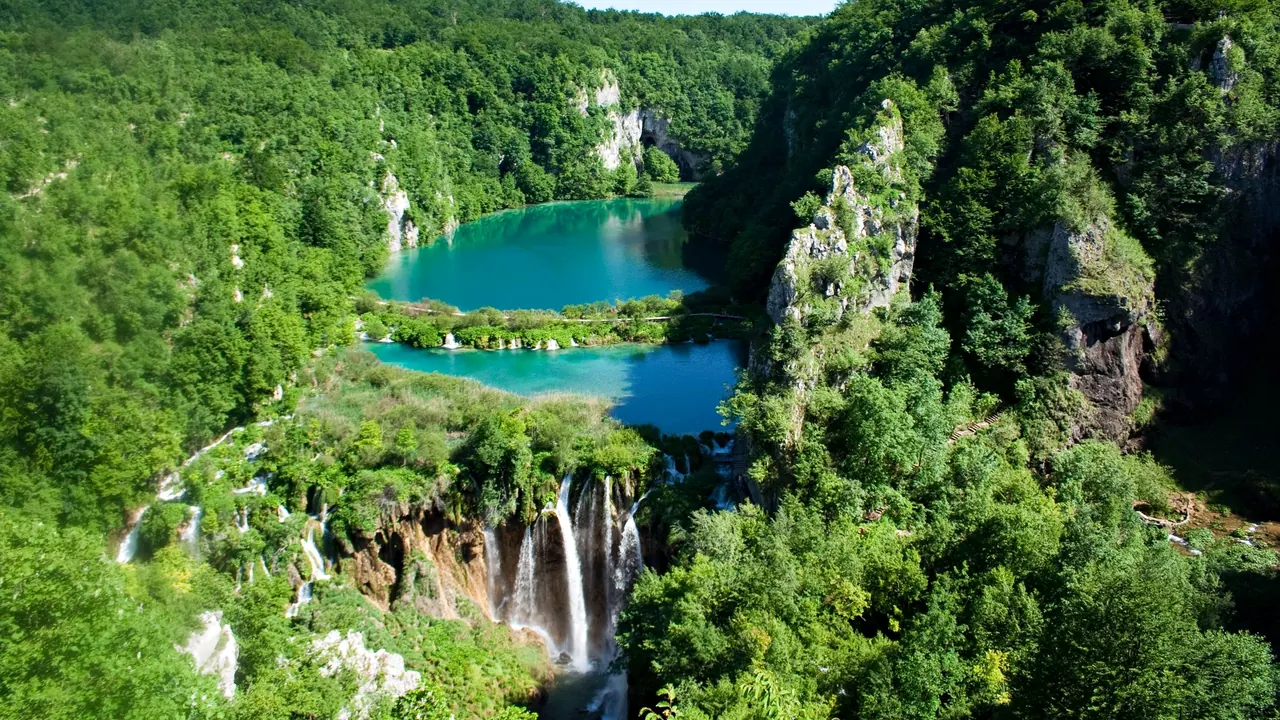
The turquoise Lower Lakes and their waterfalls
- Nature & outdoors84
- Affordability50
- Getting around48
Photo: Pablo BM from London, England, CC BY 2.0, cropped
Match
30
Every category weighted equally
- Beach & sun31
- Culture & arts27
- Food & nightlife22
- Family trip38
- Outdoors41
- Relax & unwind33
- Shopping & style25
- On a budget32
Plitvice Lakes in twelve categories
Our verdict on each, scored 0 to 100 against the same fixed benchmark cities, so a score means the same thing on every page.
Beaches & swimming. Scores 12 out of 100.
Food & drink. Scores 25 out of 100.
Culture & sights. Scores 15 out of 100.
Nightlife. Scores 3 out of 100.
Nature & outdoors. Scores 84 out of 100.
Day trips. Scores 40 out of 100.
Good for families. Scores 45 out of 100.
Getting around. Scores 48 out of 100.
Shopping & style. Scores 5 out of 100.
Affordability. Scores 50 out of 100.
Live music & performing arts. Scores 3 out of 100.
Wellness & relaxation. Scores 30 out of 100.
Plitvice Lakes category by category
Beaches & swimming
12The lakes look like the perfect place for a swim, but bathing is not allowed anywhere inside the national park, and that is strictly kept. In high summer, locals and visitors swim instead in the Korana river below the park, around Korana village and at Slunj, where the water is clear, green and cool even in July and August.
There are no sea beaches within easy reach. The Adriatic coast at Senj or Zadar is roughly two hours' drive over the mountains, a long day out rather than part of a stay here. A visitor who wants swimming as a large part of the trip should treat the lakes as a stop on the way to the coast.
Food & drink
25Eating here means hearty Lika country cooking served in roadside inns and guesthouse dining rooms along the main road and in the villages around the park entrances. Lamb and suckling pig turn on spits outside many of them, and menus lean on river trout, potatoes, cabbage, sausages, beans and dishes slow-cooked under an iron bell. Local sheep's and cow's cheeses, homemade brandies and honey turn up on most tables.
It is honest, filling food, but the range is narrow and much of it is cooked for tour groups passing through. There are no markets, café culture or fine dining to speak of, and most visitors are happy with one good lamb dinner after a day on the trails.
Culture & sights
15The park's World Heritage status is for its natural landscape, and built heritage in the area is slight. The best of it is Rastoke, a cluster of old water mills and wooden houses perched over the waterfalls where the Slunjčica joins the Korana, which shows how the Lika and Kordun countryside once worked its rivers.
Beyond that there are the ruined hilltop walls of Drežnik fortress above the Korana canyon, a few village churches and small local collections. The park also has a place in modern history: the first deaths of the Croatian war of the 1990s happened here at Easter 1991, and memorials near the entrances recall them. A visitor interested in museums, old towns or architecture will find little to fill more than an afternoon.
Nightlife
3There is no nightlife. Evenings are spent over dinner at a guesthouse or a roadside inn, perhaps with a glass of local brandy, and the villages around the park are silent soon after dark. Visitors here are on the trails early to beat the crowds, and the area is set up for that rhythm.
Nature & outdoors
84Sixteen terraced lakes step down through a forested limestone valley, joined by travertine barriers and dozens of waterfalls, the largest the Veliki slap at the bottom of the Lower Lakes. The water ranges from turquoise to emerald depending on the light, and boardwalks run right over the cascades. The Upper Lakes are greener and quieter, the Lower Lakes a narrow canyon of falls. Spring brings the most water, autumn turns the beech and fir forests red and gold, and in winter the falls freeze under snow.
Beyond the boardwalks, marked trails climb through beech forest to viewpoints, and the wider area offers the Barać caves, rafting and kayaking on the Korana and the Una across the border in Bosnia, and the karst ridges of Velebit for longer hikes. Bears, wolves and lynx live in the forests, though rarely seen. In summer the main routes are crowded by mid-morning; starting at opening time makes a real difference.
Day trips
40The closest outing is Rastoke, the mill village at Slunj, about half an hour north. Across the border in Bosnia, Bihać sits on the Una river within an hour, with the falls of Una National Park beyond it. Heading south, the Nikola Tesla Memorial Centre at his birthplace in Smiljan near Gospić makes a good half day.
Longer days reach the old fortress town of Karlovac, the coastal town of Senj with its Nehaj fortress, and, at the edge of a day out, Zadar with its Roman forum and seafront, roughly two hours away. Zagreb is about the same distance. Most visitors use the lakes as a stop between Zagreb and the coast rather than as a base for touring.
Good for families
45Children are usually enchanted by the boardwalks over the water, the fish visible in the clear lakes, the electric boat across Kozjak and the little panoramic train along the shore. Shorter circuits make the main sights manageable for school-age children in a few hours, and the area is safe and calm, with farmstay guesthouses where children can see animals.
The drawbacks are practical. Boardwalks are narrow, often wet and mostly without railings, so toddlers need a hand at all times and pushchairs are awkward; a carrier works better. Summer crowds can make the walk slow and stressful, swimming is not allowed, and there is nothing else made for children nearby beyond a few outdoor adventure parks.
Getting around
48The park itself is easy: two entrances lead onto signed walking circuits, with electric boats crossing the largest lake and panoramic trains linking the upper and lower sections. Many guesthouses in villages such as Mukinje, Jezerce and Rastovača sit within walking distance of an entrance.
Beyond that, a car makes life much simpler. Intercity buses between Zagreb and the Dalmatian coast stop at the park entrances, which suits a visitor passing through, but there is little local transport to the villages, Rastoke or anything further. The main road is good and lightly trafficked outside summer weekends, though rural roads into Lika and over to the coast are slow and winding.
Shopping & style
5Shopping is limited to souvenir kiosks at the park entrances and roadside stalls where local farmers sell cheese, honey, jams and fruit brandies. Those farm products are the only things worth taking home, and there is no town nearby with shops a visitor would seek out.
Affordability
50The area sits in the middle for price. Family-run guesthouses and private rooms in the surrounding villages are reasonable, especially a little further from the entrances, and country inns serve large portions without coastal prices.
Against that, the park entrance fee is high in the summer months and much lower in the cooler seasons, the few hotels close to the gates charge well for their location, and with little competition, meals near the park are priced for passing visitors. Coming in spring or autumn and staying in a village guesthouse gives the best value.
Live music & performing arts
3There is no performing arts life here. At most, a village festival or a restaurant evening might bring traditional Lika folk music, but nothing a visitor could plan a stay around. Concerts and theatre mean a trip to Zagreb or Zadar.
Wellness & relaxation
30There is no spa or bathing tradition in Lika, and wellness facilities are limited to a few hotel saunas and small spa rooms. What the area offers instead is quiet: farmhouse guesthouses among meadows and fir forest, clean air, and evenings with almost no sound after the coach parties have gone.
The park itself is not restful at midday in summer, when the boardwalks fill with groups. For a calmer stay, choose a guesthouse in an outlying village, walk the lakes early in the morning, and come in late spring or autumn, when the whole area slows down.
Where to stay in Plitvice Lakes
Most visitors stay one or two nights, so the choice comes down to how close you want to be to the park gates. Villages next to the entrances, such as Mukinje, Jezerce and Rastovača, have guesthouses and private rooms within walking distance of the trails. That makes the early start that beats the summer crowds easy. They suit a first visit, families with young children and anyone arriving by intercity bus without a car. The few hotels right by the gates are convenient but charge for it.
With a car, an outlying village gives better value and more quiet. Farmhouse guesthouses among meadows and fir forest suit a slower stay, walkers heading into the beech woods or towards Velebit, and children who want to see farm animals. Evenings mean a long dinner and then silence, so nobody should come here for nightlife.
In high summer, a base along the Korana river to the north, around Korana village or at Slunj beside Rastoke, gives you the swimming that the park doesn't allow, plus rafting and kayaking, and the lakes are a short drive back. There is no need to move between bases. One stay covers the park and every nearby outing.
When should you go?
Pick a month to see what it is like. The climate figures are measured averages, not a forecast.
Plitvice Lakes in July
Daytime high, °C
Rainfall in the month, mm
The whole year
Shaded against this destination’s own year: the deepest cell is its best month for that figure and the palest its weakest.
Where the figures come from
Plitvice Lakes has no weather station within reach, so its figures come from a gridded climate model rather than a measured record, and read a broad area rather than one spot.
Temperature and rainfall are climate normals, averaged over the years shown. Plitvice Lakes: 2001-2020 normals, NASA POWER reanalysis grid, no weather station within 90 km.
Before you go
| Measure | Plitvice Lakes |
|---|---|
| Official language | Croatian |
| Currency | Euro (EUR) |
| Sockets | CF230 V, 50 Hz |
| Driving side | Right |
| Time zone | UTC+1, UTC+2 in summer |
| Emergency number | 112 |
| Main airport | Zagreb Franjo Tuđman International Airport (ZAG)66 non-stop destinations |
| Public holidays this year | 14 days |
Compare Plitvice Lakes with
Every comparison with a written verdict behind it.
- Amalfi Coast
- Austrian Alps
- Bavaria
- Brač
- Capri
- Cinque Terre
- Dolomites
- Elba
- Hvar
- Ischia
- Korčula
- Krka
- Lake Garda
- Procida
- Puglia
- Tuscany
- Umbria