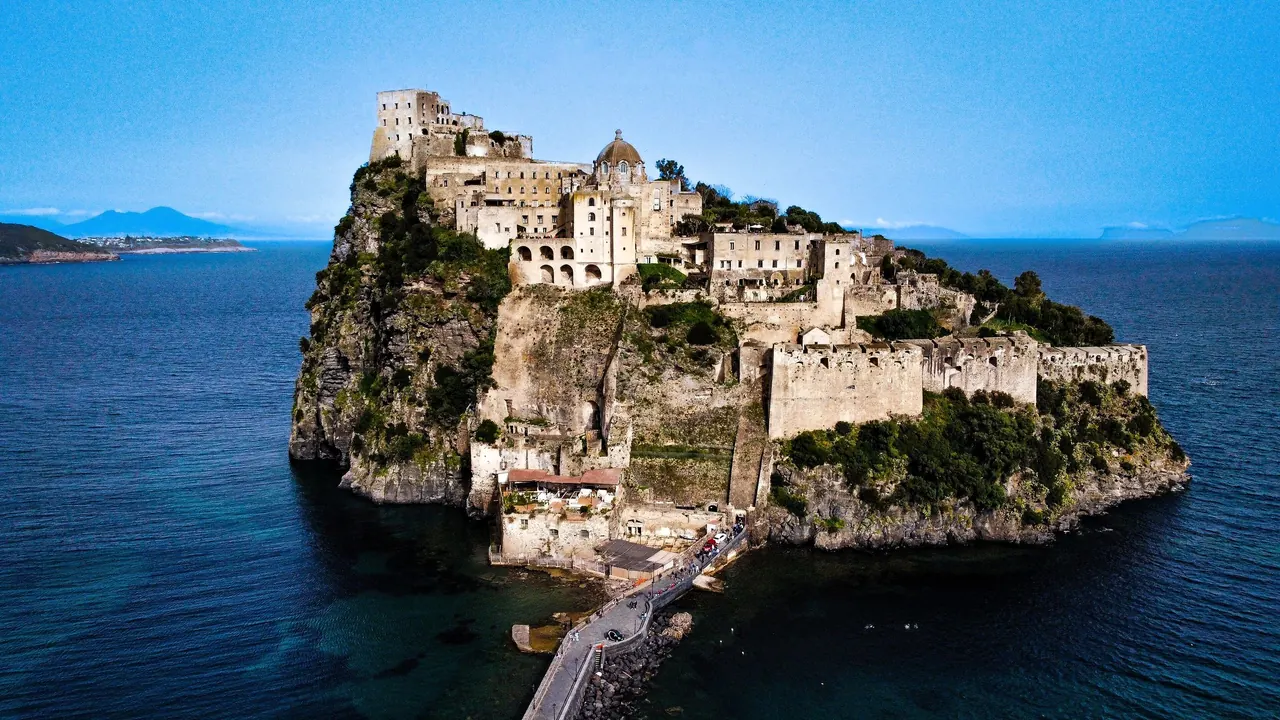
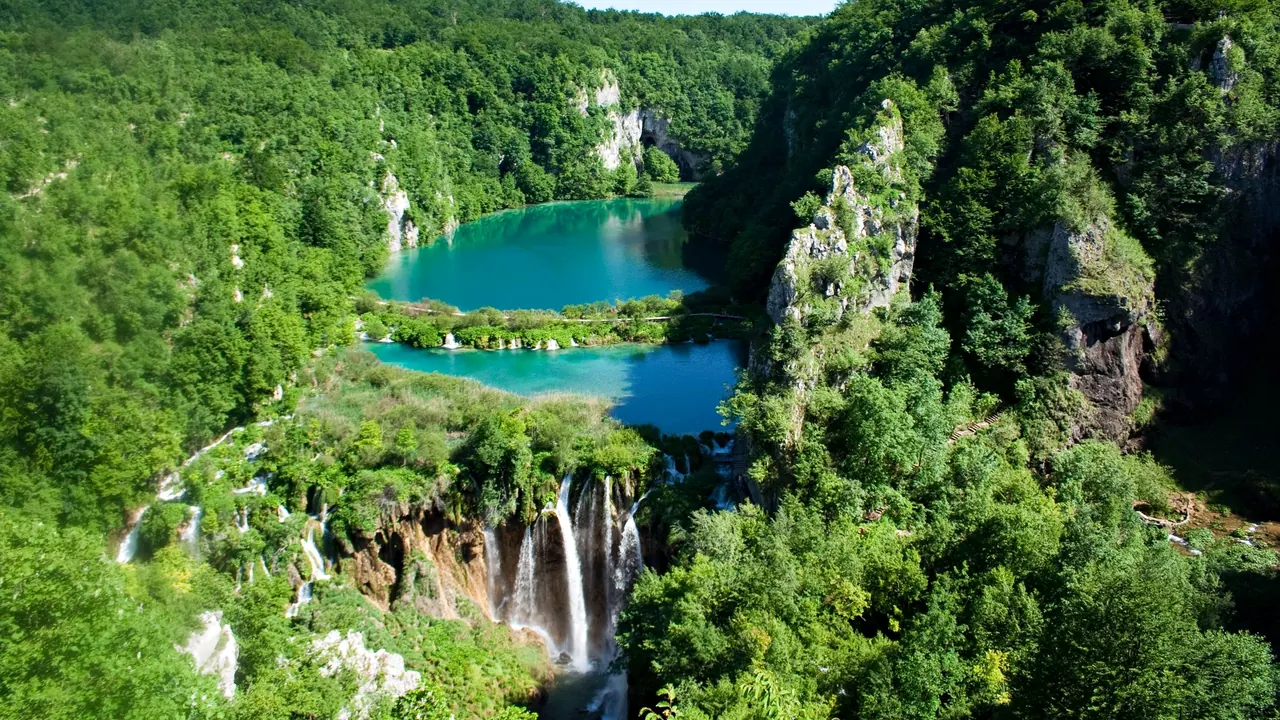
Photos: Ischia by Pipito93, CC BY-SA 4.0, cropped; Plitvice Lakes by Pablo BM from London, England, CC BY 2.0, cropped.
Ischia or Plitvice Lakes?
Our verdict in twelve categories, each scored against the same fixed benchmark cities, and the climate month by month, so you can choose for your trip.
Choose Ischia for
- beaches
- wellness
- day trips
Ischia is the choice for a warm, slow stay by the sea. It has dark volcanic sand at Maronti, thermal parks that step down to the water, wine from the slopes of Monte Epomeo and a ferry quay with Procida, Naples and the Phlegraean Fields across the bay. It suits couples and families who want a week of swimming, soaking and long dinners, with a few boat days for variety.
Choose Plitvice Lakes for
- nature and the outdoors
- getting around
- prices
Plitvice Lakes rewards people who come for the landscape and little else. The terraced lakes, the boardwalks over the waterfalls and the beech forests are among the finest natural sights in this part of Europe. Around them, though, there is country cooking, quiet guesthouses and not much to do after dark. Most people do best with two or three days on the trails, or with Plitvice as a stop on a wider drive through Croatia.
Scoreboard
Twelve categories on one fixed scale from 0 to 100. The shaded stretch is the gap between the two.
Your match
Pick a travel style or drag the sliders, and both match scores follow your weighting.
Wins on beaches and wellness with your weighting.
Wins on nature and the outdoors and getting around with your weighting.
What matters to you?
Category by category
What the scores mean for a trip.
Beaches & swimming
Ischia has a proper beach life. Maronti's long curve of volcanic sand has hot springs at one end, Citara faces the sunset and San Montano is calm and shallow, with water warm enough from June to early October.
Plitvice can't compete. The lakes are strictly off limits for swimming, so a summer dip means the cool green Korana river below the park. Anyone who wants the sea should plan a separate stop on the Adriatic.
Food & drink
Ischia has more to eat, and more of it is local. There is rabbit braised in terracotta, grilled fish and clam linguine in harbours like Sant'Angelo and Forio, and white wines from terraces on Epomeo, though half-board hotels mean the best tables take some finding.
Plitvice offers one kind of meal done honestly: spit-roast lamb, trout and dishes slow-cooked under an iron bell in roadside inns. After a couple of evenings it gets repetitive.
Culture & sights
Neither is a heritage destination, but Ischia gives a curious visitor a couple of full days. There is the Aragonese Castle on its rock off Ischia Ponte, and the Villa Arbusta museum holds finds from Pithekoussai, one of the oldest Greek settlements in the West.
At Plitvice the World Heritage status is for nature alone. The built sights amount to the mill village of Rastoke, the ruins of Drežnik and the 1991 war memorials, enough for an afternoon.
Nightlife
Nobody goes to either place for a club night, but Ischia at least offers an evening out: wine bars and cocktail terraces on the Ischia Porto waterfront, and a couple of discos that stay open late in July and August. Around Plitvice the villages fall silent after dinner, because everyone is on the trails at opening time.
Nature & outdoors
This is where Plitvice is far ahead. Its stepped lakes in turquoise and emerald, boardwalks over the cascades, the canyon of falls ending at Veliki slap and the forests where bears and lynx still live are a landscape people cross continents to see. The surrounding country adds caves, river rafting and the karst ridges of Velebit.
Ischia's nature is pleasant rather than remarkable. It has the chestnut woods and summit views of Monte Epomeo, steam vents on the south coast and good snorkelling in the marine reserve, but the island is small.
Day trips
From Ischia, the ferry quay opens up the whole Bay of Naples. Procida is a short hop away, Naples is about an hour, Pozzuoli leads to the Phlegraean Fields and Baia, and in summer there are boats to Capri and Sorrento.
Plitvice's outings are fewer and almost all need a car. Rastoke, Bihać and the Una falls across the Bosnian border, and the Tesla birthplace at Smiljan, make good half days, but Zadar and Zagreb are at the far edge of a day out.
Good for families
Ischia is the easier family choice for a long stay. Shallow bays and thermal parks with pools at different temperatures fill the days, even if steps and packed summer buses wear on parents.
Plitvice delights children for a day or two, with boats, the little train and fish in clear water. But the boardwalks have no railings, which makes toddlers hard work, swimming is banned and there is little else nearby to keep them busy.
Getting around
Plitvice is slightly easier to get around. Inside the park, electric boats and panoramic trains link the circuits, and many guesthouses are a walk from the gates, though anything beyond needs a car.
Ischia works the other way: a car is a burden on its narrow roads. You rely on slow, crowded summer buses, microtaxis and water taxis, after first arriving by ferry.
Shopping & style
Ischia at least has an evening stroll's worth of shops along Via Roma and Corso Vittoria Colonna, with linen, sandals, ceramics and thermal cosmetics. At Plitvice, the only things worth buying are the farmers' cheese, honey and fruit brandies from the roadside stalls.
Affordability
The two cost about the same overall, but the costs fall differently. On Ischia the half-board spa hotel is the bargain, while sunbeds, thermal parks and boat trips add up over a week.
At Plitvice, village guesthouses and country inns are fair, but the summer park fee and the hotels by the gates are expensive. In both places spring and autumn bring prices down.
Live music & performing arts
Live performance is thin in both places, and on Ischia it is limited to summer: chamber concerts in William Walton's Mortella gardens, the film festival at the Aragonese Castle and band music on saint's days, with the opera in Naples across the water. Around Plitvice a folk evening turns up only by chance, so concerts and theatre mean a trip to Zagreb or Zadar.
Wellness & relaxation
Ischia is built around its hot springs. Hotels pipe thermal water into their own pools, terraced parks at Citara and Lacco Ameno fill whole days, and the free hot pools at Sorgeto in the sea and the steam caves of Cavascura are memorable.
Plitvice has no bathing tradition and only a few hotel saunas. What it offers instead is silence in an outlying farmhouse, and it is restful only if you walk the lakes before the midday groups arrive.
When should you go?
Pick your month. The climate figures are measured averages, not a forecast.
Ischia in July
Plitvice Lakes in July
Daytime high, °C
Rainfall in the month, mm
Where the figures come from
Ischia's temperatures are measured 36 km from the centre, at Grazzanise.
Ischia has no rain gauge within 25 km of the centre, so its rainfall comes from a gridded climate dataset read at the destination rather than from a gauge further away.
Plitvice Lakes has no weather station within reach, so its figures come from a gridded climate model rather than a measured record, and read a broad area rather than one spot.
Temperature and rainfall are climate normals, averaged over the years shown. Ischia: 1991-2020 normals, Grazzanise (36 km from centre). Plitvice Lakes: 2001-2020 normals, NASA POWER reanalysis grid, no weather station within 90 km.
Ischia's season is long. The sea is warm enough to swim from June to early October and reaches 26°C in August, and the summer months are dry and very sunny. July and August are hot for walking, at around 31°C, so the steep village lanes and the Epomeo paths are best in spring and autumn. Rain returns in September and October and peaks at 148mm in November, but the hot pools at Sorgeto and the thermal parks make a mild winter stay possible.
Plitvice is cooler all year, and much wetter from spring through summer, when Ischia is at its driest. Its rain is spread across the year rather than kept to winter. Summer highs of about 27°C are comfortable on the boardwalks, spring brings the fullest waterfalls, and September and October are wet but bring the autumn colour. In winter the days barely reach 3°C and the falls freeze under snow. It is beautiful to see, but walking is cold and the days are short, while Ischia stays mild.
Which traveller are you?
On a beach and sun trip, Ischia is the obvious choice. It has warm sea through the summer, sandy bays at Maronti, Citara and San Montano, and water taxis to rocky coves. Swimming is banned inside the park at Plitvice, and the coast is two hours away.
For an outdoors trip, Plitvice Lakes wins. It has sixteen lakes linked by waterfalls, forest trails up to viewpoints, rafting on the Korana and Velebit within reach for longer hikes. Ischia offers a good climb up Epomeo and snorkelling, but a week covers it.
On a relaxing and wellness trip, Ischia has no real rival. Hot springs feed hotel pools, terraced thermal parks and the wild rock pools at Sorgeto. Plitvice offers quiet farmhouse nights and clean air but almost nothing in the way of spas.
Before you go
| Measure | Ischia | Plitvice Lakes |
|---|---|---|
| Official language | Italian | Croatian |
| Currency | Euro (EUR) | Euro (EUR) |
| Sockets | CFL230 V, 50 Hz | CF230 V, 50 Hz |
| Driving side | Right | Right |
| Time zone | UTC+1, UTC+2 in summer | UTC+1, UTC+2 in summer |
| Emergency number | 112 | 112 |
| Main airport | Naples International Airport (NAP)131 non-stop destinations | Zagreb Franjo Tuđman International Airport (ZAG)66 non-stop destinations |
| Public holidays this year | 13 days | 14 days |
By the numbers
| Measure | Ischia | Plitvice Lakes |
|---|---|---|
| Population | 62,027 | - |
| People per km² | 1,340 | - |
| Swim season, months above 21 °C | 5 months | - |
Where else could you go?
Every comparison below shares a destination with this one, so you can follow Ischia or Plitvice Lakes somewhere new.
- Procidavs Ischia
- Caprivs Ischia
- Amalfi Coastvs Ischia
- Krkavs Plitvice Lakes
- Bračvs Plitvice Lakes
- Hvarvs Plitvice Lakes