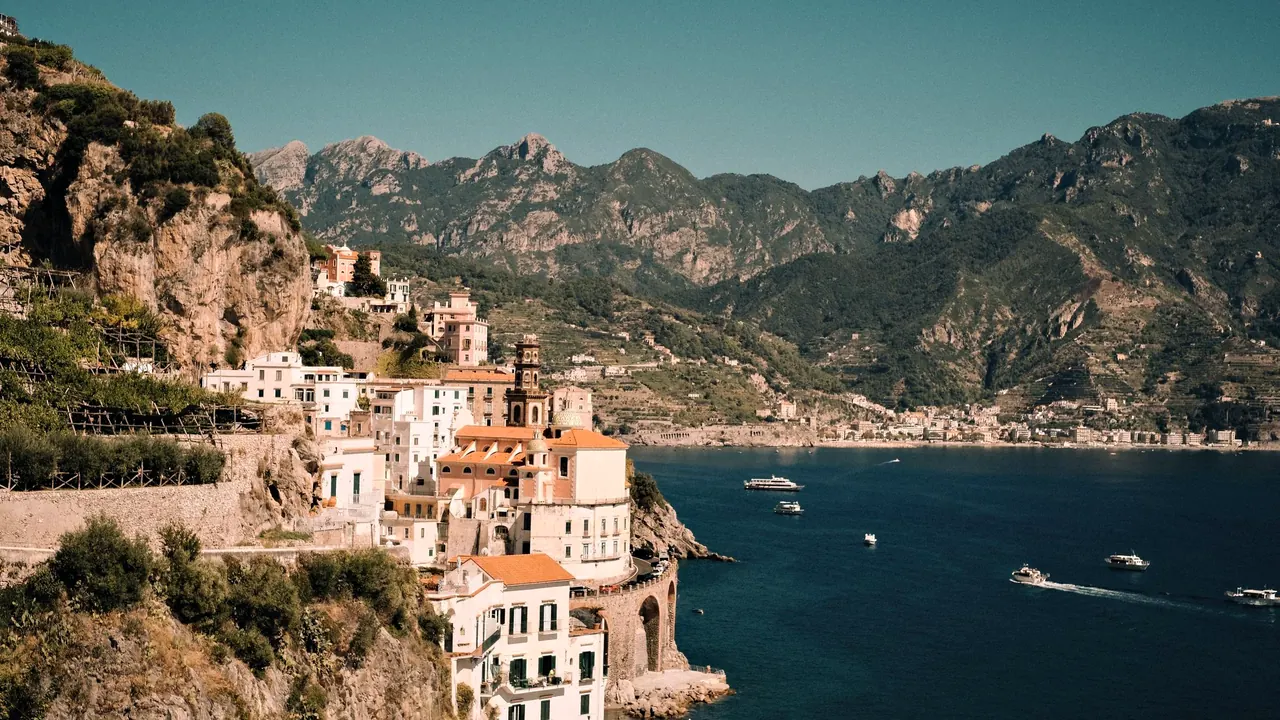
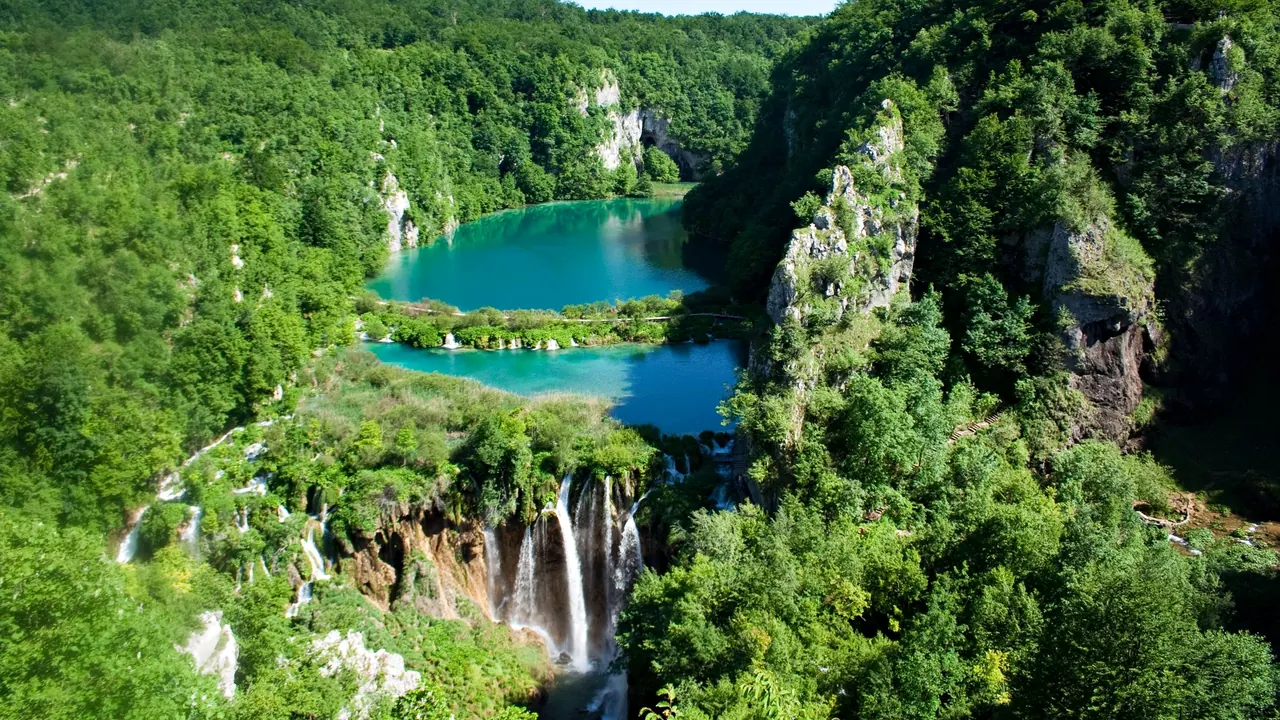
Photos: Amalfi Coast by Alina Chernii, Pexels License; Plitvice Lakes by Pablo BM from London, England, CC BY 2.0, cropped.
Amalfi Coast or Plitvice Lakes?
Our verdict in twelve categories, each scored against the same fixed benchmark cities, and the climate month by month, so you can choose for your trip.
Choose Amalfi Coast for
- beaches
- shopping
- day trips
The Amalfi Coast suits couples and anyone who wants the sea, good food and famous places all in one stay. You swim off pebble coves or from a hired boat, eat seafood pasta and lemon desserts on terraces, and spend days at Ravello's villa gardens, Pompeii or Capri. The cost is real. It is one of Europe's most expensive coasts, the towns are all stairs, and the single cliff road jams in summer.
Choose Plitvice Lakes for
- prices
- getting around
- families
Plitvice Lakes is a trip for walkers and nature lovers, and usually a short one. The draw is a chain of turquoise lakes and waterfalls crossed on boardwalks, with beech forest, caves and river rafting around it. Rooms and meals cost far less, children love the boats and boardwalks, and the area works well as a stop between Zagreb and the Croatian coast. Don't come for beaches, culture or evenings out, because there are almost none.
Scoreboard
Twelve categories on one fixed scale from 0 to 100. The shaded stretch is the gap between the two.
Your match
Pick a travel style or drag the sliders, and both match scores follow your weighting.
Wins on beaches and shopping with your weighting.
Wins on prices and getting around with your weighting.
What matters to you?
Category by category
What the scores mean for a trip.
Beaches & swimming
This is a clear win for the Amalfi Coast. Its swimming is deep, clear water under the cliffs, from grey-pebble coves at Positano, Atrani and Furore or from a boat anchored between Positano and Amalfi. Maiori has the longest stretch, with room to spread out.
Plitvice has nothing like it. Swimming in the lakes is forbidden and the rule is enforced. The only swims nearby are in the cool green Korana river around Korana village and Slunj, and the Adriatic is a long drive over the mountains.
Food & drink
Eating is one of the reasons to go to the Amalfi Coast, and a minor part of a stay at Plitvice. The Amalfi side has real depth: clams with scialatielli, fish baked in lemon leaves, Cetara's colatura anchovy sauce, the Conca dei Marini sfogliatella and Sfusato lemons in everything. It ranges from trattorias in Minori to grand terraces in Ravello.
Plitvice offers Lika country cooking at roadside inns: spit-roast lamb, river trout and dishes cooked under an iron bell, with local cheese and brandy. It is satisfying after a day of walking, but there is little variety, and one good lamb dinner is about all most visitors look for.
Culture & sights
The Amalfi Coast has far more to see. There is the Arab-Norman cathedral and cloister from Amalfi's years as a maritime republic, the villa gardens of Rufolo and Cimbrone at Ravello and a Roman villa at Minori. The pastel towns themselves are part of a UNESCO-listed landscape. Major museums still mean a trip to Naples.
At Plitvice, the World Heritage listing is for nature. Built heritage is limited to the mill village of Rastoke, the ruined Drežnik fortress and memorials to the first deaths of the 1990s war, which together fill an afternoon at most.
Nightlife
Neither place is for a night out, but the Amalfi Coast at least has evenings. In summer you can have an aperitivo with a sea view, try a few cocktail bars in Positano or sit at café tables in Amalfi's cathedral square until around midnight. At Plitvice the evening ends with dinner and perhaps a glass of brandy. The villages go quiet soon after dark, because everyone is up early for the trails.
Nature & outdoors
Both are first-rate for the outdoors, but they offer different landscapes. On the Amalfi Coast, mountains drop straight into the sea. You walk the Path of the Gods high above Positano or the shaded Valle delle Ferriere gorge, then kayak into sea caves or snorkel off Punta Campanella. Midsummer heat makes the steep trails tough.
Plitvice is all fresh water and forest: sixteen terraced lakes joined by travertine falls, boardwalks over the cascades, and beech and fir woods where bears and lynx live. Around it are the Barać caves, rafting on the Korana and Una, and hikes on the Velebit ridges. Early starts matter here, because the main routes crowd by mid-morning.
Day trips
The Amalfi Coast is one of the best bases in Europe for day trips. Pompeii and Herculaneum are about an hour away, Capri is a ferry ride in season, and Paestum's Greek temples and the old centre of Naples each make a full day. Because the road is slow, the boat is often the quickest way out.
From Plitvice the outings are smaller and further apart. The best are Rastoke, the Una falls across the border near Bihać, and the Tesla birthplace at Smiljan. Zadar and Zagreb are about two hours away, so most people visit the lakes on the way somewhere else rather than staying to tour.
Good for families
Plitvice is the easier choice with children, though it has drawbacks of its own. The boardwalks, the fish in the clear water, the electric boat and the little train delight school-age children, and the shorter circuits fit into a few hours. Toddlers need holding on the narrow, unrailed paths, and there is no swimming.
The Amalfi Coast is harder going, with hundreds of steps, pebble beaches and roads without pavements. Families do best in flatter Maiori or Minori, with boat trips and the Emerald Grotto as the treats.
Getting around
Plitvice is the simpler place to get around, at least inside the park. Signed circuits, electric boats and panoramic trains link the lakes, and many guesthouses are within walking distance of an entrance. Anything beyond the park, Rastoke included, really calls for a car.
On the Amalfi Coast, everything depends on one narrow cliff road that jams for hours in summer, with packed buses and almost no parking. From spring to autumn, the ferries between Positano, Amalfi, Maiori and Salerno are the better option. Within each town you walk, mostly up and down stairs.
Shopping & style
The Amalfi Coast has real shopping for a resort coast. You can buy linen and sandals made to measure in Positano's lanes, handmade paper in Amalfi and painted majolica in Vietri sul Mare, though the waterfront souvenir stock gets repetitive. Plitvice has entrance kiosks and farm stalls, and their cheese, honey and fruit brandy are the only things worth taking home.
Affordability
Plitvice is far cheaper. A village guesthouse and a large country dinner cost a fraction of what the Amalfi Coast charges. The main extras are the summer park fee and the pricier hotels near the gates, and both are easy to avoid in spring or autumn.
On the Amalfi Coast, sea-view rooms in Positano and Ravello, sunbeds, boats and coast-road taxis quickly add up. Staying in Maiori, Minori or Agerola helps, and so does coming in late September or early October, when the sea is still warm.
Live music & performing arts
The Amalfi Coast has one real draw here, Ravello, which Plitvice cannot match. Ravello's summer festival puts orchestras on a stage built out over the cliff at Villa Rufolo, and chamber concerts fill its churches on many warm evenings. Elsewhere on the coast there are only feast-day bands and church recitals. Around Plitvice, the most you will find is the odd evening of Lika folk music, so concerts mean going to Zagreb or Zadar.
Wellness & relaxation
The Amalfi Coast is better for a restful stay, though neither place has a bathing tradition. The cliffside hotels have spas and seawater pools facing the gulf, and quiet bases like Ravello, Praiano or Atrani give you gardens, long lunches and the sea from a balcony. The thermal parks of Ischia are a ferry day away.
Plitvice's calm is plainer: farm guesthouses in meadows and fir forest, clean air and silent evenings, but only a few hotel saunas. In both places, avoid midsummer at the main spots.
When should you go?
Pick your month. The climate figures are measured averages, not a forecast.
Amalfi Coast in July
Plitvice Lakes in July
Daytime high, °C
Rainfall in the month, mm
Where the figures come from
Amalfi Coast's temperatures are measured 65 km from the centre, at Grazzanise.
Amalfi Coast has no rain gauge within 25 km of the centre, so its rainfall comes from a gridded climate dataset read at the destination rather than from a gauge further away.
Plitvice Lakes has no weather station within reach, so its figures come from a gridded climate model rather than a measured record, and read a broad area rather than one spot.
Temperature and rainfall are climate normals, averaged over the years shown. Amalfi Coast: 1991-2020 normals, Grazzanise (64.7 km from centre). Plitvice Lakes: 2001-2020 normals, NASA POWER reanalysis grid, no weather station within 90 km.
The Amalfi Coast is a warm-weather place. The sea is good for swimming from June to early October and peaks around 26°C in August, while the hottest days reach 31°C in July and August, which makes the stairways and trails hard going around midday. May, June and September are the most pleasant months for walking and sightseeing. The rain sets in from late September, and November is the wettest month at about 143mm.
Plitvice is cooler all year. Summer highs reach about 27°C, comfortable for a day on the boardwalks, and winter is cold, with January highs around 3°C and the falls sometimes frozen under snow. Rain falls in every month, heaviest in autumn, so the season matters more for the scenery than the weather. Spring has the most water in the falls, autumn has the red and gold forest, and summer is warm but crowded.
Which traveller are you?
On a beach and sun trip, choose the Amalfi Coast. Its warm, clear sea, pebble coves at Positano and Atrani, and boat days below the cliffs have no match at Plitvice, where swimming in the lakes is banned and the coast is two hours away.
For a culture and arts trip, the Amalfi Coast is again the choice. Amalfi's cathedral, Ravello's villas and its cliffside summer concerts are all on the coast, and Pompeii, Herculaneum and Naples are within a day. Plitvice has little beyond the Rastoke mills and Drežnik's ruins.
On a trip with a tight budget, Plitvice Lakes is much easier on the wallet. Village guesthouses and country inns cost far less than a sea-view room in Positano, especially in spring or autumn, when the park entrance fee also drops.
Before you go
| Measure | Amalfi Coast | Plitvice Lakes |
|---|---|---|
| Official language | Italian | Croatian |
| Currency | Euro (EUR) | Euro (EUR) |
| Sockets | CFL230 V, 50 Hz | CF230 V, 50 Hz |
| Driving side | Right | Right |
| Time zone | UTC+1, UTC+2 in summer | UTC+1, UTC+2 in summer |
| Emergency number | 112 | 112 |
| Main airport | Naples International Airport (NAP)131 non-stop destinations | Zagreb Franjo Tuđman International Airport (ZAG)66 non-stop destinations |
| Public holidays this year | 13 days | 14 days |
By the numbers
| Measure | Amalfi Coast | Plitvice Lakes |
|---|---|---|
| Swim season, months above 21 °C | 5 months | - |
Where else could you go?
Every comparison below shares a destination with this one, so you can follow Amalfi Coast or Plitvice Lakes somewhere new.
- Caprivs Amalfi Coast
- Naplesvs Amalfi Coast
- Procidavs Amalfi Coast
- Ischiavs Amalfi Coast
- Krkavs Plitvice Lakes
- Bračvs Plitvice Lakes