Italy
Amalfi Coast
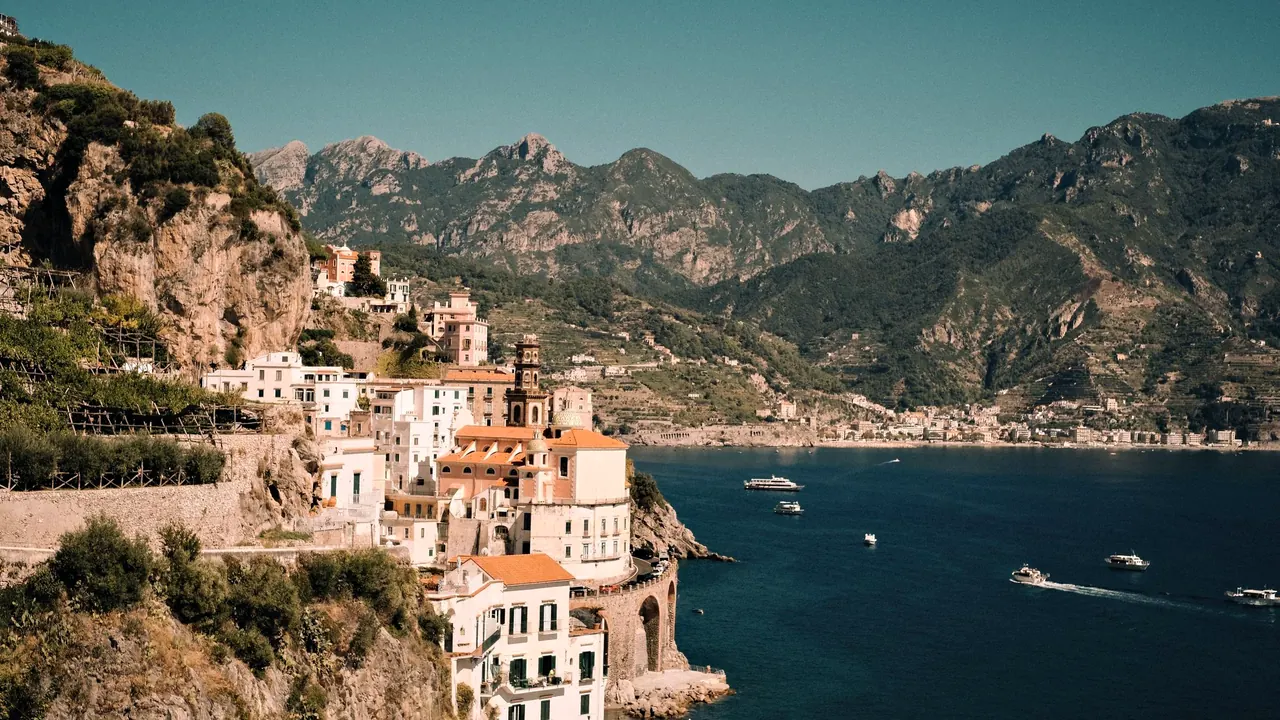
Atrani on its rock above the sea
- Day trips88
- Nature & outdoors80
- Beaches72
Photo: Alina Chernii, Pexels License
Match
52
Every category weighted equally
- Beach & sun54
- Culture & arts51
- Food & nightlife49
- Family trip52
- Outdoors60
- Relax & unwind56
- Shopping & style51
- On a budget48
Amalfi Coast in twelve categories
Our verdict on each, scored 0 to 100 against the same fixed benchmark cities, so a score means the same thing on every page.
Beaches & swimming. Scores 72 out of 100.
Food & drink. Scores 70 out of 100.
Culture & sights. Scores 60 out of 100.
Nightlife. Scores 28 out of 100.
Nature & outdoors. Scores 80 out of 100.
Day trips. Scores 88 out of 100.
Good for families. Scores 35 out of 100.
Getting around. Scores 33 out of 100.
Shopping & style. Scores 55 out of 100.
Affordability. Scores 15 out of 100.
Live music & performing arts. Scores 38 out of 100.
Wellness & relaxation. Scores 48 out of 100.
Amalfi Coast category by category
Beaches & swimming
72Swimming here means clear, deep, warm water at the foot of cliffs rather than long stretches of sand. The sea reaches about 25°C in August and is pleasant from June to early October. The beaches are small grey-pebble coves squeezed into gaps in the rock: Spiaggia Grande and Fornillo at Positano, the marina at Amalfi, tiny Atrani, Marina di Praia and the narrow fjord at Furore. Many of the best coves are reached only by boat or long stairways. Rows of hired sunbeds fill much of the space, with small free stretches at the edges.
Maiori has the longest beach on the coast, and with Minori it is the easiest choice for anyone who wants sand and room to spread out. For most visitors the real swimming is from a hired boat, dropping anchor below the cliffs between Positano and Amalfi.
Food & drink
70The cooking is coastal Campanian and leans hard on what grows and swims nearby. Expect seafood pasta, scialatielli with clams or mussels, fish baked in lemon leaves, and anchovies everywhere. Cetara cures its anchovies and makes colatura, an amber fish sauce from an old recipe. The big, knobbly Sfusato lemons go into limoncello, lemon cakes and granita. Conca dei Marini gives its name to a cream-filled sfogliatella, and mozzarella and tomatoes come down from the hills and plains nearby.
The range runs from family trattorias in Minori, Maiori and the hill villages of Agerola up to elaborate terrace dining in the grand hotels of Positano and Ravello. The waterfronts at Positano and Amalfi have plenty of tired menus aimed at day-trippers. A short walk uphill or one town along usually means better food.
Culture & sights
60The heritage is that of a medieval sea power and of the villas built above it. Amalfi's cathedral, with its striped Arab-Norman front, steep stairway and Cloister of Paradise, recalls the town's centuries as a maritime republic, and a small museum keeps alive its paper-making tradition. Up in Ravello, Villa Rufolo and Villa Cimbrone have cloistered courtyards, terraced gardens and views over the gulf. Minori has the remains of a Roman seaside villa.
The larger sight is the coast itself, a UNESCO-listed landscape of pastel towns, domed churches, watchtowers and lemon terraces stacked on the cliffs. Positano and Atrani are worth seeing simply as places. There are no major museums, though, and a visitor who wants big collections has to go to Naples or Pompeii.
Nightlife
28Evenings here are about a long dinner on a terrace, an aperitivo with a sea view and a late stroll. Positano has a few cocktail bars and one or two places that run late on summer nights, and Amalfi's cathedral square stays lively with café tables until around midnight. Beyond that the coast is quiet: it draws couples and honeymooners, not party crowds. From November to March much of it closes early or shuts altogether. Anyone who wants real nightlife goes to Naples or Salerno.
Nature & outdoors
80The Lattari mountains drop almost straight into the sea, and that is what makes the coast. The Path of the Gods runs high above Positano from Agerola to Nocelle, with views down to the water and out to Capri. It is one of the great coastal walks of Europe. Below Amalfi and Ravello, old mule tracks and stairways link villages and lemon terraces. The Valle delle Ferriere climbs a shaded gorge with waterfalls, ferns and ruined ironworks.
On the water, kayaks and small boats follow sea caves, arches and rocky headlands. The Grotta dello Smeraldo glows green, and the protected waters around Punta Campanella and the Li Galli islets are good for snorkelling and diving. Spring and autumn are best for walking. Midsummer heat makes the steep trails hard going by midday.
Day trips
88Few coasts have so many famous places within a day's reach. Pompeii is a little over an hour away by road or by bus and train through Sorrento, and Herculaneum is just beyond it. Ferries from Positano and Amalfi run to Capri in season, and also to Sorrento and Salerno. Paestum's three Greek temples stand on the plain south of Salerno, about an hour and a half away. Naples, with its archaeological museum and old centre, makes a full and rewarding day.
Closer to hand, Vietri sul Mare has ceramic workshops and Salerno has a cathedral and a medieval quarter. Ischia and Procida are reachable by ferry, though it makes a long day. The roads are slow, so the sea is often the quickest route out.
Good for families
35This coast is better suited to couples than to young children. The towns are vertical, with hundreds of steps between the road, the hotels and the sea, so pushchairs are close to useless. Most beaches are pebble, the main road has no pavement in long stretches, and the summer buses are packed. There are no attractions made for children.
Families do better in Maiori or Minori, which are flatter and have sandier, gentler beaches and an easy seafront. Boat trips, the emerald grotto and calm summer swimming are what children tend to enjoy most. Older children who like walking will manage the Path of the Gods.
Getting around
33One road connects everything: a narrow, twisting cliff road with blind bends, coach traffic and very little parking. In summer it jams for hours. Local buses run the length of the coast and up to Ravello and Agerola, but they fill up quickly and queues are long in high season. Driving yourself is stressful, and many visitors do not hire a car at all.
From spring to autumn the ferries are the easy way between Positano, Amalfi, Minori, Maiori and Salerno, and they double as sightseeing. Within each town everything is on foot, mostly up and down stairs. Choosing a base on the waterfront in Amalfi or Positano saves a lot of effort.
Shopping & style
55Shopping here is about local crafts and resort fashion, not big names. Positano's lanes are lined with boutiques of loose linen and cotton clothing in bright summer colours, plus sandal makers who will fit a pair while you wait. Amalfi sells handmade paper from its old mills. Vietri sul Mare, at the eastern end, is the place for hand-painted majolica ceramics, from tiles to whole dinner services. Limoncello, lemon soaps and painted lemon souvenirs are everywhere. Beyond that the range is narrow, and much of what lines the waterfronts is the same souvenir stock.
Affordability
15In high season this is one of the most expensive coasts in Europe. Rooms with a sea view in Positano and Ravello are priced for honeymooners. Waterfront restaurants, sunbed rentals, private boats and taxis on the coast road all add up quickly. Even a simple lunch by the water costs more than it would almost anywhere else in southern Italy.
To spend less, stay in Maiori, Minori or Atrani, or up in the hill villages of Agerola, and eat in the backstreets rather than on the seafront. The local buses and ferries are the cheapest way to move around. Rates are lower in May and October. Of the two, late September and early October are the better value for a beach stay, because the sea is still warm enough to swim. In May it is still cool.
Live music & performing arts
38Live music here centres on Ravello, a town with a long association with Wagner and with musicians who have stayed there. Its summer festival puts orchestras on a stage built out over the cliff in the gardens of Villa Rufolo. Through the warm months a chamber series fills the town's halls and churches with concerts on many evenings. The modern auditorium below the town adds further events.
Elsewhere it comes down to church concerts, the odd piano bar and religious processions with bands on feast days. There is no theatre, opera house or regular live-music scene. Outside the season there is very little.
Wellness & relaxation
48The coast has no thermal springs or bathing culture of its own. Its spas belong to the luxury cliffside hotels, some with seawater pools and treatment rooms looking out over the gulf. The restorative side is more a matter of pace: long lunches, gardens, lemon terraces and afternoons spent watching the sea from a balcony.
Ravello, high above the water and away from the beach crowds, is the calmest base. So are Atrani, Praiano and Conca dei Marini. Positano and Amalfi in July and August are crowded and noisy, while May, June and September bring the slow, quiet version of the coast. The thermal parks of Ischia are a long ferry day away.
Where to stay in Amalfi Coast
For a first visit, Amalfi is the most practical base. It sits in the middle of the coast, and its waterfront is where the buses and ferries meet, so Capri, Ravello, Positano and Salerno are all easy to reach from the harbour, and there are café tables in the cathedral square in the evening. Positano is more striking to look at: steep lanes of linen boutiques, the coast's few late bars and boats to the coves below the cliffs. It also has endless steps and the highest prices, and it suits couples better than families.
Families, and anyone who wants sand, should look east to Maiori and Minori. They are flatter, with the longest and gentlest beaches on the coast, a level seafront, family trattorias and lower prices, and ferries to Amalfi in season. Ravello is the calm choice, high above the sea among villa gardens and summer concerts, but the beach is a bus ride or a long stairway below. Atrani and Praiano are quieter, smaller places down by the water. Walkers on a budget can stay up in Agerola, at the start of the Path of the Gods.
The coast is short enough for one base to cover all of it. Because the road is slow, the best base is one near a ferry pier, not a second hotel.
When should you go?
Pick a month to see what it is like. The climate figures are measured averages, not a forecast.
Amalfi Coast in July
Daytime high, °C
Rainfall in the month, mm
The whole year
Shaded against this city’s own year: the deepest cell is its best month for that figure and the palest its weakest.
Where the figures come from
Amalfi Coast's temperatures are measured 65 km from the centre, at Grazzanise.
Amalfi Coast has no rain gauge within 25 km of the centre, so its rainfall comes from a gridded climate dataset read at the destination rather than from a gauge further away.
Temperature and rainfall are climate normals, averaged over the years shown. Amalfi Coast: 1991-2020 normals, Grazzanise (64.7 km from centre).
Before you go
| Measure | Amalfi Coast |
|---|---|
| Official language | Italian |
| Currency | Euro (EUR) |
| Sockets | CFL230 V, 50 Hz |
| Driving side | Right |
| Time zone | UTC+1, UTC+2 in summer |
| Emergency number | 112 |
| Main airport | Naples International Airport (NAP)131 non-stop destinations |
| Public holidays this year | 13 days |
By the numbers
| Measure | Amalfi Coast |
|---|---|
| Swim season, months above 21 °C | 5 months |
Compare Amalfi Coast with
Every comparison with a written verdict behind it.