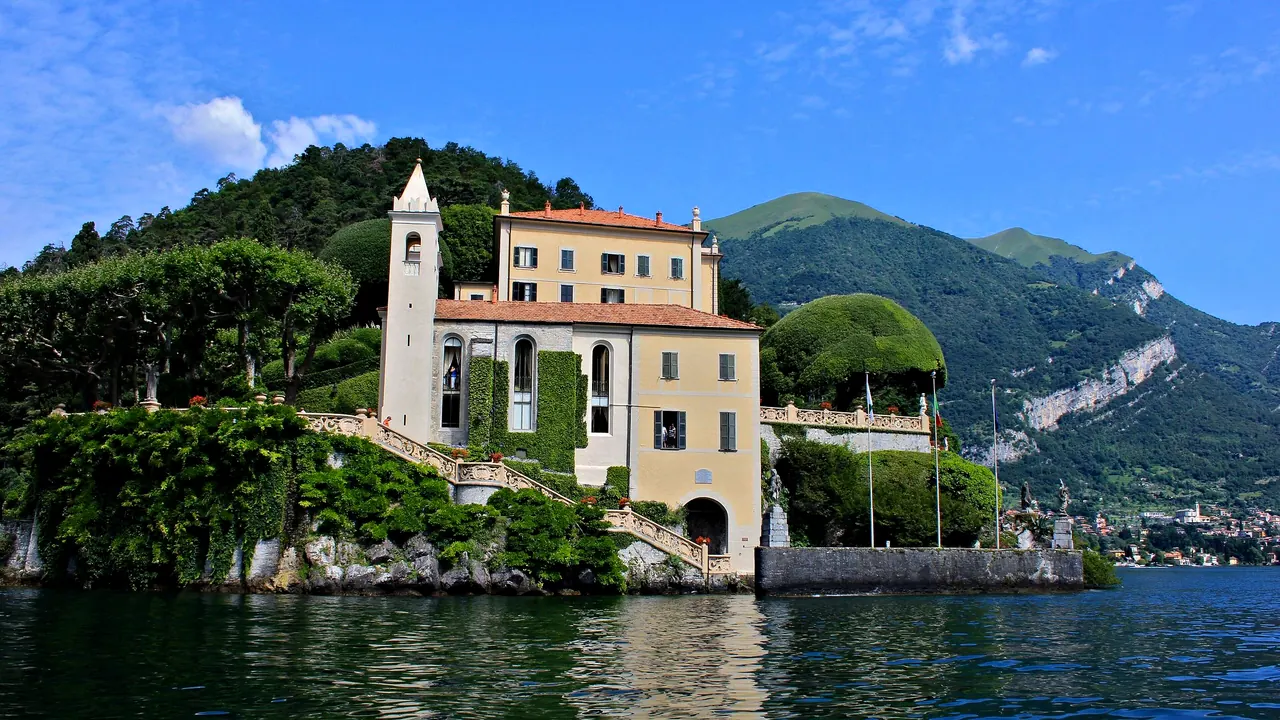
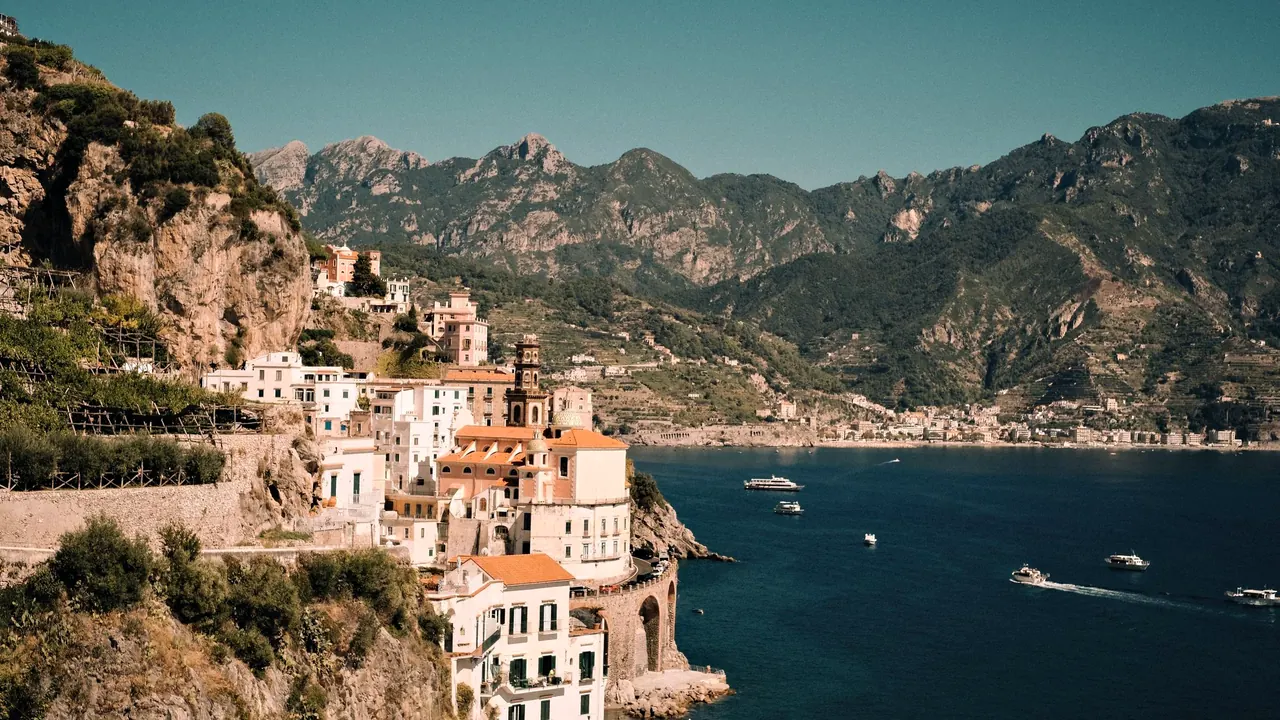
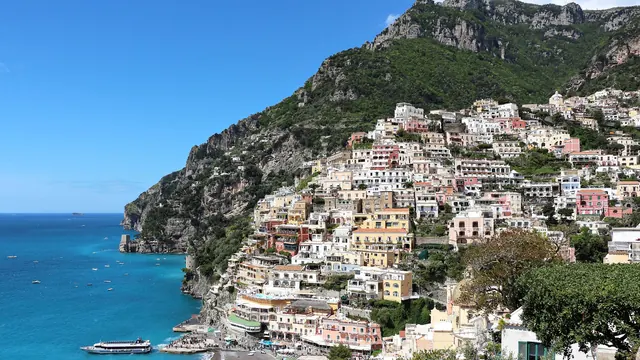
Photos: Lake Como by Navin75, CC BY-SA 2.0, cropped; Amalfi Coast by Alina Chernii, Pexels License.
Lake Como or Amalfi Coast?
Our verdict in twelve categories, each scored against the same fixed benchmark cities, and the climate month by month, so you can choose for your trip.
Choose Lake Como for
- getting around
- prices
- families
Lake Como is the easier of the two places to spend a week. Ferries cross the central lake in minutes, summers are cooler, and the villa gardens, mountain walks and quiet evenings in the villages give it a slower, greener rhythm. It is also the better pick for families, for anyone without a car and for travellers who want Milan close by. It costs a little less, though it is still far from cheap.
Choose Amalfi Coast for
- beaches
- food and drink
- shopping
The Amalfi Coast is the choice for travellers who want the sea at the centre of the trip. You get deep, clear water below the cliffs, seafood and lemons at every meal, and Pompeii, Capri and Paestum all within a day. It suits couples who don't mind the stairs, the single crowded coast road and the coast's very high prices in exchange for that drama.
Scoreboard
Twelve categories on one fixed scale from 0 to 100. The shaded stretch is the gap between the two.
Your match
Pick a travel style or drag the sliders, and both match scores follow your weighting.
Too close to call, 2 points apart
Wins on getting around and prices with your weighting.
Wins on beaches and food and drink with your weighting.
What matters to you?
Category by category
What the scores mean for a trip.
Beaches & swimming
The Amalfi Coast is a sea destination. The water is deep, clear and warm into October, and the beaches are small grey-pebble coves at Positano, Amalfi, Atrani and the fjord at Furore, many of them crowded with sunbeds. The best swimming is from a hired boat between Positano and Amalfi, and Maiori and Minori are where to go if you want sand.
Lake Como offers bathing rather than beaches. You swim from lidos at Bellagio, Lenno and Menaggio, or from the longer shores around Gravedona and Domaso. The water is cooler, the season is shorter, and a swim off a jetty is a pleasant pause between ferries rather than the reason to go.
Food & drink
Amalfi eats better. Its coastal Campanian cooking draws on the sea and the lemon terraces, with scialatielli with clams, fish baked in lemon leaves, Cetara's colatura and cured anchovies, and the cream-filled sfogliatella of Conca dei Marini. Family trattorias in Minori, Maiori and Agerola balance out the tired menus on the waterfronts.
Lake Como's food is lake and mountain cooking: perch in butter and sage on risotto, dried missoltini, polenta and Valtellina cheese, best eaten in hill-village trattorias and crotti built against the rock. It is good, honest food but a narrower range, and in both regions the lakefront or seafront terraces are where to eat least well.
Culture & sights
The two are about level, and both rest on villas and places rather than museums. Amalfi's heritage is that of a medieval maritime republic: the striped cathedral and Cloister of Paradise, the paper-making museum, and Ravello's Villa Rufolo and Villa Cimbrone. Above all there is the UNESCO-listed coastline of pastel towns stacked on the cliffs.
Lake Como's villas are the main event: Carlotta, Balbianello and Melzi, most of them reached by boat. Como town adds a marble cathedral, Romanesque churches and a rare cluster of 1930s rationalist buildings. For serious collections, Amalfi sends you to Naples or Pompeii and Como sends you to Milan.
Nightlife
Neither is a place for going out, but Amalfi has slightly more after dark. Positano has a few cocktail bars and late summer nights, and Amalfi's cathedral square stays busy with café tables until around midnight. On Lake Como, Como town has some wine bars and lakeside lounges, while Bellagio and Varenna go quiet after the last ferry. Como's way out is better, though: Milan is an easy train ride away, while from Amalfi a night in Naples or Salerno means the slow coast road.
Nature & outdoors
Both are outstanding, and the difference is sea against mountain lake. On the Amalfi Coast, the Lattari mountains fall straight into the Mediterranean. The Path of the Gods above Positano is the classic walk, and below it are sea caves, the Emerald Grotto and the snorkelling waters of Punta Campanella and Li Galli.
Lake Como has an Alpine setting, with peaks over 2,000m that keep their snow into spring. Walkers have the Sentiero del Viandante, the Greenway and climbs on the Grigna, and the afternoon breva wind makes the upper lake a serious windsurfing and kitesurfing spot. Its cooler summers also make midday walking easier than on Amalfi's sun-baked trails.
Day trips
Amalfi has the more remarkable list. Pompeii and Herculaneum are a little over an hour away, Capri is a ferry ride off, and Paestum's Greek temples and the old centre of Naples are within a day. Few bases put so much ancient history within reach, though the slow roads often make the sea the quickest way out.
From Lake Como, trips are easier to make by rail. Milan's Duomo and Last Supper are about an hour away, with Bergamo's upper town and Swiss Lugano at similar distances, and the Borromean Islands make a longer day. The lake's own ferry hops between Bellagio, Varenna and Menaggio fill a day with no planning at all.
Good for families
Lake Como is the easier of the two with children, though neither is built for them. Boat rides, the funicular up to Brunate, summer lidos and kayaking for older children make good days. The flatter upper lake around Domaso and Colico, with its campsites, is a practical base.
The Amalfi Coast is harder going. Hundreds of steps make pushchairs useless, the coast road has long stretches without pavement, and most beaches are pebble. Families are best off in Maiori or Minori, with boat trips and the Emerald Grotto as the highlights.
Getting around
Lake Como is far easier without a car. Ferries link Bellagio, Varenna, Menaggio and Cadenabbia across the central basin in minutes, trains run from Milan up the eastern shore, and buses serve the western one. A base in the central triangle covers most of what you'll want to see.
On the Amalfi Coast everything depends on one narrow cliff road, which jams for hours in summer, and the buses fill fast. The ferries between Positano, Amalfi, Maiori and Salerno ease the problem, but only from spring to autumn. Within each town, getting about means stairs.
Shopping & style
Amalfi has more to take home. In Positano's lanes you'll find bright linen resort clothes and sandals made to fit while you wait. Amalfi sells paper from its old mills, and Vietri sul Mare's hand-painted majolica runs from single tiles to whole dinner services.
Lake Como has really one speciality, Como silk, sold as scarves, ties and fabrics by the mills and their outlets on the edge of town. Beyond the silk, Bellagio has pricey boutiques and Como's old centre a mix of Italian labels, and anyone serious about fashion goes to Milan.
Affordability
Both are among Italy's most expensive vacation areas, but the Amalfi Coast is the harder one on a budget. Sea-view rooms in Positano and Ravello, sunbeds, private boats and taxis on the coast road add up fast, and even a simple lunch by the water is costly. Maiori, Minori, Atrani and Agerola soften the bill.
Lake Como offers more ordinary options. Como town and Lecco have everyday hotels and restaurants, the upper lake has campsites and simple guesthouses, and ferries and trains are reasonably priced. In both places, spring and autumn bring prices down noticeably.
Live music & performing arts
The two are close, and each has one strong asset. Ravello's summer festival, with orchestras on a stage built out over the cliff at Villa Rufolo, is backed by a chamber series on many evenings. That gives the Amalfi Coast the more memorable summer of music, though little happens outside the season.
Lake Como has the only real theatre of the pair: Como's Teatro Sociale, an early nineteenth-century opera house with its own season of opera, concerts and plays. In summer it adds concerts in villas and churches, and La Scala is a train ride away in Milan.
Wellness & relaxation
Lake Como is slightly the more restful. Days drift between terrace, garden and ferry, and once the day-trippers leave, the smaller villages are very quiet. The villa hotels near Cernobbio and Tremezzo have spas with pools set on or over the water.
On the Amalfi Coast, rest depends more on choosing the right base: Ravello, Atrani, Praiano or Conca dei Marini, rather than Positano or Amalfi in high summer. Its spas also belong to the luxury cliff hotels. Neither region has thermal baths of its own, but Ischia's thermal parks can be reached from Amalfi as a long ferry day.
When should you go?
Pick your month. The climate figures are measured averages, not a forecast.
Lake Como in July
Amalfi Coast in July
Daytime high, °C
Rainfall in the month, mm
Where the figures come from
Amalfi Coast's temperatures are measured 65 km from the centre, at Grazzanise.
Amalfi Coast has no rain gauge within 25 km of the centre, so its rainfall comes from a gridded climate dataset read at the destination rather than from a gauge further away.
Temperature and rainfall are climate normals, averaged over the years shown. Lake Como: 1991-2020 normals, Lugano (22.8 km from centre). Amalfi Coast: 1991-2020 normals, Grazzanise (64.7 km from centre).
On the Amalfi Coast, the beach season runs from June to September. Daytime highs reach 31°C in July and August and the sea warms to 26°C. Summer is almost dry and very sunny, but the heat makes the steep paths and stairways hard work by midday. The rain arrives in October and peaks in November at 143mm, and winters are mild but wet. May and late September to early October are the best months for walking and sightseeing, and in late September the sea is still warm enough to swim.
Lake Como is cooler and much wetter for most of the year. Summer highs stay around 27°C, which is pleasant for walking and long enough for lake swimming from late June to early September. Rain is heavy from April to November, peaking at 178mm in May, so showers are likely even in high summer. Winter is drier but cold. For walks and villa gardens, late spring and September are the best balance on both, and in July and August the lake is the gentler place to be outdoors.
Which traveller are you?
On a beach and sun trip, the Amalfi Coast wins clearly. It has warmer sea and sunnier summers, boat days anchored below the cliffs, and Maiori's long beach for room to spread out. Lake Como's lidos and jetties make a pleasant swim, but they are not a beach vacation.
On a family trip with children, Lake Como is the easier choice. Ferries and the Brunate funicular are adventures in themselves, the upper lake has flatter shores and campsites, and getting around is simpler. Amalfi's stairs, pebbles and packed buses wear young families down.
For a trip on a tight budget, neither is cheap, but Lake Como gives you more room. Como town, Lecco and the upper lake's guesthouses and campsites are ordinary in price, and trains run in from Milan. On the Amalfi Coast, even the cheaper bases of Maiori and Agerola sit in a very expensive region.
Before you go
| Measure | Lake Como | Amalfi Coast |
|---|---|---|
| Official language | Italian | Italian |
| Currency | Euro (EUR) | Euro (EUR) |
| Sockets | CFL230 V, 50 Hz | CFL230 V, 50 Hz |
| Driving side | Right | Right |
| Time zone | UTC+1, UTC+2 in summer | UTC+1, UTC+2 in summer |
| Emergency number | 112 | 112 |
| Main airport | Milan Malpensa International Airport (MXP)207 non-stop destinations | Naples International Airport (NAP)131 non-stop destinations |
| Public holidays this year | 13 days | 13 days |
By the numbers
| Measure | Lake Como | Amalfi Coast |
|---|---|---|
| Swim season, months above 21 °C | - | 5 months |
Where else could you go?
Every comparison below shares a destination with this one, so you can follow Lake Como or Amalfi Coast somewhere new.
- Caprivs Amalfi Coast
- Naplesvs Amalfi Coast
- Procidavs Amalfi Coast
- Ischiavs Amalfi Coast
- Lake Maggiorevs Lake Como
- Lake Gardavs Lake Como