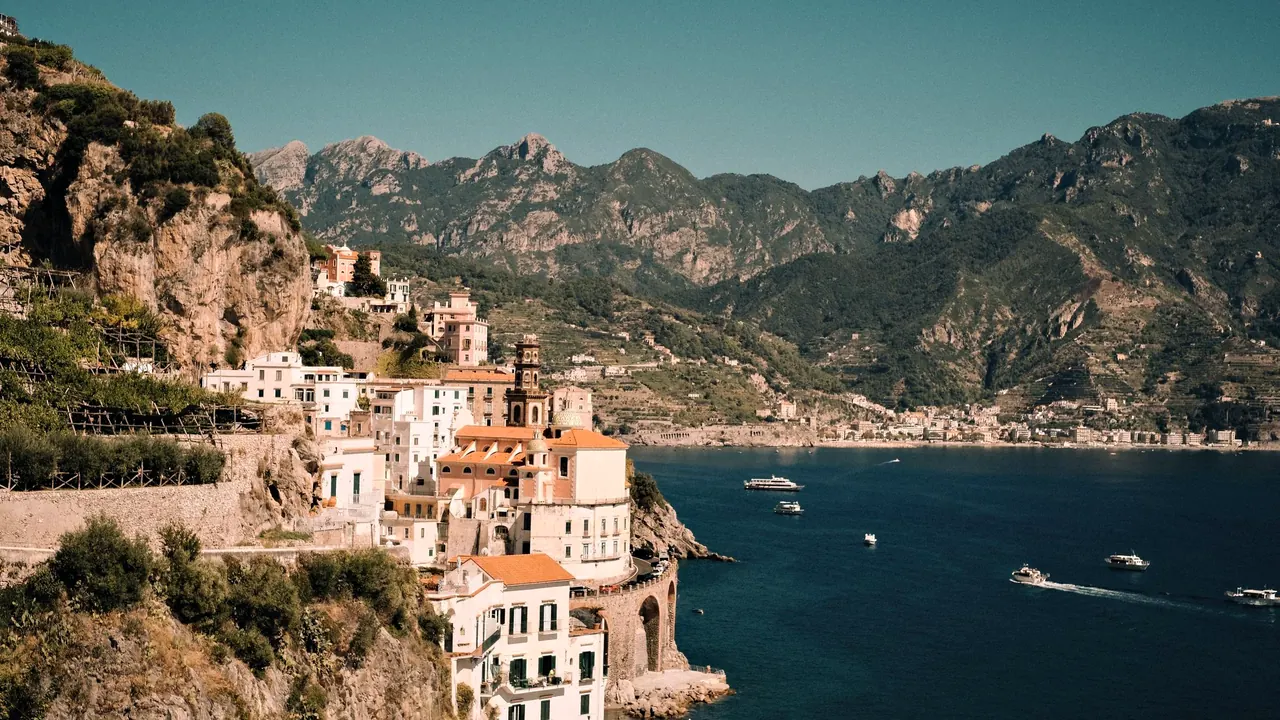
Photos: Amalfi Coast by Alina Chernii, Pexels License.
Amalfi Coast or Korčula?
Our verdict in twelve categories, each scored against the same fixed benchmark cities, and the climate month by month, so you can choose for your trip.
Choose Amalfi Coast for
- shopping
- day trips
- food and drink
The Amalfi Coast suits travellers who want a famous landscape and plenty to fill the days. You get cliff walks like the Path of the Gods, Pompeii, Capri and Paestum within reach, Ravello's gardens and summer concerts, and cooking built on lemons, anchovies and seafood pasta. It is a coast for couples and an expensive one, and you need patience with crowded buses and endless stairs.
Choose Korčula for
- prices
- getting around
- families
Korčula is the gentler and cheaper choice for a week of swimming. Sandy, shallow bays at Lumbarda make it easier with children, the walled old town can be walked in an hour, and evenings mean local Pošip and Grk wine on the town walls rather than anything grand. What you give up is range: simpler food, fewer day trips and an island that goes quiet once summer ends.
Scoreboard
Twelve categories on one fixed scale from 0 to 100. The shaded stretch is the gap between the two.
Your match
Pick a travel style or drag the sliders, and both match scores follow your weighting.
Wins on shopping and day trips with your weighting.
Wins on prices and getting around with your weighting.
What matters to you?
Category by category
What the scores mean for a trip.
Beaches & swimming
For a swimming vacation the two are close. Both offer clear, warm water off pebble and rock rather than long stretches of sand. On the Amalfi Coast the coves sit at the foot of cliffs, many filled with rows of hired sunbeds, and the best are reached by boat or long stairways. Maiori has the one long beach.
Korčula's coves are backed by pine. It also has proper sand and shallow water at Pržina and Bilin Žal near Lumbarda, and taxi boats run out to the flat rocks of Badija. The beaches are small, though, so in high summer you arrive early or walk further along the shore.
Food & drink
The Amalfi Coast eats better and with more variety. There is scialatielli with clams, fish baked in lemon leaves, Cetara's colatura fish sauce, granita made from the big Sfusato lemons and the cream-filled sfogliatella of Conca dei Marini. Prices and settings range from trattorias in Agerola to hotel terraces in Ravello, as long as you avoid the waterfront menus aimed at day-trippers.
Korčula's food is honest Dalmatian home cooking: grilled fish, black risotto, and lamb or octopus cooked under the iron bell. But the menus look much the same from one konoba to the next, and many kitchens close after the summer. Its real strength is wine: Grk from Lumbarda, Pošip from Čara and Smokvica, and Ston's oysters across the channel.
Culture & sights
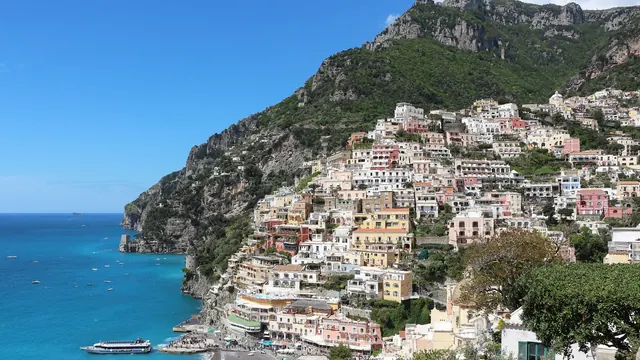
Heritage on the Amalfi Coast is spread over several towns, while on Korčula it sits almost entirely inside one set of walls, and the Italian side has more of it. Amalfi's striped Arab-Norman cathedral and its cloister date from the town's medieval years as a trading power at sea. Ravello has the gardens of Villa Rufolo and Villa Cimbrone, and the UNESCO-listed cliffs, with Positano and Atrani clinging to them, are worth the trip for the view alone. There are no big museums, so serious collections mean a day in Naples or at Pompeii.
Korčula Town packs its sights into a small peninsula: the herringbone street plan, St Mark's Cathedral with its Tintoretto, and the house the town says was Marco Polo's birthplace. Out west, the cave of Vela Spila above Vela Luka goes back to prehistory. Everything is well kept but compact, and a day or two is enough to see it all.
Nightlife
Neither is a place for going out. In both, evenings mean a long dinner and a drink with a view, then quiet. On the Amalfi Coast that means Positano's cocktail bars and the café tables on Amalfi's cathedral square, with Naples or Salerno for a proper night out. On Korčula it means bars on the old walls and towers facing the channel, or a boat to a livelier island if you want to party.
Nature & outdoors
The Amalfi Coast is far more dramatic, with the Lattari mountains dropping straight into the sea. The Path of the Gods above Positano, the waterfall gorge of the Valle delle Ferriere and kayaking past sea caves to the Grotta dello Smeraldo give walkers and paddlers much more to do. The protected waters off Punta Campanella and the Li Galli islets suit snorkellers and divers.
Korčula is softer and greener, with pine, olive groves and vineyards over a gentle ridge that suits easy cycling, plus kayaking among the islets. Its bigger outdoor draws are off the island: the climb up Sveti Ilija and the windsurfing strait at Viganj on Pelješac, and the saltwater lakes of Mljet.
Day trips
This is where the Amalfi Coast pulls well ahead. Pompeii and Herculaneum, Capri by ferry, Paestum's Greek temples and a full day in Naples are all within reach, so a beach stay easily becomes a sightseeing trip. The roads are slow, and the sea is often the quickest way out.
Korčula's outings are pleasant but smaller. You can visit the wineries of Pelješac, Ston's walls and oysters, the monastery on Mljet's lake and Hvar Town by catamaran. Dubrovnik and Split take close to three hours each way.
Good for families
Korčula is the easier island with children. Lumbarda's sandy, shallow bays give gentle swimming, children are welcome in every konoba, and short boat trips to the islets fill an afternoon.
The Amalfi Coast is built for couples: towns of steps, pebble beaches, a main road with long stretches and no pavement, and packed summer buses. Maiori and Minori are the exception, flatter and sandier. Neither has attractions made for children, so plan the days around the sea and boat trips.
Getting around
Each depends on a single main road, but Korčula's is far less of an ordeal. With a hired car or scooter you can reach the coves down its side roads, Korčula Town is easy on foot, and taxi boats link it with Lumbarda, the islets and Orebić. The catch is infrequent buses and fewer ferries outside the summer.
On the Amalfi Coast the cliff road jams for hours in summer, the buses fill quickly and driving yourself is stressful. From spring to autumn the ferries between Positano, Amalfi, Minori, Maiori and Salerno are the way round this, and within each town you climb stairs.
Shopping & style
The Amalfi Coast gives shoppers much more. Positano's lanes of linen boutiques and sandal makers, Amalfi's handmade paper and Vietri sul Mare's hand-painted majolica are worth buying, even if the waterfront souvenirs repeat themselves.
Korčula has no fashion streets, only a few craft and jewellery studios in the old town. The best things to take home are edible: Grk and Pošip wine, olive oil and the island's cukarini biscuits.
Affordability
Korčula is the cheaper of the two, though in July and August the old town still charges resort prices. Private apartments in Lumbarda or Vela Luka, konobas inland and wine bought at the cellar door keep costs down, and June and September are noticeably cheaper.
The Amalfi Coast in high season is among the most expensive coasts in Europe. Sea-view rooms in Positano and Ravello, sunbeds and private boats add up fast. Staying in Maiori, Minori, Atrani or Agerola and travelling by bus and ferry helps, and late September brings lower rates while the sea is still warm.
Live music & performing arts
Ravello gives the Amalfi Coast a real summer music season. Its festival puts orchestras on a stage built out over the cliff at Villa Rufolo, and a chamber series fills the town's churches and halls through the warm months. Elsewhere on the coast there are only church concerts and bands on feast days.
Korčula's offer is narrower but entirely its own: the Moreška sword dance in Korčula Town, older sword dances on village feast days, and unaccompanied klapa singing in squares and churches. Neither has theatre or opera, and on both the music belongs to summer.
Wellness & relaxation
The Amalfi Coast does slow time with more polish. Its cliffside hotels have spas with seawater pools and treatment rooms facing the gulf. Ravello's gardens stay calm above the beach crowds, and Atrani, Praiano and Conca dei Marini make quiet bases. For thermal bathing, Ischia's parks are a long ferry day away.
Korčula's version is plainer: hotel wellness areas around Korčula Town, and vineyard villages where shaded lunches and empty evenings make a slow week easy. On both, June and September are the calmest months.
When should you go?
Pick your month. The climate figures are measured averages, not a forecast.
Amalfi Coast in July
Korčula in July
Daytime high, °C
Rainfall in the month, mm
Where the figures come from
Amalfi Coast's temperatures are measured 65 km from the centre, at Grazzanise.
Amalfi Coast has no rain gauge within 25 km of the centre, so its rainfall comes from a gridded climate dataset read at the destination rather than from a gauge further away.
Korčula's temperatures are measured 69 km from the centre, at Mostar.
Korčula has no rain gauge within 25 km of the centre, so its rainfall comes from a gridded climate dataset read at the destination rather than from a gauge further away.
Temperature and rainfall are climate normals, averaged over the years shown. Amalfi Coast: 1991-2020 normals, Grazzanise (64.7 km from centre). Korčula: 1991-2020 normals, Mostar (69.2 km from centre).
Both are summer swimming destinations, and their seas warm and cool almost in step. On the Amalfi Coast the water is pleasant from June into early October and reaches about 26°C in August. Korčula's sea runs a degree or so cooler and is best from June to late September. July and August are hot in both places where most visitors stay. Korčula reaches 33°C, which makes midday walking hard, and the Amalfi Coast's 31°C is not much kinder on its stairways. May, June and September are the months for walking and sightseeing in both.
Both are dry in summer, and the rain returns in September. It falls harder on the Amalfi Coast, which gets about 143mm in November. Winters there are milder, with highs in the low teens. Korčula drops to around 9°C in January, so it is a cooler and quieter place in the off season.
Which traveller are you?
On a trip on a tight budget, the Amalfi Coast stretches the money thin even for careful travellers, with sunbeds, boats and waterfront meals adding up. Korčula lets it last longer, with village apartments, inland konobas and wine from the cellar door.
On a family trip with young children, the Amalfi Coast works only from flat, sandier Maiori or Minori. Elsewhere it means stairs and pebbles. Korčula is easier as long as you stay near Lumbarda, whose shallow, sandy bays give the island's gentlest swimming.
For an outdoors trip, the Amalfi Coast is the stronger choice. Mountains rise straight from the sea, so one week can mix serious cliff walking with paddling and snorkelling. Korčula suits gentle cycling, and most of its bigger outings need a ferry.
Before you go
| Measure | Amalfi Coast | Korčula |
|---|---|---|
| Official language | Italian | Croatian |
| Currency | Euro (EUR) | Euro (EUR) |
| Sockets | CFL230 V, 50 Hz | CF230 V, 50 Hz |
| Driving side | Right | Right |
| Time zone | UTC+1, UTC+2 in summer | UTC+1, UTC+2 in summer |
| Emergency number | 112 | 112 |
| Main airport | Naples International Airport (NAP)131 non-stop destinations | Dubrovnik Ruđer Bošković Airport (DBV)76 non-stop destinations |
| Public holidays this year | 13 days | 14 days |
By the numbers
| Measure | Amalfi Coast | Korčula |
|---|---|---|
| Swim season, months above 21 °C | 5 months | 5 months |
Where else could you go?
Every comparison below shares a destination with this one, so you can follow Amalfi Coast or Korčula somewhere new.
- Caprivs Amalfi Coast
- Naplesvs Amalfi Coast
- Bračvs Korčula
- Hvarvs Korčula
- Pugliavs Korčula
- Pugliavs Amalfi Coast