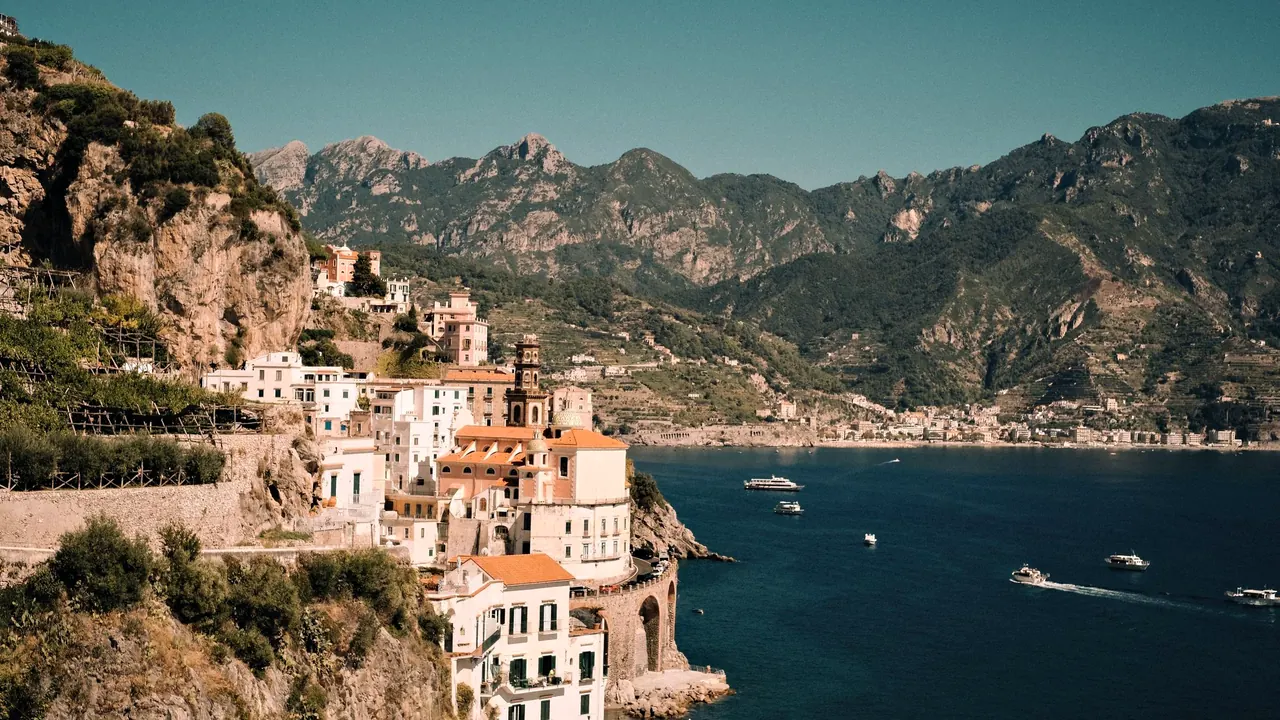
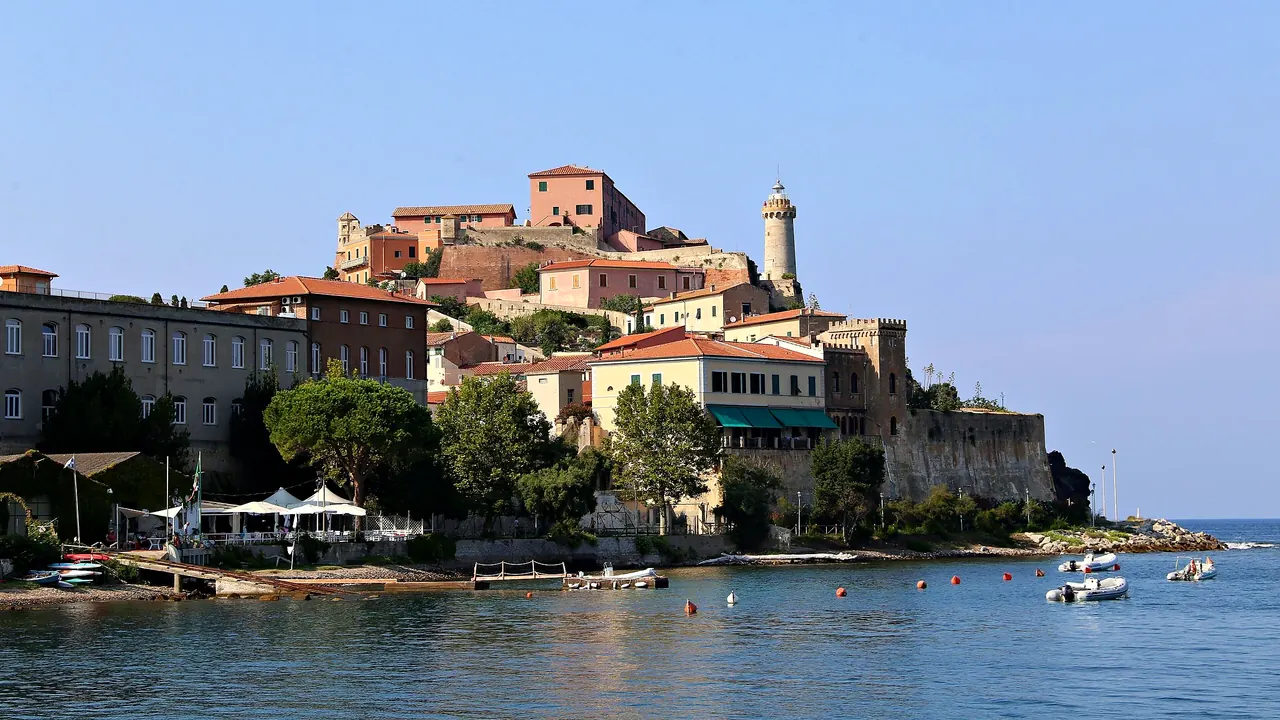
Photos: Amalfi Coast by Alina Chernii, Pexels License; Elba by Sailko, CC BY 3.0, cropped.
Amalfi Coast or Elba?
Our verdict in twelve categories, each scored against the same fixed benchmark cities, and the climate month by month, so you can choose for your trip.
Choose Amalfi Coast for
- day trips
- shopping
- live music and the arts
The Amalfi Coast suits travellers who want scenery and famous places close together, and who will pay for both. Couples and honeymooners come for the cliff towns, the terraces in Ravello and the long dinners. Walkers come for the Path of the Gods. Anyone who wants Pompeii, Capri and Naples within a day's reach is well placed here. The cooking is better, and the summer concerts in Ravello are something Elba cannot offer. You give up sand, room to spread out and any sense of ease: the towns are stairways and the single coast road jams.
Choose Elba for
- families
- prices
- beaches
Elba is the better choice for a proper beach vacation. It has pale sandy bays, gently shelving water and enough coast that a quiet cove is never far away. It suits families especially, and anyone happy to drive between beaches, stay in an apartment or campsite and keep costs in check. The trade-off is a smaller world. Outings beyond the island start with a ferry, and the food and sights are pleasant rather than memorable.
Scoreboard
Twelve categories on one fixed scale from 0 to 100. The shaded stretch is the gap between the two.
Your match
Pick a travel style or drag the sliders, and both match scores follow your weighting.
Wins on day trips and shopping with your weighting.
Wins on families and prices with your weighting.
What matters to you?
Category by category
What the scores mean for a trip.
Beaches & swimming
Swimming on the Amalfi Coast means deep, clear water under the cliffs rather than beaches to spread out on. The coves at Positano, Amalfi, Atrani and Furore are small and grey-pebbled, often filled with hired sunbeds and reached by boat or long stairways. Many visitors swim best from a hired boat anchored off the cliffs, and anyone who wants sand and room heads to Maiori or Minori.
Elba is the stronger beach destination, with about 150km of coast to choose from. In the south-west, Fetovaia, Cavoli and Seccheto have pale sand and turquoise shallows in granite bays, while Marina di Campo and Lacona give long, easy stretches. Even in August, a footpath or dirt track usually leads to a quieter cove.
Food & drink
The Amalfi Coast eats better and with more range. It has dishes you will not find elsewhere: Cetara's cured anchovies and colatura, fish baked in lemon leaves, the Sfusato lemon in everything and the sfogliatella of Conca dei Marini. Meals run from family trattorias in Minori and Agerola to grand terrace dining in Ravello.
Elba's Tuscan island cooking is honest but narrower. Cacciucco, stuffed squid and schiaccia briaca are worth seeking out in Capoliveri or Marciana. Its own Ansonica and Aleatico wines are the one area where it has the edge. Outside summer, though, many places close, and there is no fine dining to speak of.
Culture & sights
The Amalfi Coast has more to see. The striped cathedral and Cloister of Paradise in Amalfi recall a medieval maritime republic, and Villa Rufolo and Villa Cimbrone in Ravello add gardens with views over the gulf. The UNESCO-listed coast of stacked towns and lemon terraces is a sight in its own right.
Elba's history centres on Napoleon's brief exile: the Palazzina dei Mulini and the villa at San Martino. Add Portoferraio's Medici bastions, the Spanish fortress at Porto Azzurro and the mining museums, and you have good half-days between beach days. Neither place has a major museum.
Nightlife
Both are quiet after dark, and neither suits a party trip. On the Amalfi Coast the evening is a couples' affair: an aperitivo on a terrace, a few cocktail bars in Positano and café tables in Amalfi's cathedral square until about midnight.
Elba's summer nights are livelier and more family-filled, with the piazza at Capoliveri and the harbourfronts of Porto Azzurro and Marina di Campo busy past midnight. It also has a handful of open-air discos around Marina di Campo and Procchio on summer weekends, which the Amalfi Coast largely lacks. Both go quiet out of season.
Nature & outdoors
The Amalfi Coast offers the more dramatic outdoors. The Lattari mountains drop straight into the sea, and the Path of the Gods above Positano ranks among Europe's great coastal walks. Mule tracks link the lemon terraces, the Valle delle Ferriere hides waterfalls in a shaded gorge, and kayaks slip into sea caves along the cliffs.
Elba spreads its outdoors across a whole national park. You can take the open basket lift up Monte Capanne, about 1,000m, or walk the Grande Traversata Elbana along the ridges. It also does something Amalfi does not: rough mountain-bike tracks around Capoliveri. Both have clear water for snorkelling and diving, and both are best walked in spring and autumn.
Day trips
Here the gap is widest. From the Amalfi Coast, Pompeii and Herculaneum are a little over an hour away, ferries run to Capri, and Paestum's Greek temples and Naples, with its archaeological museum, each make a full day. Often the boat is the quickest way out.
Every outing from Elba begins with an hour's ferry to Piombino. Beyond it lie the Etruscan necropolis at Populonia, the hill towns of Campiglia Marittima and Suvereto, and the wine country around Bolgheri. Boats also run to Pianosa and Capraia. Pisa and Siena are too far for a comfortable day, so most visitors make one or two outings and otherwise stay on the island.
Good for families
Elba is the far better fit for children. The sandy bays at Marina di Campo, Lacona, Biodola and Procchio shelve gently enough for small children to paddle, and the campsites and apartments behind them are set up for families. The small aquarium and the open lift up Monte Capanne fill odd half-days. Winding roads and August heat are the main drawbacks.
The Amalfi Coast is built for couples. Its towns are hundreds of steps high, so pushchairs are of little use, and the coast road often has no pavement. Families who still choose it do best in flatter Maiori or Minori, with boat trips and the emerald grotto as the highlights.
Getting around
Neither is easy, but Elba is less of a struggle. The island is only about 27km long. With a car, scooter or e-bike you can reach any beach, though the twisting roads are slow and parking fills by mid-morning in August. The ferry crossing to get there needs booking in high season.
The Amalfi Coast depends on one narrow cliff road that jams for hours in summer, with crowded buses and almost no parking. Many visitors skip the car and use the ferries between Positano, Amalfi and Maiori, then go everywhere else on foot, mostly up stairs.
Shopping & style
The Amalfi Coast has the more distinctive shopping. Positano's lanes are full of linen resort clothing, and sandal makers there will fit a pair while you wait. Amalfi sells paper from its old mills, and Vietri sul Mare is the place for hand-painted majolica, from single tiles to whole dinner services.
On Elba, shopping is a pleasant part of the evening walk through Capoliveri or Portoferraio, with linen, beachwear and summer markets. The best souvenirs are edible or mineral: Aleatico wine, honey, schiaccia briaca and crystals from the old mines.
Affordability
Elba is the cheaper of the two, though neither is a bargain in summer. Elba is at its dearest in August, with the car ferry and car hire adding up. Still, it is a family resort rather than a glamorous one, and widespread campsites, apartments and inland trattorias keep costs down, especially in June and September.
The Amalfi Coast is among the most expensive shores in Europe. Sea-view rooms in Positano and Ravello, private boats and even a simple waterfront lunch cost well above the southern Italian norm. Basing yourself in Atrani or Agerola, and coming in late September, softens the bill rather than solving it.
Live music & performing arts
Neither has a theatre or a regular music scene, but the Amalfi Coast has one real draw. Ravello's summer festival puts orchestras on a stage built out over the cliff in the gardens of Villa Rufolo, and a chamber series fills the town's churches and halls on many evenings.
Elba offers only occasional summer concerts in squares, churches and the fortresses of Portoferraio, plus a classical festival of chamber music in late summer. Nobody should plan an Elba trip around them.
Wellness & relaxation
The two are roughly level for rest, but they offer different kinds of it. Elba has an actual bathing tradition: the thermal establishment at San Giovanni uses mud and seawater from the old salt pans. Otherwise, a farmhouse among the vineyards or a stay in Marciana in June or September does most of the work.
The Amalfi Coast has no springs of its own. Its spas belong to luxury cliffside hotels with seawater pools, and the calm comes from gardens and balconies in Ravello, Praiano or Conca dei Marini. Both become crowded and noisy rather than restful in August.
When should you go?
Pick your month. The climate figures are measured averages, not a forecast.
Amalfi Coast in July
Elba in July
Daytime high, °C
Rainfall in the month, mm
Where the figures come from
Amalfi Coast's temperatures are measured 65 km from the centre, at Grazzanise.
Amalfi Coast has no rain gauge within 25 km of the centre, so its rainfall comes from a gridded climate dataset read at the destination rather than from a gauge further away.
Elba's temperatures are measured 62 km from the centre, at Grosseto.
Elba has no rain gauge within 25 km of the centre, so its rainfall comes from a gridded climate dataset read at the destination rather than from a gauge further away.
Temperature and rainfall are climate normals, averaged over the years shown. Amalfi Coast: 1991-2020 normals, Grazzanise (64.7 km from centre). Elba: 1991-2020 (sunshine 1961-1990) normals, Grosseto (61.7 km from centre).
Through the year the two follow almost the same temperature curve. Both reach about 31°C in July and August, which is good for the sea but hard going on steep paths and stairways by midday. May, June and late September are the comfortable months for walking and sightseeing in either place. On both the sea is warm enough for swimming from June to late September and peaks at about 26°C off the Amalfi Coast in August. Amalfi's water holds its warmth slightly better into early October. Summer sunshine is long and reliable in both, a little more so around Amalfi.
The real difference is rain. Measured around the main towns, the Amalfi Coast turns wet from September, and November brings about 143mm, so late autumn and winter there are often grey and damp. Elba, measured on its resort coast, stays drier all year, peaking at around 92mm in November. That makes it the steadier choice for a spring or autumn walking trip, although its winter sea is just as cold and beach life stops in both.
Which traveller are you?
On a family trip with young children, Elba is far easier. Marina di Campo, Lacona and Biodola have sand that shelves gently and family campsites behind it. On the Amalfi Coast, stairways, pebble coves and a road with long stretches of no pavement wear parents down.
For a culture and arts trip, choose the Amalfi Coast. Amalfi's cathedral and Ravello's villas are on the doorstep, as are the summer concerts at Villa Rufolo, with Pompeii, Herculaneum and Naples a day away. Elba has Napoleon and its forts, and little more.
On a trip on a tight budget, Elba stretches the money further. It has self-catering apartments and campsites, inland trattorias, and a June or September sea that costs less. Even if you stay in Maiori or up in Agerola, the Amalfi Coast stays among Europe's priciest shores.
Before you go
| Measure | Amalfi Coast | Elba |
|---|---|---|
| Official language | Italian | Italian |
| Currency | Euro (EUR) | Euro (EUR) |
| Sockets | CFL230 V, 50 Hz | CFL230 V, 50 Hz |
| Driving side | Right | Right |
| Time zone | UTC+1, UTC+2 in summer | UTC+1, UTC+2 in summer |
| Emergency number | 112 | 112 |
| Main airport | Naples International Airport (NAP)131 non-stop destinations | Pisa International Airport (PSA)82 non-stop destinations |
| Public holidays this year | 13 days | 13 days |
By the numbers
| Measure | Amalfi Coast | Elba |
|---|---|---|
| Population | - | 32,000 |
| People per km² | - | 143 |
| Swim season, months above 21 °C | 5 months | 4 months |
Where else could you go?
Every comparison below shares a destination with this one, so you can follow Amalfi Coast or Elba somewhere new.
- Caprivs Amalfi Coast
- Naplesvs Amalfi Coast
- Procidavs Amalfi Coast
- Ischiavs Amalfi Coast
- Tuscanyvs Elba
- Cinque Terrevs Elba