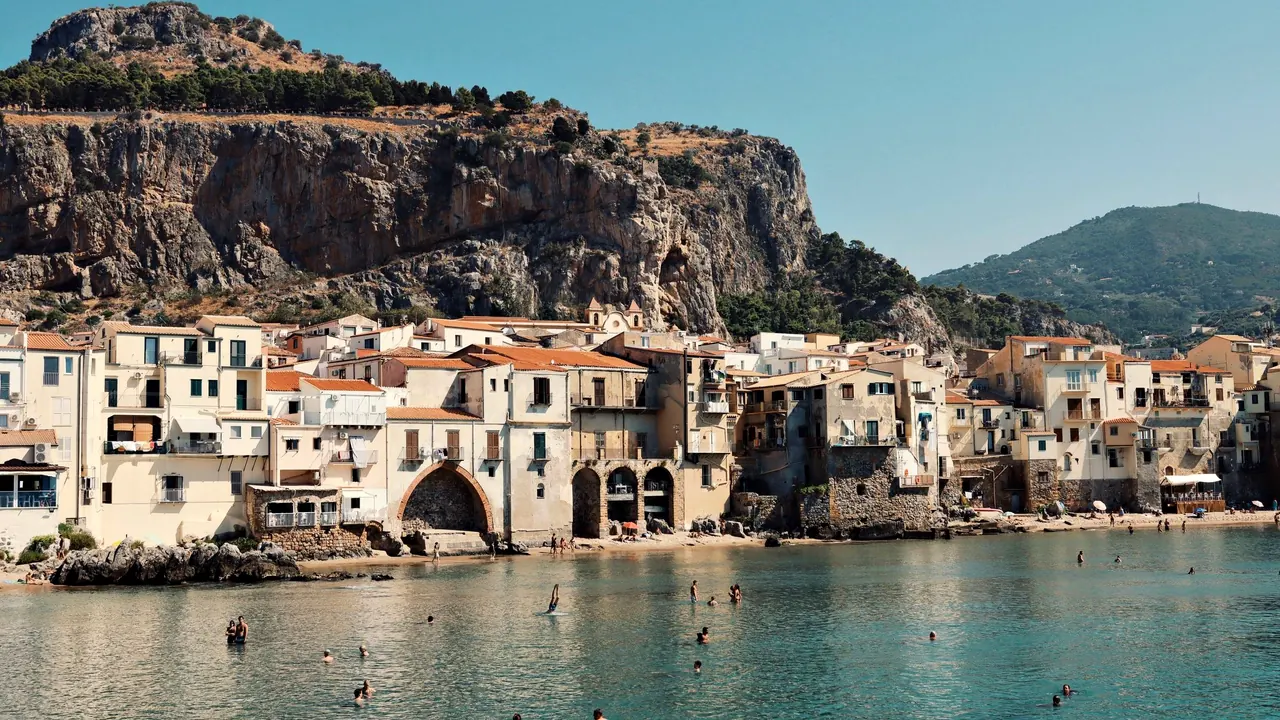
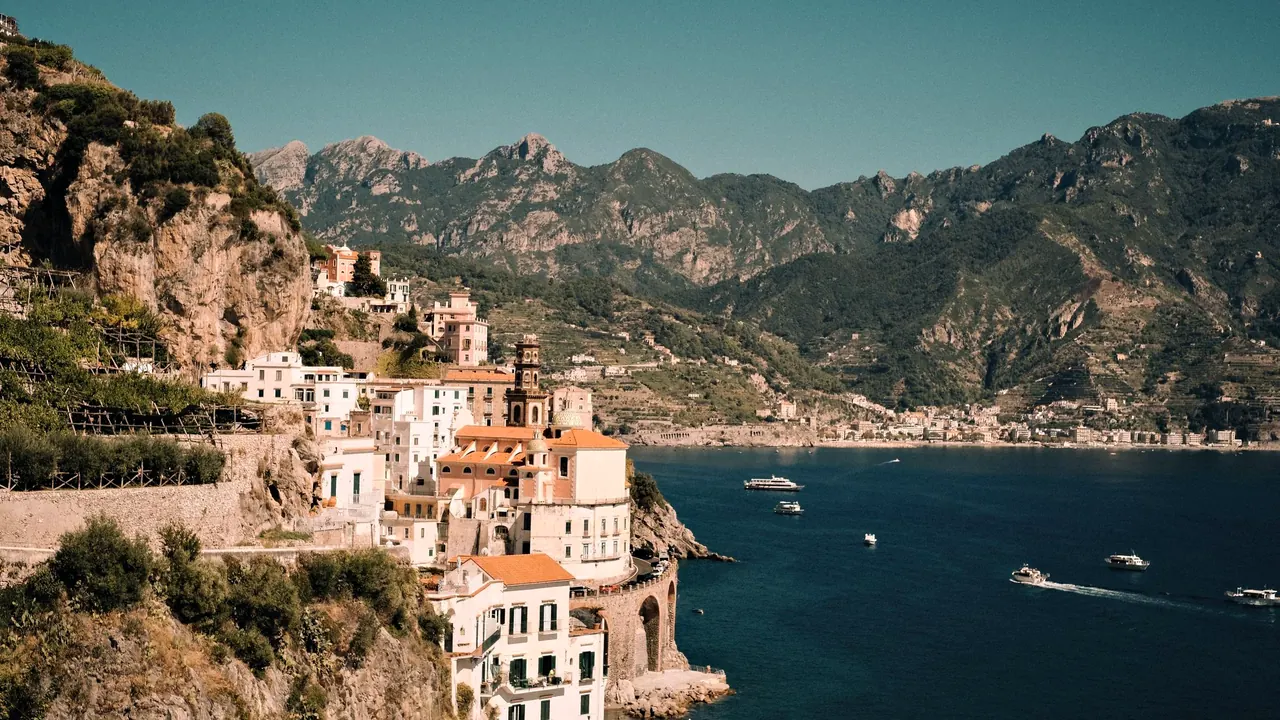
Photos: Sicily by Efrem Efre, Pexels License; Amalfi Coast by Alina Chernii, Pexels License.
Sicily or Amalfi Coast?
Our verdict in twelve categories, each scored against the same fixed benchmark cities, and the climate month by month, so you can choose for your trip.
Choose Sicily for
- prices
- culture and sights
- nightlife
Sicily is the bigger, cheaper and deeper trip. Greek temples, Arab-Norman mosaics and baroque hill towns, street food in Palermo's markets, sandy bays for children and a proper opera season make it the better pick for culture lovers, food lovers, families and anyone watching the budget. The condition is that you are happy to hire a car and move between two or three bases.
Choose Amalfi Coast for
- shopping
- day trips
- wellness
Choose the Amalfi Coast for a compact, scenic stay where you settle in one cliffside town and let ferries and footpaths do the rest. It suits couples and walkers who want the Path of the Gods, swimming from a boat below the cliffs, and Pompeii, Capri and Naples within a day's reach. In return you accept high prices, endless steps and quiet evenings.
Scoreboard
Twelve categories on one fixed scale from 0 to 100. The shaded stretch is the gap between the two.
Your match
Pick a travel style or drag the sliders, and both match scores follow your weighting.
Wins on prices and culture and sights with your weighting.
Wins on shopping and day trips with your weighting.
What matters to you?
Category by category
What the scores mean for a trip.
Beaches & swimming
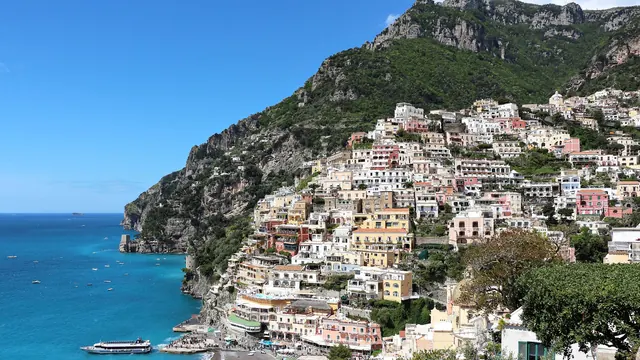
On the Amalfi Coast the swimming is superb but the beaches are not. They are small grey-pebble coves at Positano, Amalfi, Atrani and Furore, packed with hired sunbeds and often reached by boat or long stairways. Only Maiori and Minori give you sand and room to spread out.
Sicily offers far more range. There is the long white crescent of San Vito Lo Capo, wide sand near Marina di Ragusa and the reserve beaches of Vendicari, and offshore the turquoise coves of Favignana and the black volcanic shores of the Aeolians. For a vacation built around the beach, the island wins easily.
Food & drink
Amalfi's cooking is narrow and very good at what it does: scialatielli with clams, fish baked in lemon leaves, Cetara's anchovies and colatura, and limoncello from the big Sfusato lemons. The catch is the waterfront in Positano and Amalfi, where menus are pitched at day-trippers, so the better meals are uphill or one town along.
Sicily's table is richer and more varied, shaped by Greek, Arab, Norman and Spanish cooks. You can eat panelle and arancine standing at the Ballarò stalls, have granita with brioche, fish couscous in Trapani and Modica's grainy chocolate, and taste wine on Etna's slopes, mostly at fair prices. Away from the cities and resorts the choice thins quickly.
Culture & sights
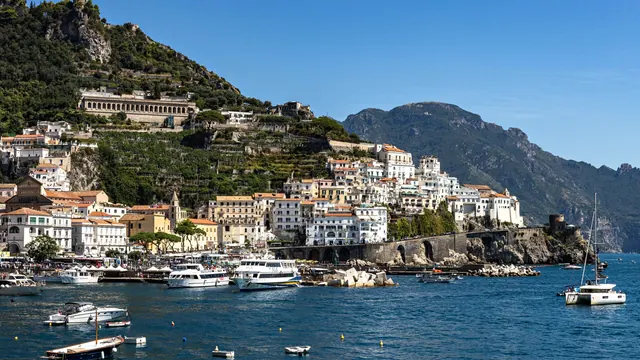
The Amalfi Coast's heritage is that of a medieval sea republic: Amalfi's striped cathedral and Cloister of Paradise, Ravello's villa gardens and a Roman villa at Minori. Its greatest sight is the stacked, UNESCO-listed landscape itself, and it has no major museums.
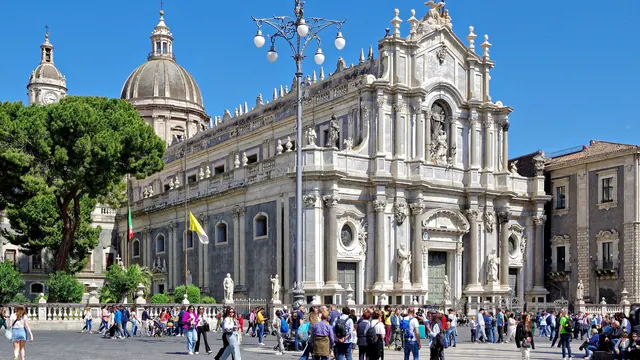
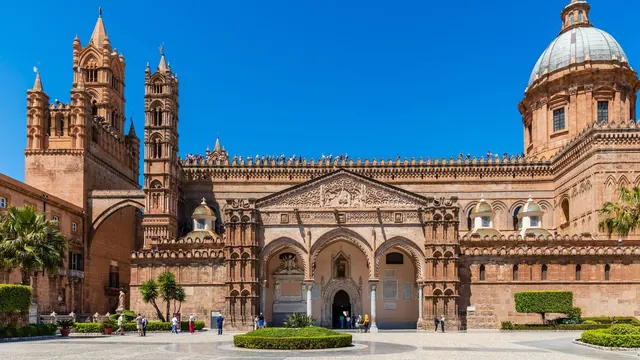
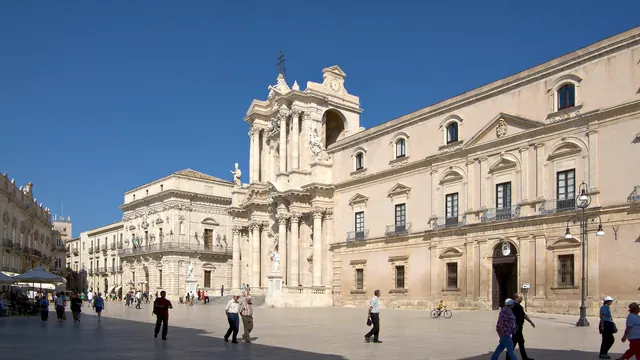
Sicily is in another league. The Valley of the Temples, Segesta, Ortigia's cathedral built around a Greek temple, the mosaics of Monreale and Piazza Armerina and the baroque towns of Noto and Ragusa Ibla add up to one of Europe's deepest layers of history. Seeing it properly takes about a week and several bases.
Nightlife
Neither is a party destination, but Sicily at least has some nightlife. Catania's historic centre fills with students and locals in its bars until late, Palermo drinks in the street around the Vucciria, and in summer there are open-air clubs at Mondello and below Taormina.
On the Amalfi Coast an evening means an aperitivo with a view, dinner on a terrace and a stroll through Amalfi's cathedral square. Positano's few cocktail bars are about as late as it gets, and in winter much of the coast shuts early.
Nature & outdoors
Both are outstanding outdoors, in very different ways. The Amalfi Coast is a single, concentrated drama of the Lattari mountains falling into the sea, with the Path of the Gods, the waterfall gorge of the Valle delle Ferriere, and sea caves and snorkelling around Li Galli, all within a few miles of your room.
Sicily's landscapes are volcanic and spread out. You can walk Etna's lava fields with a guide, climb Stromboli at dusk to watch it erupt, follow the Zingaro cliff path, walk in the beech woods of the Madonie and watch the flamingos at Vendicari. It covers more ground and needs more driving, and in both places midsummer is too hot for serious walking.
Day trips
The Amalfi Coast has the more famous names on its doorstep. Pompeii and Herculaneum are a little over an hour away, Capri is a ferry ride, and Paestum's temples and the archaeological museum of Naples each make a full day. Because the roads are slow, the sea is often the quickest way out.
Sicily also has plenty of day trips, but they are mostly to other parts of the island: from Syracuse to Modica and Marzamemi, from Palermo to Cefalù and Erice, and by ferry to Favignana or Lipari. Many are easier with a car, and the biggest sights often deserve a base of their own rather than a day.
Good for families
Sicily is much easier with children. Sicilian families keep theirs out late, so visiting ones fit in without fuss. Shallow sandy bays at San Vito Lo Capo and Mondello, agriturismi with pools, Etna's lava fields and Palermo's puppet theatre give children plenty to enjoy.
The Amalfi Coast is built vertically. Hundreds of steps make pushchairs close to useless, the beaches are pebble and the main road often has no pavement. Families who still choose it do best in flatter Maiori or Minori, with boat trips and the emerald grotto as the highlights.
Getting around
Both are awkward, for opposite reasons. On the Amalfi Coast everything hangs on one narrow cliff road that jams in summer, so most visitors skip the car and use the ferries, which double as sightseeing, then walk up and down stairs within each town.
Sicily is too big for that and nearly always means a hire car. Motorways link the main cities, but inland roads are slow, city driving is chaotic, and the trains are sparse away from a few coastal routes. You can manage without a car using two city bases, but you will see much less.
Shopping & style
The Amalfi Coast is slightly the better place to shop, because so much is made on the spot. Positano's lanes sell loose linen in summer colours and sandals fitted while you wait, Amalfi has its handmade paper, and Vietri sul Mare sells majolica, from single tiles to whole dinner services.
Sicily's shopping is spread more widely and is more often edible: Bronte pistachio cream, Modica chocolate, Pantelleria capers and Marsala wine. It also has Caltagirone's ceramics, Trapani's coral work and, for fashion, Via Libertà in Palermo.
Affordability
This is where the two differ most. In high season the Amalfi Coast is among the most expensive stretches of coast in Europe, with sea-view rooms in Positano and Ravello, sunbeds, private boats and even a simple waterfront lunch all costing heavily. Staying in Maiori, Atrani or Agerola and coming in late September softens it.
Sicily is one of the cheaper parts of Italy. Street food and pastry cost little, and B&Bs and agriturismi stay fairly priced even in summer. The costly exceptions are Taormina, the Aeolian Islands and high-season car hire.
Live music & performing arts
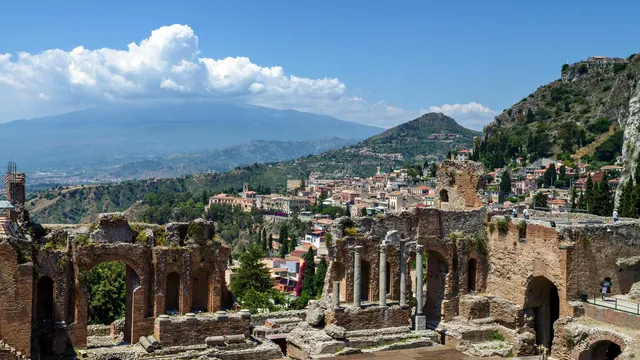
Sicily has a real performing-arts calendar. Palermo's Teatro Massimo runs full seasons of opera and ballet, Catania honours Bellini in its theatre, Greek tragedies are staged in the ancient theatre of Syracuse, and summer concerts play in Taormina's Greek theatre with Etna behind. Its marionette theatre, the opera dei pupi, has no equivalent on the mainland coast.
The Amalfi Coast has one great draw: Ravello's summer festival, with orchestras on a stage built out over the cliff at Villa Rufolo, plus a chamber series in the town's churches. Beyond Ravello in summer there is very little.
Wellness & relaxation
The two are about even here, and in both the restoration comes from the slow pace more than from spas. On the Amalfi Coast the spas belong to the luxury cliffside hotels, with seawater pools over the gulf, and Ravello, Praiano and Atrani are the calm bases. The nearest real thermal waters are on Ischia, a long ferry day away.
Sicily has natural sources of its own, though no bathing culture around them. There are hot springs near Sciacca and Segesta, volcanic mud on Vulcano and Pantelleria's crater lake. Unwinding here more often means an agriturismo among olive groves, or quiet Salina.
When should you go?
Pick your month. The climate figures are measured averages, not a forecast.
Sicily in July
Amalfi Coast in July
Daytime high, °C
Rainfall in the month, mm
Where the figures come from
Sicily's sunshine is measured 67 km from the centre, at Ustica.
Amalfi Coast's temperatures are measured 65 km from the centre, at Grazzanise.
Amalfi Coast has no rain gauge within 25 km of the centre, so its rainfall comes from a gridded climate dataset read at the destination rather than from a gauge further away.
Temperature and rainfall are climate normals, averaged over the years shown. Sicily: 1991-2020 normals, Palermo / Punta Raisi (24.1 km from centre). Amalfi Coast: 1991-2020 normals, Grazzanise (64.7 km from centre).
Around the Amalfi towns the swimming season runs from June to early October, when the sea is warm and summer is almost dry. July and August reach 31°C, which makes the stairways and the Path of the Gods hard work by midday, so May, June and September are the months for walking. The rain returns in September and builds to a wet November of 143mm, making winter a grey, damp time to visit.
Measured on the coast where most visitors stay, Sicily follows the same pattern but is drier and sunnier in high summer. July has barely 6mm of rain, and by August the sea reaches 27°C, slightly warmer than on the Amalfi side. Winters are a touch milder too, around 15°C in January, which leaves room for a sightseeing trip in Palermo or the baroque south east. For temples and hill towns, though, April, May and October are kinder than the midsummer heat.
Which traveller are you?
On a culture and arts trip, Sicily fills a week: mornings at Greek sites, afternoons in baroque hill towns, an evening at the opera in Palermo. The Amalfi Coast's sights take a couple of days, and its big collections mean going to Naples.
For a trip on a tight budget, Sicily lets you lunch at market stalls, sleep in family-run B&Bs and take intercity buses between the cities without counting every coin. On the Amalfi Coast, even a modest stay needs off-season dates and a room up in the hills.
On a shopping trip, the Amalfi Coast lets you browse slowly on foot. You can walk one town's lanes in the morning, take a ferry to the next after lunch and buy from the workshops themselves. In Sicily the good buys are spread across the island, and most are edible.
Before you go
| Measure | Sicily | Amalfi Coast |
|---|---|---|
| Official language | Italian | Italian |
| Currency | Euro (EUR) | Euro (EUR) |
| Sockets | CFL230 V, 50 Hz | CFL230 V, 50 Hz |
| Driving side | Right | Right |
| Time zone | UTC+1, UTC+2 in summer | UTC+1, UTC+2 in summer |
| Emergency number | 112 | 112 |
| Main airport | Falcone–Borsellino Airport (PMO)106 non-stop destinations | Naples International Airport (NAP)131 non-stop destinations |
| Public holidays this year | 13 days | 13 days |
By the numbers
| Measure | Sicily | Amalfi Coast |
|---|---|---|
| Population | 4,983,478 | - |
| Swim season, months above 21 °C | 5 months | 5 months |
Where else could you go?
Every comparison below shares a destination with this one, so you can follow Sicily or Amalfi Coast somewhere new.
- Caprivs Amalfi Coast
- Naplesvs Amalfi Coast
- Procidavs Amalfi Coast
- Ischiavs Amalfi Coast
- Aeolian Islandsvs Sicily
- Pugliavs Amalfi Coast