Italy
Syracuse, Sicily
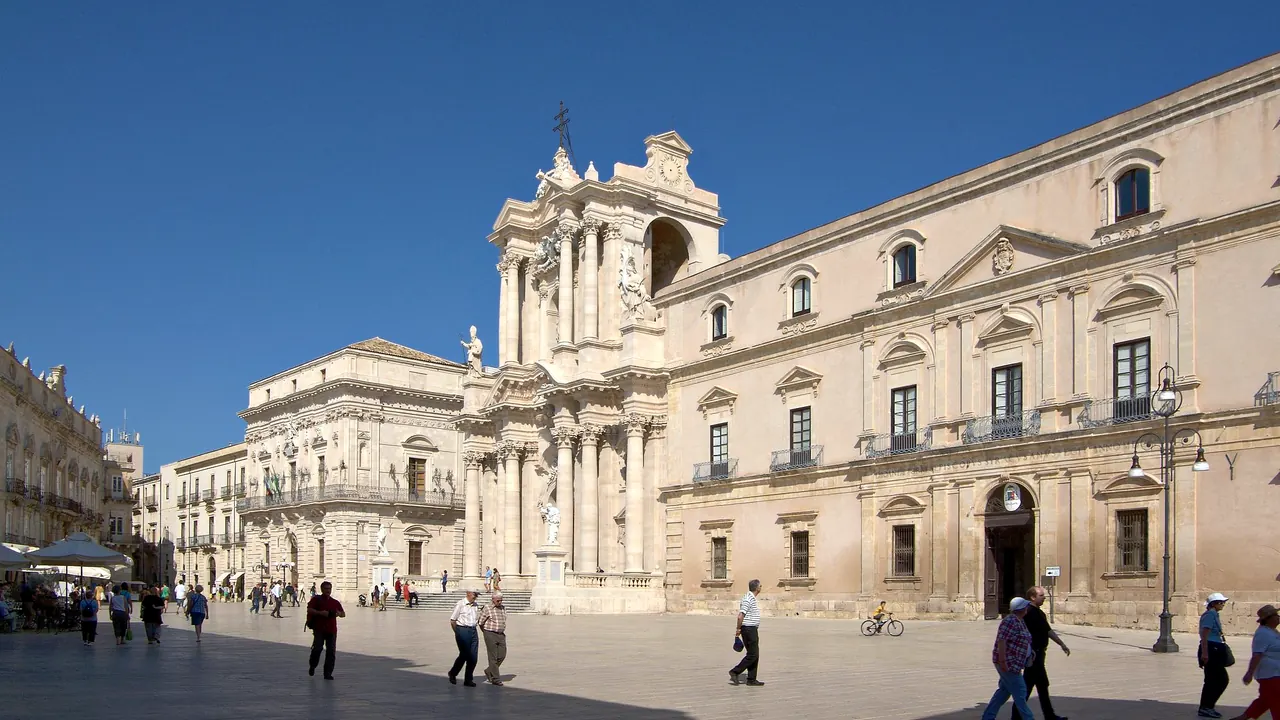
The cathedral on the Piazza Duomo in Ortigia
- Day trips86
- Beaches78
- Culture & sights78
Photo: Berthold Werner, CC BY-SA 3.0, cropped
Match
57
Every category weighted equally
- Beach & sun60
- Culture & arts57
- Food & nightlife53
- Family trip61
- Outdoors65
- Relax & unwind59
- Shopping & style53
- On a budget57
Syracuse, Sicily in twelve categories
Our verdict on each, scored 0 to 100 against the same fixed benchmark cities, so a score means the same thing on every page.
Beaches & swimming. Scores 78 out of 100.
Food & drink. Scores 68 out of 100.
Culture & sights. Scores 78 out of 100.
Nightlife. Scores 38 out of 100.
Nature & outdoors. Scores 72 out of 100.
Day trips. Scores 86 out of 100.
Good for families. Scores 55 out of 100.
Getting around. Scores 45 out of 100.
Shopping & style. Scores 35 out of 100.
Affordability. Scores 57 out of 100.
Live music & performing arts. Scores 33 out of 100.
Wellness & relaxation. Scores 40 out of 100.
Syracuse, Sicily category by category
Beaches & swimming
78Summer in Syracuse is lived partly in the water. On Ortigia, locals swim straight off the rocks and wooden platforms below the sea walls, with the old town at their backs, and the Ionian is clear and warm, around 26°C in August. South of the city the shore opens into sandy bays: Arenella and Fontane Bianche are the busy local beaches, with lidos and families, while the Plemmirio peninsula has small rocky coves.
The best swimming is about forty minutes south in the Vendicari reserve, where Calamosche and the reserve beaches are pale sand with no development behind them. The season runs comfortably from June to early October; in winter the sea is for looking at. A car makes the beaches far easier.
Food & drink
68Eating here is Sicilian through and through, and the morning market on Ortigia is where it starts: swordfish and tuna on ice, sea urchins, capers, wild fennel and piles of citrus, with stalls making sandwiches to order. From that come the dishes visitors seek out: pasta with sardines or sea urchin, spaghetti alla siracusana with anchovies, breadcrumbs and capers, raw prawns, rolled swordfish, arancini and caponata.
Breakfast in summer is almond or mulberry granita with a brioche, and pastry shops turn out cannoli and almond sweets. Wine is local and good value: Nero d'Avola from the vineyards to the south and the sweet Moscato di Siracusa. Ortigia has plenty of cheerful trattorias and a few ambitious kitchens, but the range is regional rather than international, and the most obvious piazza tables trade on the view.
Culture & sights
78Syracuse was one of the great cities of the Greek world, and it still shows. The cathedral on Ortigia is the clearest example: the Doric columns of a fifth-century BC temple to Athena are built into its walls, with a baroque façade facing one of the most beautiful squares in Italy. Around it the island is a dense web of baroque palaces and lanes, ending at the Fountain of Arethusa and the medieval Castello Maniace on the point.
On the mainland, the Neapolis archaeological park holds a huge Greek theatre cut into the rock, the cavern called the Ear of Dionysius and a Roman amphitheatre. The Paolo Orsi archaeological museum is among the finest in Italy, and Caravaggio's Burial of Saint Lucy and the catacombs of San Giovanni round out a set that rewards two or three full days.
Nightlife
38Evenings centre on Ortigia. People take an aperitivo in the piazzas or along the sea walls, then drift between small wine and cocktail bars in the lanes, and on summer weekends the island stays busy well past midnight. In July and August the beach clubs along the southern coast add some dancing.
That is about the extent of it. There are few proper clubs, the scene is aimed at a relaxed drink rather than a big night, and from November to March most nights end early. Those who want serious clubbing head up to Catania.
Nature & outdoors
72The countryside around Syracuse is more varied than it first looks. The Hyblaean plateau inland is cut by deep limestone gorges: at Cavagrande del Cassibile a steep path drops to a chain of green pools, and the Anapo valley below Pantalica has easy trails among rock-cut tombs. South along the coast, the Vendicari reserve combines dunes, saltpans and lagoons where flamingos and herons stop on migration, best in spring and autumn.
The sea itself is the other playground. The Plemmirio marine reserve is good for snorkelling and diving, and kayaks circle Ortigia's sea walls and caves. Boats also run up the Ciane river, lined with wild papyrus. Etna is about an hour and a half north for a day on the volcano. Summer heat makes midday hiking hard work.
Day trips
86Syracuse is an excellent base for south-eastern Sicily. Noto, about forty minutes away, is the showpiece of the baroque towns rebuilt after the earthquake of 1693, honey-coloured churches and palaces along one grand street. Further on, Modica with its chocolate tradition, Ragusa Ibla on its ridge and Scicli complete the UNESCO-listed Val di Noto group, each worth a day. Closer in, Palazzolo Acreide has a Greek theatre of its own, and Marzamemi is a small fishing village built around an old tuna works.
North, Catania is under an hour away, with its fish market and black lava baroque, and Taormina with its Greek theatre above the sea is around an hour and a half. The mosaics of the Villa Romana del Casale at Piazza Armerina reward a longer drive. A car makes most of this easier than buses.
Good for families
55Families do well here mainly thanks to the sea. The sandy beaches at Arenella and Fontane Bianche shelve gently and are popular with Sicilian families, and Ortigia's small size and largely car-free lanes make it a pleasant place to wander, with granita and gelato as rewards. Children usually enjoy the echoing Ear of Dionysius, the papyrus boat trips and a traditional puppet show.
There is little else built for children: no zoo, aquarium or theme park, and the archaeology needs some imagination at a young age. July and August are very hot, so sightseeing works best early and late, with the afternoon at the beach. Italian warmth towards children makes eating out with them easy.
Getting around
45The heart of a visit is easy. Ortigia is a small island you can cross on foot in fifteen minutes, connected to the mainland by two bridges, and the archaeological park and museum are a longish walk or short taxi ride away. Within that area a car is a burden, with restricted traffic zones and scarce parking.
Beyond it, things get harder. City buses exist but are infrequent and confusing for visitors, regional buses and slow trains reach Noto, Modica and Catania with limited service, and beaches like Vendicari or the gorges inland are realistically reached only by car. Most visitors who want to explore the region hire one for part of their stay.
Shopping & style
35Shopping is small-scale and mostly on Ortigia. The lanes hold a mix of souvenir shops and better finds: hand-painted Sicilian ceramics, linen, coral and silver jewellery, and papyrus paintings, a local craft tied to the plant that grows on the Ciane river. The morning market is the place for capers, almonds, dried tomatoes and pistachio products to take home.
The mainland Corso Gelone area has ordinary Italian high-street chains, but there is no luxury street or department store of note, and nobody comes here to shop seriously.
Affordability
57Syracuse is reasonably priced for a well-known Mediterranean destination. Eating is the best value: market sandwiches, arancini, granita and simple trattoria meals with local wine cost far less than in northern Italy, and site entry fees are moderate.
Accommodation is where costs climb. Ortigia's guesthouses and boutique hotels are in heavy demand from June to September, and staying on the island in August is not cheap. Mainland rooms and the shoulder seasons are much better value. Car hire and fuel, often needed for beaches and day trips, add a further layer.
Live music & performing arts
33One event sets Syracuse apart. Each late spring and early summer, classical Greek tragedies and comedies are staged in the ancient Greek theatre, a tradition running since 1914. Watching Aeschylus or Euripides at sunset on the stone seats where Greek audiences once sat is unforgettable. The plays are performed in Italian, but they are easy to follow for anyone who knows them.
Outside that season there is little to go to. Ortigia keeps the Sicilian puppet theatre alive, with knights from the Charlemagne legends fighting on the stages of small family-run theatres, and the municipal theatre has a modest programme. Summer adds a few outdoor concerts. There is no opera company, orchestra or regular jazz venue, so anyone who wants a fuller evening programme has to go to Catania.
Wellness & relaxation
40Syracuse has no thermal baths or bathing tradition of its own, and spa options are limited to treatments in the better hotels and a few day spas on Ortigia. Nobody comes here specifically for wellness.
What it offers is pace. Outside high summer, Ortigia is calm and unhurried, with long lunches, evening walks on the sea walls and sunsets over the harbour, and a slow few days here can be genuinely restful. In August, crowds and heat make it less so.
When should you go?
Pick a month to see what it is like. The climate figures are measured averages, not a forecast.
Syracuse, Sicily in July
Daytime high, °C
Rainfall in the month, mm
The whole year
Shaded against this city’s own year: the deepest cell is its best month for that figure and the palest its weakest.
Where the figures come from
Syracuse, Sicily's temperatures are measured 45 km from the centre, at Cozzo Spadaro.
Syracuse, Sicily has no rain gauge within 25 km of the centre, so its rainfall comes from a gridded climate dataset read at the city rather than from a gauge further away.
Temperature and rainfall are climate normals, averaged over the years shown. Syracuse, Sicily: 1991-2020 normals, Cozzo Spadaro (45 km from centre).
Before you go
| Measure | Syracuse, Sicily |
|---|---|
| Official language | Italian |
| Currency | Euro (EUR) |
| Sockets | CFL230 V, 50 Hz |
| Driving side | Right |
| Time zone | UTC+1, UTC+2 in summer |
| Emergency number | 112 |
| Elevation | 17 m |
| Main airport | Catania-Fontanarossa Airport (CTA)48 km from centre96 non-stop destinations |
| Public holidays this year | 13 days |
By the numbers
| Measure | Syracuse, Sicily |
|---|---|
| City population | 115,515 |
| People per km² | 556 |
| Museums within 10 km | 11 |
| UNESCO World Heritage sites within 50 km | 2 |
| Swim season, months above 21 °C | 5 months |
Compare Syracuse, Sicily with
Every comparison with a written verdict behind it.
- Amalfi
- Bari
- Bergamo
- Bologna
- Catania
- Como
- Cortina d'Ampezzo
- Florence
- Genoa
- La Spezia
- Lecce
- Lucca
- Matera
- Milan
- Naples
- Padua
- Palermo
- Pisa
- Portofino
- Positano
- Rome
- Salerno
- Siena
- Sorrento
- Taormina
- Trieste
- Tunis
- Turin
- Valletta
- Venice
- Verona