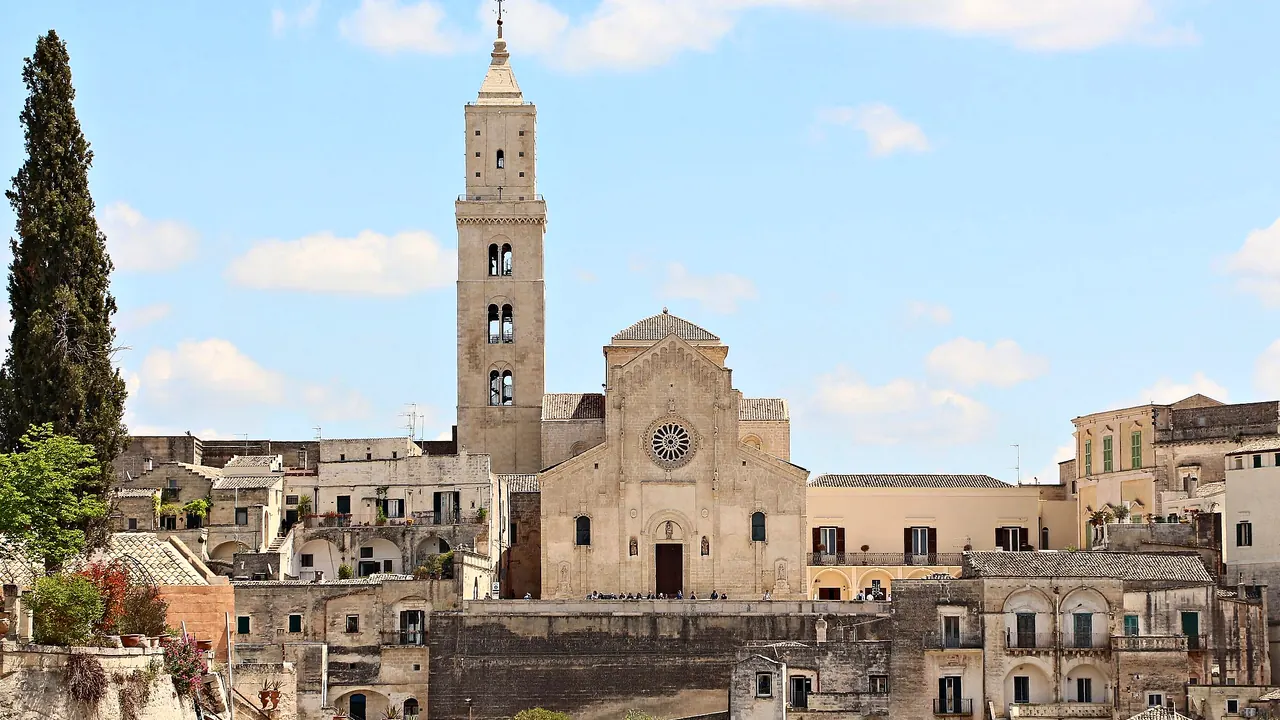
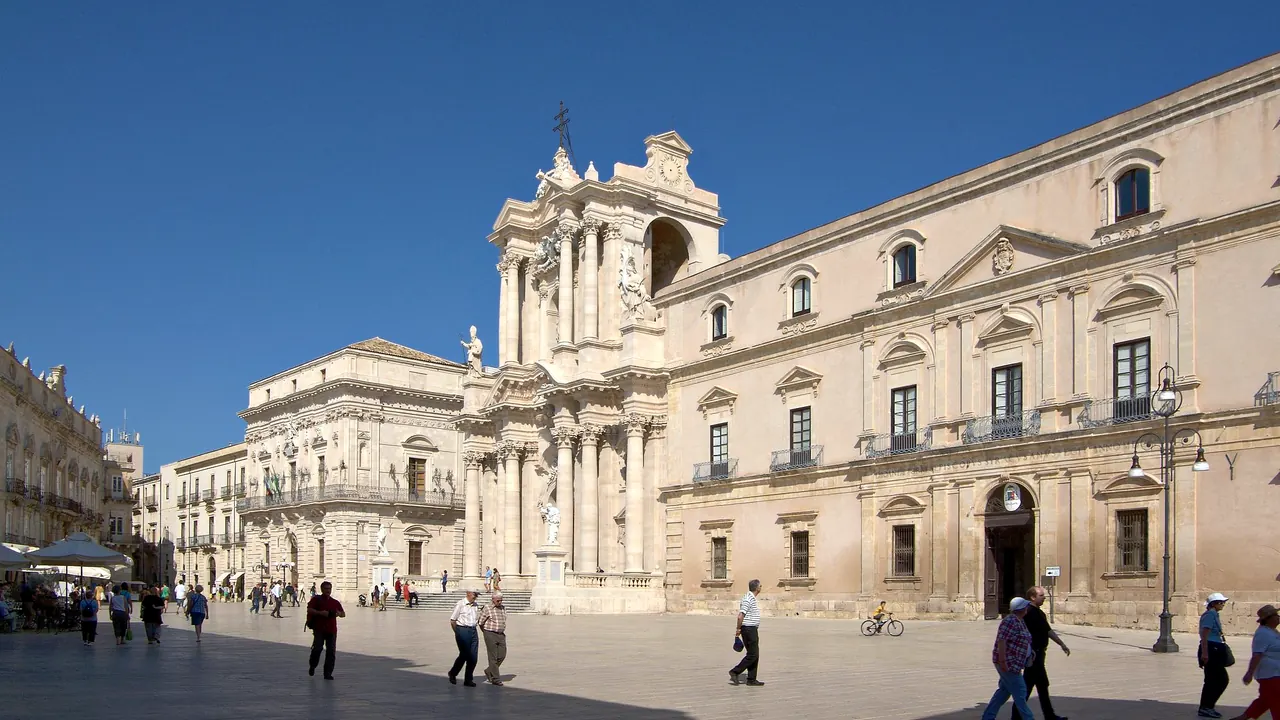
Photos: Matera by Bernard Gagnon, CC BY 4.0, cropped; Syracuse, Sicily by Berthold Werner, CC BY-SA 3.0, cropped.
Matera or Syracuse, Sicily?
Our verdict in twelve categories, each scored against the same fixed benchmark cities, and the climate month by month, so you can choose for your trip.
Choose Matera for
Matera does not lead in any category we score.
Matera suits travellers who want one extraordinary place and are happy to keep the rest of the trip simple. The cave districts of the Sassi, seen at dusk from a terrace or from the far side of the gorge, are unlike anywhere else in Italy. A day or two covers the town, and with a car it makes a natural stop on a road trip into Puglia, towards the trulli and the white towns. Come for the setting and the quiet. Don't expect beaches, nightlife or much for children.
Choose Syracuse, Sicily for
- beaches
- families
- food and drink
Syracuse is the better choice for a fuller vacation that mixes the sea with serious sightseeing. Here you can see a Greek theatre in the morning and swim off Ortigia's rocks in the afternoon, then spend the evening in the island's lanes. The food is more varied and the Val di Noto towns are within easy reach. Families, beach lovers and anyone staying a week will find more to fill the days.
Scoreboard
Twelve categories on one fixed scale from 0 to 100. The shaded stretch is the gap between the two.
Your match
Pick a travel style or drag the sliders, and both match scores follow your weighting.
Has no clear advantage with the weighting you have chosen.
Wins on beaches and families with your weighting.
What matters to you?
Category by category
What the scores mean for a trip.
Beaches & swimming
Beach life is the clearest difference between the two. Matera is inland, and the sandy, pine-backed beaches at Metaponto and Policoro are about 45 minutes away by car. The water there is calm and shallow, but it makes a day out rather than part of the routine, and most visitors never swim.
In Syracuse, summer revolves around the sea. People swim off wooden platforms right below Ortigia, families use the busy local beaches at Arenella and Fontane Bianche, and the undeveloped pale sand of Vendicari is a short drive south.
Food & drink
Matera's cooking is the plain peasant food of Basilicata: the horn-shaped durum loaf, crapiata soup, cavatelli and dried peppers fried until crisp, with Aglianico to drink. It's honest food, but the choice is narrow and there's no market or street food to explore.
Syracuse has more to eat and more ways to eat it. The morning market on Ortigia sells swordfish, sea urchins and sandwiches made to order. Pasta comes with sardines or anchovies and capers, and summer breakfasts are almond granita with a brioche. The seafood and pastry are what set it apart.
Culture & sights
Syracuse has the deeper and broader set of sights. The cathedral is built around the columns of a Greek temple, and the Neapolis park holds a rock-cut theatre and the Ear of Dionysius. The Paolo Orsi museum and a Caravaggio make up the rest, and together they need two or three days.
Matera's appeal is narrower but singular: a whole town of cave homes and rock churches with faded frescoes, lived in until the 1950s. Add the cistern under the main square and Carlo Levi's panorama of Lucanian life. It's less to see, but it's a kind of place you won't find elsewhere.
Nightlife
Neither city is for a big night out, but Syracuse has more going on. On summer weekends Ortigia's lanes and sea walls stay busy past midnight, and beach clubs on the southern coast add some dancing in July and August. Matera's evenings are a stroll along Via del Corso and a glass of wine overlooking the lit-up Sassi, and the town falls quiet soon after dinner outside the warm months.
Nature & outdoors
Matera's best walk starts from town. A path drops from Sasso Caveoso into the Gravina gorge and climbs to the Murgia plateau, past abandoned rock churches, with kestrels in the cliffs. The Lucanian Dolomites and Pollino are full-day drives.
Syracuse offers more variety. You can swim in the green pools at the bottom of Cavagrande gorge, watch flamingos on the Vendicari lagoons, snorkel in the Plemmirio marine reserve, take a boat up the papyrus-lined Ciane, or spend a day on Etna. It also adds water to the hill walking that Matera offers.
Day trips
Both make excellent bases, and both need a car. From Matera you can cross into Puglia for the trulli of Alberobello, Ostuni and the Valle d'Itria, Castel del Monte and Polignano a Mare. Nearer home are the ghost town of Craco and the mountain villages of Castelmezzano and Pietrapertosa.
Syracuse has the richer choice within easy reach. Noto, Modica, Ragusa Ibla and Scicli make up the UNESCO baroque group, and Catania and Taormina lie to the north. The mosaics at Piazza Armerina reward the longer drive.
Good for families
Neither city has anything built for children, and Matera feels it more. Older children tend to love the furnished cave houses, the walk through the cistern under the main piazza and the climb down into the gorge, but younger ones tire quickly, and on summer afternoons the bare stone offers little shade. A short stay works best, with a car for a day on the sandy Ionian shore.
Syracuse has no zoo, aquarium or theme park either, and the Greek ruins mean little to a small child. What makes it easier is the shape of the day: sightseeing early and late, the hot afternoon by the sea, and evenings in Ortigia's car-free lanes with a granita or gelato as the reward. Children are welcome at the table in both cities, but Syracuse's relaxed trattorias, arancini and market sandwiches make eating out with them especially easy.
Getting around
They are much alike: a walkable core and a car for everything beyond it. What differs is the terrain. Ortigia is flat and you can cross it in fifteen minutes, while Matera's Sassi are reached by steep stairways that tire the legs. For longer journeys, Syracuse at least has regional trains and buses to Noto and Catania, whereas Matera sits off the national rail network, with only a slow narrow-gauge line to Bari.
Shopping & style
Neither is a shopping destination, though Ortigia's lanes have more worth buying. Look for hand-painted Sicilian ceramics, linen, coral jewellery and papyrus paintings, plus capers, almonds and pistachio from the market. Matera's crafts are on a smaller scale: the painted cuccù whistle, tufa-stone models of the Sassi and papier-mâché. Its dried peppers and bottles of Aglianico are the best things to take home.
Affordability
Costs are much the same, and in both cities they follow the same pattern: food is cheap and the most sought-after rooms are not. In Matera the premium is for cave hotels in the Sassi, and a guesthouse in the upper town saves a good deal. In Syracuse it's Ortigia in high summer, so a mainland room or a shoulder-season visit is the way to save. In both, budget for a hire car if you want to see the region.
Live music & performing arts
Syracuse has one great event: each late spring and early summer, Greek tragedies and comedies are staged in the ancient theatre, a tradition running since 1914. The rest of the year, Ortigia's family-run puppet theatres keep the Charlemagne legends alive.
Matera's calendar is thinner: conservatory concerts, a summer jazz festival among the Sassi, and the Festa della Bruna, when a papier-mâché float is torn apart at the end of the procession.
Wellness & relaxation
Neither has thermal baths, and both offer calm through their pace rather than treatments. The kind of calm differs. Matera's distinctive touch is the hotel spa set in candlelit cave rooms with pools cut into the rock, and quiet mornings in the Sassi. Syracuse relaxes you by the water, with evening walks on the sea walls, harbour sunsets and an unhurried swim, best outside the crowded heat of August.
When should you go?
Pick your month. The climate figures are measured averages, not a forecast.
Matera in July
Syracuse, Sicily in July
Daytime high, °C
Rainfall in the month, mm
Where the figures come from
Matera has no rain gauge within 25 km of the centre, so its rainfall comes from a gridded climate dataset read at the city rather than from a gauge further away.
Syracuse, Sicily's temperatures are measured 45 km from the centre, at Cozzo Spadaro.
Syracuse, Sicily has no rain gauge within 25 km of the centre, so its rainfall comes from a gridded climate dataset read at the city rather than from a gauge further away.
Temperature and rainfall are climate normals, averaged over the years shown. Matera: 2005-2025, 10 years observed (rainfall 1991-2020) normals, Matera / Martella (4.8 km from centre). Syracuse, Sicily: 1991-2020 normals, Cozzo Spadaro (45 km from centre).
Matera sits high on its plateau and has a real winter. Days are cold from December to February, around 10°C in January, and late autumn is the wettest stretch, with November the rainiest month. July and August are hot, about 32°C, on bare stone with little shade, so the most comfortable months for the Sassi and the gorge are May, June, September and early October. The Ionian coast it drives down to warms to swimming temperatures from June to September.
Syracuse is milder all year, with winter days in the mid-teens and an almost rainless summer. July gets barely any rain and the most sunshine of the year. The sea reaches about 26°C in August and stays warm into October, which gives the city a beach season Matera can't match from its doorstep. October brings the heaviest rain, and midsummer heat makes sightseeing an early-morning and evening job. For walking, spring and autumn suit both cities. Syracuse is also the better pick for a winter trip.
Which traveller are you?
For a beach and sun trip, choose Syracuse. You can swim off the rocks below Ortigia's sea walls, sandy bays lie just south and the Vendicari reserve is close by. From Matera, every swim means a drive down to the Ionian coast.
On a family trip with children, Syracuse is easier. Its beaches shelve gently, Ortigia's lanes are largely car-free, and there are papyrus boat trips and puppet shows. Matera's steep stone steps defeat pushchairs, and the town has nothing designed for children.
For a short city break, Matera is the more striking choice. It's compact, its sights cluster around the Sassi and the gorge, and two nights are enough to see it at dusk and at dawn. Syracuse rewards a longer stay than a weekend.
Before you go
| Measure | Matera | Syracuse, Sicily |
|---|---|---|
| Official language | Italian | Italian |
| Currency | Euro (EUR) | Euro (EUR) |
| Sockets | CFL230 V, 50 Hz | CFL230 V, 50 Hz |
| Driving side | Right | Right |
| Time zone | UTC+1, UTC+2 in summer | UTC+1, UTC+2 in summer |
| Emergency number | 112 | 112 |
| Elevation | 401 m | 17 m |
| Main airport | Bari Karol Wojtyła International Airport (BRI)54 km from centre104 non-stop destinations | Catania-Fontanarossa Airport (CTA)48 km from centre96 non-stop destinations |
| Public holidays this year | 13 days | 13 days |
By the numbers
| Measure | Matera | Syracuse, Sicily |
|---|---|---|
| City population | 59,685 | 115,515 |
| People per km² | 152 | 556 |
| Museums within 10 km | 8 | 11 |
| UNESCO World Heritage sites within 50 km | 1 | 2 |
| Swim season, months above 21 °C | 5 months | 5 months |
Where else could you go?
Every comparison below shares a destination with this one, so you can follow Matera or Syracuse, Sicily somewhere new.
- Cataniavs Syracuse, Sicily
- Barivs Matera
- Taorminavs Syracuse, Sicily
- Leccevs Matera
- Vallettavs Syracuse, Sicily
- Salernovs Matera