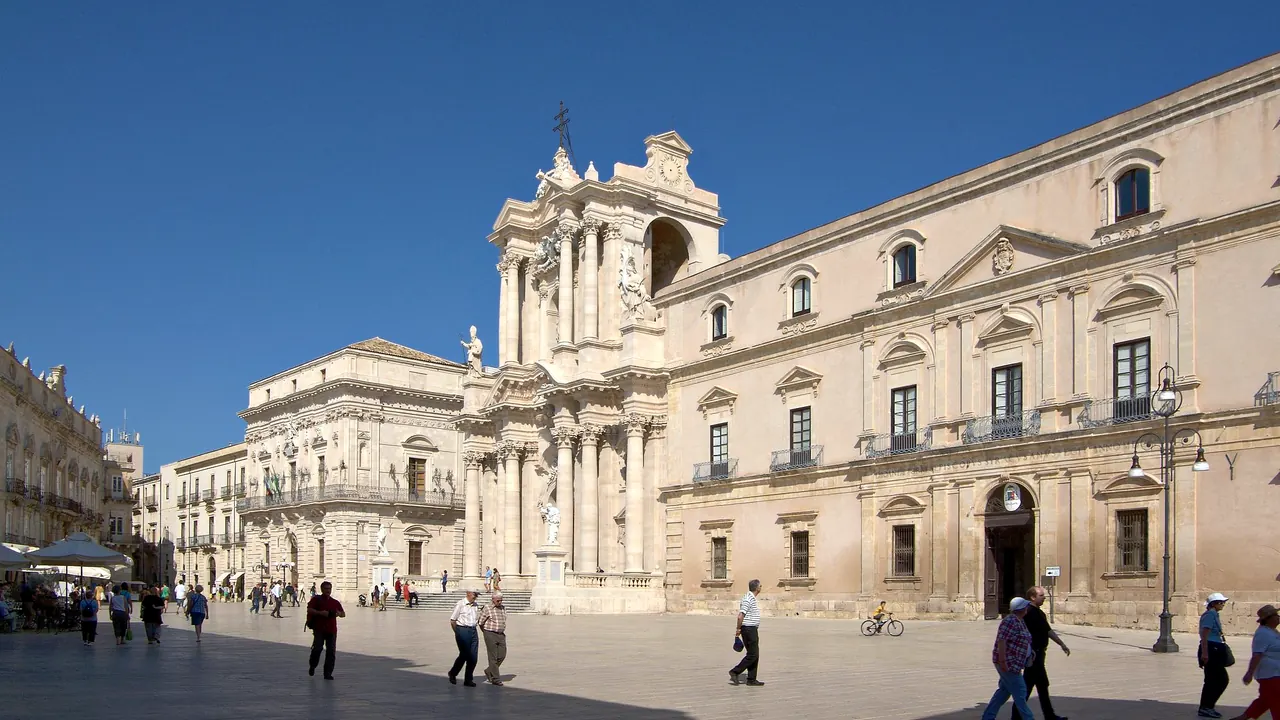
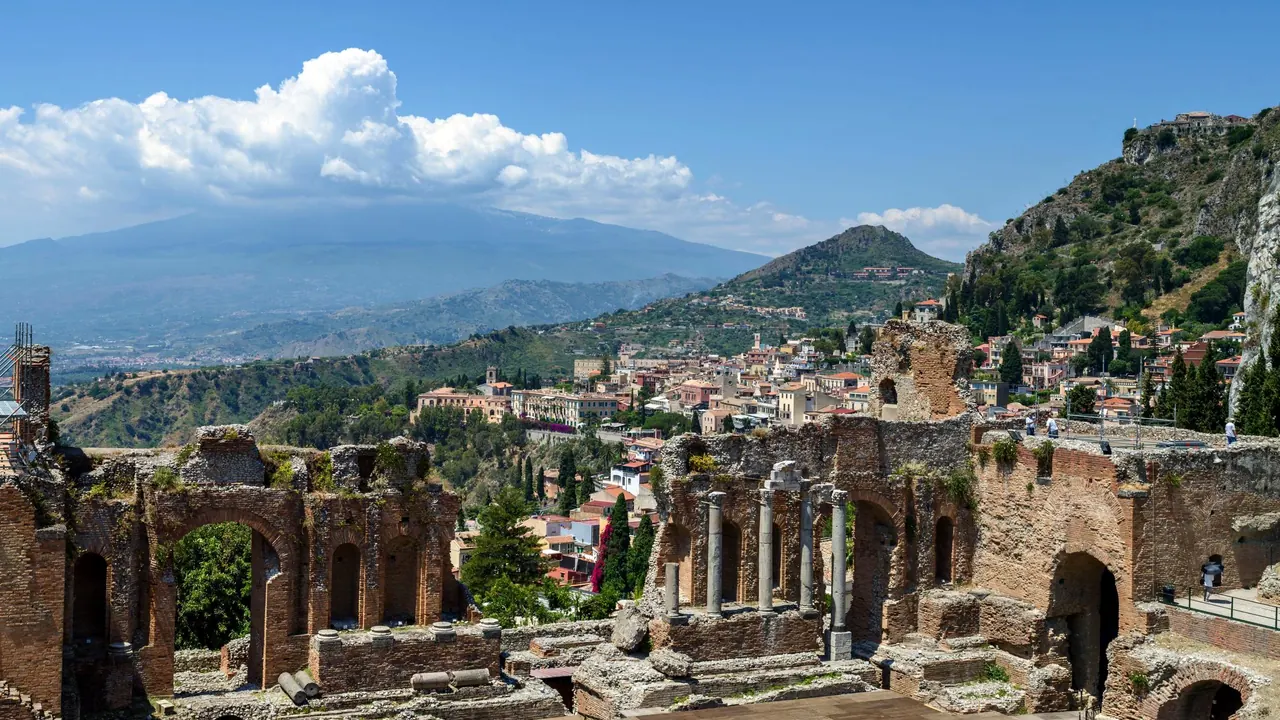
Photos: Syracuse, Sicily by Berthold Werner, CC BY-SA 3.0, cropped; Taormina by Reinhard Bruckner, Pexels License.
Syracuse, Sicily or Taormina?
Our verdict in twelve categories, each scored against the same fixed benchmark cities, and the climate month by month, so you can choose for your trip.
Choose Syracuse, Sicily for
- culture and sights
- prices
- families
Syracuse is the better choice for travellers who want substance and a sensible budget. Ortigia and the Neapolis park give it one of the richest sets of Greek and baroque sights in Sicily, and its market feeds a stronger everyday food scene. The sandy bays to the south suit children, and Noto and the other Val di Noto towns are close by. Rooms cost noticeably less, though you will want a hire car for the coast and the countryside.
Choose Taormina for
- getting around
- nature and the outdoors
- shopping
Taormina rewards those who come for the setting and the mountain. Etna, the Alcantara gorges and the Isola Bella reserve make it the stronger base for walking, volcano trips and snorkelling, and the coastal railway makes getting about easier than in Syracuse. Expect resort prices for those terrace views, and expect to have seen the town's own sights within a day.
Scoreboard
Twelve categories on one fixed scale from 0 to 100. The shaded stretch is the gap between the two.
Your match
Pick a travel style or drag the sliders, and both match scores follow your weighting.
Wins on culture and sights and prices with your weighting.
Wins on getting around and nature and the outdoors with your weighting.
What matters to you?
Category by category
What the scores mean for a trip.
Beaches & swimming
Syracuse has more sand and more choice. On Ortigia you can swim off rocks and wooden platforms right in town, Arenella and Fontane Bianche are proper sandy bays, and the undeveloped beaches of Vendicari are some of the finest on this coast, though you need a car for most of them.
Taormina's bays are better to look at than to spread out on. The water at Mazzarò and Isola Bella is glassy and good for snorkelling, but the beaches are narrow pebble strips crowded with loungers in summer. For longer stretches of sand you take the bus to Giardini Naxos or Letojanni.
Food & drink
Syracuse eats better day to day. The Ortigia market supplies swordfish, sea urchins and capers to the trattorias, dishes such as spaghetti alla siracusana are easy to find, and the wine comes from nearby: Nero d'Avola and the sweet Moscato di Siracusa.
Taormina has a refined top tier with sea views, and Etna wines appear on almost every list. Its main street leans on tourist menus, though, and the good everyday cooking is in the side streets or down in Giardini Naxos.
Culture & sights
This is where the two differ most. Syracuse was a great Greek city and it shows everywhere: a temple to Athena built into the cathedral, the baroque lanes of Ortigia, the rock-cut theatre and the Ear of Dionysius at Neapolis, the Paolo Orsi museum and Caravaggio's Burial of Saint Lucy.
Taormina has one magnificent sight, the Greek theatre with Etna framed through its broken stage, and a handsome medieval Corso with Palazzo Corvaja and the Duomo. It is lovely, but a slow day covers it, and there is no major museum.
Nightlife
Neither is a party town, but Syracuse stays up later. On summer weekends Ortigia's lanes stay busy past midnight, with people moving between small wine and cocktail bars, and in July and August the beach clubs to the south add some dancing.
Taormina's evenings are quieter: an aperitivo in Piazza IX Aprile, piano bars above the sea and a crowd of mostly couples and older visitors. Anyone looking for real clubs, from either town, ends up in Catania.
Nature & outdoors
Taormina has the more dramatic outdoors. Etna is close enough for crater walks, guided trips towards the summit and winter skiing, the basalt Alcantara gorges are nearby, and hill paths climb to Castelmola and Monte Tauro.
Syracuse's countryside is gentler but more varied than visitors expect: the green pools of Cavagrande, the trails of the Anapo valley, flamingos at Vendicari and papyrus along the Ciane. From Syracuse, Etna is a long day trip rather than the view from your window. Each town has a marine reserve for snorkelling.
Day trips
Syracuse sits in the middle of the baroque south-east. Noto is about forty minutes away, and Modica, Ragusa Ibla and Scicli each make an easy day. Catania, and Taormina itself, are within reach to the north.
Taormina's options are good but further apart. Catania and the wine villages on Etna's slopes are close, and Savoca and Forza d'Agrò are charming. But Syracuse is about two hours away, and the Val di Noto needs a very early start.
Good for families
Syracuse is easier with children. Its sandy beaches shelve gently, Ortigia is flat and largely car-free, and the echoing Ear of Dionysius, the papyrus boat trips and the puppet shows give some variety.
Taormina suits school-age children who will enjoy Etna and snorkelling. With toddlers, the steps, pebbly beaches and hotels aimed at couples make it hard work, which is why many families stay down in Giardini Naxos.
Getting around
Both have small centres you can cover on foot. Ortigia is flat, while in Taormina stairways are part of every outing. The bigger difference is getting further out. Taormina has a cable car down to the beaches, buses to Castelmola, and the coastal railway and regional coaches to Catania, its airport, Messina and Syracuse.
In Syracuse the city buses are infrequent and confusing for visitors, and the regional trains are slow. Vendicari, the gorges and most of the baroque towns really need a hire car.
Shopping & style
Neither is worth a trip for shopping, and the difference is mostly in style. In Syracuse the finds are scattered through Ortigia's lanes and the morning market, including papyrus paintings made from the plant that grows on the Ciane. Taormina puts its jewellers, cameo dealers, lace shops and resort-wear boutiques along Corso Umberto, which is more polished but aimed squarely at visitors.
Affordability
Syracuse is much the cheaper base. Food is excellent value and mainland rooms are reasonably priced. Ortigia gets expensive mainly in high summer, especially August, and car hire adds to the total.
Taormina is the most expensive place to stay in eastern Sicily. Grand hotels set the tone, mid-range rooms are scarce in summer, and the bars and restaurants on the Corso charge resort prices. Sleeping in Giardini Naxos or Letojanni brings the bill down.
Live music & performing arts
Both owe their best evenings to an ancient theatre, but they use it differently. Syracuse stages classical Greek drama at Neapolis in late spring and early summer, a tradition since 1914, and Ortigia keeps Sicilian puppet theatre alive all year.
Taormina's theatre hosts summer concerts, opera, ballet and international pop acts with Etna behind the stage, and the town has a long-running film festival. Out of season, both send you to Catania for a fuller programme.
Wellness & relaxation
Neither town has thermal baths or a bathing tradition, and in August heat and crowds unsettle both, so the real choice comes in the other months. Syracuse rests you through its rhythm rather than its facilities. Ortigia is small enough that a day of swimming off the rocks, a slow lunch and a walk round the island's edge needs no planning at all, while spa treatments are a sideline in a few hotels.
Taormina suits a stay built around a spa. Its grand hotels treat wellness as part of the offer, with sea-view pools and treatments that use mud from the volcano, so pampering is easy to book without leaving the hotel. The town itself is at its gentlest in late spring and late September, when the gardens and terraces are quiet enough to enjoy.
When should you go?
Pick your month. The climate figures are measured averages, not a forecast.
Syracuse, Sicily in July
Taormina in July
Daytime high, °C
Rainfall in the month, mm
Where the figures come from
Syracuse, Sicily's temperatures are measured 45 km from the centre, at Cozzo Spadaro.
Syracuse, Sicily has no rain gauge within 25 km of the centre, so its rainfall comes from a gridded climate dataset read at the city rather than from a gauge further away.
Taormina's temperatures are measured 45 km from the centre, at Messina.
Taormina has no rain gauge within 25 km of the centre, so its rainfall comes from a gridded climate dataset read at the city rather than from a gauge further away.
Temperature and rainfall are climate normals, averaged over the years shown. Syracuse, Sicily: 1991-2020 normals, Cozzo Spadaro (45 km from centre). Taormina: 1991-2020 normals, Messina (45.1 km from centre).
Both towns share the same stretch of sea, so the swimming season is the same in each. The water is warm enough from June, reaches about 26°C in August and stays pleasant into early October. July and August are hot in both, with highs around 31°C, so midday sightseeing in Ortigia or on Taormina's stepped lanes is hard going. May, June and September are the most comfortable months for walking.
The difference shows in the cooler half of the year. Syracuse is the drier and sunnier of the two, with most of its rain falling between October and January. Taormina turns wet from September, with October and November each above 100mm, and it gets noticeably fewer sunny hours through the winter. For a spring or late-autumn trip with good light, Syracuse is the safer bet.
Which traveller are you?
On a culture and arts trip, Syracuse is the clear pick. The temple columns inside Ortigia's cathedral, the Neapolis theatre, the Paolo Orsi museum and a Caravaggio fill two or three days. Taormina's theatre and Corso take about one.
For an outdoors trip, Taormina has the edge. Etna's craters, lava flows and winter slopes are within an hour, and the Alcantara gorges are closer still. Paths climb to Castelmola, and the Isola Bella reserve below town is good for snorkelling and kayaking.
On a trip with a tight budget, Syracuse goes much further. Mainland rooms and shoulder-season stays are reasonable, and market sandwiches and trattoria meals cost little. Taormina charges resort prices for beds and dinners unless you sleep down in Giardini Naxos.
Before you go
| Measure | Syracuse, Sicily | Taormina |
|---|---|---|
| Official language | Italian | Italian |
| Currency | Euro (EUR) | Euro (EUR) |
| Sockets | CFL230 V, 50 Hz | CFL230 V, 50 Hz |
| Driving side | Right | Right |
| Time zone | UTC+1, UTC+2 in summer | UTC+1, UTC+2 in summer |
| Emergency number | 112 | 112 |
| Elevation | 17 m | 204 m |
| Main airport | Catania-Fontanarossa Airport (CTA)48 km from centre96 non-stop destinations | Catania-Fontanarossa Airport (CTA)47 km from centre96 non-stop destinations |
| Public holidays this year | 13 days | 13 days |
By the numbers
| Measure | Syracuse, Sicily | Taormina |
|---|---|---|
| City population | 115,515 | 10,471 |
| People per km² | 556 | 799 |
| Museums within 10 km | 11 | 5 |
| UNESCO World Heritage sites within 50 km | 2 | 2 |
| Swim season, months above 21 °C | 5 months | 5 months |
Where else could you go?
Every comparison below shares a destination with this one, so you can follow Syracuse, Sicily or Taormina somewhere new.
- Cataniavs Taormina
- Cataniavs Syracuse, Sicily
- Vallettavs Syracuse, Sicily
- Palermovs Taormina
- Palermovs Syracuse, Sicily
- Vallettavs Taormina