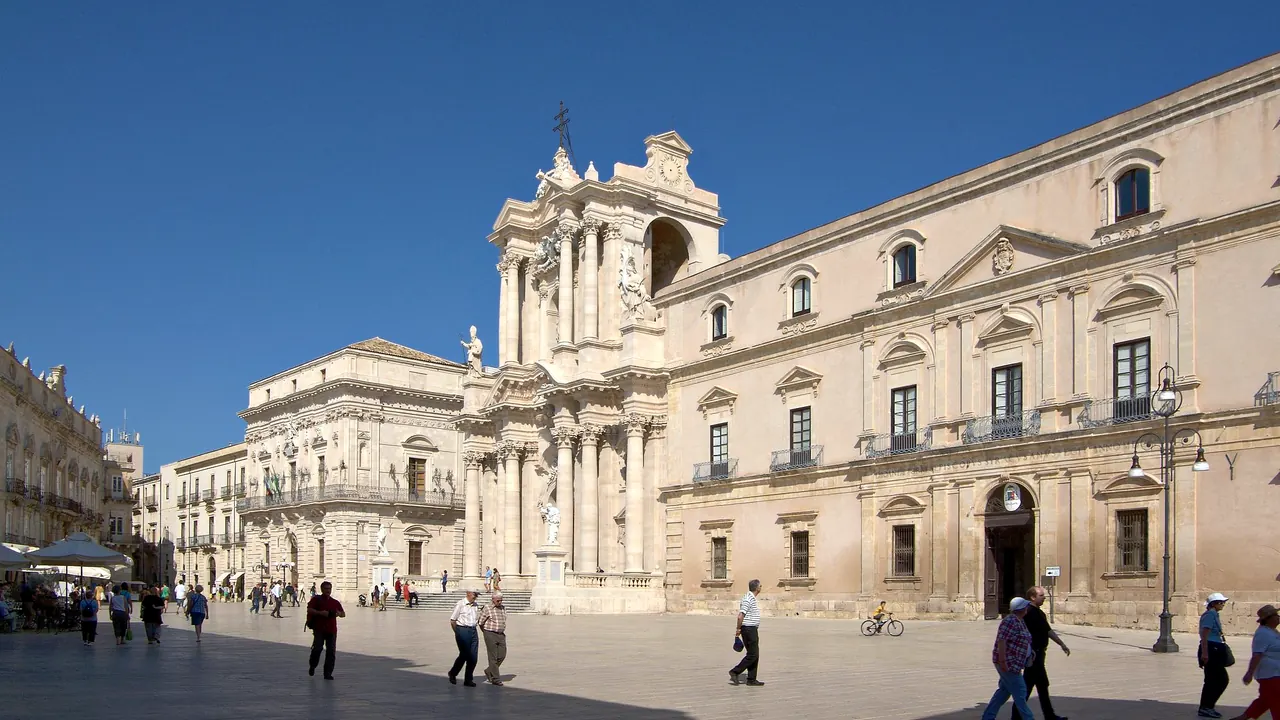
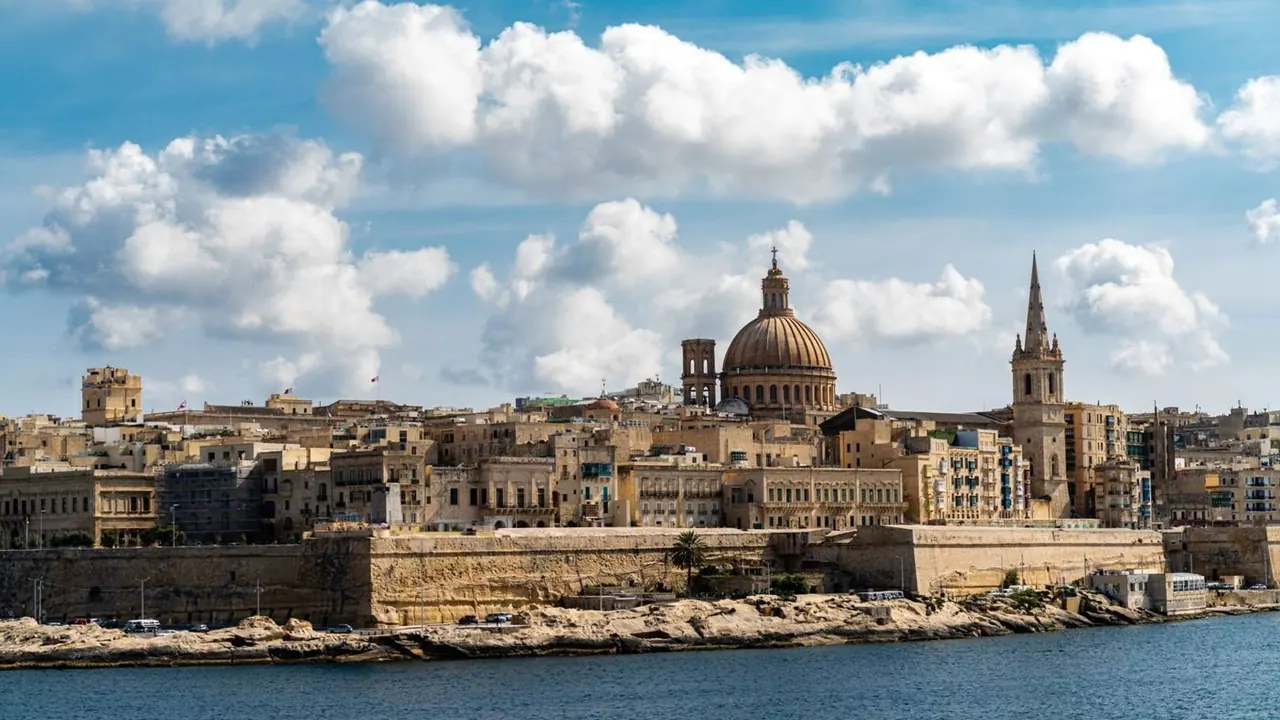
Photos: Syracuse, Sicily by Berthold Werner, CC BY-SA 3.0, cropped; Valletta by Pho Tomass, Pexels License.
Syracuse, Sicily or Valletta?
Our verdict in twelve categories, each scored against the same fixed benchmark cities, and the climate month by month, so you can choose for your trip.
Choose Syracuse, Sicily for
- nature and the outdoors
- food and drink
- beaches
Syracuse suits travellers who want a city and a region together: Greek ruins on Ortigia and in the Neapolis park, swimming off the rocks or on the sandy bays of Vendicari, and drives out to Noto, Modica and Ragusa. The cooking goes deeper, rooted in the Ortigia market, and the stay costs a little less. It works best if you hire a car for part of the trip.
Choose Valletta for
- getting around
- live music and the arts
- nightlife
Valletta is the better choice for anyone who would rather not drive. The walled city is about a kilometre long, buses run across the island from the city gate, and ferries cross the harbour to Sliema and the Three Cities. Evenings offer more as well, from the wine bars of Strait Street and concerts at the Manoel Theatre to the clubs of Paceville. With English spoken everywhere, it is an easy first trip abroad.
Scoreboard
Twelve categories on one fixed scale from 0 to 100. The shaded stretch is the gap between the two.
Your match
Pick a travel style or drag the sliders, and both match scores follow your weighting.
Too close to call, 2 points apart
Wins on nature and the outdoors and food and drink with your weighting.
Wins on getting around and live music and the arts with your weighting.
What matters to you?
Category by category
What the scores mean for a trip.
Beaches & swimming
In both cities you can swim in town, off rocks and ladders below the old walls, and the water is equally warm by late summer. Syracuse pulls ahead once you leave the centre. There are gently shelving sandy bays at Arenella and Fontane Bianche on its southern edge, and the pale, undeveloped beaches of Vendicari are about forty minutes away.
Valletta's sandy beaches are in the north and west of Malta, under an hour away by bus. They are small and crowded in August, so most visitors treat them as a half-day outing. The island makes up for this with rock pools such as St Peter's Pool and the turquoise Blue Lagoon on Comino, though the lagoon is packed in summer.
Food & drink
Syracuse is the better place to eat. The Ortigia market supplies the dishes people cross Sicily for: pasta with sardines or sea urchin, raw prawns, rolled swordfish, and summer breakfasts of almond granita with brioche. The Nero d'Avola and Moscato come from vineyards just to the south.
Maltese cooking borrows from Sicily but has less range: pastizzi, ftira with tuna, rabbit stew and lampuki pie in autumn. Many restaurants on Valletta's main streets cater to cruise passengers, so the best fish means a trip out to Marsaxlokk.
Culture & sights
Both reward two or three days, and both have a Caravaggio on the essential list, but they show different kinds of history. Syracuse has layer upon layer of it: a Greek temple built into the cathedral, a theatre cut into the rock of the Neapolis park, and the Paolo Orsi museum, one of the best archaeological collections in Italy.
Valletta was built in one go. The Knights of St John laid out its grid after the siege of 1565, and the whole walled city is UNESCO-listed. Its highlights are the gilded interior of St John's Co-Cathedral, the Grandmaster's Palace and the forts that face the Three Cities across the Grand Harbour.
Nightlife
Neither is a place for big nights out, but Valletta gives you more choice. The wine and cocktail bars of Strait Street feel much like Ortigia's lanes. If you want something louder, the clubs of Paceville are half an hour away and stay open until dawn in summer.
In Syracuse an evening means an aperitivo on the sea walls and a drink in a small bar, with some summer dancing at the beach clubs to the south. For proper clubbing you have to go to Catania, and in winter most nights end early.
Nature & outdoors
Syracuse has far more countryside to explore. Inland, the Hyblaean plateau is cut by limestone gorges, with green pools at Cavagrande and trails past the rock-cut tombs of Pantalica. Vendicari adds lagoons that draw flamingos, and Etna is close enough for a day trip.
Malta is small, dry and heavily built up, so most of its outdoor life is at sea: wreck and cave dives, the Blue Hole on Gozo and boat trips into the Blue Grotto. Walks along the Dingli Cliffs or Gozo's coast are pleasant but short, and there are no mountains or forests.
Day trips
From Syracuse you can tour a whole corner of Sicily, and each town feels different. There is the baroque of Noto, Modica and Ragusa Ibla, Greek theatres at Palazzolo Acreide and Taormina, the black lava-stone streets of Catania and the Roman mosaics at Piazza Armerina.
Valletta's day trips are shorter: Mdina and Rabat, the prehistoric temples of Hagar Qim and Mnajdra, the painted boats of Marsaxlokk and a ferry day to Gozo. There is plenty of history, but every trip shows the same island character.
Good for families
Syracuse keeps children happy with the sea, while Malta has attractions built for them. Around Syracuse, the gently shelving sand at Arenella and Fontane Bianche, Ortigia's car-free lanes, the papyrus boats and the puppet shows are the main pleasures. There is no zoo, aquarium or theme park, though.
Malta has the national aquarium at Qawra and Popeye Village, but both are some way from the capital. Valletta's stepped streets and narrow pavements are hard work with a pushchair, so families often stay in Sliema and come in for the noon cannon at the Upper Barrakka Gardens. Both cities are very hot in July and August.
Getting around
Both centres are small enough to walk. Ortigia takes fifteen minutes to cross. Valletta's grid is short but full of steep streets and stairs, and the lift down from the Upper Barrakka Gardens helps. Valletta pulls ahead outside the walls. Its buses reach nearly all of Malta, so you don't need a car, though they are slow and often crowded on the island's congested roads.
From Syracuse, regional buses and slow trains do reach Noto, Modica and Catania, but services are limited and the city buses are confusing for visitors. Vendicari and the inland gorges can realistically only be reached by car, so most visitors hire one for part of their stay.
Shopping & style
What you bring home depends on the island's crafts. In Syracuse that means hand-painted Sicilian ceramics, linen, coral jewellery and papyrus paintings made from the plant that grows on the Ciane river. The Ortigia market adds capers, almonds and pistachio products for the suitcase.
Valletta's crafts are silver filigree, Gozo bobbin lace and blown glass, and at Ta' Qali you can watch them being made. Republic and Merchant Streets have a few more chains and jewellers than Ortigia's lanes. Even so, neither city has a luxury district.
Affordability
Syracuse is a little cheaper, mostly when it comes to eating. Market sandwiches, arancini and simple trattoria meals with local wine are good value. Rooms on Ortigia in summer and the cost of a hire car are what raise the bill.
Valletta is mid-priced for southern Europe, and staying inside the walls costs more than staying across the harbour in Sliema or Gzira. Cheap pastizzi and low bus fares help, and not needing a car closes some of the gap.
Live music & performing arts
Valletta has more going on in the evenings. The Manoel Theatre, built in 1731, puts on chamber music, drama and concerts by the Malta Philharmonic. The year also brings a baroque music festival in winter, jazz on the Grand Harbour in summer and full opera productions on Gozo in autumn.
Syracuse has one remarkable season. Each late spring and early summer, Greek plays are performed in the ancient theatre, a tradition running since 1914. Apart from that and the Sicilian puppet theatres on Ortigia, there is little to go to.
Wellness & relaxation
Neither has thermal baths, and in both the spas are mostly in hotels, so relaxing here is about the pace of life. Syracuse does this a little better. Outside August, Ortigia is unhurried, with long lunches, sunset walks along the sea walls and a few day spas on the island.
Valletta only slows down once the cruise passengers leave in the late afternoon. Then the Upper and Lower Barrakka Gardens become quiet places to sit and watch the harbour.
When should you go?
Pick your month. The climate figures are measured averages, not a forecast.
Syracuse, Sicily in July
Valletta in July
Daytime high, °C
Rainfall in the month, mm
Where the figures come from
Syracuse, Sicily's temperatures are measured 45 km from the centre, at Cozzo Spadaro.
Syracuse, Sicily has no rain gauge within 25 km of the centre, so its rainfall comes from a gridded climate dataset read at the city rather than from a gauge further away.
Temperature and rainfall are climate normals, averaged over the years shown. Syracuse, Sicily: 1991-2020 normals, Cozzo Spadaro (45 km from centre). Valletta: 1991-2020 normals, Luqa (5.9 km from centre).
The two have much the same long, dry, sunny summer. July and August are the hottest months, with highs of 31°C in Syracuse and 32°C in Valletta, which makes midday sightseeing hard work in both. The sea is warm enough to swim from June, when it is about 22°C, until well into October. May, June and September are the best months for combining sightseeing with swimming, and April and May are the most pleasant for walking.
Where they differ is the wet season. Valletta's rain sets in during September and stays heavy all winter, reaching about 90mm in November. Syracuse stays dry through September, then has its wettest month in October at 96mm and is noticeably drier in February. Winters in both are mild enough for sightseeing but too cool for the beach.
Which traveller are you?
On a beach and sun trip, Syracuse lets the sea set the rhythm of the day, with an early swim in town and long afternoons on sand further south. The price is a hire car. From Valletta, sandy beaches stay half-day outings.
For an outdoors trip, Syracuse gives you a different landscape most days, inland and along the coast, though the summer heat pushes walks into the early morning. Malta suits divers best, and keen walkers soon run out of ground.
For a short city break, Valletta is the easier choice. Everything essential sits inside one walled grid you can cover on foot, with no car and little planning. Syracuse's sights are split across island and mainland, and it pays off more on a longer stay.
Before you go
| Measure | Syracuse, Sicily | Valletta |
|---|---|---|
| Official language | Italian | English, Maltese |
| Currency | Euro (EUR) | Euro (EUR) |
| Sockets | CFL230 V, 50 Hz | G230 V, 50 Hz |
| Driving side | Right | Left |
| Time zone | UTC+1, UTC+2 in summer | UTC+1, UTC+2 in summer |
| Emergency number | 112 | 112 |
| Elevation | 17 m | 56 m |
| Main airport | Catania-Fontanarossa Airport (CTA)48 km from centre96 non-stop destinations | Malta International Airport (MLA)6 km from centre113 non-stop destinations |
| Public holidays this year | 13 days | 14 days |
By the numbers
| Measure | Syracuse, Sicily | Valletta |
|---|---|---|
| City population | 115,515 | 5,197 |
| People per km² | 556 | 6,496 |
| Museums within 10 km | 11 | 16 |
| UNESCO World Heritage sites within 50 km | 2 | 3 |
| Swim season, months above 21 °C | 5 months | 6 months |
Where else could you go?
Every comparison below shares a destination with this one, so you can follow Syracuse, Sicily or Valletta somewhere new.
- Cataniavs Syracuse, Sicily
- Taorminavs Syracuse, Sicily
- Cataniavs Valletta
- Palermovs Syracuse, Sicily
- Taorminavs Valletta
- Palermovs Valletta