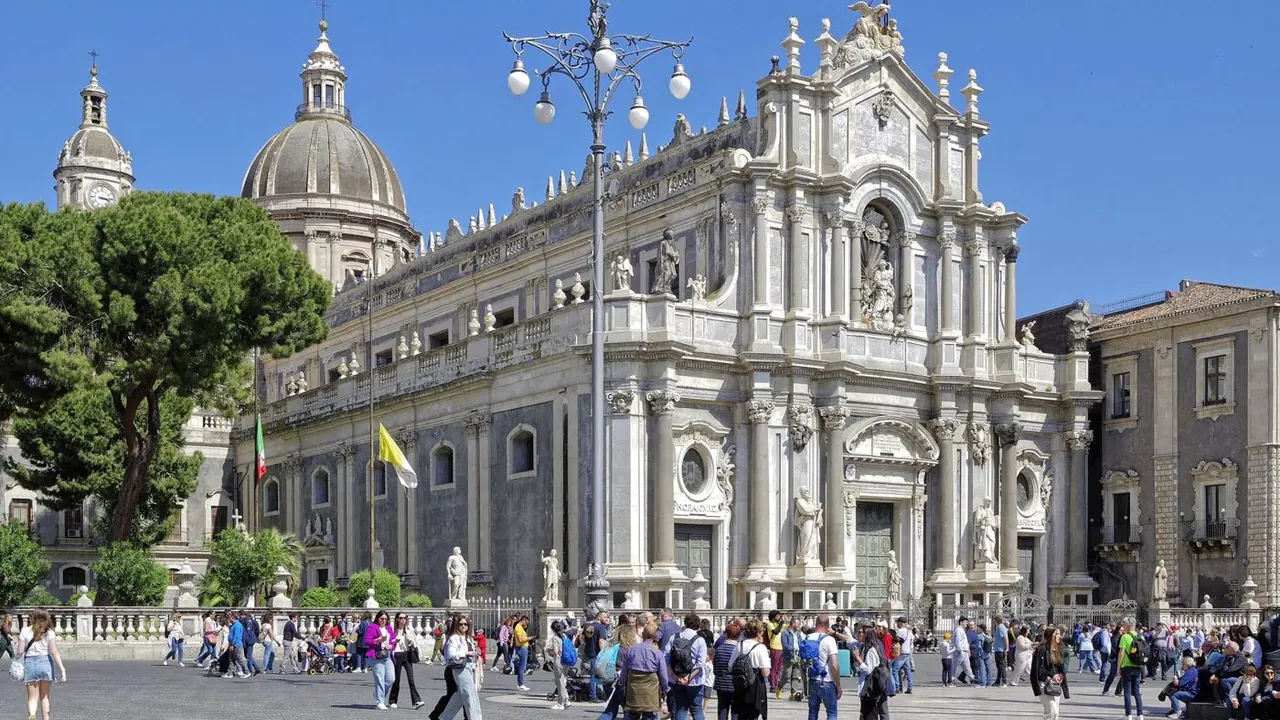
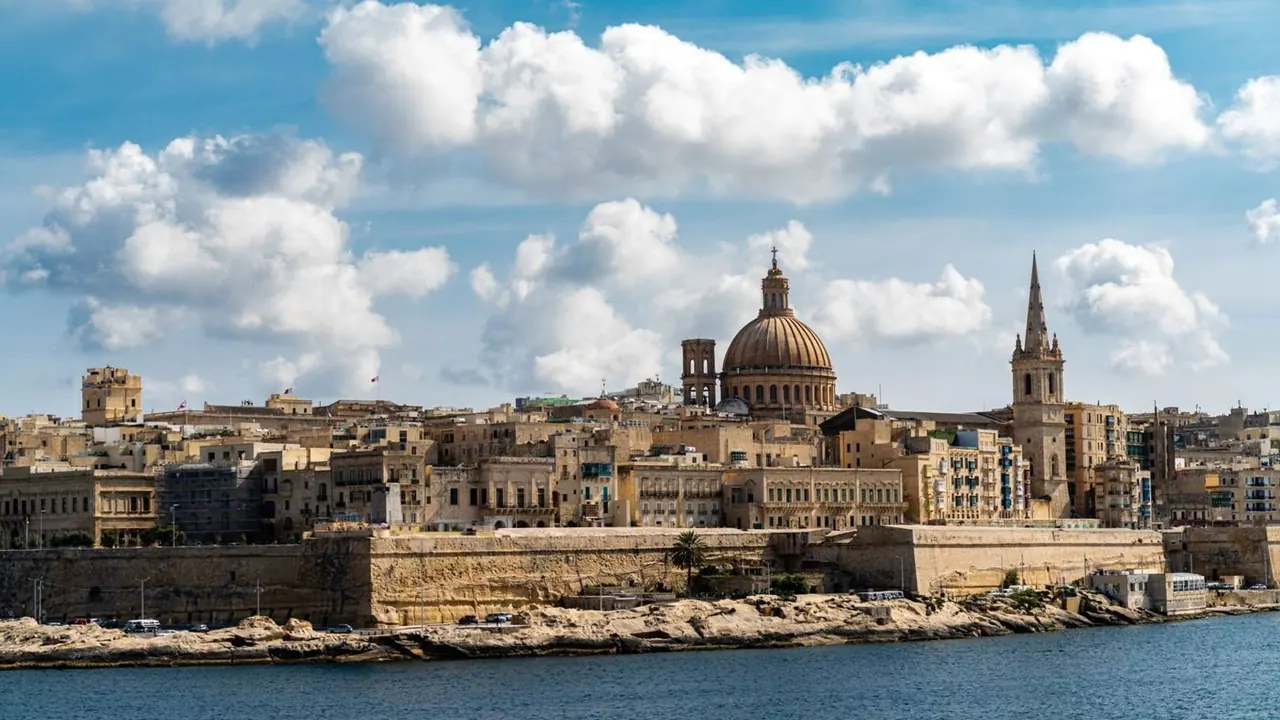
Photos: Catania by Berthold Werner, CC BY-SA 4.0, cropped; Valletta by Pho Tomass, Pexels License.
Catania or Valletta?
Our verdict in twelve categories, each scored against the same fixed benchmark cities, and the climate month by month, so you can choose for your trip.
Choose Catania for
- nature and the outdoors
- food and drink
- nightlife
Catania suits travellers who want a big, loud Sicilian city with a volcano on the doorstep. The street food and the fish market are the main draw, Etna's craters and lava trails are under an hour away, and Siracusa, Taormina and the baroque towns make it the best base in eastern Sicily. It is cheaper day to day and stays up later, though you will want a car and some patience with traffic.
Choose Valletta for
- culture and sights
- getting around
- families
For a calmer, more compact trip built around history, Valletta is the better choice. The whole walled city of the Knights can be walked in a day, St John's Co-Cathedral and its Caravaggio are among the finest single sights in the Mediterranean, and buses and harbour ferries reach the rest of Malta without a car. English is spoken everywhere and distances are short, so it is also the easier pick for families.
Scoreboard
Twelve categories on one fixed scale from 0 to 100. The shaded stretch is the gap between the two.
Your match
Pick a travel style or drag the sliders, and both match scores follow your weighting.
Wins on nature and the outdoors and food and drink with your weighting.
Wins on culture and sights and getting around with your weighting.
What matters to you?
Category by category
What the scores mean for a trip.
Beaches & swimming
These two are close for swimming, but the coast works differently in each. Catania has proper sand on its own edge: La Playa runs south of the centre with beach clubs, while the black lava platforms of Aci Castello and Aci Trezza offer clear-water swimming among sea stacks.
Valletta has no beach in town. You swim off limestone ledges below the bastions or along the Sliema shore, and the sandy bays such as Golden Bay and Mellieha are small and a bus ride away. They make a half-day outing rather than somewhere you can wander down to.
Food & drink
Catania eats far better. Its fish market behind the cathedral, cone-shaped arancini, pasta alla Norma, pistachio from Bronte and wines from Etna's volcanic slopes add up to a serious food city, and almost all of it is casual and found on the street.
Malta's cooking is likeable but thinner. You get pastizzi with tea, ftira at lunch, rabbit stew and lampuki pie in autumn. Too many central Valletta tables cater to cruise passengers, and the best fish means a trip out to Marsaxlokk.
Culture & sights
Valletta has the stronger set of sights. The whole fortified city is a single Knights' creation, and St John's Co-Cathedral, with its marble tomb floor and Caravaggio, outclasses anything in Catania. The Three Cities, Fort St Elmo and the Hypogeum add depth within a short ride.
Catania's appeal is its townscape: lava-black and limestone baroque along Via dei Crociferi, the vast monastery of San Nicolò l'Arena and Roman ruins sunk into the streets. Its museums are modest, but the February Feast of Sant'Agata is a spectacle Valletta cannot match.
Nightlife
Catania is the place for a night out. A large university keeps the lanes around Piazza Bellini and the Teatro Massimo full of outdoor drinkers past midnight, and in summer the La Playa beach clubs turn into dance floors.
Valletta winds down after dinner, with wine bars along the old sailors' lane of Strait Street making for a sedate evening. Anyone wanting a club has to travel half an hour to Paceville, which is loud and young rather than stylish.
Nature & outdoors
This is Catania's clearest advantage. Etna rises to about 3,300m within an hour of the city, with cable cars, guided crater walks, old woodland and winter skiing, and the Alcantara Gorge and Nebrodi mountains lie beyond it.
Malta is a dry, built-up limestone island whose nature is mostly underwater. The diving is genuinely good, with wrecks, caves and Gozo's Blue Hole. On land there are the Dingli Cliffs and Gozo's greener coast, but hikes are short.
Day trips
Both cities sit within easy reach of a lot, but Catania's range is wider. Siracusa's Ortigia and Greek theatre, Taormina above the sea, the baroque showpieces of Noto, Modica and Ragusa, and the mosaics at Piazza Armerina offer real variety, though a car makes the circuit easier.
From Valletta, the outings are closer and all reachable by bus or ferry. Silent Mdina, the temples of Hagar Qim and Mnajdra, Marsaxlokk's painted boats and a full day on Gozo are all on offer, but they share one island character.
Good for families
Malta is the easier family trip. English everywhere, safety and short distances take much of the effort out of it, and the aquarium at Qawra, Popeye Village and the noon cannon at the Upper Barrakka please children. Valletta's stepped streets are hard with a pushchair, so many families base themselves in Sliema.
Catania welcomes children warmly, and Etna's craters and Etnaland are big hits. The city itself, with heavy traffic, uneven pavements and little shade, tires young ones quickly.
Getting around
Valletta is simpler to manage. The city is about a kilometre long, a lift and short ferries link it to the harbour towns, and buses from the city gate reach almost all of Malta. A car is unnecessary, even if the buses are slow.
Catania's centre is walkable, but beyond Via Etnea the single metro line and traffic-bound buses help less. Most visitors end up hiring a car for Etna and the baroque towns, then struggle to park it.
Shopping & style
Neither is a shopping destination, and they are broadly level. What you buy differs. Catania's best finds are edible, from pistachio cream to Etna wine, picked up at the noisy La Fiera market or alongside Caltagirone ceramics.
Valletta leans towards crafts: silver filigree, Gozo lace and blown glass, which you can see being made at Ta' Qali. For bigger fashion stores, locals head to Sliema.
Affordability
Catania stretches a budget further. Street food makes a full meal for little money, old-centre guesthouses are reasonable most of the year and the churches cost nothing to see. A hire car and guided trips to Etna's summit are the costs to watch.
Valletta is the dearer stay, since rooms inside the walls are mostly boutique conversions. Moving across the harbour to Sliema or Gzira saves money, while pastizzi and buses stay cheap and the main museums charge entry.
Live music & performing arts
Catania offers more for an evening at the theatre. Bellini's home town has a grand opera house with a proper opera and symphonic season, plus the Sicilian puppet theatre of knights and Saracens.
Valletta's jewel is the Manoel Theatre of 1731, a tiny gilded auditorium worth visiting for any performance. Its year leans on winter baroque and summer jazz festivals, though, and on many nights there is little on.
Wellness & relaxation
Neither city is built for pampering. Both lack a bathing tradition and leave spas to coastal resort hotels. The calm comes in different forms.
Catania's rest lies in long lunches and the passeggiata, or in retreating to quiet villages on Etna's slopes away from the city noise. Valletta grows still in the late afternoon once day visitors leave, with golden light on the limestone and harbour views from the Barrakka Gardens.
When should you go?
Pick your month. The climate figures are measured averages, not a forecast.
Catania in July
Valletta in July
Daytime high, °C
Rainfall in the month, mm
Where the figures come from
Catania's sunshine is measured 88 km from the centre, at Messina.
Temperature and rainfall are climate normals, averaged over the years shown. Catania: 1991-2020 normals, Catania / Fontanarossa (5.2 km from centre). Valletta: 1991-2020 normals, Luqa (5.9 km from centre).
In Catania, May and early June are the best time for walking the baroque streets and heading up Etna. The days are warm and dry before the real heat builds. The sea becomes comfortable for swimming in June and stays that way into October. July and August are fierce, with highs around 32°C that make the shadeless centre hard going in the middle of the day. September and October bring back easier sightseeing weather while the water is still warm.
Valletta follows the same pattern a little more gently. Its summer highs stop nearer 32°C, and it gets more sunshine than Catania in every month. Its sea is also good for swimming from June to October and peaks at about 27°C in August, against 26°C off Catania. Both are nearly dry through the summer, but Valletta's autumn and winter rain is heavier, reaching about 90mm in November. Winter days in both sit in the mid-teens, which is fine for museums and walks between showers. In Catania this is also when snow settles on Etna's slopes.
Which traveller are you?
On a food and nightlife trip, Catania wins easily. Arancini and granita by day, horse-meat grills on Via Plebiscito at night, Etna wines, and a student crowd that fills the lanes around Piazza Bellini long after Valletta has gone to bed.
For a culture and arts trip, Valletta is the better pick. The entire walled city is a planned Knights' capital, with Caravaggio in the Co-Cathedral, the Grandmaster's Palace and the Three Cities across the harbour. The prehistoric temples and the Hypogeum add thousands of years to it.
On an outdoors trip, choose Catania. Etna gives you summit craters, lava-flow trails, beech woods and winter skiing, with the Alcantara Gorge and the Nebrodi forests beyond. Malta's strengths are diving and short cliff walks, but it has no mountains.
Before you go
| Measure | Catania | Valletta |
|---|---|---|
| Official language | Italian | English, Maltese |
| Currency | Euro (EUR) | Euro (EUR) |
| Sockets | CFL230 V, 50 Hz | G230 V, 50 Hz |
| Driving side | Right | Left |
| Time zone | UTC+1, UTC+2 in summer | UTC+1, UTC+2 in summer |
| Emergency number | 112 | 112 |
| Elevation | 7 m | 56 m |
| Main airport | Catania-Fontanarossa Airport (CTA)4 km from centre96 non-stop destinations | Malta International Airport (MLA)6 km from centre113 non-stop destinations |
| Public holidays this year | 13 days | 14 days |
By the numbers
| Measure | Catania | Valletta |
|---|---|---|
| City population | 311,584 | 5,197 |
| People per km² | 1,704 | 6,496 |
| Museums within 10 km | 25 | 16 |
| UNESCO World Heritage sites within 50 km | 3 | 3 |
| Swim season, months above 21 °C | 5 months | 6 months |
Where else could you go?
Every comparison below shares a destination with this one, so you can follow Catania or Valletta somewhere new.