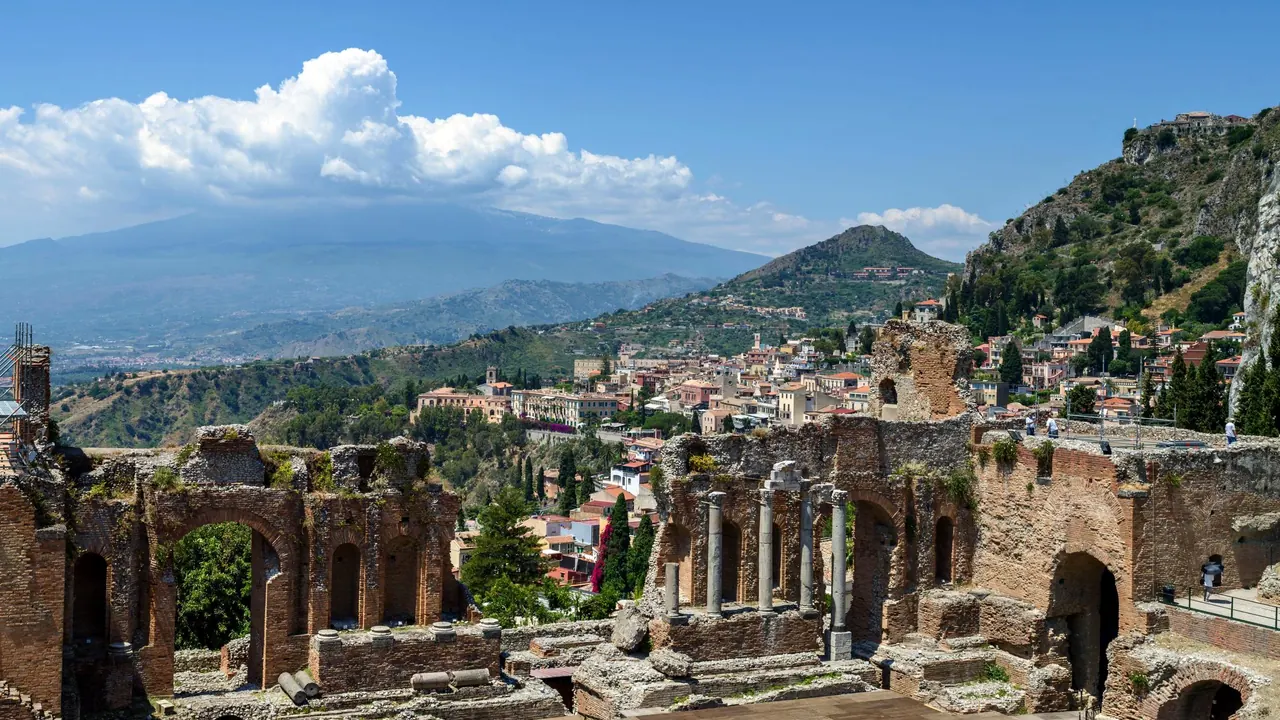
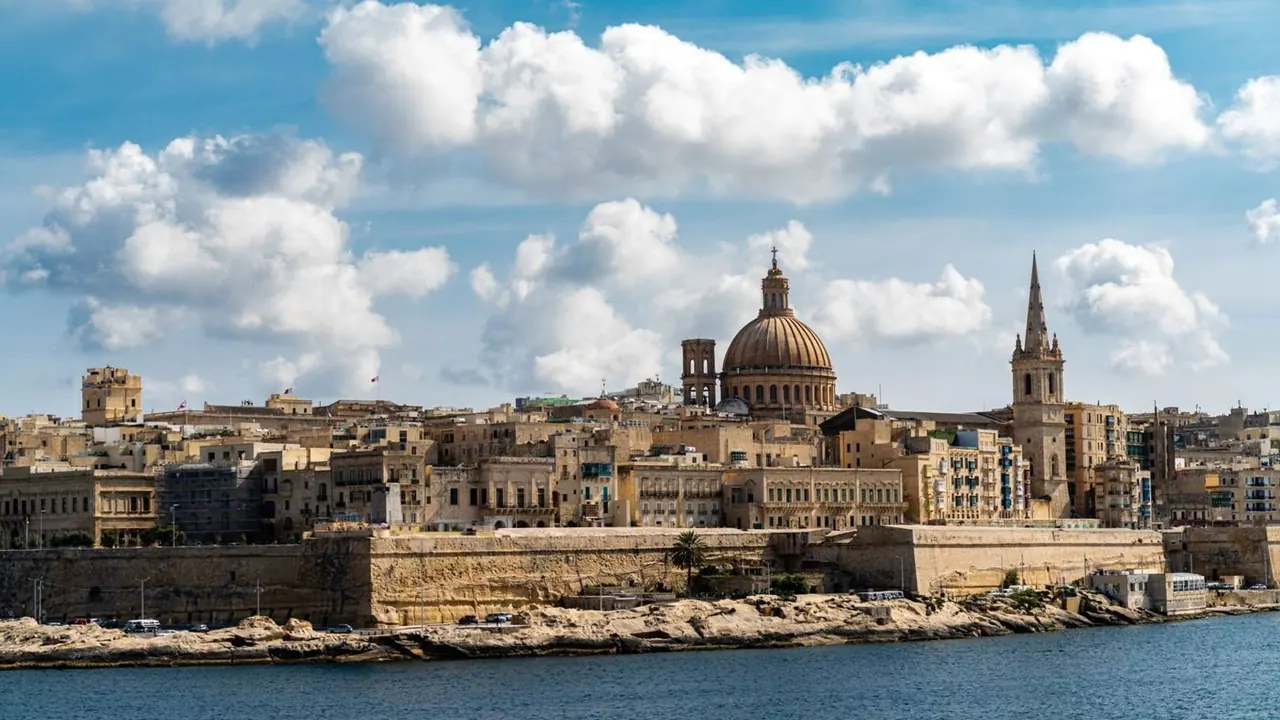
Photos: Taormina by Reinhard Bruckner, Pexels License; Valletta by Pho Tomass, Pexels License.
Taormina or Valletta?
Our verdict in twelve categories, each scored against the same fixed benchmark cities, and the climate month by month, so you can choose for your trip.
Choose Taormina for
- nature and the outdoors
- wellness
- beaches
Taormina suits a slower trip built around landscape. Etna fills the view from the town's terrace, guided walks over lava fields and craters are within easy reach, and the days settle into a pattern of snorkelling off Isola Bella, a long lunch and an evening over Etna wine. It is the lovelier place to unwind and the better base for walking. It also costs more, and there is little to do after dinner.
Choose Valletta for
- culture and sights
- prices
- nightlife
Valletta is the choice for a traveller who wants a real city with history to work through. The Knights' walled capital, Caravaggio in St John's Co-Cathedral, the Three Cities across the harbour and the prehistoric temples nearby fill several days, and Strait Street and the Manoel Theatre give the evenings more to do. Money goes further here, families find the island easier, and buses reach almost everywhere without a car.
Scoreboard
Twelve categories on one fixed scale from 0 to 100. The shaded stretch is the gap between the two.
Your match
Pick a travel style or drag the sliders, and both match scores follow your weighting.
Wins on nature and the outdoors and wellness with your weighting.
Wins on culture and sights and prices with your weighting.
What matters to you?
Category by category
What the scores mean for a trip.
Beaches & swimming
The swimming is about equally good in both, but it works differently. In Taormina you take the cable car down from the town to the pebble coves at Mazzarò and Isola Bella, where the water is glassy and good for snorkelling, and the longer sand of Giardini Naxos is a short bus ride away.
In Valletta you swim in town by climbing down ladders off limestone ledges below the bastions. The sandy bays of Golden Bay and Mellieha are under an hour away by bus, so they make a half-day outing rather than a morning habit. Taormina has the beach closer to hand. Malta has more variety, from rock pools to Comino's lagoon.
Food & drink
Sicily and Malta put very different things on the plate. Taormina cooks from the Sicilian repertoire: pasta alla Norma, swordfish and raw red prawns, cannoli from the pastry shops and almond granita with a warm brioche at breakfast. Etna's Nerello Mascalese reds and Carricante whites are on almost every list, and the refined end of the scale comes with sea views.
Valletta's cooking is plainer and more of a crossroads, with Sicilian, North African and British traces: pastizzi from cheap counters, ftira for lunch, rabbit stew and lampuki pie in autumn. For the best fish you go out to Marsaxlokk rather than eat inside the walls, and nothing on Malta matches Etna's wines. In both towns the main streets lean on tourist menus, and the choice does not run deep.
Culture & sights
Valletta is far richer. The whole city is a planned work of the Knights, and St John's Co-Cathedral with its Caravaggio, the Grandmaster's Palace, Fort St Elmo and the MUZA museum fill two or three days before you even cross to the Three Cities or visit the Hypogeum.
Taormina has one great monument, the Greek theatre, which frames Etna and the coast, and a pleasant walk along Corso Umberto past Palazzo Corvaja and the Duomo. There are no major museums, so a single unhurried day covers it.
Nightlife
Neither is a party town, but Valletta has more going on. Strait Street's wine bars and cocktail places, with tables out on the steps, keep the old sailors' quarter busy in the evening. Paceville's clubs, open until dawn, are half an hour away for anyone who wants them.
Taormina's evenings are an aperitivo in Piazza IX Aprile, the passeggiata and a piano bar over the sea. There is no club scene, the crowd is mostly couples, and out of season the town is asleep soon after dinner.
Nature & outdoors
Taormina is much the stronger choice for the outdoors. Within about an hour you can walk the Silvestri craters, go up towards Etna's summit with a guide, ski its slopes in winter or walk through the Alcantara gorges. Paths from town lead up to Castelmola and Monte Tauro.
Malta is dry, built-up limestone with no mountains or forests, and its walks along Dingli Cliffs or Gozo's coast are short. Its strength is underwater, with wrecks, caves and the Blue Hole drawing divers. It is the better island for a dive, but for everything on land it cannot compete.
Day trips
Both are good bases for day trips, but the scale is different. From Taormina the trips run down Sicily's east coast to Catania's lava-stone baroque and fish market, Syracuse and Ortigia, and, with an early start, Noto. Closer in are the film villages of Savoca and Forza d'Agrò and the wine towns on Etna's northern slopes.
Valletta's trips are shorter and centre on history: Mdina and Rabat's catacombs half an hour away, the temples of Hagar Qim and Mnajdra above the southern cliffs, and Gozo by ferry. Sicily offers more variety and wine country. Malta wins on easy distances, though it all shares one island character.
Good for families
Valletta works better with children, mostly because of the island around it. English is spoken everywhere, distances are short, and the aquarium at Qawra, Popeye Village and the shallow sandy bays in the north are easy outings. The noon cannon at the Upper Barrakka Gardens is a favourite in the city.
Both towns are steep and full of steps, which is hard going with a pushchair. Taormina adds pebbly beaches crowded in August and hotels aimed at couples, though school-age children love Etna and snorkelling at Isola Bella. In both places families often stay elsewhere, in Giardini Naxos or Sliema.
Getting around
Valletta is the easier place to get around without a car. The city is about a kilometre long, ferries cross to Sliema and the Three Cities, and buses from the city gate reach nearly the whole island, even if they are slow on congested roads.
Taormina's pedestrian centre is just as walkable and has the cable car down to the sea. It also has something Malta lacks: a railway, though the station is down by the coast, with trains to Catania, Messina and Syracuse. The catch is that Etna and the inland villages realistically need a tour or a hired car.
Shopping & style
Neither is a shopping destination, and both put their shops along one main street. Corso Umberto in Taormina specialises in coral, cameos, linen and Sicilian ceramics such as the painted moor's-head vases, along with pistachio and almond sweets.
Valletta's Republic Street and Merchant Street mix high-street chains with silver filigree, Gozo lace and blown glass, and you can watch the crafts being made at Ta' Qali. For bigger shopping you head to Catania from Taormina and to Sliema from Valletta.
Affordability
Valletta is noticeably kinder to the wallet. Malta is mid-priced, bus fares and pastizzi are cheap, and a simple meal of fish or pasta is reasonable. Rooms inside the walls are on the dear side, but Sliema and Gzira are a short ferry ride away and cost less.
Taormina is the most expensive place in eastern Sicily, with grand sea-view hotels, scarce mid-range rooms in summer and resort prices along the Corso. Granita and the local buses stay cheap, and sleeping down in Giardini Naxos or Letojanni brings the cost down.
Live music & performing arts
Valletta has more on through the year. The Manoel Theatre, a gilded eighteenth-century auditorium, puts on chamber music, drama and the Malta Philharmonic. A baroque festival in winter, jazz on the Grand Harbour in summer and the rival opera houses on Gozo add to the calendar.
Taormina has the more unforgettable setting but a much shorter season. On summer nights the Greek theatre stages opera, ballet and big concerts with Etna behind the stage. Outside summer there is little beyond piano bars, and for serious opera you go to Catania.
Wellness & relaxation
Taormina is the better place to unwind. Its large hotels have good spas with terrace pools above the sea and treatments using volcanic mud and citrus, and the pace of long lunches, the shade of the Villa Comunale and Etna changing colour at dusk does the rest, at least outside August.
Valletta's spas are pleasant but ordinary, and most are in the resort hotels of St Julian's. Its calm comes later in the day, when the cruise passengers leave, the limestone turns gold and the Barrakka Gardens grow quiet over the harbour.
When should you go?
Pick your month. The climate figures are measured averages, not a forecast.
Taormina in July
Valletta in July
Daytime high, °C
Rainfall in the month, mm
Where the figures come from
Taormina's temperatures are measured 45 km from the centre, at Messina.
Taormina has no rain gauge within 25 km of the centre, so its rainfall comes from a gridded climate dataset read at the city rather than from a gauge further away.
Temperature and rainfall are climate normals, averaged over the years shown. Taormina: 1991-2020 normals, Messina (45.1 km from centre). Valletta: 1991-2020 normals, Luqa (5.9 km from centre).
Both places are at their best from May to early June and again in late September, when the days are warm but not punishing and the sea is still pleasant. Both have a swimming season from June to October, and the water peaks at around 26°C in August. July and August are hot for walking the streets, above 30°C in each, and the heat feels worse on Taormina's endless steps.
For the rest of the year Valletta is the drier and sunnier of the two. Its summers are almost rainless, and even in winter it gets noticeably more sunshine. Taormina turns wet sooner and harder, with about 100mm of rain in October and similar amounts through to January, so an autumn visit there is best kept to September. Winters are mild in both, with highs of around 15°C to 17°C. That is comfortable for museums and churches in Valletta but less so for Taormina, where the pleasures are mostly outdoors.
Which traveller are you?
On an outdoors trip, Taormina is the clear choice. Etna's lava flows, craters and vineyards are about an hour away, the Alcantara gorges are closer still, and footpaths climb straight from town to Castelmola and Monte Tauro. Walks on Malta are short and run along the cliffs.
For a culture and arts trip, Valletta offers far more. The whole walled city is a UNESCO site, with Caravaggio in the Co-Cathedral, the MUZA art museum, the Hypogeum close by and an eighteenth-century theatre still putting on concerts. Taormina's sights fill a single day.
On a trip on a tight budget, your money lasts longer in Valletta. Pastizzi counters, cheap buses and cheaper rooms across the harbour in Sliema or Gzira keep costs moderate. Taormina is the dearest base in eastern Sicily, and it only becomes reasonable if you sleep down in Giardini Naxos.
Before you go
| Measure | Taormina | Valletta |
|---|---|---|
| Official language | Italian | English, Maltese |
| Currency | Euro (EUR) | Euro (EUR) |
| Sockets | CFL230 V, 50 Hz | G230 V, 50 Hz |
| Driving side | Right | Left |
| Time zone | UTC+1, UTC+2 in summer | UTC+1, UTC+2 in summer |
| Emergency number | 112 | 112 |
| Elevation | 204 m | 56 m |
| Main airport | Catania-Fontanarossa Airport (CTA)47 km from centre96 non-stop destinations | Malta International Airport (MLA)6 km from centre113 non-stop destinations |
| Public holidays this year | 13 days | 14 days |
By the numbers
| Measure | Taormina | Valletta |
|---|---|---|
| City population | 10,471 | 5,197 |
| People per km² | 799 | 6,496 |
| Museums within 10 km | 5 | 16 |
| UNESCO World Heritage sites within 50 km | 2 | 3 |
| Swim season, months above 21 °C | 5 months | 6 months |
Where else could you go?
Every comparison below shares a destination with this one, so you can follow Taormina or Valletta somewhere new.
- Cataniavs Taormina
- Syracuse, Sicilyvs Taormina
- Syracuse, Sicilyvs Valletta
- Palermovs Taormina
- Cataniavs Valletta
- Palermovs Valletta