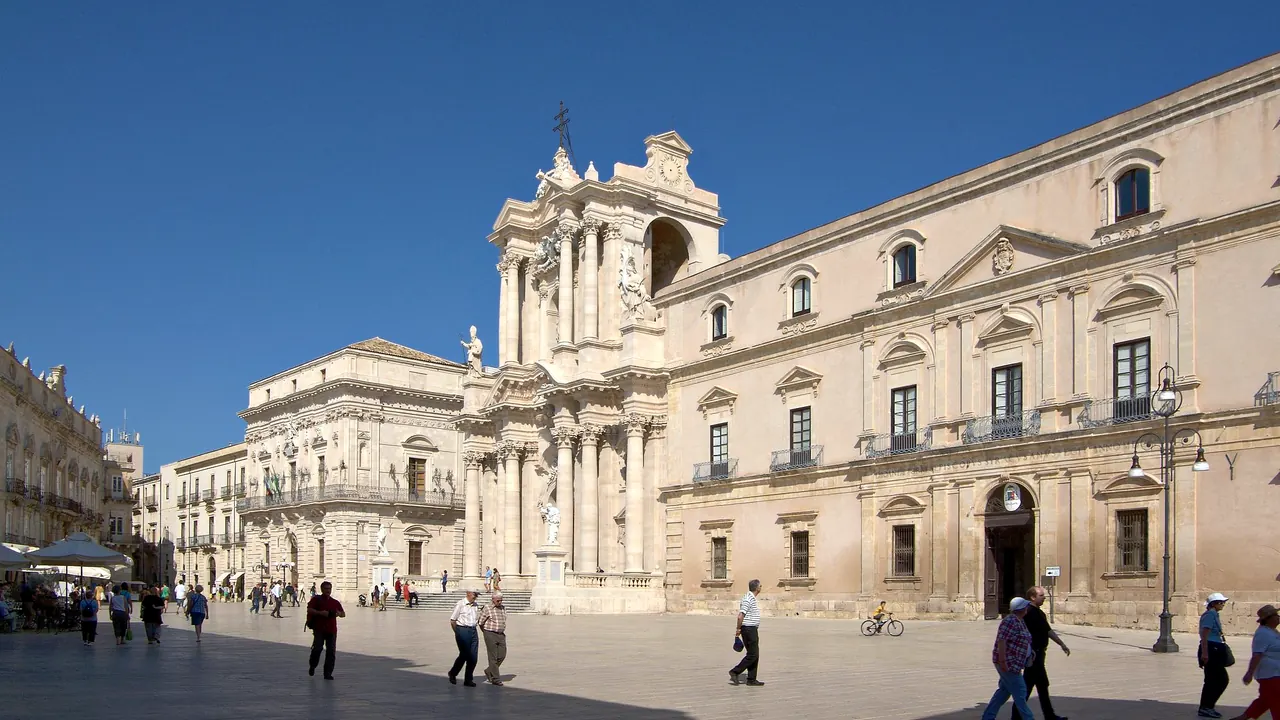
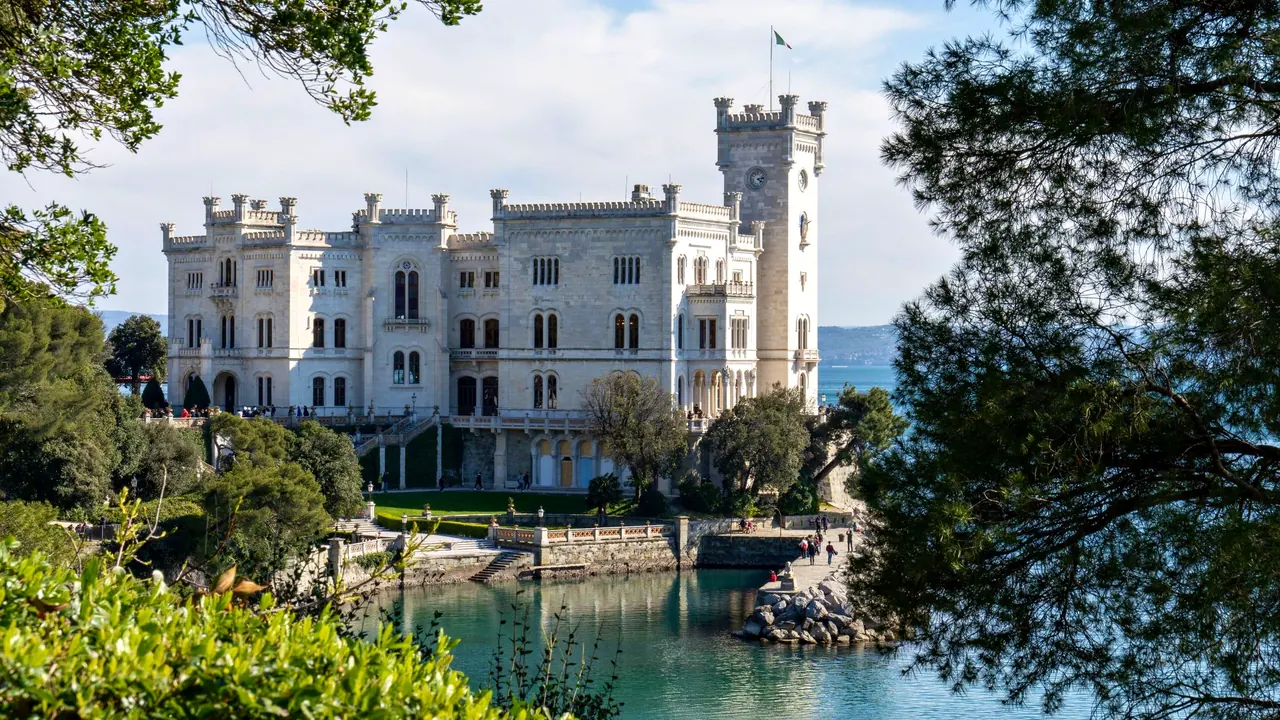
Photos: Syracuse, Sicily by Berthold Werner, CC BY-SA 3.0, cropped; Trieste by Tibor Szabo, Pexels License.
Syracuse, Sicily or Trieste?
Our verdict in twelve categories, each scored against the same fixed benchmark cities, and the climate month by month, so you can choose for your trip.
Choose Syracuse, Sicily for
- beaches
- culture and sights
- day trips
Syracuse is the choice for travellers who want ancient history and warm sea on the same trip. Ortigia packs a Greek temple inside its cathedral, baroque lanes and swimming off the rocks into one small island. The Neapolis theatre, the Paolo Orsi museum, sandy bays to the south and the baroque towns of the Val di Noto fill a longer stay. It works best for a week or more with a hire car for part of it.
Choose Trieste for
- getting around
- live music and the arts
- shopping
Trieste suits someone who would rather take the bus than drive and likes a city with Central European manners. You get Habsburg squares, old coffee houses, a proper opera season at the Teatro Verdi and the Karst rising straight behind the streets. Slovenia and Friuli are within easy reach. Swimming means concrete steps and ladders at Barcola, not sand, but for a calm, walkable stay with evenings at the theatre, it is the better fit.
Scoreboard
Twelve categories on one fixed scale from 0 to 100. The shaded stretch is the gap between the two.
Your match
Pick a travel style or drag the sliders, and both match scores follow your weighting.
Too close to call, level with your weighting
Wins on beaches and culture and sights with your weighting.
Wins on getting around and live music and the arts with your weighting.
What matters to you?
Category by category
What the scores mean for a trip.
Beaches & swimming
Syracuse offers both kinds of swimming. You can climb into the clear Ionian from the platforms below Ortigia's sea walls, or lie on real sand at Arenella, Fontane Bianche and the reserve beaches of Vendicari. The water stays warm well into October.
Trieste swims in a city way: towels on the stepped concrete and lawns of Barcola, ladders into the Adriatic and old bathing establishments with changing cabins. The pebble coves at Sistiana and Duino are prettier, but there is almost no sand.
Food & drink
The two eat in very different directions, and neither has a wide restaurant range. Syracuse cooks from the sea and the citrus groves: the Ortigia market, pasta with sardines or sea urchin, granita and brioche for breakfast, and Nero d'Avola to drink.
Trieste's table is half Austrian. Boiled pork is carved at the counter of a buffet, jota soup sits alongside fried sardoni, and strudel and presnitz follow. Its real speciality is coffee, with its own ordering vocabulary, plus Karst wine at the farmhouse osmize.
Culture & sights
Syracuse carries the weight of a major Greek city. The Doric columns in its cathedral, the rock-cut theatre and the Ear of Dionysius at Neapolis, the Paolo Orsi museum and Caravaggio's Burial of Saint Lucy add up to two or three full days of first-rate sightseeing.
Trieste is more about atmosphere than great sights. Piazza Unità opening onto the sea, the Canal Grande with San Spiridione, San Giusto's mosaics and the white Miramare Castle show its Habsburg past well. The Risiera di San Sabba adds a sombre note. Its literary associations with Joyce and Svevo are felt more than seen.
Nightlife
Both are aperitivo towns where the evening ends with a drink, not a club. Syracuse's summer has a little more pull: Ortigia's lanes stay busy past midnight at weekends, and the beach clubs on the southern coast put on some dancing in July and August.
Trieste relies on students' wine bars and pubs, plus kiosks along Barcola on warm nights. In both cities serious clubbers have to travel, and Catania is the nearest option from Syracuse.
Nature & outdoors
Both have a lot of good countryside, of different kinds. Around Syracuse you find gorges with green pools at Cavagrande, rock-cut tombs in the Anapo valley, flamingos at Vendicari, diving at Plemmirio and a day on Etna. Most of it needs a car, and the summer heat makes hiking hard.
Trieste's outdoors starts at the edge of town. The Strada Napoleonica and the Rilke Path run above the gulf, Val Rosandra is good for climbing and there are huge caves in the Karst. The gulf is a real sailing water, and the Julian Alps are close enough for mountain days.
Day trips
Syracuse has the edge, mainly thanks to the Val di Noto. Noto, Modica, Ragusa Ibla and Scicli each make a fine baroque day out, and Taormina and the Villa Romana mosaics are further options, though buses are thin and a car helps.
Trieste's appeal is variety across borders. It has Aquileia's mosaics and Palmanova's star plan in Friuli, Piran and Ljubljana in Slovenia, and Venice by train for a long day.
Good for families
Neither city is built for children, and they suit different ages. Syracuse is better for small children who mainly want the beach, with gently shelving sand at Arenella and Fontane Bianche, puppet shows and boat trips among the papyrus.
Trieste works better for older children. It has an aquarium and a science centre, and the vast Grotta Gigante impresses them, but the rock swimming and steep stepped streets are harder with toddlers.
Getting around
In Syracuse, Ortigia itself is an easy fifteen-minute walk end to end. Beyond the island, infrequent buses and slow trains mean that Vendicari, the gorges and the baroque towns realistically call for a hire car.
Trieste is much easier without one. The centre is flat and compact, a dense bus network runs out to Barcola, Miramare and the Karst, and passenger boats cross to Muggia. The only real effort is the steep climb to San Giusto.
Shopping & style
Neither city is a shopping trip, so the difference is in the souvenirs. Syracuse sells hand-painted ceramics, coral jewellery and papyrus paintings tied to the Ciane river, and its market has capers, almonds and pistachio.
Trieste has antique and second-hand shops that recall its merchant past, coffee from local roasters and Karst wine and honey.
Affordability
Costs come out much the same, but they add up in different places. In Syracuse, market food and trattoria meals are cheap. Rooms on Ortigia get expensive in summer, though, and car hire adds to the bill.
In Trieste, a buffet plate and a coffee at the bar cost little and the buses are cheap. The waterfront, cathedral hill and Karst walks are free, so you rarely need to pay for a car.
Live music & performing arts
Trieste has an evening programme to speak of. The Teatro Verdi runs a real season of opera and ballet, the city keeps a rare Habsburg fondness for operetta, and the Rossetti and a Slovenian-language theatre add straight drama.
Syracuse has one great event: classical Greek plays performed in the ancient theatre in late spring and early summer. Apart from that and Ortigia's puppet theatre, there is little to go to.
Wellness & relaxation
Ortigia's sea walls and Trieste's coffee houses offer two different kinds of slow time. In Syracuse it means long lunches and sunsets over the harbour. It is best in the mild, sunny months either side of summer, because the August heat and crowds take away much of the calm.
Trieste's quiet happens more indoors and has a literary feel: a newspaper in an old coffee house, then an evening walk out along the Molo Audace. Neither city has thermal baths, and spa treatments in both come down to hotel spas and a few day spas.
When should you go?
Pick your month. The climate figures are measured averages, not a forecast.
Syracuse, Sicily in July
Trieste in July
Daytime high, °C
Rainfall in the month, mm
Where the figures come from
Syracuse, Sicily's temperatures are measured 45 km from the centre, at Cozzo Spadaro.
Syracuse, Sicily has no rain gauge within 25 km of the centre, so its rainfall comes from a gridded climate dataset read at the city rather than from a gauge further away.
Temperature and rainfall are climate normals, averaged over the years shown. Syracuse, Sicily: 1991-2020 normals, Cozzo Spadaro (45 km from centre). Trieste: 1991-2020 normals, Trieste (1.6 km from centre).
Syracuse has the longer and more reliable warm season. Beach weather runs from June to early October, the sea reaches about 26°C in August and summer is almost rainless. The catch is heat. July and August highs of around 31°C make midday sightseeing hard work, so April, May and October are better for walking the ruins and baroque towns. October also brings the first heavy rain. Winter is mild at around 16°C and much sunnier than in the north, so it is fine for sightseeing, though too cold for swimming.
Trieste is a little cooler in summer and far colder in winter, with highs near 10°C from December to February. Its swimming season is shorter, roughly June to September. Rain falls all year, and autumn is the wettest stretch, peaking at about 125mm in November. Late spring and early summer are the most comfortable time for walking the city and the Karst. September is still warm but noticeably wetter than in Sicily.
Which traveller are you?
On a beach and sun trip, Syracuse is the clear pick. You can swim off the rocks below Ortigia's walls, spread out on the sand at Fontane Bianche or drive to Vendicari's undeveloped beaches, under an almost rainless summer sky. Trieste swims from concrete and pebbles.
For a culture and arts trip, Syracuse has the deeper sights: the Athena temple inside the cathedral, the Neapolis theatre, a superb archaeological museum and a Caravaggio. Trieste answers with Habsburg squares and an opera house, which count for more in the evening than by day.
For a short city break, Trieste is the easier fit. Piazza Unità, the Canal Grande and the museums sit close together on flat ground, frequent buses run out to Miramare and the Karst, and the Teatro Verdi fills the evenings. Syracuse's evenings are quieter and its buses thinner.
Before you go
| Measure | Syracuse, Sicily | Trieste |
|---|---|---|
| Official language | Italian | Italian |
| Currency | Euro (EUR) | Euro (EUR) |
| Sockets | CFL230 V, 50 Hz | CFL230 V, 50 Hz |
| Driving side | Right | Right |
| Time zone | UTC+1, UTC+2 in summer | UTC+1, UTC+2 in summer |
| Emergency number | 112 | 112 |
| Elevation | 17 m | 2 m |
| Main airport | Catania-Fontanarossa Airport (CTA)48 km from centre96 non-stop destinations | Trieste Airport (TRS)31 km from centre32 non-stop destinations |
| Public holidays this year | 13 days | 13 days |
By the numbers
| Measure | Syracuse, Sicily | Trieste |
|---|---|---|
| City population | 115,515 | 198,417 |
| People per km² | 556 | 2,332 |
| Museums within 10 km | 11 | 33 |
| UNESCO World Heritage sites within 50 km | 2 | 5 |
| Swim season, months above 21 °C | 5 months | 4 months |
Where else could you go?
Every comparison below shares a destination with this one, so you can follow Syracuse, Sicily or Trieste somewhere new.
- Piranvs Trieste
- Cataniavs Syracuse, Sicily
- Rovinjvs Trieste
- Ljubljanavs Trieste
- Bledvs Trieste
- Pulavs Trieste