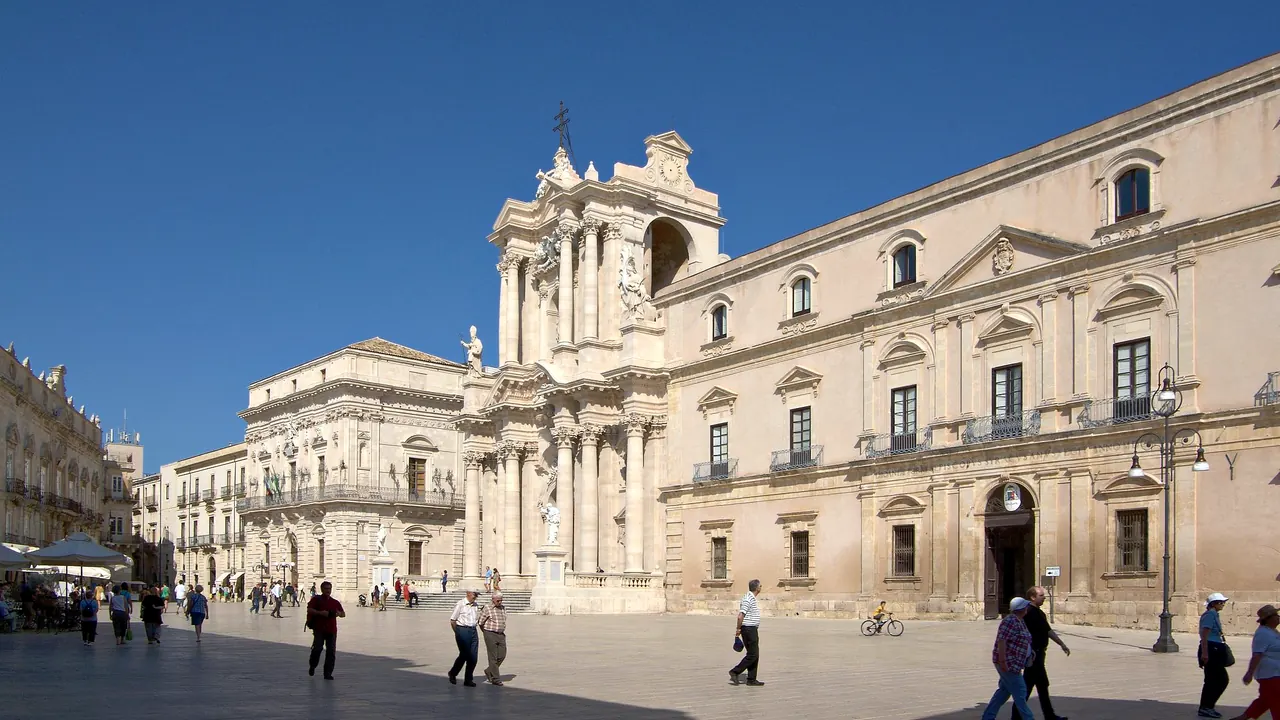
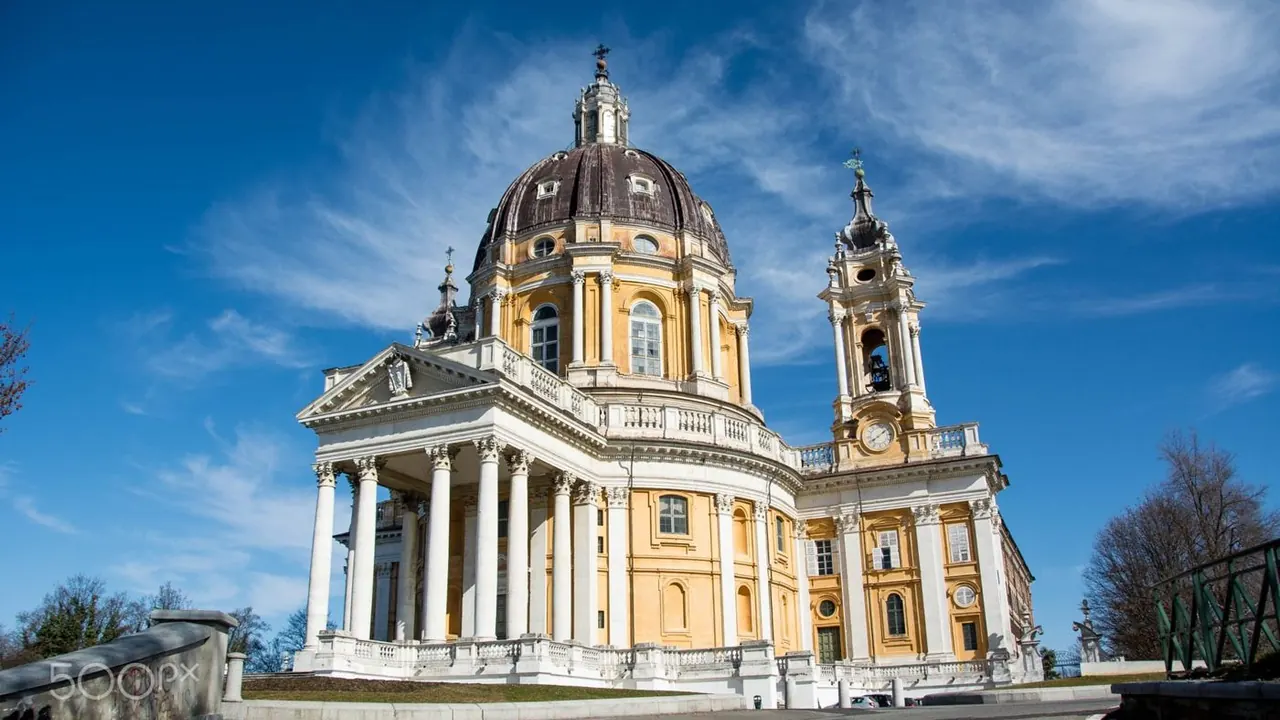
Photos: Syracuse, Sicily by Berthold Werner, CC BY-SA 3.0, cropped; Turin by Konstantin Dacosta, CC BY 3.0, cropped.
Syracuse, Sicily or Turin?
Our verdict in twelve categories, each scored against the same fixed benchmark cities, and the climate month by month, so you can choose for your trip.
Choose Syracuse, Sicily for
- beaches
- day trips
Syracuse suits a warm-weather trip that mixes the sea with antiquity. You can swim off Ortigia's rocks in the morning, see a cathedral built into a Greek temple in the afternoon, and drive out to the baroque towns of the Val di Noto. It is best for travellers who are happy with quiet evenings and willing to hire a car for the coast.
Choose Turin for
- live music and the arts
- getting around
- shopping
Turin is the better choice for people who travel to eat well, drink well and go out. Its kitchens and wine country go deeper, its evenings run later, and there is opera and orchestral music most of the year. The Alps are close enough for a day of walking or skiing. The flat arcaded centre and fast rail links mean you can manage without a car. If you want a beach, look elsewhere.
Scoreboard
Twelve categories on one fixed scale from 0 to 100. The shaded stretch is the gap between the two.
Your match
Pick a travel style or drag the sliders, and both match scores follow your weighting.
Wins on beaches and day trips with your weighting.
Wins on live music and the arts and getting around with your weighting.
What matters to you?
Category by category
What the scores mean for a trip.
Beaches & swimming
For swimming there is no contest. In Syracuse the sea is part of daily life in summer: people swim from the rocks right below the old town, there are gently sloping sandy bays to the south, and the undeveloped beaches of Vendicari are about forty minutes away.
Turin is an inland city on the Po plain. The nearest sea, the Ligurian Riviera, is a long day out by train. In summer, local people cool off in small lakes such as Avigliana instead.
Food & drink
Turin is the better place to eat. Piedmontese cooking is rich and precise, from agnolotti del plin to bollito misto. The wine comes from the Barolo and Barbaresco hills, and in autumn there are white truffles from the Langhe. The city also has its chocolate tradition, the bicerin served in its historic cafés, and Porta Palazzo, one of Europe's largest open-air markets.
Syracuse's food is excellent but narrower in range. It is built on the Ortigia market: swordfish, sea urchin pasta, raw prawns, and almond granita for breakfast. It is cooking from the sea and very regional. Turin offers more variety and more serious kitchens.
Culture & sights
The two cities are equally rich, but in different eras. In Syracuse you walk through Greek antiquity itself: temple columns built into the cathedral walls, a theatre cut into the rock at Neapolis, and the finds in the Paolo Orsi museum, all set within Ortigia's baroque lanes.
Turin's strength is its museums and its role as a royal capital. The Museo Egizio holds one of the world's great Egyptian collections. Add the Savoy palaces, the Shroud, the cinema museum in the Mole, and modern art at Rivoli and the GAM. Turin suits people who like galleries. Syracuse suits people who like ancient ruins in the open air.
Nightlife
Turin gives you more of an evening out. The aperitivo leads into crowded pavements in San Salvario, small cocktail bars in the Quadrilatero Romano, the slightly alternative Vanchiglia, and the riverside Murazzi in summer. There are also clubs in old industrial buildings.
Syracuse is mostly about a drink in a piazza or on the sea walls of Ortigia. Beach clubs add some dancing in high summer. In winter most nights end early, and anyone looking for a club drives to Catania.
Nature & outdoors
Turin has the bigger outdoors on its doorstep. The Alps are an hour or so away, with ibex and high trails in the Gran Paradiso, hut-to-hut hiking in summer and the ski slopes around Sestriere in winter. Closer in, there are walking paths up to Superga and cycle routes along the Po.
Syracuse's outdoors is warmer and more coastal. You can snorkel and dive in the Plemmirio marine reserve, walk to the green pools at Cavagrande, watch flamingos at Vendicari and spend a day on Etna. Summer heat limits hiking to the early morning.
Day trips
Both are excellent bases, and the choice depends on what you want from a day out. From Syracuse you can visit the honey-coloured baroque towns of Noto, Modica and Ragusa Ibla, the Greek theatre at Taormina, and the Roman mosaics at Piazza Armerina. You will need a car for most of these.
Turin's day trips are about wine and mountains. You can go to Alba and the Barolo villages in the Langhe, see the abbey of Sacra di San Michele high above the Susa valley, or visit Aosta and Genoa. Milan is only about an hour away by fast train.
Good for families
Families will be equally comfortable in either city, for different reasons. In Syracuse, life revolves around gently sloping sand at Arenella and Fontane Bianche, plus small treats like the echoing Ear of Dionysius, papyrus boat trips and puppet shows.
Turin's appeal for children is mostly indoors and in the parks. Highlights include the glass lift up the Mole, the mummies in the Museo Egizio, and the car museum. The arcades are easy with a pushchair, and Zoom Torino is a short drive out of town. Neither city has a zoo or theme park of its own.
Getting around
Ortigia is small enough to cross on foot in fifteen minutes, and on the island a car is more trouble than help, with restricted traffic zones and very little parking. Beyond the bridges, getting around is harder. City buses are infrequent, trains to Noto and Catania are slow, and most visitors end up hiring a car for the beaches and the Val di Noto.
In Turin you can do without wheels of your own for the whole stay. The flat grid of arcades takes you on foot from Porta Nuova to the Mole, a driverless metro line runs out to Lingotto, and trams cover the rest, if slowly. A car is only worth having for the wine hills and the mountains.
Shopping & style
Shopping in Syracuse means small craft finds in the lanes of Ortigia: hand-painted ceramics, linen, coral jewellery and papyrus paintings, plus capers, almonds and pistachio products from the morning market. Apart from a few chain stores around Corso Gelone, there is little else.
For an actual day of shopping, Turin is the place. Via Roma's arcades hold the big fashion labels, Via Garibaldi has the high-street shops, antique dealers line Via Maria Vittoria and the Balon flea market fills the streets on Saturdays. The most memorable things to bring home are edible: gianduiotti from the chocolate makers, plus truffles and Piedmontese wine from the delicatessens.
Affordability
Overall costs are about the same, but the money goes on different things. In Syracuse, market sandwiches, arancini and trattoria meals are cheap. Rooms on Ortigia get expensive in high summer, and car hire adds to the bill.
In Turin, hotels are fairly priced for most of the year except during big trade fairs. A generous aperitivo can replace dinner, and walking and cheap public transport mean you can manage without a car. Truffle season and fine dining are where the costs add up.
Live music & performing arts
Turin has a full programme all year round. There is opera and ballet at the Teatro Regio, the RAI National Symphony Orchestra, concerts in Renzo Piano's Lingotto auditorium, theatre at the Carignano, and jazz in small venues around the centre.
Syracuse has one outstanding event: Greek tragedies staged at sunset in the ancient theatre each late spring and early summer. Apart from that, it offers only puppet theatre and a few summer concerts.
Wellness & relaxation
Neither city has a bathing tradition, and spa options are mostly hotel treatments. The difference is in what makes each one restful. Syracuse offers long lunches, sunsets over the harbour and quiet walks on the sea walls outside August.
Turin offers lingering coffees in historic cafés, strolls under the arcades and afternoons in Valentino park. Real thermal baths are within reach from Turin, at Acqui Terme or in the Aosta valley, each about two hours away.
When should you go?
Pick your month. The climate figures are measured averages, not a forecast.
Syracuse, Sicily in July
Turin in July
Daytime high, °C
Rainfall in the month, mm
Where the figures come from
Syracuse, Sicily's temperatures are measured 45 km from the centre, at Cozzo Spadaro.
Syracuse, Sicily has no rain gauge within 25 km of the centre, so its rainfall comes from a gridded climate dataset read at the city rather than from a gauge further away.
Turin has no rain gauge within 25 km of the centre, so its rainfall comes from a gridded climate dataset read at the city rather than from a gauge further away.
Temperature and rainfall are climate normals, averaged over the years shown. Syracuse, Sicily: 1991-2020 normals, Cozzo Spadaro (45 km from centre). Turin: 1991-2020 normals, Torino / Caselle (15.4 km from centre).
Syracuse has a long, dry, sunny summer. The sea is warm enough for swimming from June to early October and peaks around 26°C. July and August reach about 31°C, so sightseeing is best done early and late. Rain arrives in October, the wettest month at about 96mm, and showers continue through the winter. Winter is still mild enough for walking around the archaeological sites in comfort. Spring is drier, with plenty of sun.
Turin has a much sharper change of seasons. Winter highs are only about 7°C, which is fine for museums and cafés but chilly for long walks. The wettest time is late spring, with May bringing around 115mm, and summer gets warm and humid. September is the most comfortable month for walking the city. Overall, Syracuse is the more pleasant of the two from late autumn to spring, and both are hot in high summer.
Which traveller are you?
On a beach and sun trip, choose Syracuse. You can swim from platforms below Ortigia's sea walls, spend a day on the sandy bays at Fontane Bianche or Vendicari, and rely on months of dry sunshine. Turin is inland and nearly two hours from the sea.
For a food and nightlife trip, Turin is the stronger pick. It has Piedmontese cooking, Barolo on every wine list and white truffles in autumn. Evenings start with the aperitivo, which began here, and continue in the bars of San Salvario and the Quadrilatero. Syracuse's evenings end earlier.
For a short city break, Turin is easier. Its compact grid of arcades links the Museo Egizio, the Royal Palace and the Mole on foot, and trains connect it quickly to the rest of Italy. Syracuse's centre is small too, but its best sights beyond Ortigia need more time and usually a car.
Before you go
| Measure | Syracuse, Sicily | Turin |
|---|---|---|
| Official language | Italian | Italian |
| Currency | Euro (EUR) | Euro (EUR) |
| Sockets | CFL230 V, 50 Hz | CFL230 V, 50 Hz |
| Driving side | Right | Right |
| Time zone | UTC+1, UTC+2 in summer | UTC+1, UTC+2 in summer |
| Emergency number | 112 | 112 |
| Elevation | 17 m | 239 m |
| Main airport | Catania-Fontanarossa Airport (CTA)48 km from centre96 non-stop destinations | Turin Airport (TRN)14 km from centre65 non-stop destinations |
| Public holidays this year | 13 days | 13 days |
By the numbers
| Measure | Syracuse, Sicily | Turin |
|---|---|---|
| City population | 115,515 | 841,600 |
| People per km² | 556 | 6,474 |
| Museums within 10 km | 11 | 72 |
| UNESCO World Heritage sites within 50 km | 2 | 4 |
| Swim season, months above 21 °C | 5 months | - |
Where else could you go?
Every comparison below shares a destination with this one, so you can follow Syracuse, Sicily or Turin somewhere new.
- Cataniavs Syracuse, Sicily
- Taorminavs Syracuse, Sicily
- Zermattvs Turin
- Chamonixvs Turin
- Genoavs Turin
- Milanvs Turin