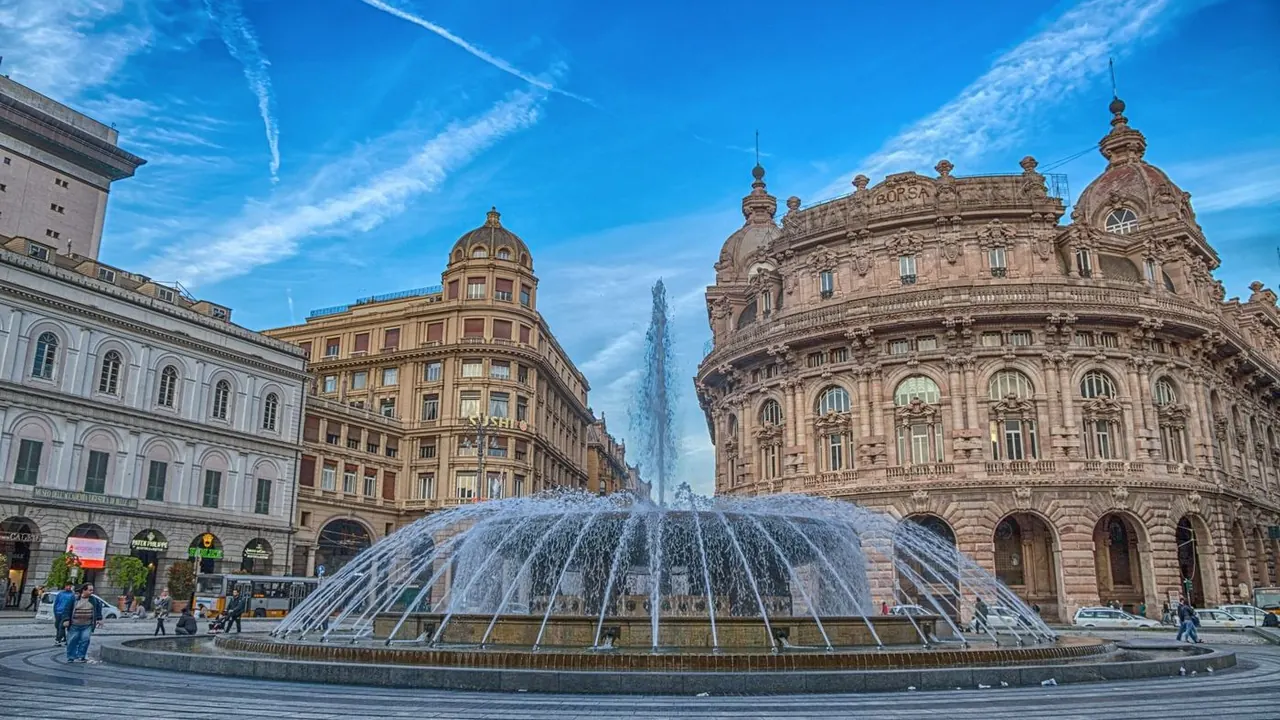
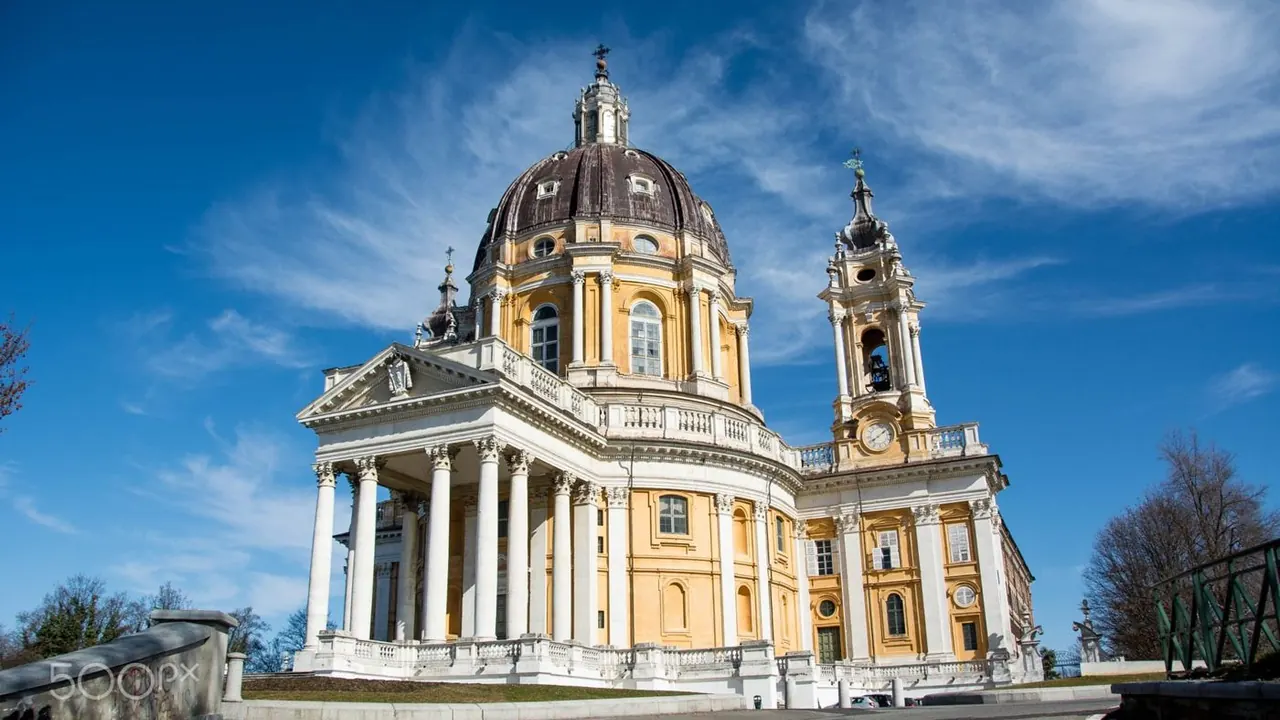
Photos: Genoa by Faber1893, CC BY-SA 4.0, cropped; Turin by Konstantin Dacosta, CC BY 3.0, cropped.
Genoa or Turin?
Our verdict in twelve categories, each scored against the same fixed benchmark cities, and the climate month by month, so you can choose for your trip.
Choose Genoa for
- beaches
- families
Genoa is the pick for travellers who want the sea within reach of a city. You can spend a morning in the caruggi and the painted Rolli palaces and swim at Boccadasse or Nervi in the afternoon, and the coastal railway takes you to Camogli, Portofino and the Cinque Terre. The aquarium keeps children busy too. It suits a summer trip that mixes sightseeing with the water, as long as you don't mind steep lanes and plenty of stairs.
Choose Turin for
- live music and the arts
- shopping
- food and drink
Choose Turin if food and evenings matter more to you than the beach. Piedmontese cooking, the aperitivo ritual, a fuller opera and concert calendar and better shopping make it the stronger city break, and the Museo Egizio is something Genoa cannot match. With the Alps and the Langhe wine hills close by, it is also the base for skiing, mountain walking and vineyard days. Its flat grid of arcaded streets is easy to walk in any weather.
Scoreboard
Twelve categories on one fixed scale from 0 to 100. The shaded stretch is the gap between the two.
Your match
Pick a travel style or drag the sliders, and both match scores follow your weighting.
Too close to call, level with your weighting
Wins on beaches and families with your weighting.
Wins on live music and the arts and shopping with your weighting.
What matters to you?
Category by category
What the scores mean for a trip.
Beaches & swimming
This is where the two cities differ most. Genoa has swimming within the city itself, at the pebble cove of Boccadasse, the bathing establishments along Corso Italia and the rock platforms below the Nervi promenade. Better bays at Camogli, Rapallo and Sestri Levante are a short train ride away. The shores are mostly pebble and crowded at summer weekends, but a daily swim fits easily into a city stay.
Turin sits inland on the Po plain. The nearest sea is that same Ligurian Riviera, nearly two hours away, so locals cool off at lakes such as Avigliana or Lago Maggiore instead. If swimming in the sea matters, Genoa is the only real choice of the two.
Food & drink
Both cities cook seriously, but Turin's table is richer and has more range. Genoa's strength is simple and very local: pesto with trofie, focaccia dunked in cappuccino, and farinata and fried fish by the slice from old friggitorie. That makes it the better place of the two for street food and seafood.
Turin answers with the depth of Piedmontese cooking: vitello tonnato, agnolotti del plin, bollito misto and white truffles from the Langhe in autumn, with Barolo and Barbaresco on the wine list. It adds gianduja, bicerin in the historic cafés and the aperitivo, which began there. Turin also has more fine dining, which is thin in Genoa.
Culture & sights
The two are close in depth but very different in character. Genoa's appeal is the place itself. Its huge medieval maze of shaded caruggi sits below the Strade Nuove, whose Rolli palaces are a UNESCO site, with painted halls as striking as the Van Dycks inside. Add the striped cathedral and the marble sculpture of Staglieno cemetery.
Turin is a royal capital built around great collections. The Museo Egizio is a draw in its own right, and the Royal Palace, the Savoy residences around Venaria and the cinema museum in the Mole fill several days. Contemporary art at Rivoli and the old Fiat works at Lingotto add a modern layer that Genoa doesn't have.
Nightlife
Neither city is made for a wild night, but Turin has more going on. In Genoa, evenings mean aperitivo and a glass of wine in the medieval squares around Piazza delle Erbe, which fill with students and locals until late at weekends. In summer people move out to the seafront at Corso Italia. Weeknights are quiet, and there are few clubs.
Turin has several distinct bar districts: wine bars in the Quadrilatero Romano, pavement crowds of students in San Salvario and a more alternative scene in Vanchiglia. In summer the riverside Murazzi fill up, and some clubs are set in old industrial buildings.
Nature & outdoors
Both have excellent outdoors on their doorstep, one by the sea and one in the mountains. From Genoa you can walk straight out of the city, taking the funicular to Righi and following the ring of hill forts. The cliff paths of Portofino and the terraced Cinque Terre trails are a train ride away, and boats leave the harbour to watch whales and dolphins in the Pelagos Sanctuary.
Turin's draw is the Alps, about an hour away: Gran Paradiso with its ibex, hut-to-hut hiking in summer and the Via Lattea ski slopes in winter. Closer in, Superga hill and the cycle paths along the Po are gentler. The city itself is flat, though, so anything wild needs a car or a train.
Day trips
Both are first-rate bases for days out, and each is a day trip from the other. Genoa's outings run along the coast by train: Camogli, Santa Margherita and Portofino in under an hour, the Cinque Terre further on, and quieter medieval Finale Ligure Borgo and Noli to the west.
Turin's best trips go inland, to the UNESCO-listed vineyards of the Langhe, truffle-town Alba and the castle villages of Barolo and La Morra. The Sacra di San Michele sits on its rock above the Susa valley. Milan is about an hour away by fast train.
Good for families
Genoa is the more rewarding city for children. The Porto Antico packs a whole day into one place: one of Europe's largest aquariums, a children's science centre, the glass biosphere and the Galata museum with its walk-through submarine. Funiculars, public lifts and summer swimming help too, though the steep, dark lanes are hard work with a pushchair.
Turin is physically easier, with a flat grid and arcades that give shade and shelter. Its cinema museum, car museum and Egyptian mummies suit older children best. But the city has no zoo or aquarium, and the zoo park at Cumiana is a drive away.
Getting around
Both are easy to manage without a car, but they move in different directions. Genoa is a vertical city: you walk the old town and harbour, then ride funiculars, a rack railway and public lifts up the hillsides. The coastal railway does more for visitors than the city's single short metro line or its slow buses.
Turin is flat and laid out in a grid, so walking from Porta Nuova through Piazza San Carlo to the Mole is simple, with arcades overhead much of the way. A driverless metro line, trams and buses cover the outer districts.
Shopping & style
Turin is the better place to shop. Via Roma's arcades carry luxury and designer labels, boutiques cluster around Via Lagrange, antique dealers line Via Maria Vittoria, and the Balon flea market fills the streets behind Porta Palazzo every Saturday. Chocolate makers and delicatessens selling truffles and Piedmontese wine are the best finds of all.
Genoa's arcaded Via XX Settembre covers the familiar Italian names, but it lacks Turin's luxury shops and antiques. The things worth buying are in the old town: candied fruit, pesto and olive oil, silver filigree and coral from small workshops.
Affordability
Costs are much the same in both, comfortable rather than cheap for northern Italy. Genoa's savings are focaccia and farinata for very little, and its costs grow on the Riviera in summer, where loungers and resort prices add up.
In Turin a generous aperitivo can stand in for dinner and Porta Palazzo market is good value. Costs there rise during trade fairs, the truffle season and at the main museums.
Live music & performing arts
Turin has the fuller calendar. The Teatro Regio stages a full opera and ballet season, the RAI National Symphony Orchestra has its own auditorium, and Renzo Piano's hall at Lingotto adds more concerts. Jazz clubs and long-running classical, jazz and electronic festivals fill out the year.
Genoa can offer an evening or two: opera, ballet and symphonic concerts at the Carlo Felice, Paganini concerts, and small clubs that keep the songwriter tradition going. There is less choice, and its Italian-language theatre suits few visitors.
Wellness & relaxation
Neither city has a bathing culture, and both send visitors to Acqui Terme for thermal water. It is a little over an hour from Genoa and nearer two from Turin, which also has the Alpine baths of the Aosta valley.
Where they differ is pace. Turin's slow cafés, arcade walks and Valentino park make the whole stay feel calm. Genoa's port and crowded lanes are lively, so rest means getting out to the villa gardens of Nervi or to a long lunch in a Riviera village.
When should you go?
Pick your month. The climate figures are measured averages, not a forecast.
Genoa in July
Turin in July
Daytime high, °C
Rainfall in the month, mm
Where the figures come from
Genoa has no rain gauge within 25 km of the centre, so its rainfall comes from a gridded climate dataset read at the city rather than from a gauge further away.
Genoa's sunshine is measured 80 km from the centre, at Capo Mele.
Turin has no rain gauge within 25 km of the centre, so its rainfall comes from a gridded climate dataset read at the city rather than from a gauge further away.
Temperature and rainfall are climate normals, averaged over the years shown. Genoa: 1991-2020 normals, Genova / Sestri (6.7 km from centre). Turin: 1991-2020 normals, Torino / Caselle (15.4 km from centre).
Genoa has the milder climate. Winter days reach about 12°C against Turin's 7°C, and its summers are very dry, with only about 27mm of rain in July and long hours of sunshine. The sea is warm enough for swimming from June to September and reaches about 25°C in August. Late spring and early autumn are the most comfortable months for walking its hills. Heavy rain arrives in October and lasts through November, so an autumn visit there is a gamble.
Turin has colder winters, better suited to the ski slopes than to city walks, and a hotter, stickier summer that peaks near 29°C in July. Its rain is spread more evenly through the year, with a wet May and a damp stretch from September to November. For exploring on foot, April and June are the most pleasant months, mild to warm rather than hot, though showers are likely in both. March is drier but still cool, and September stays warm while the autumn rain begins.
Which traveller are you?
For a beach and sun trip, Genoa is the clear choice. Clear water, pebble coves at Boccadasse and Nervi, and Riviera towns a short train ride away give you a swim most afternoons. Turin has no coast, and the sea is a long day's journey from there.
For a food and nightlife trip, Turin comes out ahead. It has truffles, Barolo and agnolotti, the aperitivo started there, and historic cafés serve bicerin under the arcades. Later, its several bar districts, San Salvario, Vanchiglia, the Quadrilatero and the summer Murazzi, give more choice than Genoa's old-town squares.
On a family trip with children, Genoa has the edge. The aquarium, the walk-through submarine at the Galata museum, the funiculars and the summer swimming add up to more for children than Turin's museums. Turin's flat streets are easier with pushchairs, though.
Before you go
| Measure | Genoa | Turin |
|---|---|---|
| Official language | Italian | Italian |
| Currency | Euro (EUR) | Euro (EUR) |
| Sockets | CFL230 V, 50 Hz | CFL230 V, 50 Hz |
| Driving side | Right | Right |
| Time zone | UTC+1, UTC+2 in summer | UTC+1, UTC+2 in summer |
| Emergency number | 112 | 112 |
| Elevation | 20 m | 239 m |
| Main airport | Genoa Cristoforo Colombo Airport (GOA)7 km from centre25 non-stop destinations | Turin Airport (TRN)14 km from centre65 non-stop destinations |
| Public holidays this year | 13 days | 13 days |
By the numbers
| Measure | Genoa | Turin |
|---|---|---|
| City population | 558,745 | 841,600 |
| People per km² | 2,325 | 6,474 |
| Museums within 10 km | 51 | 72 |
| UNESCO World Heritage sites within 50 km | 1 | 4 |
| Swim season, months above 21 °C | 4 months | - |
Where else could you go?
Every comparison below shares a destination with this one, so you can follow Genoa or Turin somewhere new.