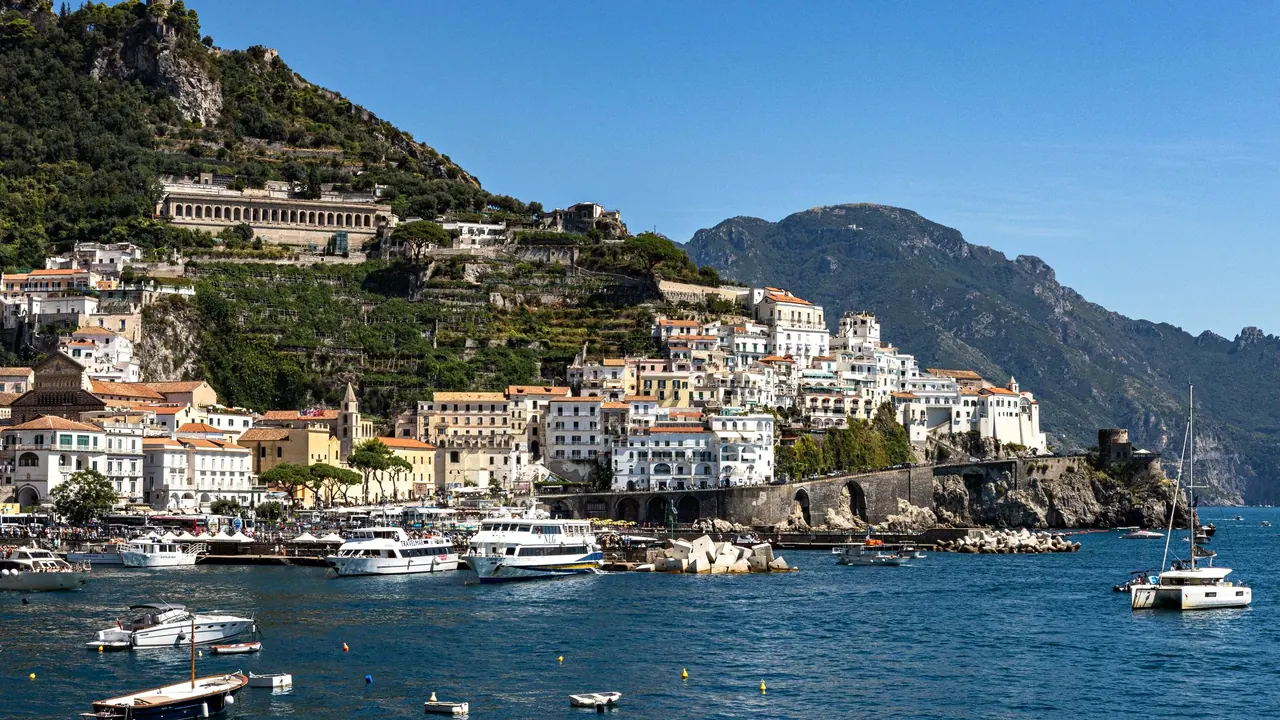
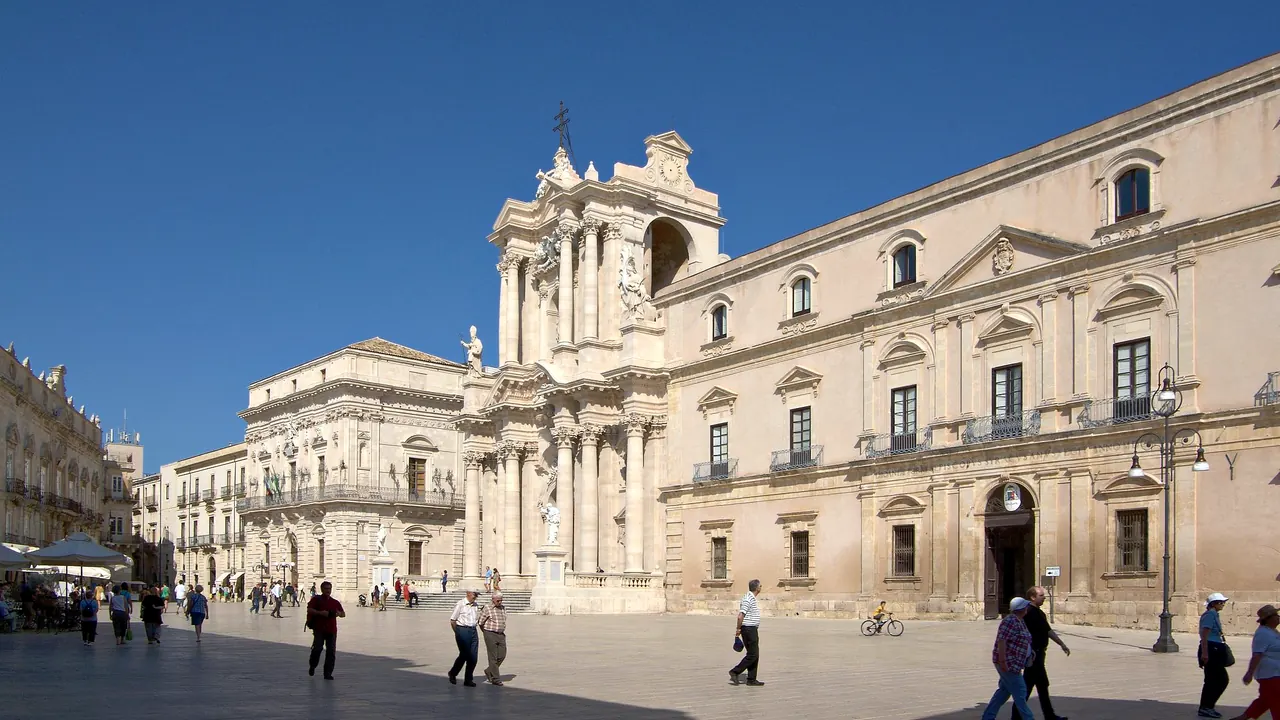
Photos: Amalfi by Oleksandra Zelena, Pexels License; Syracuse, Sicily by Berthold Werner, CC BY-SA 3.0, cropped.
Amalfi or Syracuse, Sicily?
Our verdict in twelve categories, each scored against the same fixed benchmark cities, and the climate month by month, so you can choose for your trip.
Choose Amalfi for
- nature and the outdoors
- getting around
- day trips
Amalfi is for travellers who come for the coast itself: cliffs dropping into the sea, lemon terraces, the Path of the Gods and boat trips to Positano, Ravello and Capri. It suits walkers and couples who don't mind steep stairs and steep bills. They will spend their days outdoors or on the water rather than in museums.
Choose Syracuse, Sicily for
- culture and sights
- prices
- families
Syracuse gives you more to do at noticeably lower cost. Ortigia and the Neapolis park offer some of the richest Greek and baroque heritage in Italy, the market cooking is better, and sandy beaches lie to the south. It is the stronger choice for families, food lovers, anyone on a budget and anyone who wants history alongside the sea. The trade-off is that a car helps for the wider region.
Scoreboard
Twelve categories on one fixed scale from 0 to 100. The shaded stretch is the gap between the two.
Your match
Pick a travel style or drag the sliders, and both match scores follow your weighting.
Wins on nature and the outdoors and getting around with your weighting.
Wins on culture and sights and prices with your weighting.
What matters to you?
Category by category
What the scores mean for a trip.
Beaches & swimming
Amalfi's town beach is Marina Grande, a strip of pebbles under the Duomo that is mostly given over to beach-club loungers in summer. The nicer swimming is at Atrani, ten minutes' walk away, or in coves such as Santa Croce that you reach by stairs or shuttle boat. Many people simply hire a boat for the day.
Syracuse offers more kinds of swimming. You can dive off the rocks and wooden platforms below Ortigia's sea walls, and further south there are proper sandy bays at Arenella and Fontane Bianche. Best of all are the undeveloped pale beaches of the Vendicari reserve, but you really need a car to get to them.
Food & drink
Both cities cook with their own coast, but Syracuse eats better. Amalfi's best things are its sfusato lemons, Cetara's colatura and scialatielli with clams. The town is small, though, and much of the food around Piazza Duomo is made for passing crowds.
In Syracuse, eating starts at the Ortigia morning market, with swordfish, sea urchins and capers, and the same ingredients turn up in pasta with sardines, raw prawns and arancini. Almond granita for breakfast, good pastry shops and cheap Nero d'Avola give you far more to explore over a week.
Culture & sights
This is where the two cities differ most. Amalfi's heritage comes from its medieval maritime republic: the Arab-Norman Duomo with its bronze doors, the Chiostro del Paradiso, the Arsenale and the paper museum up the valley. Most visitors have seen it all in half a day.
Syracuse was one of the great cities of the Greek world, and its sights fill days. On Ortigia, the cathedral is built around the Doric columns of a temple to Athena, and the island also has the Fountain of Arethusa and Castello Maniace. On the mainland are the Neapolis theatre and the Ear of Dionysius, one of Italy's finest archaeological museums, Caravaggio and the catacombs.
Nightlife
Neither is a place for clubbing, but Syracuse has more going on after dark. In Amalfi, the evening ends with a gelato or a last drink on the piazza, and the town goes quiet once the last buses and ferries leave. On summer weekends, Ortigia's wine and cocktail bars stay busy past midnight, and the beach clubs to the south add some dancing in July and August. For a real night out, you would head to Naples from one and Catania from the other.
Nature & outdoors
Amalfi's landscape is the reason people go, and it begins right behind the town. The Valle delle Ferriere gorge has waterfalls and ferns, mule stairways climb to Pontone and Ravello, and the Path of the Gods above Positano is among Europe's great coastal walks. All of it is a short walk or bus ride away.
Syracuse has more variety but less drama, and it is further away. Inland there are the limestone gorges of Cavagrande and Pantalica, Vendicari's lagoons draw flamingos, and Etna is a long day trip. Where it does better is under the water: the Plemmirio marine reserve is good for snorkelling and diving.
Day trips
Both are excellent bases, but the trips are of different kinds. From Amalfi you hop by bus and ferry between famous coastal places: Ravello's villa gardens, Positano, Capri, and with some planning Pompeii and Paestum. Without a car, it is the easier of the two.
From Syracuse, the trips go inland to the UNESCO-listed baroque towns of the Val di Noto, Noto, Modica and Ragusa Ibla, and north to Catania and Taormina. These work best with a hire car rather than on slow regional transport.
Good for families
Syracuse is much the easier choice with children. Its sandy beaches shelve gently, Ortigia is flat and mostly free of cars, and children enjoy the echo in the Ear of Dionysius, the puppet shows and the boat trips among the papyrus.
Amalfi suits older children who swim confidently and like boats and sea caves. With toddlers it is hard going: endless stairs where a pushchair is useless, a crowded pebble beach and cliff-road buses that bring on carsickness.
Getting around
Both centres are small enough to walk, and in both a car is a nuisance in town. The difference is the terrain and what lies beyond. Amalfi is all stairways, which is hard on anyone with limited mobility. Its buses and seasonal ferries cover the whole coast without a car, although in summer the buses fill up and the single road gets jammed.
Ortigia is flat and takes fifteen minutes to cross on foot. Outside it, though, local buses are infrequent and confusing, so most visitors hire a car for the beaches, the gorges and the baroque towns.
Shopping & style
Amalfi's shopping is one street running up from Piazza Duomo. In Syracuse it is spread through the lanes of Ortigia and its morning market. In Amalfi, the thing to buy is the handmade cotton paper from the valley mills, along with majolica tableware and sandals made to measure, though much of the stock repeats from shop to shop.
Syracuse adds coral and silver jewellery, papyrus paintings tied to the plants of the Ciane river, and capers, almonds and pistachio products from the market to take home. It also has a few ordinary chain stores on the mainland. Fashion and luxury shoppers will find little in either.
Affordability
Syracuse costs far less. Amalfi is among the most expensive places to stay in Italy, with sea-view rooms that cost as much as Europe's dearest capitals, and the meals, loungers and boat hire are expensive too. Staying up in the hill villages helps, but it is never cheap.
In Syracuse, eating out is good value. Most of the extra cost comes from rooms on Ortigia in high summer and from car hire, and both can be kept down by staying on the mainland or coming in spring or autumn.
Live music & performing arts
Each has one great seasonal event, and Syracuse has a little more around it. Amalfi has no theatre of its own. Its highlight is the summer Ravello Festival up the hill, with concerts on the terrace of Villa Rufolo above the sea.
Since 1914, Syracuse has staged Greek tragedies and comedies in its ancient theatre in late spring and early summer. Ortigia's family-run puppet theatres also keep the Charlemagne legends going for the rest of the year.
Wellness & relaxation
Getting a spa treatment is easier in Syracuse. Amalfi's treatment rooms are in cliffside luxury hotels, which mostly keep them for their own guests, while Ortigia has a few day spas that anyone can book. In Amalfi, rest comes from long terrace lunches and swims off the rocks, and in summer you have to go up to the hill hamlets to find it.
Syracuse keeps its calm in the centre for more of the year. Outside August, evening walks on Ortigia's sea walls and sunsets over the harbour make a slow few days feel properly restful.
When should you go?
Pick your month. The climate figures are measured averages, not a forecast.
Amalfi in July
Syracuse, Sicily in July
Daytime high, °C
Rainfall in the month, mm
Where the figures come from
Amalfi's temperatures are measured 65 km from the centre, at Grazzanise.
Amalfi has no rain gauge within 25 km of the centre, so its rainfall comes from a gridded climate dataset read at the city rather than from a gauge further away.
Syracuse, Sicily's temperatures are measured 45 km from the centre, at Cozzo Spadaro.
Syracuse, Sicily has no rain gauge within 25 km of the centre, so its rainfall comes from a gridded climate dataset read at the city rather than from a gauge further away.
Temperature and rainfall are climate normals, averaged over the years shown. Amalfi: 1991-2020 normals, Grazzanise (64.7 km from centre). Syracuse, Sicily: 1991-2020 normals, Cozzo Spadaro (45 km from centre).
Summer is much the same in both: highs around 31°C in July and August, a sea that warms to 26°C, and comfortable swimming from June to September, with the water still pleasant into early October. Amalfi's dry season is short, though. Rain picks up in September, October is already wet and November peaks at about 143mm. The best months for the Path of the Gods and the valley walks are therefore April, May and early June, before the midsummer heat makes the exposed trails a slog.
Syracuse is drier and sunnier in every month, and its spring is almost rainless, so April and May are ideal for the archaeological sites and the inland gorges. Its wetter months run from October to January, but even then it gets less rain than Amalfi. Winter days are milder too, around 16°C in January against Amalfi's 13°C, which makes Syracuse the better choice for walking the streets out of season. In July and August, both are best explored early and late in the day.
Which traveller are you?
On a culture and arts trip, Syracuse is far ahead. Greek theatre, Roman amphitheatre, temple columns inside a baroque cathedral and a major archaeological museum add up to several full days of sightseeing. Amalfi's medieval heritage is lovely but takes a single morning.
For an outdoors trip, pick Amalfi. The walking starts at the back of town and climbs onto some of Europe's finest coastal paths, and kayaks reach sea caves such as the Emerald Grotto. Syracuse's gorges and lagoons are rewarding but mostly need a car.
On a trip on a tight budget, Syracuse makes much more sense. Market sandwiches, granita and simple trattoria meals are cheap, and mainland rooms are reasonable. In Amalfi, rooms stay expensive even outside summer, and the local bus is the only real saving.
Before you go
| Measure | Amalfi | Syracuse, Sicily |
|---|---|---|
| Official language | Italian | Italian |
| Currency | Euro (EUR) | Euro (EUR) |
| Sockets | CFL230 V, 50 Hz | CFL230 V, 50 Hz |
| Driving side | Right | Right |
| Time zone | UTC+1, UTC+2 in summer | UTC+1, UTC+2 in summer |
| Emergency number | 112 | 112 |
| Elevation | 6 m | 17 m |
| Main airport | Naples International Airport (NAP)38 km from centre131 non-stop destinations | Catania-Fontanarossa Airport (CTA)48 km from centre96 non-stop destinations |
| Public holidays this year | 13 days | 13 days |
By the numbers
| Measure | Amalfi | Syracuse, Sicily |
|---|---|---|
| City population | 4,729 | 115,515 |
| People per km² | 830 | 556 |
| Museums within 10 km | 8 | 11 |
| UNESCO World Heritage sites within 50 km | 5 | 2 |
| Swim season, months above 21 °C | 5 months | 5 months |
Where else could you go?
Every comparison below shares a destination with this one, so you can follow Amalfi or Syracuse, Sicily somewhere new.
- Positanovs Amalfi
- Salernovs Amalfi
- Sorrentovs Amalfi
- Naplesvs Amalfi
- Cataniavs Syracuse, Sicily
- Taorminavs Syracuse, Sicily