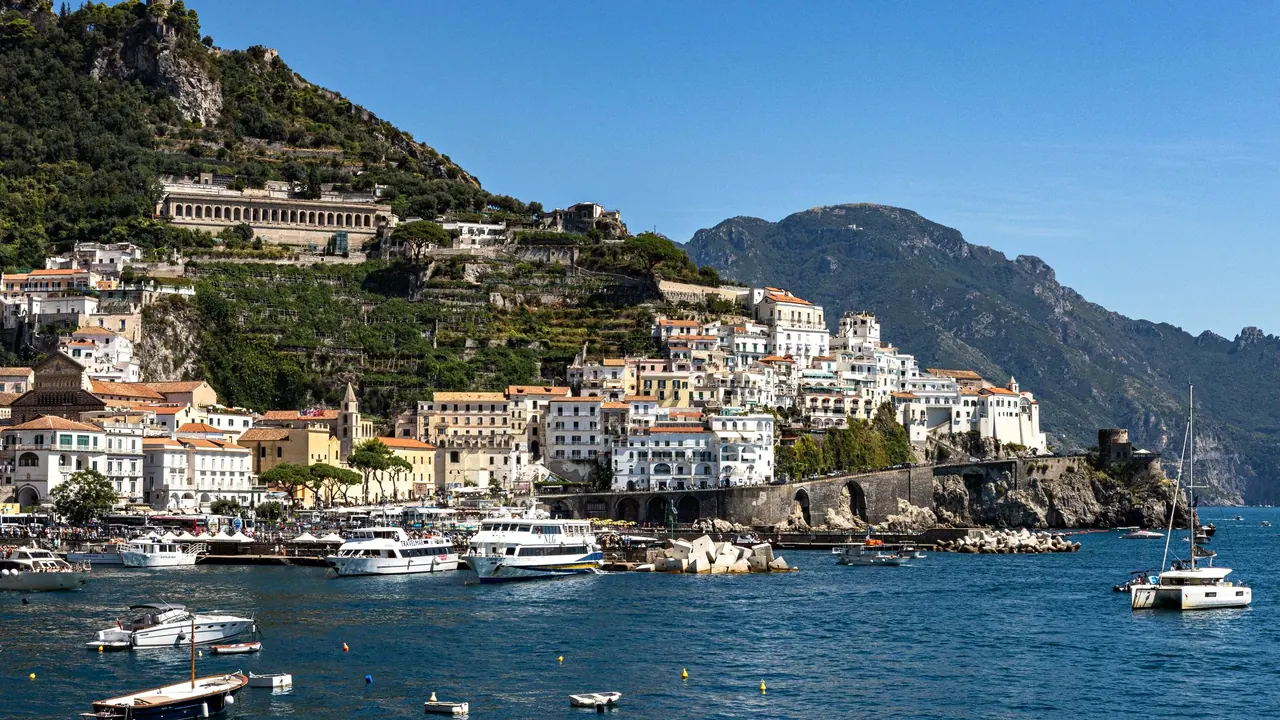
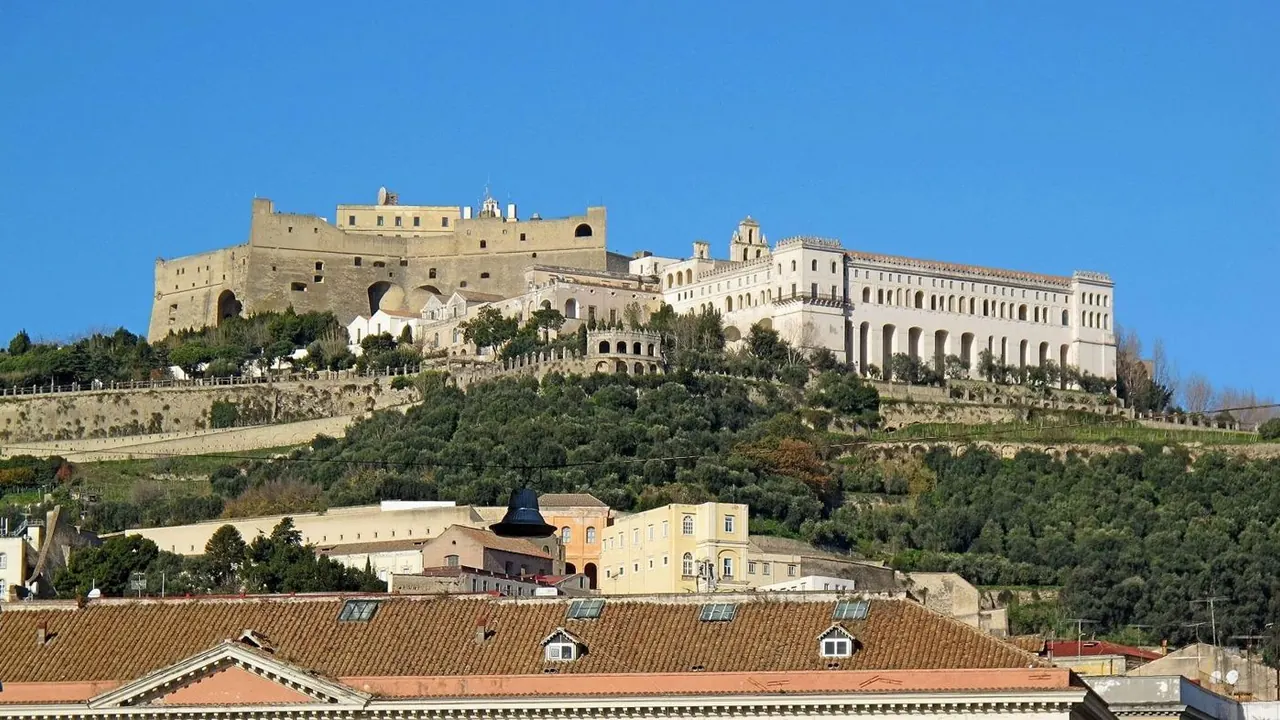
Photos: Amalfi by Oleksandra Zelena, Pexels License; Naples by pietro scerrato, CC BY 3.0, cropped.
Amalfi or Naples?
Our verdict in twelve categories, each scored against the same fixed benchmark cities, and the climate month by month, so you can choose for your trip.
Choose Amalfi for
- beaches
- nature and the outdoors
Amalfi suits a slower coastal stay built around the landscape: swims from pebble beaches and coves, boat days out to the grottoes, and walks on the terraced mountainsides up to the Path of the Gods. It is small, steep and expensive, quiet after dinner and short on sights, so it works best for couples and walkers who want scenery rather than a city.
Choose Naples for
- culture and sights
- nightlife
- prices
Travellers who want a real city with depth should pick Naples. The historic centre, the Archaeological Museum and the San Carlo opera house could fill a week, and the pizza and street food are far stronger. Evenings run late in the piazzas and your money goes much further. Pompeii, Herculaneum and the islands are all easy day trips from it.
Scoreboard
Twelve categories on one fixed scale from 0 to 100. The shaded stretch is the gap between the two.
Your match
Pick a travel style or drag the sliders, and both match scores follow your weighting.
Wins on beaches and nature and the outdoors with your weighting.
Wins on culture and sights and nightlife with your weighting.
What matters to you?
Category by category
What the scores mean for a trip.
Beaches & swimming
Amalfi puts the sea at the foot of the town. Marina Grande lies below the Duomo steps, Atrani's beach is ten minutes away on foot, and small boats run to coves such as Santa Croce and Duoglio. It is all pebble and packed with loungers in high summer, but the water is clear and a swim fits easily between other plans.
In Naples you swim from the rocks under the Lungomare or at small lidos in Posillipo, and the water near the port is not always clean. The good swimming there means a ferry to Procida, Ischia or Capri, which makes it a day out rather than a daily habit.
Food & drink
Naples is the far better place to eat. It is the home of pizza, and its street food, from fried pizza to sfogliatelle and babà, sits alongside markets such as the Pignasecca and trattorias cooking ragù and genovese. Its one gap is international food, which is scarce.
Amalfi cooks from a fine coastal larder of sfusato lemons, anchovies, colatura and scialatielli with seafood, but the choice is a small town's. The cafés on the piazza that serve the day visitors are often average, and the careful trattorias are tucked away in the alleys and up the valley.
Culture & sights
The gap here is wide. Amalfi's heritage is lovely but takes half a day: the striped Duomo with its bronze doors cast in Constantinople, the Chiostro del Paradiso, the old Arsenale and the paper museum.
Naples could fill a week, with churches on every block of Spaccanapoli and the National Archaeological Museum holding the finds from Pompeii and Herculaneum. Add the Veiled Christ in the Cappella Sansevero, the catacombs of San Gennaro, the Royal Palace and Capodimonte. Amalfi was a maritime republic, while Naples was the capital of a kingdom, and the difference in scale shows.
Nightlife
Amalfi's evenings end with dinner and a drink or gelato on Piazza Duomo. The town goes quiet once the last buses and ferries have taken the day visitors away.
Naples keeps going well past midnight, with students on the steps around Piazza Bellini and a better-dressed crowd in the alleys of Chiaia. Neither is a clubbing city, but only Naples offers a proper night out.
Nature & outdoors
Both sit in outstanding landscape, but of different kinds. Amalfi has its scenery on the doorstep: the Lattari mountains dropping into the sea, the Valle delle Ferriere gorge at the back of town, mule stairways up to Pontone and Ravello, and the Path of the Gods a short bus ride away at Agerola.
Naples offers volcanoes instead. The crater rim of Vesuvius, the oak-filled crater of Astroni, Lake Avernus and the snorkelling at Gaiola are all close by. Green space inside the city is scarce, though, and the Path of the Gods takes a long day from there.
Day trips
Both are excellent bases, but Naples has the edge. Pompeii and Herculaneum are each under an hour away on the Circumvesuviana, the palace at Caserta is about forty minutes by train, and ferries from Molo Beverello reach Capri, Ischia and Procida.
Amalfi's strength is its own coast: Ravello up the hill, Positano by ferry, and Cetara and Vietri sul Mare along the road. Pompeii and Paestum are within reach but take some planning, and the ferries run mainly from spring to autumn.
Good for families
Neither is easy with small children, but Naples copes better. It has the Edenlandia amusement park, the zoo and the science museum at Bagnoli, plus funiculars and underground tunnels that older children enjoy, and Neapolitans make families welcome in any pizzeria.
Amalfi is built of stairways that defeat a pushchair, its beach is a crowded strip of pebbles, and the winding cliff buses can make children carsick. Older children who swim confidently will love the boats and sea caves, but families with toddlers are better off staying somewhere else.
Getting around
Amalfi is tiny and easy to walk, though almost every route involves steps, and its buses and ferries make it the hub of the coast. In summer the buses fill up and pass waiting queues, and the single cliff road jams.
Naples is a little easier. Metro Line 1, with its stations decorated as art galleries, and four funiculars up to Vomero and Posillipo do much of the climbing for you. Its buses are slow and the Circumvesuviana is crowded and prone to delays, and in neither place is a car worth having.
Shopping & style
Naples is the place for real shopping. Via Toledo and the Galleria Umberto I are the high street, Via Chiaia and Via dei Mille have the boutiques, and Chiaia's tailors make suits, shirts and silk ties by hand. The workshops on Via San Gregorio Armeno make nativity figures all year.
Amalfi has one main street of limoncello, lemon soap and ceramics, and much of the stock is the same from shop to shop. Its handmade cotton paper from the valley mills is the souvenir that is truly its own.
Affordability
The difference here is large. Amalfi is among the most expensive places to stay in Italy. Sea-view rooms, seafront meals, loungers and boat hire are all priced at the luxury end, and only the local buses are cheap.
Naples is one of the cheaper big cities in Western Europe, and pizza, coffee at the bar, the funiculars and guesthouses in the centre are all easy on a budget. Its costs rise only when you head to the islands or the Amalfi Coast, so staying in Naples and visiting Amalfi for the day saves a great deal.
Live music & performing arts
Naples has the Teatro di San Carlo, the oldest opera house in Europe still in use, with a full season of opera, ballet and concerts. There are also concerts at the San Pietro a Majella conservatory, and Neapolitan song in small venues and trattorias.
Amalfi has no theatre at all. Its one draw is up the hill at Ravello, where the summer festival holds concerts on the terrace of Villa Rufolo. That is an evening worth planning around, but it is a short season, not a year-round programme.
Wellness & relaxation
Naples has real thermal water: the springs at Agnano on the edge of the city, used since Roman times, and the terraced thermal parks of Ischia an hour away by hydrofoil. The city itself is loud, so in town rest comes from the Lungomare and the cloisters of Santa Chiara.
Amalfi has no bathing tradition, and its spas belong to cliff-side hotels that serve mainly their own guests. Its calm comes from the pace of long lunches and early swims, and you will find it most easily in the hill hamlets and in May or October.
When should you go?
Pick your month. The climate figures are measured averages, not a forecast.
Amalfi in July
Naples in July
Daytime high, °C
Rainfall in the month, mm
Where the figures come from
Amalfi's temperatures are measured 65 km from the centre, at Grazzanise.
Amalfi has no rain gauge within 25 km of the centre, so its rainfall comes from a gridded climate dataset read at the city rather than from a gauge further away.
Naples has no rain gauge within 25 km of the centre, so its rainfall comes from a gridded climate dataset read at the city rather than from a gauge further away.
Naples's sunshine is measured 28 km from the centre, at Grazzanise.
Temperature and rainfall are climate normals, averaged over the years shown. Amalfi: 1991-2020 normals, Grazzanise (64.7 km from centre). Naples: 2005-2020 (sunshine 1991-2020, rainfall 1991-2020) normals, Napoli / Capodichino (4.6 km from centre).
The two have almost exactly the same climate, so the month you travel hardly decides between them. The sea is warm enough for comfortable swimming from June to October and reaches about 26°C in August, and May suits people who don't mind cooler water. July and August reach 31°C with long sunshine and almost no rain. That is perfect on a lounger but hard work on Amalfi's exposed stairways and trails, or in the airless lanes of central Naples.
The rain sets in during September and peaks in November at around 145mm, and winter highs are only 13°C to 14°C. That makes May, June and late September the best months in both places: warm, mostly dry and good for walking. Amalfi depends more on summer, because its life is on the water and its ferries run mainly from spring to autumn. Naples, with its museums, churches and opera, holds up much better in a wet winter week.
Which traveller are you?
For a beach and sun trip, Amalfi is the better pick. Its pebble beach lies right below the old town, Atrani and coves like Santa Croce are a short walk or boat ride away, and boat hire to the grottoes is easy. In Naples, good swimming usually means taking a ferry.
On a culture and arts trip, Naples wins outright. The Greek street grid, the Archaeological Museum with its Pompeii frescoes, the Veiled Christ and the underground city fill several days, and the San Carlo stages opera. Amalfi's Duomo and cloister take a morning.
For a food and nightlife trip, Naples is far ahead. This is where pizza comes from, the street food and pastry shops are everywhere, and evenings go on past midnight around Piazza Bellini and in Chiaia. Amalfi offers good lemon and seafood cooking, then quiet.
Before you go
| Measure | Amalfi | Naples |
|---|---|---|
| Official language | Italian | Italian |
| Currency | Euro (EUR) | Euro (EUR) |
| Sockets | CFL230 V, 50 Hz | CFL230 V, 50 Hz |
| Driving side | Right | Right |
| Time zone | UTC+1, UTC+2 in summer | UTC+1, UTC+2 in summer |
| Emergency number | 112 | 112 |
| Elevation | 6 m | 17 m |
| Main airport | Naples International Airport (NAP)38 km from centre131 non-stop destinations | Naples International Airport (NAP)7 km from centre131 non-stop destinations |
| Public holidays this year | 13 days | 13 days |
By the numbers
| Measure | Amalfi | Naples |
|---|---|---|
| City population | 4,729 | 913,462 |
| People per km² | 830 | 7,676 |
| Museums within 10 km | 8 | 65 |
| UNESCO World Heritage sites within 50 km | 5 | 5 |
| Swim season, months above 21 °C | 5 months | 5 months |
Where else could you go?
Every comparison below shares a destination with this one, so you can follow Amalfi or Naples somewhere new.