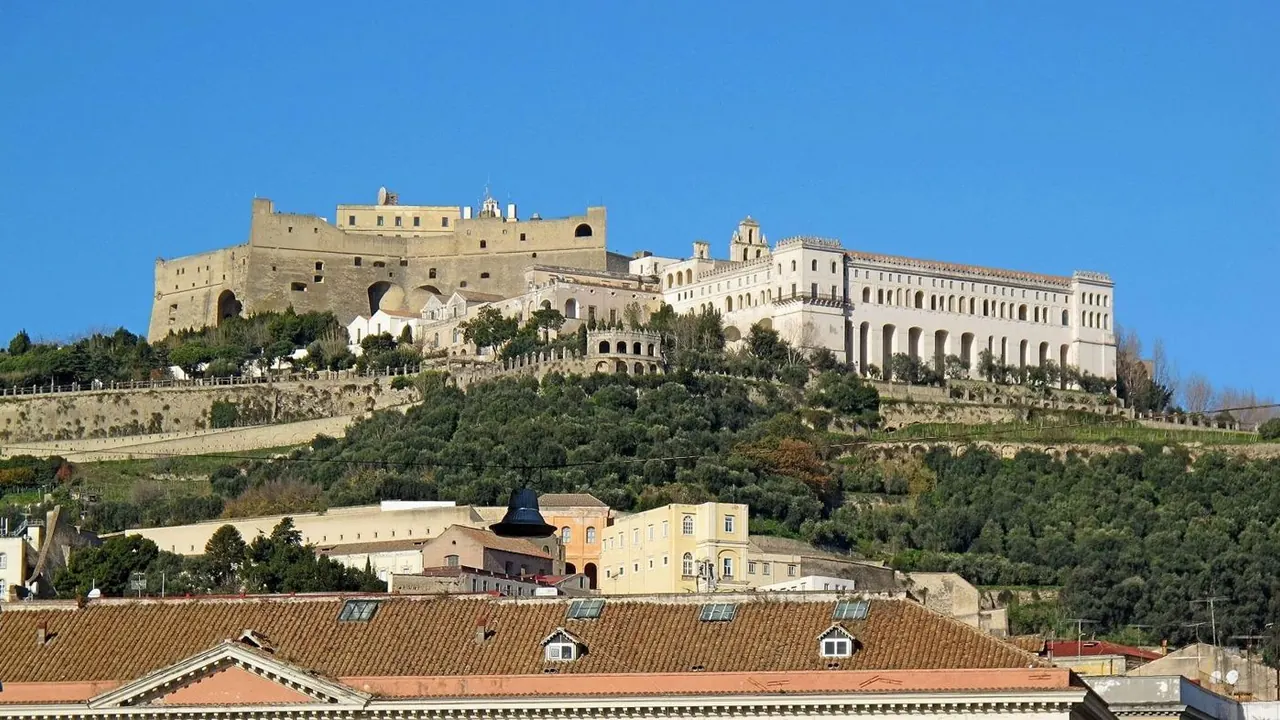
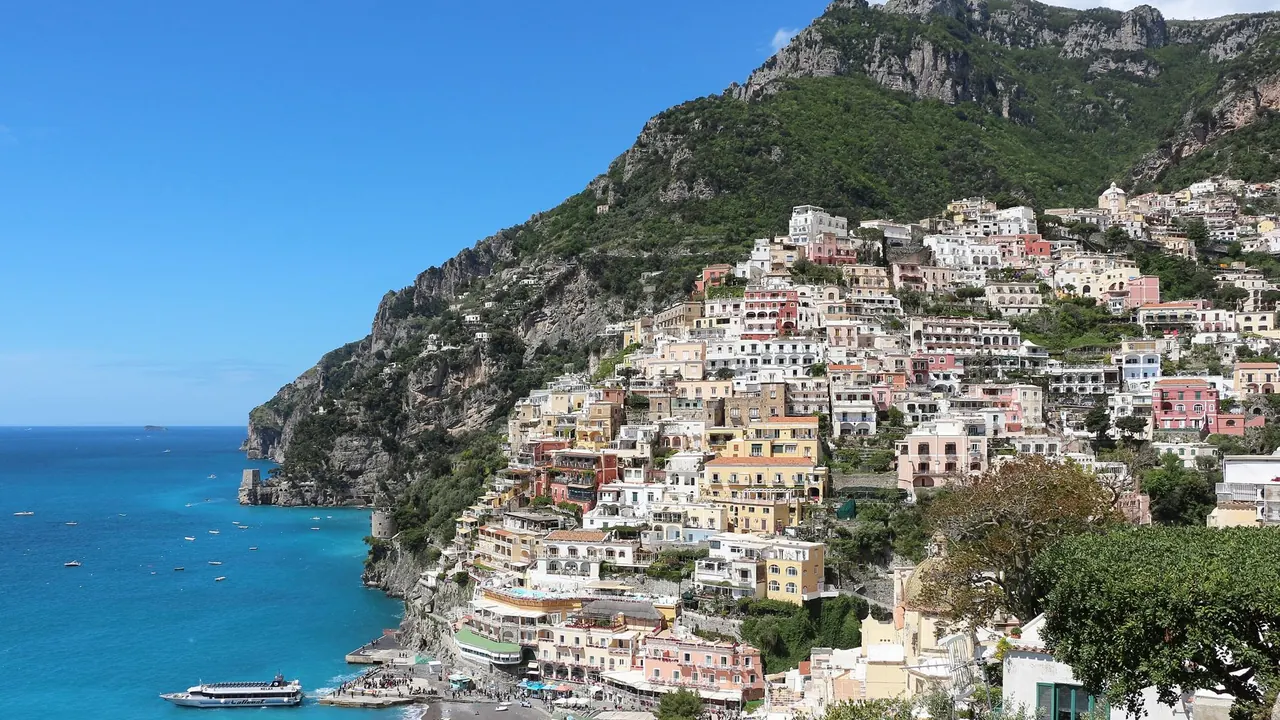
Photos: Naples by pietro scerrato, CC BY 3.0, cropped; Positano by Bernard Gagnon, CC BY 4.0, cropped.
Naples or Positano?
Our verdict in twelve categories, each scored against the same fixed benchmark cities, and the climate month by month, so you can choose for your trip.
Choose Naples for
- culture and sights
- prices
- live music and the arts
Naples is the choice for travellers who want a real city. It has one of Europe's great historic centres, the Pompeii finds in the Archaeological Museum, pizza in the place it was invented and late evenings on Piazza Bellini. It is also far kinder on the wallet, and the ruins, islands and coast are all within reach by train or ferry.
Choose Positano for
- beaches
- nature and the outdoors
- wellness
For a slower, more scenic trip built around the sea, Positano is the better fit: swimming off its coves, walking the Path of the Gods and long lunches on a terrace. There is little to visit and little to do after dinner, and it is very expensive. It works best for couples who want beauty and calm and are happy to pay for them.
Scoreboard
Twelve categories on one fixed scale from 0 to 100. The shaded stretch is the gap between the two.
Your match
Pick a travel style or drag the sliders, and both match scores follow your weighting.
Wins on culture and sights and prices with your weighting.
Wins on beaches and nature and the outdoors with your weighting.
What matters to you?
Category by category
What the scores mean for a trip.
Beaches & swimming
Positano is the better place to swim. Spiaggia Grande and Fornillo are right below the town, the water is clear and boats reach quieter coves. The shore is steep, coarse grey pebble, though, and every spot is taken by mid-morning in August.
Naples has the sea all round it but little beach to speak of. There are rocks below the Lungomare, small lidos in Posillipo and paid beach clubs, and the water near the port is not always clean. Its best swimming is on Procida or Ischia, or down the coast towards Positano itself.
Food & drink
Naples is one of Italy's great places to eat. You get Neapolitan pizza in its home city, fried street food, sfogliatelle and babà, and markets such as the Pignasecca and Porta Nolana full of fish, buffalo mozzarella and San Marzano tomatoes.
Positano offers a setting rather than a range: clams, grilled fish and lemon desserts on terraces above the sea. The same coastal menu repeats from place to place, there is no street food or market life, and many kitchens shut through the winter.
Culture & sights
Naples has far more culture. Its Greek street plan is packed with Gothic and Baroque churches, the Archaeological Museum holds the frescoes and mosaics from Pompeii, and the Veiled Christ is in the Cappella Sansevero. There are tunnels and catacombs below ground and palaces and castles above.
In Positano the main sight is the town itself, stacked up its ravine, along with the majolica dome of Santa Maria Assunta and the painted Roman villa beneath it. That takes a morning, and for anything more you would go to Naples.
Nightlife
Neither is a clubbing destination, but Naples has a proper night out all year. Crowds drink on the steps around Piazza Bellini, and the smarter bars in the Chiaia alleys stay busy until well past midnight.
In Positano the evening means aperitivo with a view, a long dinner and a few bars near the beach, plus one cave club in summer. That suits a couple's romantic evening, and very little of it lasts beyond the season.
Nature & outdoors
Both have outstanding scenery, of different kinds. Naples sits among volcanoes. You can walk to the crater rim of Vesuvius, explore the oak woods inside the Astroni crater, see Lake Avernus and snorkel in the Gaiola underwater park, though there is little green space within the city.
Positano has the mountains on its doorstep. The Path of the Gods ends at Nocelle above the town, trails climb through chestnut woods to ridges over 1,000m, and kayaks follow the cliffs to grottoes and the Li Galli islets. From Naples, the same walks take a long day.
Day trips
Both are excellent bases, but Naples has more within easy reach and works all year. Pompeii and Herculaneum are under an hour away on the Circumvesuviana, the Caserta palace is about forty minutes away by train, and boats to the islands leave from Molo Beverello.
Positano is better placed for Amalfi, Ravello and Capri by boat. Pompeii takes about an hour and a half, though, and most ferries stop out of season, which leaves only the slow coast buses in winter.
Good for families
Neither is easy with small children, but Naples gives them more to do. There are pizzerias that welcome families at any hour, Edenlandia, the zoo and the science museum at Bagnoli, and older children enjoy the tunnels, funiculars and ferries. Scooters and broken pavements still make pushchairs a struggle.
Positano is harder still. It is a town of stairs with nothing aimed at children except the sea, and its pebbly beaches shelve quickly. Older children who like swimming will love the boats, but families with toddlers do better on flatter parts of the coast.
Getting around
Naples gives you more ways to get around. The centre is walkable, Metro Line 1 has stations decorated as galleries, four funiculars climb the hills and trains run along the bay, even if the buses are slow and the Circumvesuviana is packed.
You can cross Positano on foot, but only by climbing hundreds of steps. There is one local bus loop, and the coast buses crawl in summer traffic. Ferries are the easy option, mostly in season, and in neither place is a car worth having.
Shopping & style
Naples has the wider choice. There are tailoring workshops and silk ties in Chiaia, the main shopping street of Via Toledo, the Galleria Umberto I arcade, nativity figures on Via San Gregorio Armeno, and coral and cameos from Torre del Greco.
Positano does one thing well: moda Positano, its loose white linen and printed resort wear, with sandals cut to fit while you wait, plus ceramics and lemon soaps. Beyond that one look there is little to browse.
Affordability
Naples is much the cheaper base. Pizza, street food, coffee at the bar and public transport cost little, and the historic centre has plenty of modest B&Bs. Costs rise once you head out to the islands or the coast.
Positano is that coast at its most expensive, with sea-view rooms, loungers, terrace restaurants and boat trips all priced for the view. Staying in Praiano or Sorrento, or coming in May or October, brings the bill down.
Live music & performing arts
Naples has the Teatro di San Carlo, the oldest opera house in Europe still in use, with a season of opera, ballet and concerts. There are also recitals at the conservatory, chamber music in churches and Neapolitan song at small shows and in the trattorias.
Positano has only occasional summer concerts in its churches and squares. Its best evening of music is the Ravello festival further along the coast, and for opera you need Naples.
Wellness & relaxation
Neither town is restful in itself, and the difference is in the kind of rest. Naples has real thermal water: the Agnano spa on the edge of the city and, about an hour away by hydrofoil, Ischia's terraced thermal parks. The city itself is loud.
Positano has no bathing tradition, but its upscale hotels have spas and pools cut into the cliff, and the views do the rest. It is calmest in May, June and late September, outside the summer crowds.
When should you go?
Pick your month. The climate figures are measured averages, not a forecast.
Naples in July
Positano in July
Daytime high, °C
Rainfall in the month, mm
Where the figures come from
Naples's sunshine is measured 28 km from the centre, at Grazzanise.
Positano's temperatures are measured 25 km from the centre, at Capri.
Positano has no rain gauge within 25 km of the centre, so its rainfall comes from a gridded climate dataset read at the city rather than from a gauge further away.
Positano's sunshine is measured 59 km from the centre, at Grazzanise.
Temperature and rainfall are climate normals, averaged over the years shown. Naples: 2005-2020 (sunshine 1991-2020, rainfall 1971-2000) normals, Napoli / Capodichino (4.6 km from centre). Positano: 2005-2025 (sunshine 1991-2020, rainfall 1991-2020) normals, Capri (25.3 km from centre).
The two share almost the same climate, with Positano a degree or so cooler. The sea is warm enough for swimming from June to early October, reaching about 26°C in August, and July and August are dry and very sunny. That heat, around 31°C in Naples, makes midday sightseeing in the city and the stairways of Positano tiring. May, June and late September are the most comfortable months for walking and hiking.
Rain returns in September and is heaviest in November, at about 148mm in Naples and a little less in Positano. Winter suits Naples better, because its museums, churches and underground sites carry on whatever the weather, while Positano's ferries thin out and many of its kitchens close until Easter.
Which traveller are you?
On a beach and sun trip, Positano is the clear pick. Its clear, deep-blue water is right below the town, and boats run to Arienzo, Laurito and coves along the cliffs. In Naples the cleaner swimming means a ferry to the islands.
For a culture and arts trip, Naples wins easily. The Greek street grid, the Archaeological Museum, the Veiled Christ, the catacombs and opera at San Carlo can fill a week. Positano's sights take a couple of hours.
On a trip on a tight budget, Naples makes your money go much further. Pizza, street food and funicular rides cost little and the centre has modest B&Bs, while Positano's sea-view rooms and terraces are among the most expensive in Italy.
Before you go
| Measure | Naples | Positano |
|---|---|---|
| Official language | Italian | Italian |
| Currency | Euro (EUR) | Euro (EUR) |
| Sockets | CFL230 V, 50 Hz | CFL230 V, 50 Hz |
| Driving side | Right | Right |
| Time zone | UTC+1, UTC+2 in summer | UTC+1, UTC+2 in summer |
| Emergency number | 112 | 112 |
| Elevation | 17 m | 142 m |
| Main airport | Naples International Airport (NAP)7 km from centre131 non-stop destinations | Naples International Airport (NAP)33 km from centre131 non-stop destinations |
| Public holidays this year | 13 days | 13 days |
By the numbers
| Measure | Naples | Positano |
|---|---|---|
| City population | 913,462 | 3,729 |
| People per km² | 7,676 | 429 |
| Museums within 10 km | 65 | 10 |
| UNESCO World Heritage sites within 50 km | 5 | 5 |
| Swim season, months above 21 °C | 5 months | 5 months |
Where else could you go?
Every comparison below shares a destination with this one, so you can follow Naples or Positano somewhere new.
- Sorrentovs Positano
- Amalfivs Positano
- Salernovs Positano
- Sorrentovs Naples
- Amalfivs Naples
- Salernovs Naples