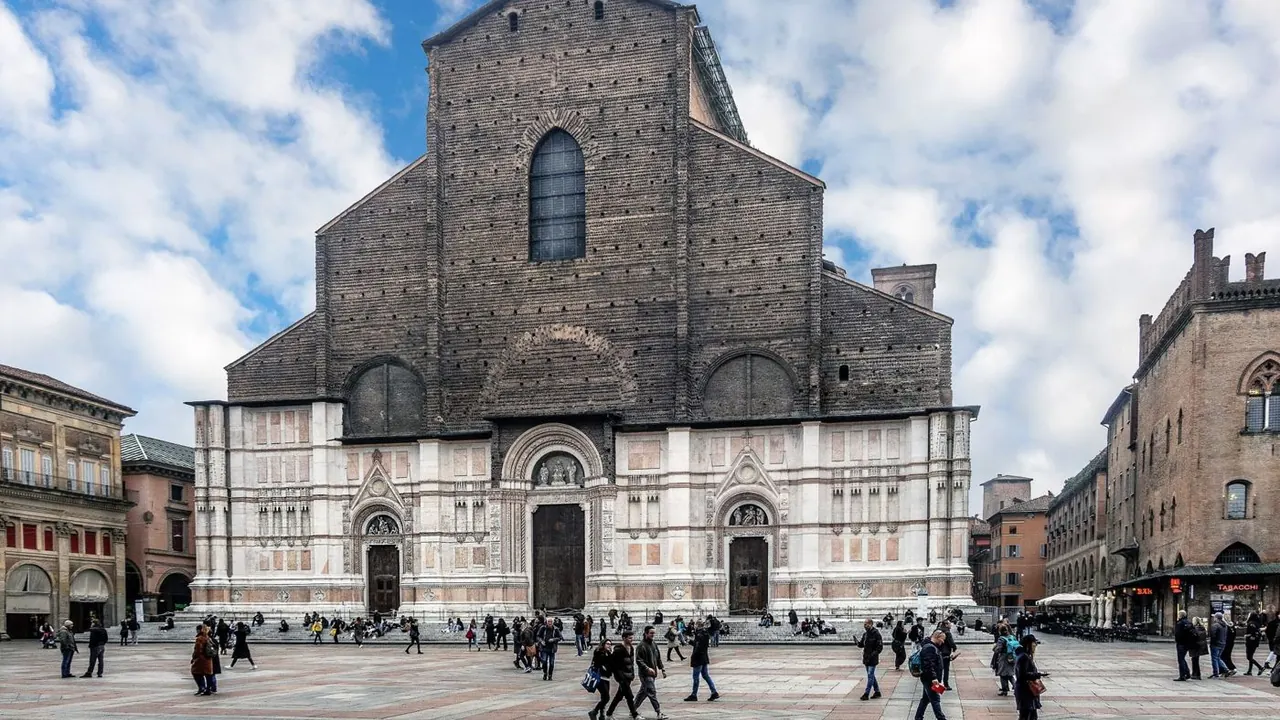
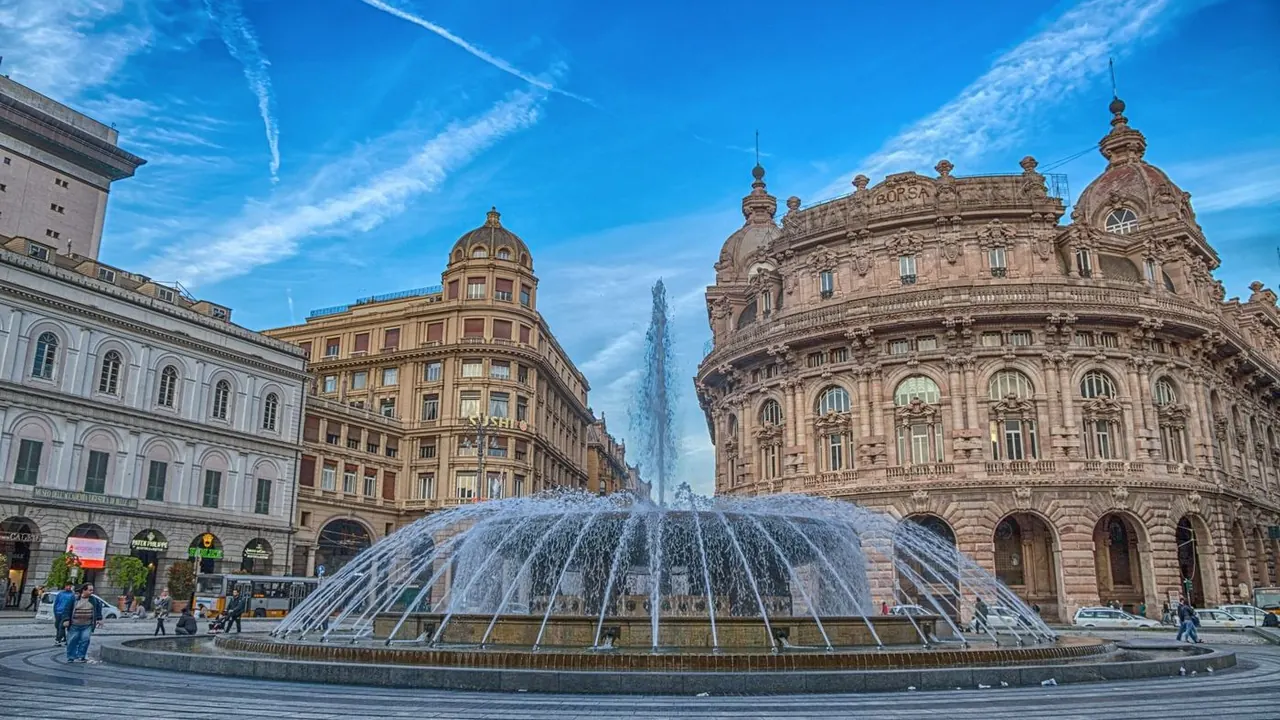
Photos: Bologna by Vanni Lazzari, CC BY-SA 4.0, cropped; Genoa by Faber1893, CC BY-SA 4.0, cropped.
Bologna or Genoa?
Our verdict in twelve categories, each scored against the same fixed benchmark cities, and the climate month by month, so you can choose for your trip.
Choose Bologna for
- nightlife
- day trips
- food and drink
Travellers who put eating first and like to move around should pick Bologna. Its kitchens gave Italy tagliatelle al ragù, tortellini and mortadella, and its flat, arcaded centre is easy to cover on foot. From the station, Florence, Ravenna, Verona and Venice are all within a day's reach, so few cities make a better base for seeing a whole region by train. Students keep the evenings livelier than in Genoa, and the city suits a curious visitor who likes to see a lot.
Choose Genoa for
- beaches
- nature and the outdoors
- families
Genoa is for someone who wants the sea and the hills built into their days. You can swim at Boccadasse or Nervi after a morning in the palaces, walk the fortress ridges above the port, or take the coastal railway to Portofino and the Cinque Terre. Families get a big aquarium and the harbour attractions. It is also the kinder city in winter, when the sea keeps afternoons mild and sunny while Bologna turns cold. The price is a steep, mazy city with quieter nights.
Scoreboard
Twelve categories on one fixed scale from 0 to 100. The shaded stretch is the gap between the two.
Your match
Pick a travel style or drag the sliders, and both match scores follow your weighting.
Too close to call, 1 point apart
Wins on nightlife and day trips with your weighting.
Wins on beaches and nature and the outdoors with your weighting.
What matters to you?
Category by category
What the scores mean for a trip.
Beaches & swimming
Bologna has no shore of its own. A seaside day means the train to Rimini or Cervia, where the Adriatic is warm and shallow but often greenish and lined with rented sunbeds.
Genoa lets you swim without leaving town, from the pebble cove at Boccadasse, the lidos of Corso Italia or the rocks below Nervi, in clearer water. The Riviera towns of Camogli and Sestri Levante are close by train. It is still pebbles and crowded loungers rather than a true beach vacation, but a daily swim is easy here and awkward from Bologna.
Food & drink
Both are serious food cities, but Bologna has the richer and more famous table. Ragù, tortellini in brodo, lasagne verdi and mortadella anchor its trattorias, and Parmigiano, Parma ham and balsamic vinegar are made in towns nearby. It is a place to plan meals around, though the cooking is heavy in summer.
Genoa eats lighter and closer to the sea. You get pesto with trofie, focaccia at breakfast, farinata and fried fish from the friggitorie, and seafood with Vermentino in the harbour trattorias. It is excellent everyday eating, but with less depth than Bologna's kitchens.
Culture & sights
The two are well matched, both built on a large medieval core, but they feel very different. Bologna's centre is open and arcaded, with brick porticoes, Piazza Maggiore, the Two Towers, Santo Stefano and the Archiginnasio's anatomical theatre. It is a coherent university city you can see in two or three days.
Genoa is darker and denser. Its narrow caruggi open onto the Strade Nuove, where the Rolli palaces hold Van Dyck and Rubens in painted halls, and Staglieno's marble cemetery and the old harbour add a maritime, mercantile flavour that Bologna lacks.
Nightlife
Bologna goes out more. Its large student population fills Piazza Verdi and Via Petroni, Via del Pratello's taverns run late, and wine bars around the Quadrilatero follow the aperitivo, though the city goes quiet in August.
Genoa's nights are calmer and older. You get small bars around Piazza delle Erbe, waterfront drinks at the Porto Antico and beach clubs in summer, but little clubbing and sleepy weeknights.
Nature & outdoors
Genoa is the outdoor city of the two. A funicular lifts you to Righi and the ring of hilltop forts, and the Portofino promontory's cliff paths and the Cinque Terre trails are a train ride away. The Beigua Geopark, kayaking, diving and whale watching round it out.
Bologna offers gentler ground: the arcaded climb to San Luca, the Colli Bolognesi, the gypsum caves of the Parco dei Gessi and the Via degli Dei to Florence. Real mountains are an hour and a half away at Corno alle Scale, and the plain to the north is flat.
Day trips
Bologna is the stronger base by some way. Florence is barely half an hour by fast train, Ravenna's mosaics, Ferrara, Modena and Parma are short hops, and even Verona, Padua and Venice fit into a day.
Genoa's outings are fewer but very scenic, running along the coast to Portofino, Camogli and the Cinque Terre, or west to Finale Ligure and Albenga. Milan and Turin are within reach for a museum day. It is a coastline you explore, while Bologna gives you a whole region of art cities.
Good for families
Genoa gives children more to do. The aquarium at the Porto Antico can fill half a day, and the science centre, biosphere, Galata submarine and the funiculars add more, with swimming coves nearby. The steep, dark lanes are hard work with a pushchair.
Bologna is easier on the feet, being flat, largely car-free and shaded by porticoes, but it has little aimed at children beyond climbing the Asinelli tower. Families tend to head out to Mirabilandia or the Rimini beach.
Getting around
Bologna is simpler to navigate. Its compact, flat centre is walkable end to end under the arches, and the main station sits at the edge of the old town. Neither city has much metro to speak of, and Bologna has none at all.
Genoa makes you work harder, with a maze of lanes and a city that climbs steeply from the port. Its funiculars, rack railway and public lifts are part of the charm, and the coastal railway is the best way out, but buses crawl in the narrow streets.
Shopping & style
Neither is a shopping destination, and in both the best thing to take home is food. Bologna has a slight edge in range. Alongside the Quadrilatero delicatessens it has a small luxury cluster on Via Farini and in the Galleria Cavour, plus the Montagnola market and vintage shops in the university quarter.
Genoa's shopping is more craft-led. Old shops in the old town sell candied fruit and pesto, and small workshops make silver filigree and coral, while Via XX Settembre covers the mainstream names.
Affordability
Genoa is a little easier on the budget. Focaccia and farinata make very cheap meals, central hotels cost less, and the lifts and funiculars are inexpensive, though the Riviera resorts and paid loungers push costs up on beach days.
In Bologna, meals and aperitivo are fair value and most sights are free. The rooms cost more, especially when a trade fair fills the city, so it pays to book early.
Live music & performing arts
Bologna has the livelier musical life. The Teatro Comunale's opera season, a long jazz tradition in basement clubs and student gigs in small venues give it more to choose from on any given night, and in summer there are concerts in Piazza Maggiore.
Genoa offers a solid evening or two: opera and ballet at the Carlo Felice, Paganini concerts and the singer-songwriter tradition in small clubs. Its drama, like Bologna's, is in Italian.
Wellness & relaxation
Neither city is a place to unwind at the spa, and both rely on hotel spas and nearby thermal towns. Bologna is closer to the water. Castel San Pietro Terme is twenty minutes away and Porretta Terme sits in a green Apennine valley, and the slow lunch under the porticoes is its own kind of rest.
Genoa's thermal option, Acqui Terme, is over an hour away. Its calm comes from the sea instead, from the promenade and villa gardens at Nervi and long lunches in the Riviera villages.
When should you go?
Pick your month. The climate figures are measured averages, not a forecast.
Bologna in July
Genoa in July
Daytime high, °C
Rainfall in the month, mm
Where the figures come from
Bologna has no rain gauge within 25 km of the centre, so its rainfall comes from a gridded climate dataset read at the city rather than from a gauge further away.
Bologna's sunshine is measured 82 km from the centre, at Cervia.
Genoa has no rain gauge within 25 km of the centre, so its rainfall comes from a gridded climate dataset read at the city rather than from a gauge further away.
Genoa's sunshine is measured 80 km from the centre, at Capo Mele.
Temperature and rainfall are climate normals, averaged over the years shown. Bologna: 1991-2020, 14 years observed normals, Bologna / Borgo Panigale (5.5 km from centre). Genoa: 1991-2020 normals, Genova / Sestri (6.7 km from centre).
Bologna sits on the Po plain and has a hard continental swing. July and August reach about 32°C, humid and heavy for walking the streets, while winter afternoons fall to around 7°C. Late April to early June and September to mid-October are the comfortable months, though autumn brings the wettest weeks. Summer is very sunny but best spent under the porticoes.
Genoa is softened by the sea. Winter highs stay near 12°C, so a January visit is pleasant for walking, and summers are warm without Bologna's heat. The sea reaches about 25°C in August and is swimmable from June into September, with July the driest month. Rain builds sharply in autumn, peaking at around 212mm in October, so October and November are the riskiest months for the coast paths. Late spring and early autumn suit both cities.
Which traveller are you?
On a beach and sun trip, Genoa is the clear pick. It has swimming coves and platforms inside the city and clear water along the Riviera a short train ride away. From Bologna the sea means an hour's train ride to the crowded lidos of Rimini.
For a food and nightlife trip, Bologna wins. Emilian fresh pasta, the Quadrilatero delicatessens and the aperitivo ritual come first, and then the student bars of Piazza Verdi and Via del Pratello carry on late. Genoa's evenings are more reserved and its weeknights quiet.
On an outdoors trip, Genoa offers far more. There are fortress trails straight from the funicular, cliff paths on the Portofino promontory, Cinque Terre hikes and whale watching in the Pelagos Sanctuary. Bologna has gentle hill walks and the Via degli Dei, but mostly flat farmland beyond.
Before you go
| Measure | Bologna | Genoa |
|---|---|---|
| Official language | Italian | Italian |
| Currency | Euro (EUR) | Euro (EUR) |
| Sockets | CFL230 V, 50 Hz | CFL230 V, 50 Hz |
| Driving side | Right | Right |
| Time zone | UTC+1, UTC+2 in summer | UTC+1, UTC+2 in summer |
| Emergency number | 112 | 112 |
| Elevation | 54 m | 20 m |
| Main airport | Bologna Guglielmo Marconi Airport (BLQ)6 km from centre98 non-stop destinations | Genoa Cristoforo Colombo Airport (GOA)7 km from centre25 non-stop destinations |
| Public holidays this year | 13 days | 13 days |
By the numbers
| Measure | Bologna | Genoa |
|---|---|---|
| City population | 387,971 | 558,745 |
| People per km² | 2,754 | 2,325 |
| Museums within 10 km | 68 | 51 |
| UNESCO World Heritage sites within 50 km | 3 | 1 |
| Swim season, months above 21 °C | - | 4 months |
Where else could you go?
Every comparison below shares a destination with this one, so you can follow Bologna or Genoa somewhere new.