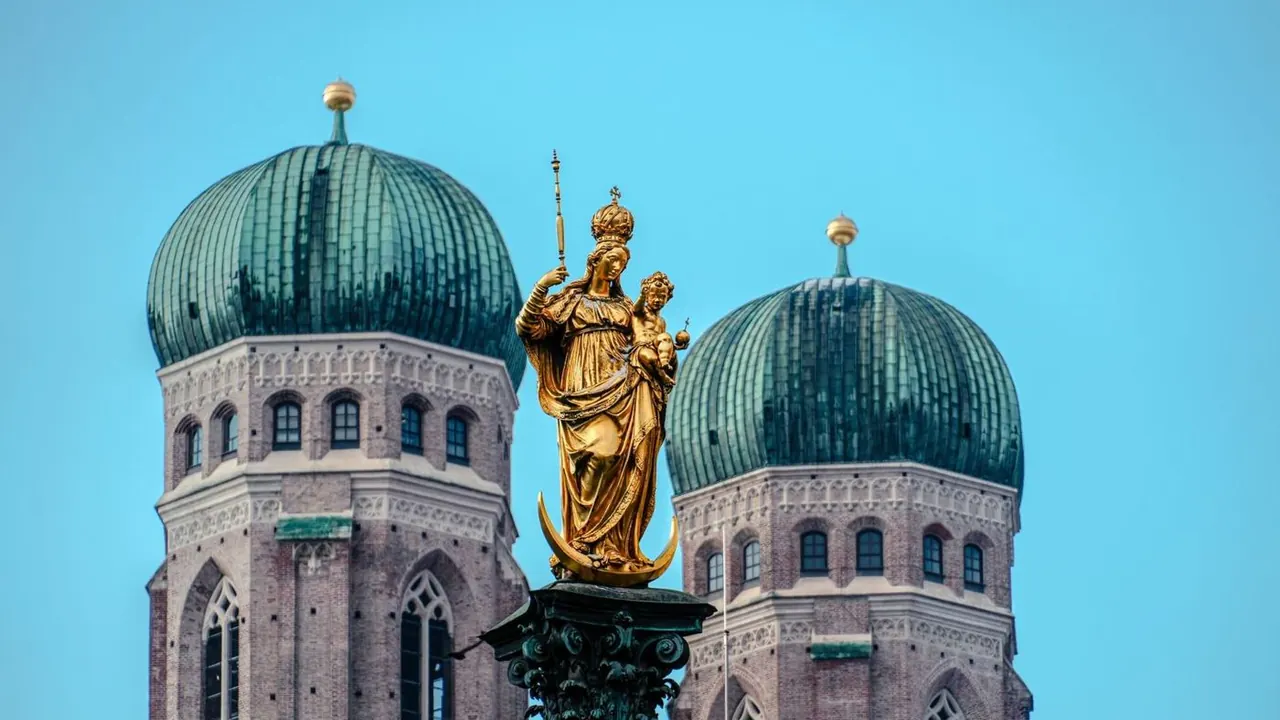
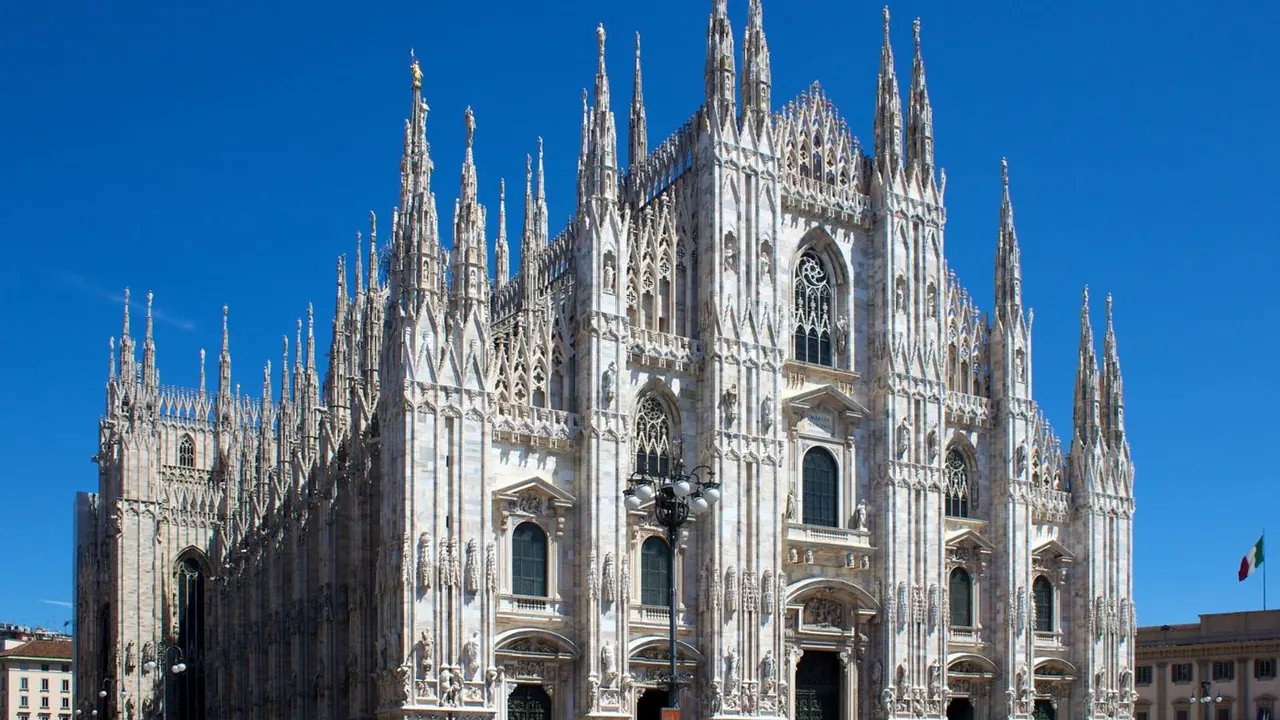
Photos: Munich by 0xd1ma, Pexels License; Milan by Jiuguang Wang, CC BY-SA 3.0, cropped.
Munich or Milan?
Our verdict in twelve categories, each scored against the same fixed benchmark cities, and the climate month by month, so you can choose for your trip.
Choose Munich for
- families
- wellness
- nature and the outdoors
Families and anyone who wants fresh air will do better in Munich. The Alps are on the horizon, the English Garden and the Isar banks are right in town, and the bathing halls and Erding's thermal baths make it easy to slow down. Children are welcome almost everywhere, beer gardens included, and the integrated transport takes the effort out of moving about. Its museums and opera stand level with Milan's, so choosing Munich costs you very little on culture.
Choose Milan for
- shopping
- food and drink
- nightlife
Milan suits the traveller who wants to shop, eat and dress up for the evening. It is a city of fashion flagships and design showrooms, of saffron risotto and long aperitivo hours along the Navigli, and the opera at La Scala is the high point. It also works as a rail hub for a string of Italian art cities. Pick it for a stylish adult trip where the meals and the shops matter as much as the sights.
Scoreboard
Twelve categories on one fixed scale from 0 to 100. The shaded stretch is the gap between the two.
Your match
Pick a travel style or drag the sliders, and both match scores follow your weighting.
Too close to call, 2 points apart
Wins on families and wellness with your weighting.
Wins on shopping and food and drink with your weighting.
What matters to you?
Category by category
What the scores mean for a trip.
Beaches & swimming
Neither city has a coast, but Munich makes summer swimming part of the city itself. Locals sunbathe on the Isar's gravel banks at the Flaucher, and the Starnberger See and Ammersee are under an hour away by S-Bahn, with lawns and jetties. The alpine water is fresh rather than warm.
Milan offers the Idroscalo basin near Linate and its public pools. For anything better you take a train to the pebbly lidos of Como or Maggiore, where the water is a little warmer in August, but that is a day out rather than an afternoon.
Food & drink
Milan is the stronger city for eating out. Its own butter-rich cooking, from ossobuco to cotoletta, sits alongside cuisines from the rest of Italy and a serious tier of fine dining, and the aperitivo ritual in Brera, Isola and on the Navigli makes the early evening a meal in itself.
Munich's table is built around beer: roast pork, white sausage before noon, and Obatzda eaten under chestnut trees in a beer garden, where you can bring your own picnic. The Viktualienmarkt is livelier than anything Milan offers in the way of open markets, but beyond Bavarian food the choice is narrower.
Culture & sights
Here the two are evenly matched, and the difference is in the kind of heritage. Milan has a few sights of the very first rank: the marble Duomo with its rooftop among the spires, the Last Supper, the Brera and Michelangelo's Rondanini Pietà in the Castello, set in a largely modern city.
Munich's strength is royal collections in depth. The Kunstareal groups the Alte Pinakothek, the Glyptothek and the Lenbachhaus, the Residenz and Nymphenburg show how the Wittelsbachs lived, and the Deutsches Museum fills an island in the Isar. Its old town is handsome but much of it was rebuilt after the war.
Nightlife
Milan gives a fuller night out. Aperitivo leads naturally into bar-hopping along the Navigli towpaths, Porta Venezia has the gay scene and a relaxed mix of bars, and the clubs around Corso Como expect you to dress for the door, with warehouse nights on the city's edges. Expect it to go quiet in August.
In Munich a night often begins and ends in the beer hall. Glockenbach and Gärtnerplatz have the cocktail and gay bars, and a few techno clubs run until morning at weekends, but many districts are quiet by midnight on weeknights, except during the two weeks of Oktoberfest.
Nature & outdoors
Munich has the better outdoors. The Alps begin about an hour south, with trains to the Zugspitze, Garmisch and Tegernsee for summer hiking and winter skiing, and in the city the English Garden, the Eisbach surfers and the Isar cycle paths bring open space close to every hotel.
Milan's own green space is limited to Parco Sempione and the canal towpaths out into the rice fields. The steep shores of Como and Maggiore and the via ferrata on the Grigne are fine, but the city's ski resorts are a full day away, not an easy outing.
Day trips
Both are excellent bases. What differs is where the trains take you. From Milan, high-speed lines reach Verona's arena, Turin's Egyptian Museum and Bologna in about an hour, and Bergamo, Pavia's Certosa, Mantua and the lake villages are close. Lugano adds a Swiss detour.
Munich's excursions mix medieval Germany with the mountains: Augsburg, Nuremberg and Regensburg by train, baroque Salzburg and Innsbruck across the border, and the fairy-tale castles of Neuschwanstein and Herrenchiemsee. Choose Milan for Italian art cities and Munich for castles and Alpine towns.
Good for families
Munich is much easier with children. It is clean, green and safe, the Hellabrunn zoo spreads along the Isar meadows, the Deutsches Museum has a children's area, and beer gardens often have their own playgrounds, so parents can sit down while the children play.
Milan copes, with the science museum's submarine and trains, the small aquarium and the playgrounds in Parco Sempione, but its signature sights are for adults and summer humidity tires small children. Both cities have theme parks within reach, Gardaland and Leolandia for Milan, Legoland for Munich.
Getting around
Both centres are compact and flat, so the main sights in each lie a short walk apart. In Milan, five colour-coded metro lines and a dense tram network, the old orange cars included, cover the rest, and trains from Centrale, Garibaldi and Cadorna run straight out to the lakes. The drawbacks are the summer heat underground and Malpensa's distance from the city, which makes the airport journey a long one.
Munich is the smoother of the two. U-Bahn, S-Bahn, trams and buses work as one network that reaches Nymphenburg, the Olympic Park, the lakes and the airport, and the riverside and park routes make cycling an easy way to get about. Delays on the central S-Bahn line are its main weak point.
Shopping & style
Milan is a destination for shopping in a way Munich is not. The great Italian fashion houses have their flagships on Via Montenapoleone and Via della Spiga, the Galleria and La Rinascente have set the standard for generations, and design showrooms and the Navigli antique markets add depth.
Munich is a well-heeled place to shop, with luxury on Maximilianstrasse and chains along Kaufingerstrasse. What you take home from Munich is local: a dirndl or lederhosen from a specialist tailor, delicacies from Dallmayr, or crafts from the December Christmas markets.
Affordability
Neither is cheap. Each is the most expensive city in its country, and in both the hotels hurt most, especially during trade fairs, with fashion weeks pushing up Milan's rates and Oktoberfest pushing up Munich's.
The ways to save are different. In Milan, an aperitivo spread can replace supper and office-worker lunch menus are good value. In Munich, beer-hall meals, a picnic in a beer garden, free parks and lakes and token Sunday museum fees do the same job.
Live music & performing arts
Opera lovers are well served in both. Milan has La Scala, the most famous name of all, whose season opens in December on Sant'Ambrogio's day, along with the Piccolo Teatro and big summer concerts at San Siro. Summer is quiet for classical music.
Munich is broader rather than grander. The Bavarian State Opera plays for most of the year and has a summer festival as well, three major orchestras fill the Herkulessaal and the Prinzregententheater, and the rococo Cuvilliés Theatre is a jewel for chamber opera. For a summer visit, then, Munich has more on.
Wellness & relaxation
Munich is the better place to unwind. The Art Nouveau Müller'sches Volksbad has a Roman-style steam bath, the public saunas keep German infusion rituals, and Erding's huge thermal complex is about forty minutes away. Lazy afternoons on the English Garden lawns and quiet Sundays help.
Milan is a working city, so relaxing there means its thermal spa, a few hotel spas or a summer afternoon at the 1930s Bagni Misteriosi pools. Most visitors who want real rest leave for the villas on the lakes.
When should you go?
Pick your month. The climate figures are measured averages, not a forecast.
Munich in July
Milan in July
Daytime high, °C
Rainfall in the month, mm
Where the figures come from
Milan's sunshine is measured 41 km from the centre, at Novara / Cameri.
Temperature and rainfall are climate normals, averaged over the years shown. Munich: 1991-2020 normals, München (1.9 km from centre). Milan: 1991-2020 (rainfall 1971-2000) normals, Milano / Linate (8 km from centre).
Milan has the hotter summer. July highs reach about 30°C and the air on the plain is often humid, so midsummer sightseeing is sticky, though July and August are the best months for a dip in the lakes. Munich peaks at around 25°C, which is more comfortable for walking, but June to August is also its wettest stretch, with about 120mm a month, mostly in showers. In Milan the rain comes in autumn instead, building from September to a peak of 75mm in November.
For walking the streets, Milan is at its best in May and late September, and Munich from May to September, with spring and early autumn ideal for hikes in the hills. Winter is grey in both. Munich is the colder of the two, with January highs near 4°C, and it gets snow in the nearby mountains, which suits a Christmas market or ski trip more than a museum-and-café break.
Which traveller are you?
On a family trip with children, Munich is the easier choice. It has a large zoo along the Isar, the hands-on Deutsches Museum, playgrounds in the beer gardens and lake beaches by S-Bahn, while Milan's main sights mostly appeal to adults.
For a shopping trip, Milan wins easily. The Quadrilatero della Moda holds the flagships of Italian houses that started here, design showrooms add furniture and lighting, and Brera and Porta Ticinese have vintage shops. Munich offers luxury and Tracht, but on a smaller scale.
On an outdoors trip, Munich gives quicker access to proper mountains. The Zugspitze, Garmisch and Tegernsee are reachable by regional train, and the Eisbach wave and the Isar paths are in town. Milan has the Grigne and the lakes, but hikers start further from the city.
Before you go
| Measure | Munich | Milan |
|---|---|---|
| Official language | German | Italian |
| Currency | Euro (EUR) | Euro (EUR) |
| Sockets | CF230 V, 50 Hz | CFL230 V, 50 Hz |
| Driving side | Right | Right |
| Time zone | UTC+1, UTC+2 in summer | UTC+1, UTC+2 in summer |
| Emergency number | 112 | 112 |
| Elevation | 519 m | 138 m |
| Main airport | Munich Airport (MUC)29 km from centre210 non-stop destinations | Milan Malpensa International Airport (MXP)40 km from centre208 non-stop destinations |
| Public holidays this year | 12 days | 13 days |
By the numbers
| Measure | Munich | Milan |
|---|---|---|
| City population | 1,505,036 | 1,354,196 |
| People per km² | 4,844 | 7,453 |
| Museums within 10 km | 75 | 88 |
| UNESCO World Heritage sites within 50 km | 1 | 4 |
Where else could you go?
Every comparison below shares a destination with this one, so you can follow Munich or Milan somewhere new.