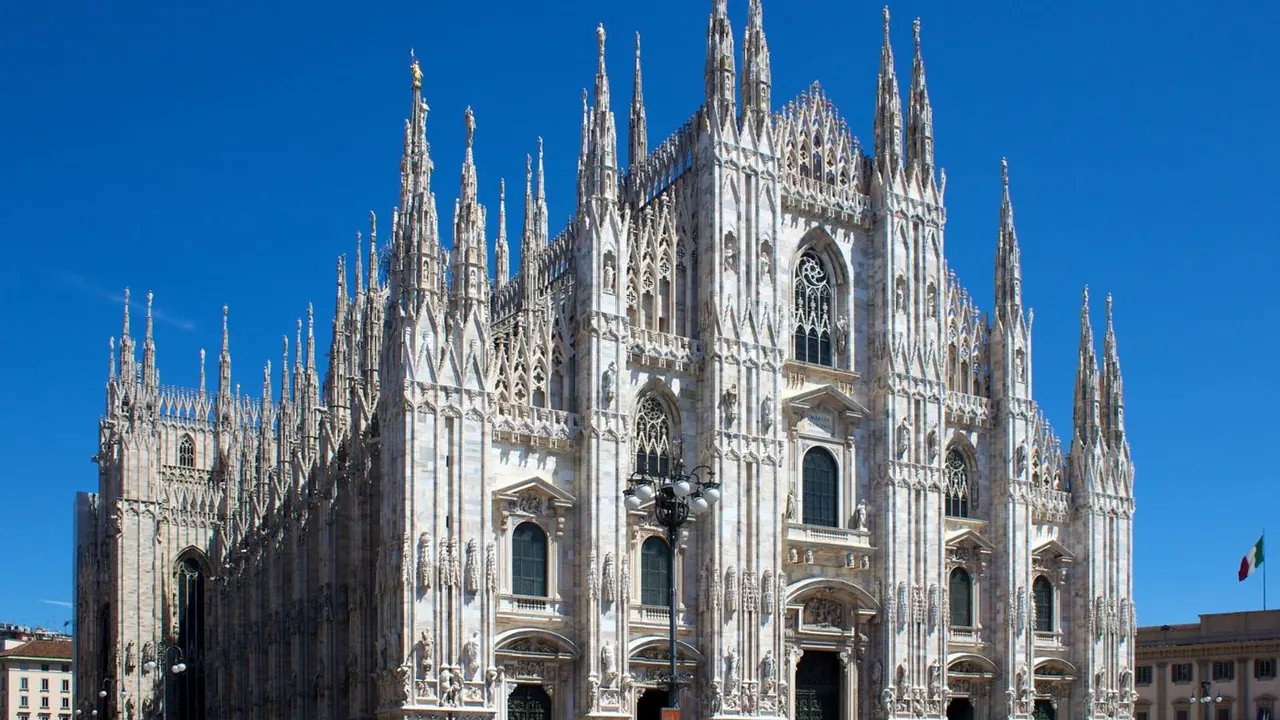
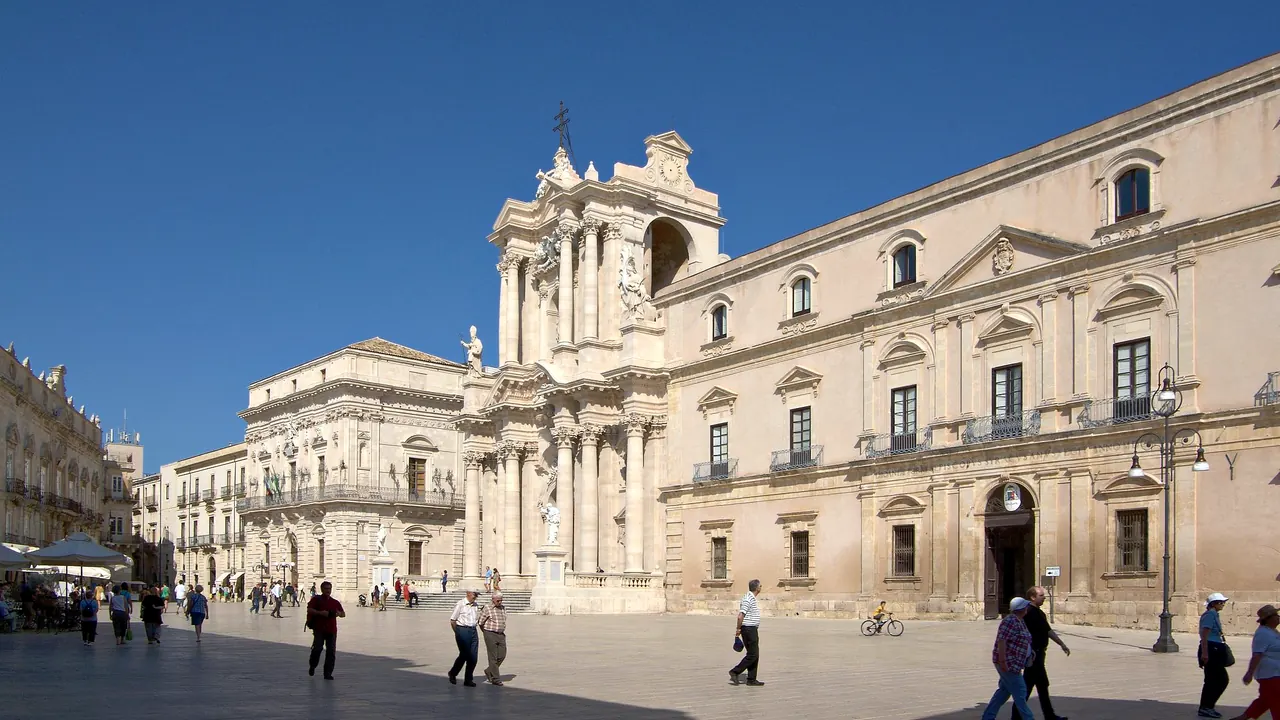
Photos: Milan by Jiuguang Wang, CC BY-SA 3.0, cropped; Syracuse, Sicily by Berthold Werner, CC BY-SA 3.0, cropped.
Milan or Syracuse, Sicily?
Our verdict in twelve categories, each scored against the same fixed benchmark cities, and the climate month by month, so you can choose for your trip.
Choose Milan for
- shopping
- live music and the arts
- getting around
Milan suits a traveller who wants a big city with plenty to do after dark and plenty to buy. Fashion shopping on a world scale, La Scala, a long food culture built around aperitivo and a metro that makes the whole city easy all come together here. It is also the better base without a car, with fast trains to the lakes and to cities such as Verona and Turin. In return you get no sea, a hot and humid summer and some of the highest prices in Italy.
Choose Syracuse, Sicily for
- beaches
- prices
- nature and the outdoors
Syracuse is the choice for a slower Mediterranean trip in which the sea comes first. You can swim off the rocks below Ortigia's walls and spend the evening in a Greek and baroque old town, and sandy bays and nature reserves lie a short drive south. The money goes further, especially at the table. Evenings are quiet, though, there is little to shop for, and to explore beyond the island you really need a hire car.
Scoreboard
Twelve categories on one fixed scale from 0 to 100. The shaded stretch is the gap between the two.
Your match
Pick a travel style or drag the sliders, and both match scores follow your weighting.
Wins on shopping and live music and the arts with your weighting.
Wins on beaches and prices with your weighting.
What matters to you?
Category by category
What the scores mean for a trip.
Beaches & swimming
Milan is landlocked, and swimming there is an outing you have to plan. In the city that means the Idroscalo basin or a public pool. Otherwise you take the train for about an hour to a pebbly lido on Lake Como or Lake Maggiore.
Syracuse makes the sea part of every summer day. You can swim from the rocks and platforms beneath Ortigia, go to the sandy bays at Arenella and Fontane Bianche, find small coves on Plemmirio, or drive to the undeveloped sand of Vendicari further south. The water is clear, warm and salty, which the lakes cannot match.
Food & drink
Milan eats better overall. You can have the city's own buttery northern classics, such as saffron risotto and ossobuco, and you can also find good cooking from every Italian region and a serious fine-dining scene. Its aperitivo ritual around the Navigli, Brera and Isola gives the evening a shape.
Syracuse cooks one cuisine, and cooks it well. It starts at the Ortigia market, with swordfish, sea urchin, sardines, capers and citrus, and goes on to almond granita at breakfast and local Nero d'Avola. Do not expect much variety, but the seafood is fresher and simple meals cost far less.
Culture & sights
The sightseeing in both cities is first-rate, but it comes from very different eras. Milan is the place for painting and Renaissance genius: Leonardo's Last Supper, the Brera gallery, Michelangelo's last Pietà at the Castello and the marble rooftop of the Duomo. They are scattered in clusters through a largely modern city.
Syracuse goes back much further. A Greek temple is still standing inside its cathedral, the Neapolis park holds a theatre cut into the rock and the Paolo Orsi museum is one of Italy's great archaeological collections. Ortigia is also a continuous baroque old town, which is easier to wander than Milan's separate pockets.
Nightlife
Milan offers a real night out. It starts with aperitivo and moves on to the canal-side bars of the Navigli, Porta Venezia's gay scene, the dressy clubs around Corso Como and warehouse parties on the edges of the city.
In Syracuse the evening is a stroll between small wine and cocktail bars in Ortigia's lanes, with some beach-club dancing in midsummer. Serious clubbers go to Catania. The two cities peak at opposite times: Milan empties in August, just when Ortigia is at its liveliest.
Nature & outdoors
Syracuse has more on its doorstep and more variety. Within easy reach are limestone gorges with green pools at Cavagrande, flamingos on the lagoons at Vendicari, snorkelling and kayaking in the Plemmirio marine reserve, and Etna as a longer day out. Most of it needs a car, and summer heat rules out midday hikes.
Milan itself is flat and hazy, with Parco Sempione and the canal towpaths for cycling. Its strength lies an hour north, where trains run to the steep lakeshores and the ridges of the Prealps. Those suit hikers and sailors, and Milan has winter skiing within range, which Syracuse does not.
Day trips
From Milan, fast trains do the work and you never need a car. Bergamo's walled upper town and the villages of Lake Como are about an hour away. Verona, Turin and Bologna make full city days out, and Lugano takes you across into Switzerland. Pavia's great monastery, Mantua's Gonzaga palaces and Cremona's violin-making add quieter options.
Syracuse offers just as rich a choice, but you really need a hire car, because the buses are thin. Its trips share a theme: the honey-coloured baroque towns of the Val di Noto, from Noto itself to Modica, Ragusa Ibla and Scicli. Etna's neighbour Catania and Taormina's Greek theatre above the sea lie to the north.
Good for families
Milan keeps children busy with attractions built for them. There is the science and technology museum with its submarine and trains, the small aquarium beside the playgrounds of Parco Sempione, and Leolandia and Gardaland within easy reach for older children. It is the safer bet when the weather turns.
Syracuse has no zoo, aquarium or theme park, so the sea does the work. The sandy beaches at Arenella and Fontane Bianche shelve gently, and Ortigia's lanes are mostly free of cars. Papyrus boat trips and puppet shows fill the cooler hours, which makes it better for a summer of afternoons on the beach.
Getting around
Milan is much easier to get around. It has a simple five-line metro you can use with a tap of a contactless card, a dense tram network that includes the old orange cars, and direct trains from three stations to the lakes and nearby towns.
In Syracuse the only easy part is Ortigia, which you can cross on foot in a quarter of an hour. City and regional buses are sparse, and the beaches, gorges and baroque towns all realistically mean hiring a car.
Shopping & style
Milan is worth the trip for shopping alone. Many of the great Italian fashion houses were founded in the city, and their flagships line the streets of the Quadrilatero della Moda. Next to the Duomo stands a department store that has defined Italian style for more than a century. Add the design showrooms, the vintage shops of Brera and Porta Ticinese, and the antique markets along the Navigli.
Syracuse is a place for a few souvenirs, not a shopping trip. Ortigia sells hand-painted ceramics, coral and silver jewellery and papyrus paintings, and the market has capers, almonds and pistachio products. The mainland has only ordinary high-street chains.
Affordability
Your money goes noticeably further in Syracuse, above all on food. Market sandwiches, arancini, granita and trattoria meals with local wine cost far less than anything comparable in Milan. Rooms on Ortigia do get pricey in August, and car hire and fuel add to the bill.
Milan is Italy's most expensive city. Hotel rates soar during trade fairs and fashion weeks. Aperitivo snacks in place of supper, office-worker lunch menus and staying near a metro stop outside the centre all take some of the sting out.
Live music & performing arts
Milan gives you a full evening programme all year except summer. It has La Scala's opera and ballet season, which opens each December, the Piccolo Teatro, a symphony orchestra, jazz rooms and big stadium concerts at San Siro.
Syracuse has one extraordinary event and little else. Each late spring and early summer, Greek tragedies are staged in the ancient theatre itself, a tradition dating from 1914. Beyond that there is Ortigia's Sicilian puppet theatre and a modest municipal programme.
Wellness & relaxation
Milan has more actual spa facilities. A well-known thermal complex in the south of the centre has outdoor pools and saunas, there are a few good hotel spas, and in summer you can spend an afternoon at the restored 1930s pools of the Bagni Misteriosi. For real quiet, though, most people take the train north to the lakes.
Syracuse has little beyond hotel treatments, and what it offers is a slower pace. Long lunches, evening walks on the sea walls and sunsets over the harbour make a few days on Ortigia restful, best outside the crowded heat of August.
When should you go?
Pick your month. The climate figures are measured averages, not a forecast.
Milan in July
Syracuse, Sicily in July
Daytime high, °C
Rainfall in the month, mm
Where the figures come from
Milan's sunshine is measured 41 km from the centre, at Novara / Cameri.
Syracuse, Sicily's temperatures are measured 45 km from the centre, at Cozzo Spadaro.
Syracuse, Sicily has no rain gauge within 25 km of the centre, so its rainfall comes from a gridded climate dataset read at the city rather than from a gauge further away.
Temperature and rainfall are climate normals, averaged over the years shown. Milan: 1991-2020 (rainfall 1971-2000) normals, Milano / Linate (8 km from centre). Syracuse, Sicily: 1991-2020 normals, Cozzo Spadaro (45 km from centre).
Milan has proper seasons. Winters are grey and cold, with highs around 7°C. Summers on the Po plain turn hot and sticky, near 30°C, which makes July and August hard work for sightseeing, so the lakes are the place for a swim. April and September are the most comfortable months for walking the city. It rains steadily all year, and the wettest spells come in May and in October, which can bring around 119mm.
Syracuse is far milder and much sunnier. Winter highs stay near 16°C, so January is still fine for walking among the ruins, but almost all the rain falls between October and March. From May to September it is close to dry and very sunny. The sea is warm enough to swim from June to early October and peaks around 26°C in August, although midday in high summer is too hot to be out exploring. For walking and swimming on one trip, late spring and early autumn are the best times in Sicily, and it beats Milan by a long way in winter.
Which traveller are you?
On a beach and sun trip, Syracuse wins easily. You can swim straight off Ortigia's sea walls, sandy family beaches lie just south and the empty pale sand at Vendicari is not far beyond. Milan's nearest real swimming is an hour away at a lake.
For a shopping trip, Milan is in another league. It has the flagships of the Quadrilatero della Moda, the old shops under the Galleria's glass roof, design showrooms and Navigli antique markets. Syracuse offers ceramics, coral jewellery and capers from the market.
On a food and nightlife trip, Milan gives you more. The aperitivo hour moves on to canal-side bars and dressy clubs, and its restaurants cover all of Italy's regional cooking as well as fine dining. In Syracuse the seafood is excellent, but evenings end over a quiet glass of wine.
Before you go
| Measure | Milan | Syracuse, Sicily |
|---|---|---|
| Official language | Italian | Italian |
| Currency | Euro (EUR) | Euro (EUR) |
| Sockets | CFL230 V, 50 Hz | CFL230 V, 50 Hz |
| Driving side | Right | Right |
| Time zone | UTC+1, UTC+2 in summer | UTC+1, UTC+2 in summer |
| Emergency number | 112 | 112 |
| Elevation | 138 m | 17 m |
| Main airport | Milan Malpensa International Airport (MXP)40 km from centre208 non-stop destinations | Catania-Fontanarossa Airport (CTA)48 km from centre96 non-stop destinations |
| Public holidays this year | 13 days | 13 days |
By the numbers
| Measure | Milan | Syracuse, Sicily |
|---|---|---|
| City population | 1,354,196 | 115,515 |
| People per km² | 7,453 | 556 |
| Museums within 10 km | 88 | 11 |
| UNESCO World Heritage sites within 50 km | 4 | 2 |
| Swim season, months above 21 °C | - | 5 months |
Where else could you go?
Every comparison below shares a destination with this one, so you can follow Milan or Syracuse, Sicily somewhere new.
- Comovs Milan
- Bergamovs Milan
- Cataniavs Syracuse, Sicily
- Luganovs Milan
- Taorminavs Syracuse, Sicily
- Genoavs Milan