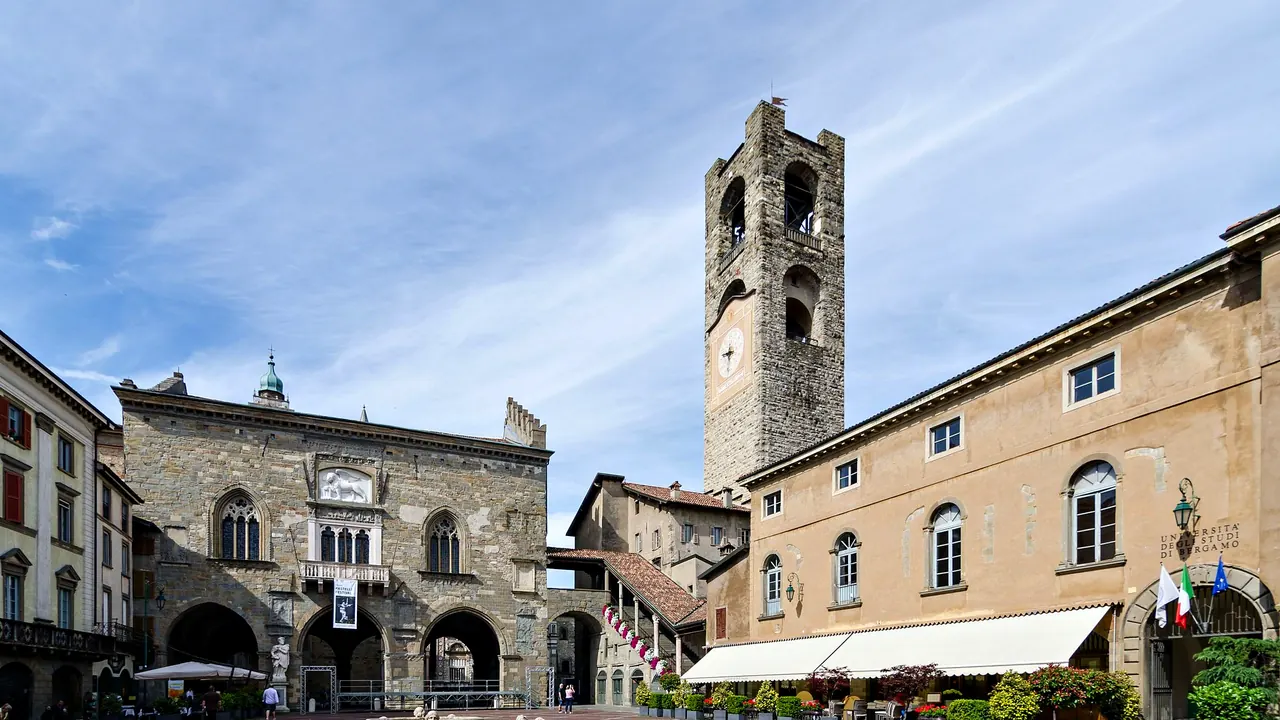
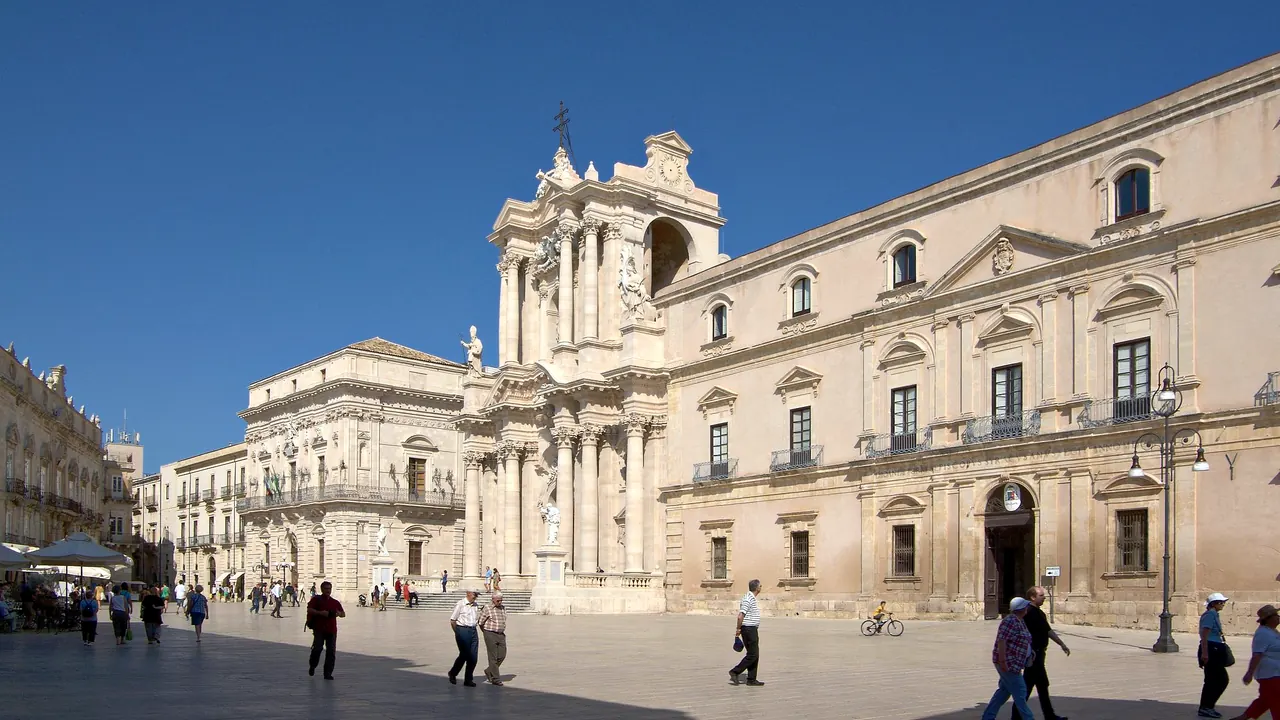
Photos: Bergamo by Steffen Schmitz, CC BY-SA 4.0, cropped; Syracuse, Sicily by Berthold Werner, CC BY-SA 3.0, cropped.
Bergamo or Syracuse, Sicily?
Our verdict in twelve categories, each scored against the same fixed benchmark cities, and the climate month by month, so you can choose for your trip.
Choose Bergamo for
- getting around
- live music and the arts
- wellness
Bergamo suits a traveller who wants an easy, well-connected base in northern Italy. The walled Città Alta takes a day or two, the Orobie Alps and Lake Iseo start just outside town, and Milan, Brescia and Verona are all reachable by train without hiring a car. It is also the better pick if your evenings lean towards opera or your days towards a thermal spa.
Choose Syracuse, Sicily for
- beaches
- food and drink
- culture and sights
For a trip built around warmth, the sea and deep history, Syracuse is the stronger choice. Greek columns inside a cathedral, a theatre cut into the rock and a swim off Ortigia's rocks before dinner make a combination the north cannot offer, and the seafood is more distinctive. Plan on a car, though, because the best beaches, the gorges and the baroque towns of the Val di Noto are hard to reach any other way.
Scoreboard
Twelve categories on one fixed scale from 0 to 100. The shaded stretch is the gap between the two.
Your match
Pick a travel style or drag the sliders, and both match scores follow your weighting.
Too close to call, 2 points apart
Wins on getting around and live music and the arts with your weighting.
Wins on beaches and food and drink with your weighting.
What matters to you?
Category by category
What the scores mean for a trip.
Beaches & swimming
This is where the two cities are furthest apart. Bergamo has no coast, so a summer swim means a trip out to Lake Iseo or the Lecco arm of Lake Como, where you lie on grass, pebbles or concrete platforms. It makes a pleasant hot day out but is not a reason to go.
In Syracuse the sea is part of daily life. People swim from wooden platforms beneath Ortigia's walls, families fill the sandy bays at Arenella and Fontane Bianche, and the pale sand at Calamosche in the Vendicari reserve is some of the best swimming in south-eastern Sicily.
Food & drink
Syracuse has the more memorable table, and most of it comes from the sea. The Ortigia market supplies swordfish, sea urchins, capers and citrus to pasta with sardines and spaghetti alla siracusana, and a granita with brioche makes the summer breakfast. Simple trattoria meals with Nero d'Avola are part of the pleasure.
Bergamo's cooking belongs to the mountains: casoncelli in butter and sage, polenta with braised meats and game, and valley cheeses such as Taleggio and Strachitunt. It is hearty and very good, and the province has a stronger fine-dining tier, but it is the narrower of the two kitchens.
Culture & sights
Syracuse has the deeper well of sights. Its Greek past is still visible everywhere, from the temple columns inside the cathedral to the rock-cut theatre and Ear of Dionysius at Neapolis, and the Paolo Orsi museum and Caravaggio's Burial of Saint Lucy add enough to fill two or three full days.
Bergamo is a tighter package. The Città Alta, inside its UNESCO-listed Venetian walls, packs Piazza Vecchia, Santa Maria Maggiore and the Cappella Colleoni into a short walk. Its real advantage is painting: the Accademia Carrara's Raphael, Bellini and Mantegna give it a gallery Syracuse cannot match.
Nightlife
Neither city is for a big night out, and both evenings start with a long aperitivo. Syracuse is slightly livelier in summer, when Ortigia's lanes stay busy past midnight on weekends and the beach clubs along the southern coast add some dancing, though winter nights end early.
Bergamo is steadier through the year, with wine bars around Via XX Settembre and Borgo Santa Caterina, student bars and summer drinks along the walls, but most nights wind down around midnight. For proper clubs, Bergamo looks to Milan and Syracuse to Catania.
Nature & outdoors
Both have a lot of good countryside on the doorstep, but it is very different. From Bergamo you can walk up through the Colli di Bergamo to San Vigilio, and further north Val Brembana and Val Seriana lead into the Orobie Alps, with rifugi, high lakes, small winter ski areas such as Foppolo, and sailing and cycling on the lakes.
Around Syracuse the outdoors means limestone gorges and the sea. Cavagrande's chain of pools and the trails below Pantalica lie inland, Vendicari's lagoons draw flamingos, and the Plemmirio marine reserve is good for snorkelling and diving, with Etna within a day's reach. Midday summer heat makes hiking hard there, while the Alps around Bergamo stay cooler.
Day trips
Both are excellent bases, but they work in different ways. From Bergamo the trains do the work: Milan's Duomo and Last Supper are under an hour away, Brescia and Lecco are on direct lines, and Verona, Cremona and the car-free island of Monte Isola on Lake Iseo add variety.
Syracuse looks out over the baroque towns rebuilt after 1693: Noto, Modica, Ragusa Ibla and Scicli, with Taormina's theatre and the Piazza Armerina mosaics further afield. These trips are richer in one coherent style, but most of them really need a car.
Good for families
Families do about equally well in both, for different reasons. Bergamo has the attractions built for children: funicular rides, Leolandia's rides and miniature Italy twenty minutes away, and the Le Cornelle wildlife park, though the cobbled upper town is hard going with a buggy.
Syracuse relies on the sea, with gently shelving sand at Fontane Bianche, car-free lanes on Ortigia, puppet shows and papyrus boat rides. It has no theme park or zoo, and in July and August the heat confines sightseeing to the early morning and evening.
Getting around
Bergamo is much easier to manage without a car. Funiculars climb to the Città Alta and on to San Vigilio, buses run to the station and the nearby airport, a light-rail line runs up Val Seriana, and direct trains reach Milan and Brescia. You only need a car for the upper valleys.
In Syracuse you walk Ortigia in fifteen minutes and a taxi covers the archaeological park, but that is where easy travel ends. Buses are infrequent, trains to Noto and Catania are slow, and Vendicari or the inland gorges are realistically reached only by hire car.
Shopping & style
Bergamo has a little more range. The arcades of Via XX Settembre and the Sentierone cover mid-range fashion, the upper town's main lane is lined with cheese shops and delicatessens, and Milan's serious shopping is less than an hour away.
Syracuse is more about craft than clothes: hand-painted ceramics, coral and silver jewellery, linen and papyrus paintings in Ortigia's lanes, plus capers, almonds and pistachio products from the market.
Affordability
Overall the two cost about the same, but the money goes on different things. In Syracuse food is the bargain, with market sandwiches, arancini and simple meals that undercut the north, while Ortigia rooms in summer and the near-essential hire car push the bill up.
Bergamo's savings come from transport and lodging. Cheap buses and funiculars, fairly priced lower-town hotels and a train network that makes a car unnecessary keep costs steady, though staying inside the Città Alta costs more.
Live music & performing arts
Bergamo has the fuller stage calendar, centred on its native Donizetti. The Teatro Donizetti runs a season of opera, concerts and theatre plus an autumn festival of his works, Bergamo Jazz fills the spring, and La Scala is within reach for an evening.
Syracuse has one event the north cannot match: Greek tragedies staged in the ancient theatre each late spring and early summer. Beyond that and Ortigia's puppet theatres, its evenings are quiet.
Wellness & relaxation
Bergamo is better placed for a spa. San Pellegrino Terme, about forty minutes up Val Brembana, offers thermal bathing in a grand Belle Époque setting, and the springs at Trescore Balneario have been in use since Roman times.
Syracuse has no bathing tradition, only hotel and day spas. Its restfulness comes from the pace of Ortigia out of season: long lunches, sea-wall walks and sunsets over the harbour.
When should you go?
Pick your month. The climate figures are measured averages, not a forecast.
Bergamo in July
Syracuse, Sicily in July
Daytime high, °C
Rainfall in the month, mm
Where the figures come from
Bergamo has no rain gauge within 25 km of the centre, so its rainfall comes from a gridded climate dataset read at the city rather than from a gauge further away.
Bergamo's sunshine is measured 64 km from the centre, at Lugano.
Syracuse, Sicily's temperatures are measured 45 km from the centre, at Cozzo Spadaro.
Syracuse, Sicily has no rain gauge within 25 km of the centre, so its rainfall comes from a gridded climate dataset read at the city rather than from a gauge further away.
Temperature and rainfall are climate normals, averaged over the years shown. Bergamo: 1991-2020 normals, Bergamo / Orio Al Serio (3.9 km from centre). Syracuse, Sicily: 1991-2020 normals, Cozzo Spadaro (45 km from centre).
The two cities run on very different calendars. Bergamo has four real seasons, and the driest part of its year is December to April. Winter days are cold, but April, at around 18°C, is the most comfortable month for walking between the lower town and the Città Alta. The rain picks up in May and stays fairly heavy until November. July and August are a little drier than June and get the most sunshine. At about 29°C they suit a day at the lakes, but the steep lanes are hard work at midday. September and October stay mild but bring the heaviest rain of the year, so expect showers.
Syracuse is dry and bright for most of the year. Summer brings almost no rain and long sunny days, and August reaches about 31°C, so sightseeing is best done early or late. The sea warms to about 26°C in late summer, and swimming is comfortable from June into early October. Winter is mild at around 16°C, pleasant for the archaeology and Ortigia's lanes, though October and November bring the wettest weeks.
Which traveller are you?
On a beach and sun trip, Syracuse is the obvious choice. You can swim off Ortigia's sea walls in the old town or drive to Vendicari's undeveloped sand, under a dry, cloudless summer sky. Bergamo can only offer lake lidos with pebble and grass shores.
For a relaxing and wellness trip, Bergamo has more to offer. San Pellegrino's Belle Époque thermal spa and the ancient sulphur springs at Trescore Balneario are both close, while Syracuse offers only hotel spas and a slow pace that August heat and crowds can spoil.
For a short city break, Bergamo is easier. The airport is a short bus ride from the centre, funiculars link the two towns, and the Città Alta and Accademia Carrara fit neatly into a weekend. Syracuse rewards more days and usually a hire car.
Before you go
| Measure | Bergamo | Syracuse, Sicily |
|---|---|---|
| Official language | Italian | Italian |
| Currency | Euro (EUR) | Euro (EUR) |
| Sockets | CFL230 V, 50 Hz | CFL230 V, 50 Hz |
| Driving side | Right | Right |
| Time zone | UTC+1, UTC+2 in summer | UTC+1, UTC+2 in summer |
| Emergency number | 112 | 112 |
| Elevation | 249 m | 17 m |
| Main airport | Il Caravaggio International Airport (BGY)4 km from centre146 non-stop destinations | Catania-Fontanarossa Airport (CTA)48 km from centre96 non-stop destinations |
| Public holidays this year | 13 days | 13 days |
By the numbers
| Measure | Bergamo | Syracuse, Sicily |
|---|---|---|
| City population | 119,534 | 115,515 |
| People per km² | 2,973 | 556 |
| Museums within 10 km | 21 | 11 |
| UNESCO World Heritage sites within 50 km | 6 | 2 |
| Swim season, months above 21 °C | - | 5 months |
Where else could you go?
Every comparison below shares a destination with this one, so you can follow Bergamo or Syracuse, Sicily somewhere new.
- Milanvs Bergamo
- Comovs Bergamo
- Cataniavs Syracuse, Sicily
- Luganovs Bergamo
- Taorminavs Syracuse, Sicily
- Veronavs Bergamo