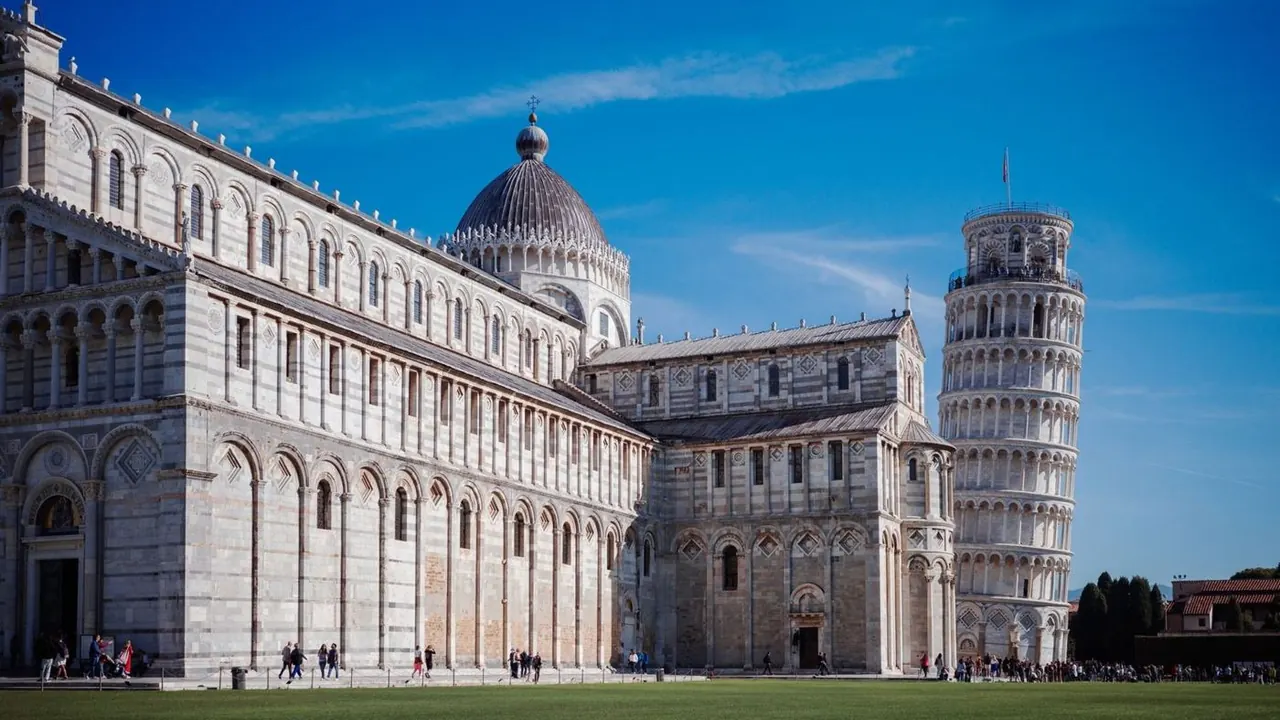
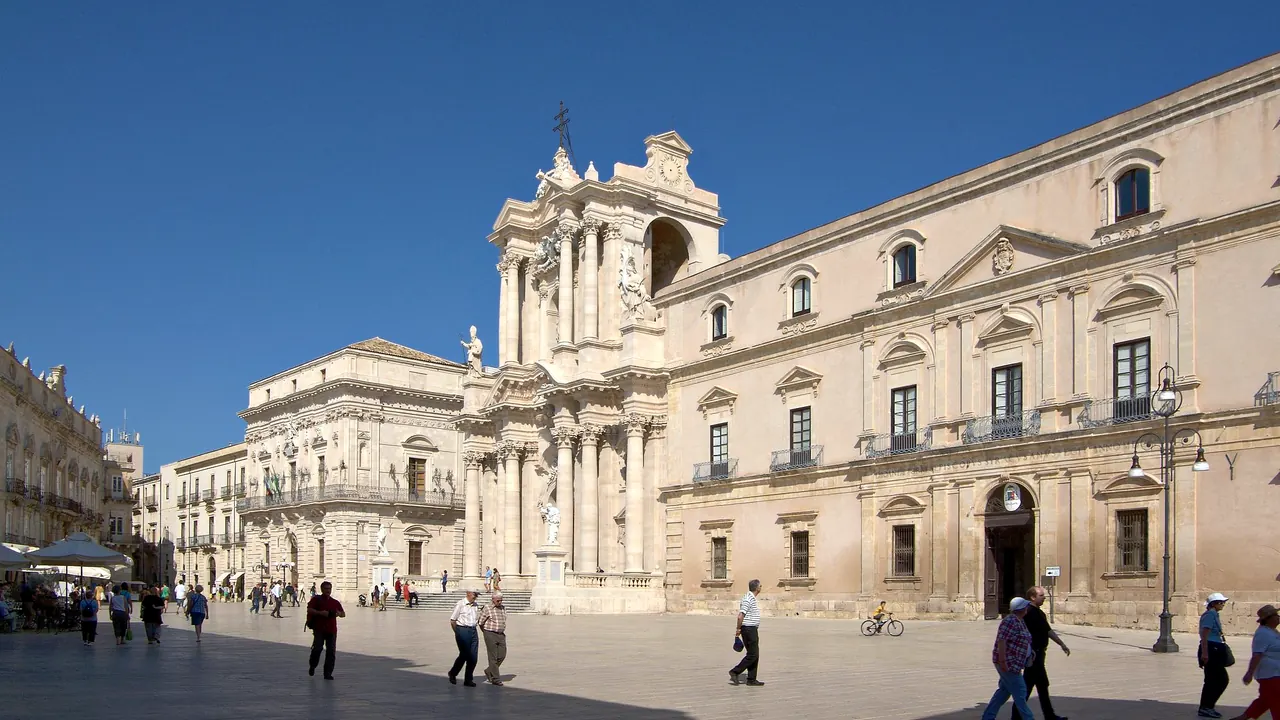
Photos: Pisa by Bruno Kraler, Pexels License; Syracuse, Sicily by Berthold Werner, CC BY-SA 3.0, cropped.
Pisa or Syracuse, Sicily?
Our verdict in twelve categories, each scored against the same fixed benchmark cities, and the climate month by month, so you can choose for your trip.
Choose Pisa for
- getting around
- day trips
- live music and the arts
Pisa suits a traveller who wants to see a good slice of Tuscany without hiring a car. The town is flat and walkable, the airport is right next to it, and the station puts Florence, Lucca and the Cinque Terre within easy reach. Its own sights fit into a day or two, so it works best as a calm, well-connected base and not as a destination in its own right.
Choose Syracuse, Sicily for
- beaches
- food and drink
- culture and sights
Choose Syracuse for a longer, slower stay built around the sea and the ancient Greek world. You can swim below Ortigia's walls, eat Sicilian market food and see a Greek theatre cut into the rock, all in one place. To get the most from the beaches, gorges and baroque towns around it, plan on hiring a car.
Scoreboard
Twelve categories on one fixed scale from 0 to 100. The shaded stretch is the gap between the two.
Your match
Pick a travel style or drag the sliders, and both match scores follow your weighting.
Too close to call, level with your weighting
Wins on getting around and day trips with your weighting.
Wins on beaches and food and drink with your weighting.
What matters to you?
Category by category
What the scores mean for a trip.
Beaches & swimming
Syracuse is the swimming city of the two. On Ortigia you step off the rocks and wooden platforms below the sea walls into clear water, with the old town behind you. The pale, undeveloped sand of Vendicari is within a short drive, and Arenella and Fontane Bianche cater for families.
Pisa's coast is about 12km away. Tirrenia and Calambrone have long sandy beaches backed by pines, mostly divided into rented beach establishments, and the water near the Arno mouth is rarely clear. It makes a pleasant summer afternoon off from sightseeing, not the reason for the trip.
Food & drink
Syracuse has the more distinctive food. The Ortigia market supplies swordfish, sea urchins and capers, and you meet them again in pasta with sardines or sea urchin. Breakfast is almond granita with a brioche, and the local wines are Nero d'Avola and the sweet Moscato. Among the trattorias are a few ambitious kitchens.
Pisa cooks plainer Tuscan food: ribollita, game, salt cod and hot cecina from wood ovens, best eaten around Piazza delle Vettovaglie, where students keep the trattorias honest. It is filling and good value but offers less variety, and the menus near the tower are best avoided.
Culture & sights
Syracuse has more to see. Its Greek past runs from the temple columns built into the cathedral to the rock-cut theatre at Neapolis and the Paolo Orsi museum. On top of that come baroque Ortigia, Castello Maniace and a Caravaggio, which fill two or three full days.
Pisa's Piazza dei Miracoli is one magnificent group of buildings standing on a lawn. The Lungarni, Piazza dei Cavalieri, Santa Maria della Spina and the San Matteo museum fill a second day, and most visitors never get that far. It is a smaller visit overall.
Nightlife
Neither city is for a big night out, and their scenes are about the same size. What differs is who sets the tone. In Pisa it is the students, drinking outside small bars around the old market during term, and the city goes quiet when term ends. In Syracuse it is the summer: aperitivo on Ortigia's sea walls and some dancing at the beach clubs in July and August, while winter nights end early. For proper clubbing, people go to Catania.
Nature & outdoors
Syracuse has the more varied outdoors, and much of it involves water. You can snorkel or dive in the Plemmirio marine reserve, kayak around Ortigia, walk down to the green pools at the bottom of the Cavagrande gorge and watch flamingos at Vendicari. Etna is close enough for a day on the volcano.
Pisa's nature is gentler and closer to town. The pine forest and dunes of San Rossore begin at the edge of the city and are good for cycling and spotting deer, and the olive-terrace paths of the Monte Pisano are nearby. For real mountain hiking you have to go out to the Apuan Alps.
Day trips
Both are good bases, but Pisa's day trips are easier and offer more. Florence is about an hour away by train and Lucca under half an hour. The Cinque Terre, Viareggio and the marble towns are all on the railway, so you can fill a week without a car.
Syracuse is the gateway to the baroque Val di Noto towns, Noto, Modica and Ragusa Ibla, with Catania and Taormina to the north. It is a superb set of trips, but the distances are longer and most of them are much easier with a hire car than by bus.
Good for families
Both cities are manageable with children rather than built for them, and in both the beach does much of the work. Syracuse adds the echoing Ear of Dionysius, papyrus boat trips and puppet shows. Pisa offers the tower photo, a big lawn to run on, and cycling or riding in San Rossore. In both, the midsummer heat means sightseeing early and late.
Getting around
Pisa is far simpler to get around. The centre is flat and can be walked from end to end, a shuttle train links the airport to the station, and the station is a rail hub for western Tuscany.
Syracuse is easy only on Ortigia and in the archaeological area. Beyond them, buses and trains are infrequent. Vendicari and the inland gorges realistically need a car, and a car is a burden inside the old town's restricted traffic zones.
Shopping & style
Pisa is the place for ordinary clothes shopping, Syracuse for crafts. Corso Italia has mid-range fashion and high-street chains, the arcades of Borgo Stretto have smarter shoes and clothes, and once a month an antiques market sets up along the river.
In Syracuse the better finds are in Ortigia's lanes: hand-painted ceramics, coral jewellery and papyrus paintings made from the plant that grows on the Ciane. Capers and pistachio products from the morning market are good to take home too. Neither city is worth the trip for shopping alone.
Affordability
Overall costs are much the same, but they fall in different places. In Pisa the expensive parts are the tower climb and the cafés beside the monuments, while student trattorias keep meals cheap and walking makes getting around almost free. In Syracuse eating is the bargain, but summer rooms on Ortigia and the hire car most trips need push the total up.
Live music & performing arts
An evening out in Pisa means the Teatro Verdi, a 19th-century horseshoe-shaped opera house. From autumn to spring it runs opera, concerts and ballet, which gives you more to choose from through the cooler months.
An evening in Syracuse is about one occasion: Greek tragedy and comedy staged at sunset in the ancient theatre each late spring and early summer. Ortigia also keeps the Sicilian puppet theatre going in small family-run houses. Outside the festival season, though, there is little on.
Wellness & relaxation
Neither is a wellness destination, but Pisa has something Syracuse lacks: thermal springs. The 18th-century bath palace at San Giuliano Terme is just outside the city, and Casciana Terme has a larger public pool. In Syracuse the rest comes from the pace: long lunches and sunset walks on Ortigia's sea walls, except in August, when crowds and heat make it less restful. Spa treatments there are mostly found in hotels.
When should you go?
Pick your month. The climate figures are measured averages, not a forecast.
Pisa in July
Syracuse, Sicily in July
Daytime high, °C
Rainfall in the month, mm
Where the figures come from
Syracuse, Sicily's temperatures are measured 45 km from the centre, at Cozzo Spadaro.
Syracuse, Sicily has no rain gauge within 25 km of the centre, so its rainfall comes from a gridded climate dataset read at the city rather than from a gauge further away.
Temperature and rainfall are climate normals, averaged over the years shown. Pisa: 1991-2020 normals, Pisa / S. Giusto (3.9 km from centre). Syracuse, Sicily: 1991-2020 normals, Cozzo Spadaro (45 km from centre).
Pisa has a real winter by Mediterranean standards, with daytime highs of about 11°C in January, and autumn is its wet season: September, October and November each bring more than 100mm of rain. The sea is warm enough for swimming from late June to mid-September and peaks at about 25°C in August. July and August are hot and humid on the plain, so May is best for walking the town, and June and early September are the months to combine sightseeing with afternoons at the beach.
Syracuse is milder and sunnier all year, at about 16°C in January, so winter sightseeing is comfortable there. Summers are almost dry, and the sea reaches 26°C in August and stays warm enough to swim into early October. Midsummer is as hot as in Pisa, too hot for walking at midday. The rain comes back in October, so April and May suit long days on foot, while June and late September give you both the streets and the sea.
Which traveller are you?
For a beach and sun trip, Syracuse is the clear choice. You can swim off the rocks below Ortigia's sea walls before lunch, the water is warmer and clearer, the season runs into early October, and the undeveloped sand of Vendicari is a short drive south.
For a short city break, Pisa works better. The airport is minutes from the centre by shuttle train, the flat old town is easy to walk, and the cathedral square and riverside palaces fit into a weekend. Lucca is a short hop if there is time.
On a culture and arts trip, Syracuse has more in one place: a Greek theatre cut into rock, a temple built into a cathedral, a first-class archaeological museum and baroque Ortigia, with Noto nearby. Pisa's own sights are fewer, though Florence is an easy train ride away.
Before you go
| Measure | Pisa | Syracuse, Sicily |
|---|---|---|
| Official language | Italian | Italian |
| Currency | Euro (EUR) | Euro (EUR) |
| Sockets | CFL230 V, 50 Hz | CFL230 V, 50 Hz |
| Driving side | Right | Right |
| Time zone | UTC+1, UTC+2 in summer | UTC+1, UTC+2 in summer |
| Emergency number | 112 | 112 |
| Elevation | 4 m | 17 m |
| Main airport | Pisa International Airport (PSA)4 km from centre82 non-stop destinations | Catania-Fontanarossa Airport (CTA)48 km from centre96 non-stop destinations |
| Public holidays this year | 13 days | 13 days |
By the numbers
| Measure | Pisa | Syracuse, Sicily |
|---|---|---|
| City population | 88,737 | 115,515 |
| People per km² | 479 | 556 |
| Museums within 10 km | 27 | 11 |
| UNESCO World Heritage sites within 50 km | 4 | 2 |
| Swim season, months above 21 °C | 4 months | 5 months |
Where else could you go?
Every comparison below shares a destination with this one, so you can follow Pisa or Syracuse, Sicily somewhere new.
- Luccavs Pisa
- Cataniavs Syracuse, Sicily
- La Speziavs Pisa
- Florencevs Pisa
- Taorminavs Syracuse, Sicily
- Sienavs Pisa