Photos: Cinque Terre by Narcisa Aciko, Pexels License; Pisa by Bruno Kraler, Pexels License.
Cinque Terre or Pisa?
Our verdict in twelve categories, each scored against the same fixed benchmark cities, and the climate month by month, so you can choose for your trip.
Choose Cinque Terre for
- nature and the outdoors
- beaches
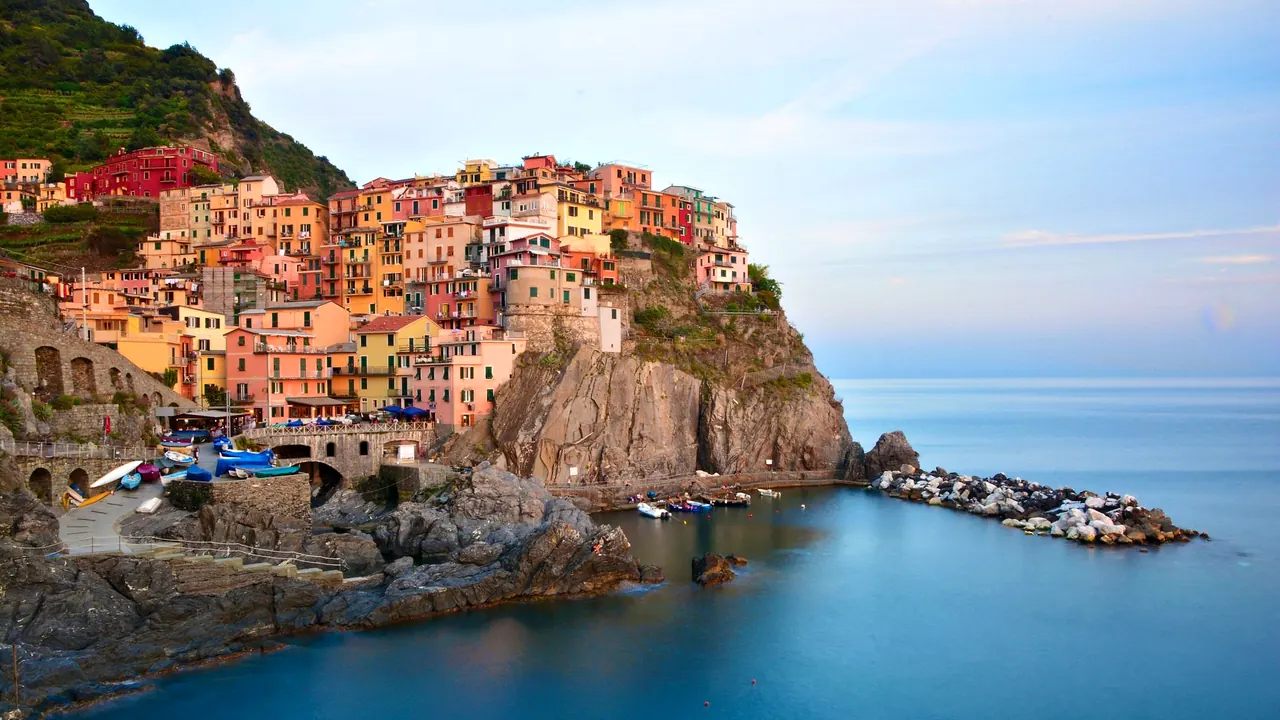
Cinque Terre is for walkers and for travellers who want the coastline itself to be the trip. You get five car-free villages on the cliffs, the paths that link them, a swim off the rocks before lunch and a glass of terraced white on a harbour wall at sunset. In return you need steady legs, a bigger budget for rooms and a liking for early, quiet evenings. It is hard going with small children.
Choose Pisa for
- live music and the arts
- culture and sights
- nightlife
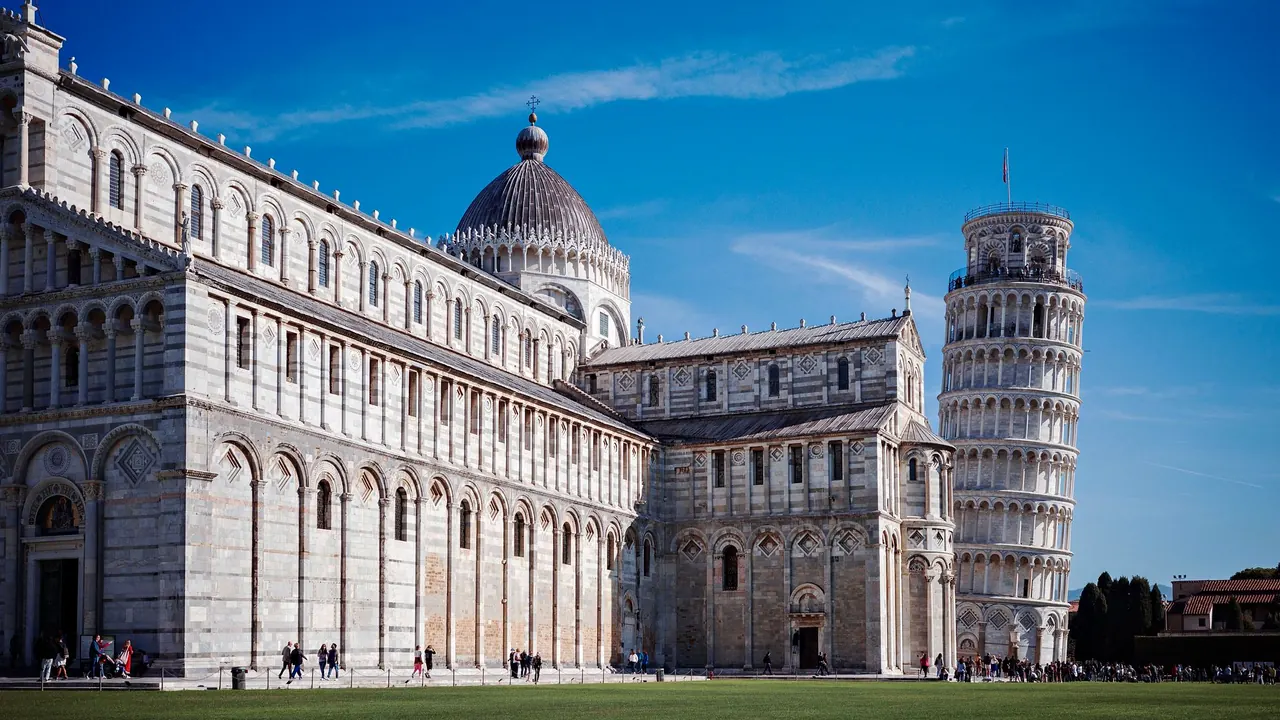
Pisa makes the better base for a wider look at Tuscany. The cathedral square and the old town by the river fill a day or two, and the station puts Florence, Lucca and the coast within easy reach. Rooms and meals cost less, and the student squares stay lively after dark. Its countryside can't match the cliffs or the walking, but the Cinque Terre villages are an easy day out by train from Pisa.
Scoreboard
Twelve categories on one fixed scale from 0 to 100. The shaded stretch is the gap between the two.
Your match
Pick a travel style or drag the sliders, and both match scores follow your weighting.
Wins on nature and the outdoors and beaches with your weighting.
Wins on live music and the arts and culture and sights with your weighting.
What matters to you?
Category by category
What the scores mean for a trip.
Beaches & swimming
For swimming the two come out about even, but the experiences are different. In Cinque Terre the clear sea starts at the foot of the village. Mostly you swim off rock shelves and slipways at Vernazza, Manarola or Riomaggiore. Monterosso is the one village with a proper stretch of sand and pebble, and in summer its umbrellas stand close together.
Pisa's beaches are a bus ride of about 12km away. They are broader and sandier, with long beaches backed by pine woods at Tirrenia and Calambrone and shallow water that is easy for paddling. The water near the Arno mouth is murkier, though, and most people use the beach as an afternoon off from sightseeing.
Food & drink
The two are roughly level here. Each has a simple, regional kitchen and tourist menus near its main sight. Cinque Terre eats Ligurian: trofie with pesto, Monterosso anchovies, fried seafood in paper cones and the rare sweet Sciacchetrà from the terraces.
Pisa eats like inland Tuscany, with ribollita, game, salt cod and hot cecina from wood ovens. The best of it is around the Piazza delle Vettovaglie market, where student custom keeps the trattorias honest. If you want seafood by the water, go to the coast. If you want hearty dishes in an old-town square, Pisa does them better.
Culture & sights
Pisa has far more to see. The cathedral, baptistery, Leaning Tower and Camposanto stand together on one lawn. Beyond the square are the Museo di San Matteo, Santa Maria della Spina on the river and the palazzi along the Lungarni, enough for two full days.
In Cinque Terre the sight is the landscape the villagers shaped: colour-washed houses above harbours, dry-stone terraces, striped Ligurian Gothic churches and a watchtower above Vernazza. It is beautiful to walk through, but there is no museum of any size, and it doesn't hold your interest the way Pisa's monuments do.
Nightlife
Pisa is livelier by a distance. During term, students fill the little squares around the old market until past midnight, Borgo Stretto and the riverbanks draw the aperitivo crowd, and in summer the beach bars take over. There are few clubs, though.
Cinque Terre's evening is a sunset glass on a cliffside terrace. A handful of bars in Monterosso and Riomaggiore stay open a little later, and the coast is asleep well before midnight. If you want a proper night out there, you have to go to La Spezia.
Nature & outdoors
This is Cinque Terre's strongest suit. The national park and marine reserve give you cliff paths through olive groves and vineyards, a ridge route through chestnut woods, old mule tracks down to the sea, and boats or kayaks out to the grottoes. You can walk from one village to the next and take the train back.
Pisa's outdoors is flatter and gentler. You can ride a bike or a horse through San Rossore's pine forest and dunes among fallow deer, watch birds at Lake Massaciuccoli and climb the olive terraces of the Monte Pisano. For real mountain hiking you have to go out to the Apuan Alps.
Day trips
Both are well placed, but Pisa is better. Florence is an hour by train and Lucca under half an hour, and Volterra, San Gimignano, Siena and Chianti are all within a drive. The Cinque Terre villages themselves are a day out from Pisa.
From the cliffs, the coastal railway and the boats reach Portovenere, Lerici, Sarzana and Carrara's quarries to the south, and Portofino and Genoa to the north. Pisa and Lucca are within reach too, but you need to plan longer journeys to get the same variety.
Good for families
Pisa is far easier with children. The centre is flat and compact, the tower lawn gives them room to run and everyone wants the photo holding up the tower. The sandy shallows at Tirrenia and the bike paths in San Rossore make good family days out.
Cinque Terre is built of steps. A pushchair is useless, Corniglia sits hundreds of steps above its station and the summer trains are packed. It works for older children who like walking, and families with little ones usually stay in Monterosso for its gently shelving beach.
Getting around
Pisa is simpler. You can walk across the whole flat centre, a shuttle train links the airport to the station, and that station is a rail hub for western Tuscany. Bikes suit the streets, and buses reach the tower and the beaches.
Cinque Terre moves well in its own way. The local train hops between the villages in minutes, ferries link most of the harbours in season and the trails join them on foot. A car is a hindrance in both places, but the coast's crowded summer platforms and steep stairways make every journey harder work.
Shopping & style
Neither is a shopping destination, but Pisa at least has ordinary Italian shopping. Corso Italia has mid-range chains, and Borgo Stretto's arcades have smarter clothes and old pastry shops. A monthly antiques market sets up by the river.
In Cinque Terre you shop for the larder: pesto, jarred anchovies, lemon liqueur and a bottle of Sciacchetrà, plus some ceramics and linen.
Affordability
Cinque Terre's cost is almost all in the bed. Day to day the coast is cheap to live on: focaccia and farinata from a bakery counter, fried fish in a paper cone on the harbour wall and a plain trattoria supper, with the local train costing little between villages. What makes the stay expensive is the price of a night in a village in season.
Pisa comes out cheaper overall, and its few traps are easy to avoid. The cafés right beside the cathedral square charge for the view, and climbing the tower is a real expense. In high summer the beach establishments at Tirrenia and Calambrone charge seaside rates for umbrellas and loungers, so the free stretches between them are worth finding. Rooms are easiest to come by outside the summer peak.
Live music & performing arts
Pisa has a real stage. The 19th-century Teatro Verdi runs opera, concerts, ballet and drama from autumn to spring, and the university and the churches add chamber music.
Cinque Terre has little beyond the odd summer concert on a village square and the bands at saints' day processions. For anything more, you need La Spezia or Genoa.
Wellness & relaxation
Pisa has the better options for a restful stay. Just outside the city, San Giuliano Terme has thermal waters used since Roman times and a spa in an 18th-century bath palace. Casciana Terme, inland, has a larger public thermal pool, and the small city is calm away from the cathedral square.
Cinque Terre has no spa culture. A few guesthouses offer massages, and its calm comes from car-free lanes and a terrace above the sea. That holds in spring and autumn or early in the day, but not on a summer afternoon.
When should you go?
Pick your month. The climate figures are measured averages, not a forecast.
Cinque Terre in July
Pisa in July
Daytime high, °C
Rainfall in the month, mm
Where the figures come from
Cinque Terre's temperatures are measured 78 km from the centre, at Pisa / S. Giusto.
Cinque Terre has no rain gauge within 25 km of the centre, so its rainfall comes from a gridded climate dataset read at the destination rather than from a gauge further away.
Temperature and rainfall are climate normals, averaged over the years shown. Cinque Terre: 1991-2020 normals, Pisa / S. Giusto (77.8 km from centre). Pisa: 1991-2020 normals, Pisa / S. Giusto (3.9 km from centre).
The two have the same temperatures, so rain is what separates them. Spring and early autumn are best in both: May reaches about 23°C, which is comfortable for walking the cliff paths or the streets. In July and August the days climb to 30°C. That makes the coastal trail hard work at midday, and the plain around Pisa is hot and humid. The sea is warm enough to swim from June to September and is warmest in August. Summer is also the sunniest and driest time of year in both places.
Autumn is where they part. Around the villages the rain comes heavily in October and November, at about 178mm in the wettest month. Downpours like these can close sections of the paths. Pisa is wet then too, but less so, at around 132mm, and a rainy day there still leaves you museums and a train to Florence. Winter is mild and grey in both. It is fine for a quiet look around Pisa, but there is little reason to choose the coast villages then.
Which traveller are you?
On an outdoors trip, Cinque Terre is the clear pick. The Sentiero Azzurro and the ridge-top Sentiero Rosso run past vineyards above the sea, there are kayaks out to the grottoes, and the marine reserve is there for divers. Pisa has gentler cycling and walking in the San Rossore park and on the Monte Pisano.
For a culture and arts trip, choose Pisa. You have the Piazza dei Miracoli, medieval painting at San Matteo, Vasari's palace on Piazza dei Cavalieri and opera at the Teatro Verdi, and Florence is an hour away. In Cinque Terre the heritage is the villages and their terraces, and most people have seen it in a day or two.
On a trip with a tight budget, stay in Pisa. Rooms in the centre are mid-range, the student trattorias are good value and you can walk everywhere. Village rooms on the Cinque Terre are scarce and expensive, and the paths charge for access, so many budget travellers sleep elsewhere and come in by train.
Before you go
| Measure | Cinque Terre | Pisa |
|---|---|---|
| Official language | Italian | Italian |
| Currency | Euro (EUR) | Euro (EUR) |
| Sockets | CFL230 V, 50 Hz | CFL230 V, 50 Hz |
| Driving side | Right | Right |
| Time zone | UTC+1, UTC+2 in summer | UTC+1, UTC+2 in summer |
| Emergency number | 112 | 112 |
| Elevation | - | 4 m |
| Main airport | Pisa International Airport (PSA)82 non-stop destinations | Pisa International Airport (PSA)4 km from centre82 non-stop destinations |
| Public holidays this year | 13 days | 13 days |
By the numbers
| Measure | Cinque Terre | Pisa |
|---|---|---|
| Population | - | 88,737 |
| People per km² | - | 479 |
| Museums within 10 km | - | 27 |
| UNESCO World Heritage sites within 50 km | - | 4 |
| Swim season, months above 21 °C | 4 months | 4 months |
Where else could you go?
Every comparison below shares a destination with this one, so you can follow Cinque Terre or Pisa somewhere new.