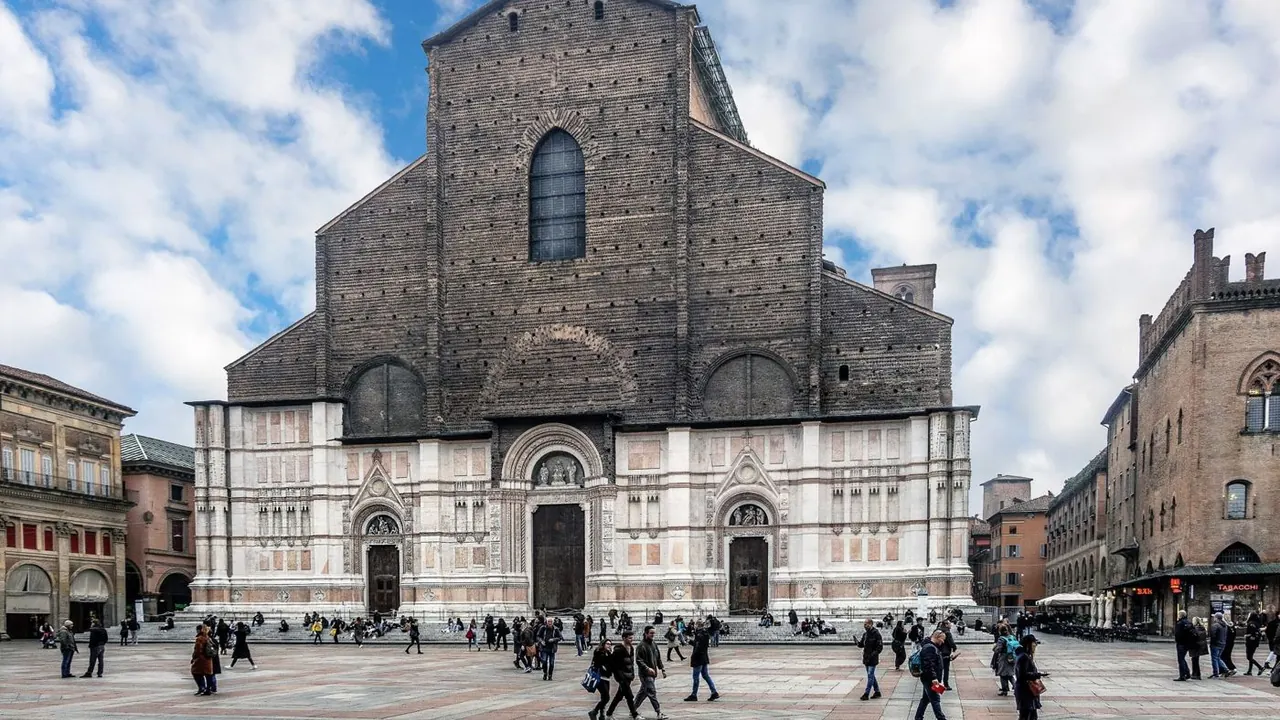
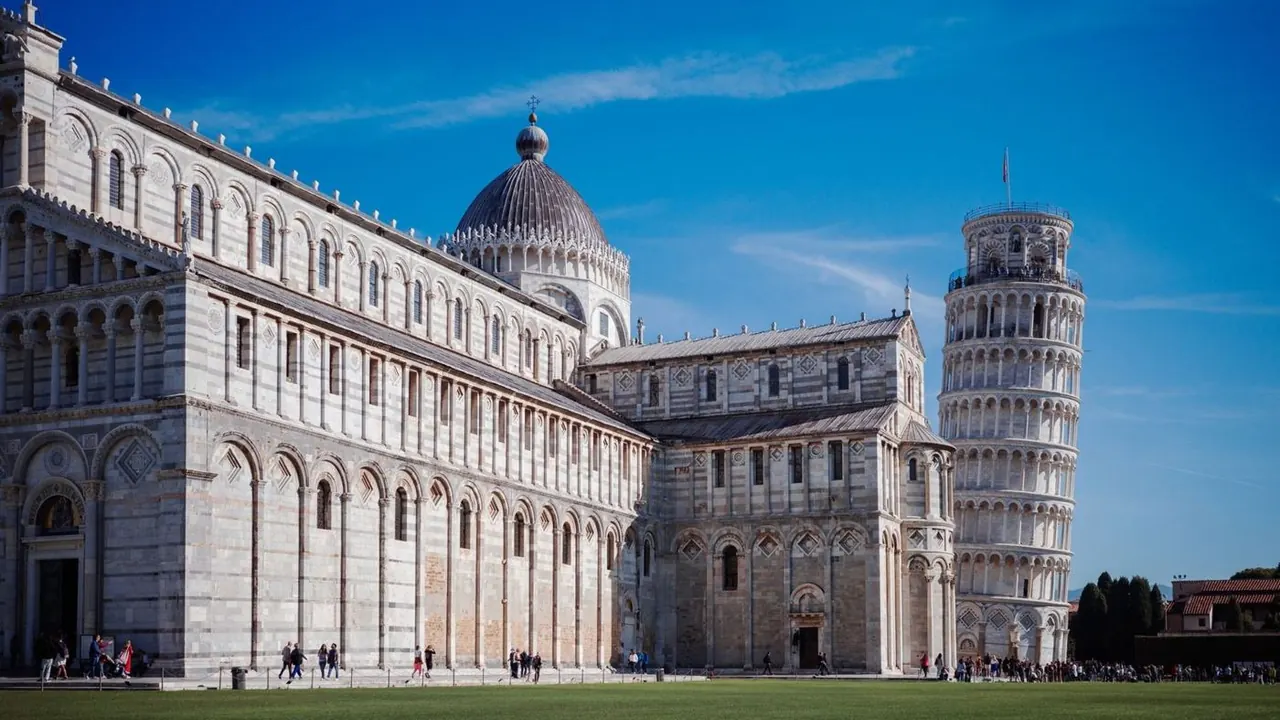
Photos: Bologna by Vanni Lazzari, CC BY-SA 4.0, cropped; Pisa by Bruno Kraler, Pexels License.
Bologna or Pisa?
Our verdict in twelve categories, each scored against the same fixed benchmark cities, and the climate month by month, so you can choose for your trip.
Choose Bologna for
- food and drink
- live music and the arts
- nightlife
Bologna is the one for travellers who plan their days around the table. Its fresh pasta, the Quadrilatero delis and the evening aperitivo are in a different league from Pisa's simple Tuscan cooking. It also has livelier nights, a historic opera house, a long jazz tradition and a larger, more complete medieval centre under its porticoes. That makes it suit a longer city stay, with Florence, Ravenna and Ferrara as side trips.
Choose Pisa for
- beaches
- nature and the outdoors
- prices
If you want sea air and open country alongside the sights, Pisa fits better. The sandy beaches at Tirrenia and Calambrone and the forest and dunes of San Rossore are right on the doorstep, rooms cost a little less, and the airport is minutes from the centre. Its great sights are gathered in one square, with a quieter old town beyond it, which suits a shorter stay with Lucca, the Cinque Terre and Florence by train.
Scoreboard
Twelve categories on one fixed scale from 0 to 100. The shaded stretch is the gap between the two.
Your match
Pick a travel style or drag the sliders, and both match scores follow your weighting.
Wins on food and drink and live music and the arts with your weighting.
Wins on beaches and nature and the outdoors with your weighting.
What matters to you?
Category by category
What the scores mean for a trip.
Beaches & swimming
Bologna is inland, so a swim means about an hour on the train to Rimini or Cervia. The Adriatic there is warm and shallow, but the shore is lined with organised lidos. It works as an escape from the city heat, not as part of your daily routine.
Pisa has the sea on its doorstep. The coast is about 12km away, with long pine-backed sandy beaches at Tirrenia and Calambrone and small coves at Marina di Pisa, so an afternoon swim after a morning of sightseeing is easy. The water near the mouth of the Arno is rarely clear, but the shallows are good for paddling.
Food & drink
Food is the widest gap between the two. Bologna is the home of ragù, tortellini in brodo and mortadella. Fresh pasta is rolled in shop windows, the Quadrilatero is full of delicatessens, and the Parmigiano, ham and balsamic producers of Parma and Modena are close by. Plenty of people come for the eating alone.
Pisa eats well but plainly: ribollita, game, salt cod and hot cecina, best in the trattorias around Piazza delle Vettovaglie, while the menus by the tower are forgettable. Neither city offers much beyond its regional cooking, but Pisa has the better seafood, thanks to the nearby coast.
Culture & sights
Bologna has more to see overall. The sight is the whole medieval centre, with nearly 40km of UNESCO-listed porticoes, Piazza Maggiore and San Petronio, the Two Towers, the seven churches of Santo Stefano and the wooden anatomical theatre of the Archiginnasio. That is enough for two or three full days.
Pisa has the more famous single image in the Piazza dei Miracoli, where the white marble cathedral, the baptistery, the tower and the Camposanto stand together on one lawn. Beyond it, Piazza dei Cavalieri, Santa Maria della Spina and the San Matteo museum are rewarding but on a smaller scale.
Nightlife
Students drive the evenings in both cities, but Bologna has far more places to go. Piazza Verdi and Via Petroni fill with young drinkers, the taverns along Via del Pratello stay open late, and the wine bars around the Quadrilatero take over after aperitivo. The clubs are out on the edge of town, and August goes quiet.
In Pisa, a night out means a glass of wine in the squares around the old market or along Borgo Stretto. There are few clubs, and out of term the city winds down early. In summer, though, the evenings move to the beach bars on the coast, which Bologna cannot offer.
Nature & outdoors
Bologna's green side is the Colli Bolognesi. You can take the arcaded climb to San Luca, see the gypsum caves of the Parco dei Gessi or start the Via degli Dei trail over the mountains to Florence, and there is modest skiing at Corno alle Scale. North of the city the plain is flat farmland.
Pisa offers more variety close at hand. The San Rossore park runs from the edge of the city through pine forest, wetland and wild dunes to the sea, with deer and easy cycling. The olive terraces of Monte Pisano, the Apuan Alps and the Cinque Terre cliff paths add proper walking.
Day trips
Both are outstanding bases, and the real difference is direction. Bologna sits on the main rail junction of northern Italy, with Florence barely half an hour away by fast train. Ferrara, with its Renaissance walls and castle, is a short trip north across the plain, and Ravenna's Byzantine mosaics are about an hour away towards the coast. Modena and Parma are quick regional rides along the Via Emilia, and Venice, Verona and Padua are each about an hour and a half away.
Pisa looks to Tuscany and the coast. Lucca is under half an hour away, Florence about an hour and the Cinque Terre a little over an hour by train, and with a car you can reach Volterra, San Gimignano and Siena. Choose by which side of the Apennines you want to explore.
Good for families
Neither city is built around children, but both are practical, with flat, compact centres and easy meals of pasta and gelato. In Bologna the porticoes give shade, and older children enjoy the Asinelli climb. For a bigger outing, families head to the Mirabilandia theme park near Ravenna.
Pisa has the tower lawn to run about on and the classic photo. Shallow sandy beaches and bike rides in San Rossore are a short trip away, which makes summer days easier to fill. Bear in mind that younger children are not allowed up the Leaning Tower.
Getting around
Both are small, flat cities best seen on foot, and in both the railway station matters more than local transport. In Bologna the porticoes keep you in shade or out of the rain, much of the centre is closed to cars, and buses climb into the hills. There is no metro.
Pisa stretches along one main route, about half an hour's walk from the station to the tower. Its airport is unusually close, linked to the station by an automatic shuttle train. Buses run out to the beaches, and a car is only worth having for the hill towns inland.
Shopping & style
Bologna gives a shopper more, though food is still what most people take home: mortadella, aged Parmigiano and balsamic from the Quadrilatero delis. It also has a small luxury cluster on Via Farini and in the Galleria Cavour, the Montagnola market, the antiques market in Piazza Santo Stefano, and bookshops and vintage stores in the university quarter.
Pisa offers everyday shopping on Corso Italia and under the arcades of Borgo Stretto, a monthly antiques market by the river and souvenir stalls at the tower. For serious fashion or crafts you go to Florence or Lucca.
Affordability
Bologna's costs are uneven. Eating is good value, with food included at aperitivo and local wine cheaper than in Italy's main tourist cities, and most sights are free. Hotels in the old town, though, are priced like the rest of prosperous northern Italy, and trade fairs can make rooms scarce and costly.
Pisa comes out a little cheaper overall, mainly because rooms are mid-range rather than premium and the student trattorias keep meals honest. Its extra costs are concentrated in a few places: the tower climb, the cafés right beside it and beach loungers in high summer.
Live music & performing arts
Bologna has the deeper scene. It is a UNESCO City of Music, and the historic Teatro Comunale runs opera, ballet and symphonic concerts. Basement jazz clubs play most nights, students keep indie gigs going in small venues, and in summer there are concerts and film screenings in Piazza Maggiore.
In Pisa, music centres on the Teatro Verdi, a 19th-century horseshoe-shaped house with opera, concerts and ballet from autumn to spring, plus chamber music and church recitals. A night there is a pleasant way to see opera, but there is little jazz or touring music, and bigger productions mean a trip to Florence.
Wellness & relaxation
Neither city has a bathing culture of its own, so in both, wellness means hotel spas or nearby springs. Bologna's springs are at Castel San Pietro Terme, twenty minutes away, and at the old Apennine spa town of Porretta Terme, about an hour south by train. In town, its pleasure is a long lunch under the porticoes, though the university quarter is noisy.
Pisa's thermal water is closer and grander. San Giuliano Terme, used since Roman times, has a spa in an 18th-century bath palace below Monte Pisano, and Casciana Terme has a larger public pool. Away from the cathedral square, Pisa is also the quieter city day to day.
When should you go?
Pick your month. The climate figures are measured averages, not a forecast.
Bologna in July
Pisa in July
Daytime high, °C
Rainfall in the month, mm
Where the figures come from
Bologna has no rain gauge within 25 km of the centre, so its rainfall comes from a gridded climate dataset read at the city rather than from a gauge further away.
Bologna's sunshine is measured 82 km from the centre, at Cervia.
Temperature and rainfall are climate normals, averaged over the years shown. Bologna: 1991-2020 normals, Bologna / Borgo Panigale (5.5 km from centre). Pisa: 1991-2020 normals, Pisa / S. Giusto (3.9 km from centre).
Spring and early autumn are good for walking in both cities, but they part ways at either end of the year. Bologna sits on the Po plain and has the harsher extremes. Winters are colder, around 7°C by day in January, and July and August reach about 32°C, with a humid heat that makes midday sightseeing hard work. Rain is moderate all year and picks up a little in autumn, so May, June and September are its best months.
Pisa, close to the sea, is milder in winter and a touch less fierce in summer, but its autumn is far wetter, with October and November each bringing well over 120mm. The sea is warm enough to swim from late June into September, reaching about 25°C in August. That means a Pisa summer can mix sightseeing with beach afternoons, while a Bologna summer sends you up into the hills. Both cities get long hours of sunshine from May to August.
Which traveller are you?
On a food and nightlife trip, Bologna is the clear pick. Tagliatelle al ragù, tortellini and mortadella are made here with real care, and the Quadrilatero is a working market district. Evenings run from aperitivo on to the student bars of Piazza Verdi and Via del Pratello.
For a beach and sun trip, Pisa wins easily. The wide sandy beaches of Tirrenia and Calambrone are about 12km away, the shallow sea warms right through summer and Versilia is a short train ride north. From Bologna, the nearest sand is an hour away at Rimini.
On a culture and arts trip, Bologna gives you more to fill the days. There is a large brick medieval centre, the Archiginnasio and the Pinacoteca, and in the evenings the Teatro Comunale or a jazz club. Pisa has the more famous single square but less beyond it.
Before you go
| Measure | Bologna | Pisa |
|---|---|---|
| Official language | Italian | Italian |
| Currency | Euro (EUR) | Euro (EUR) |
| Sockets | CFL230 V, 50 Hz | CFL230 V, 50 Hz |
| Driving side | Right | Right |
| Time zone | UTC+1, UTC+2 in summer | UTC+1, UTC+2 in summer |
| Emergency number | 112 | 112 |
| Elevation | 54 m | 4 m |
| Main airport | Bologna Guglielmo Marconi Airport (BLQ)6 km from centre98 non-stop destinations | Pisa International Airport (PSA)4 km from centre82 non-stop destinations |
| Public holidays this year | 13 days | 13 days |
By the numbers
| Measure | Bologna | Pisa |
|---|---|---|
| City population | 387,971 | 88,737 |
| People per km² | 2,754 | 479 |
| Museums within 10 km | 68 | 27 |
| UNESCO World Heritage sites within 50 km | 3 | 3 |
| Swim season, months above 21 °C | - | 4 months |
Where else could you go?
Every comparison below shares a destination with this one, so you can follow Bologna or Pisa somewhere new.