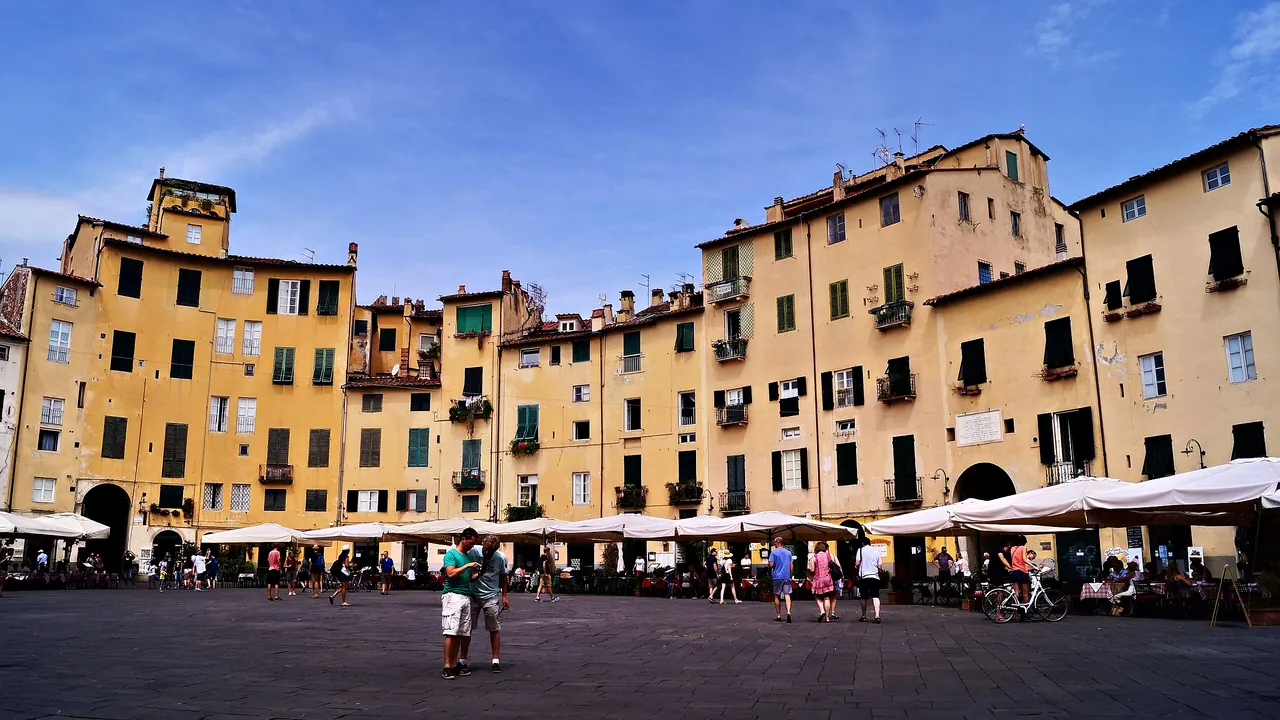
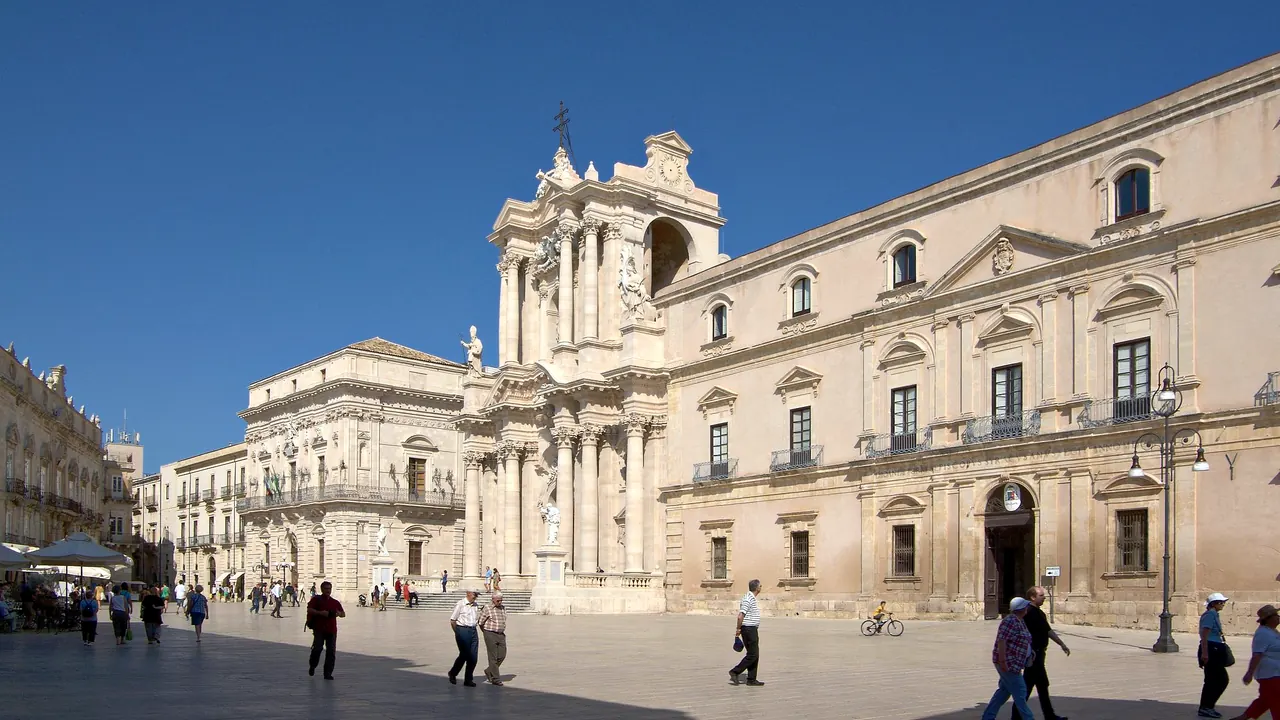
Photos: Lucca by Stefano Sansavini, CC BY-SA 4.0, cropped; Syracuse, Sicily by Berthold Werner, CC BY-SA 3.0, cropped.
Lucca or Syracuse, Sicily?
Our verdict in twelve categories, each scored against the same fixed benchmark cities, and the climate month by month, so you can choose for your trip.
Choose Lucca for
- getting around
- live music and the arts
- wellness
Lucca suits travellers who want an easy, unhurried base in Tuscany without needing a car. You can walk or cycle the whole walled centre, and trains run to Pisa, Florence and the Versilia beaches. Evenings can include Puccini, and the old spa towns are close by for a day of soaking. It is the better choice for a calm, well-connected trip where the sea is an afternoon outing rather than the point of the stay.
Choose Syracuse, Sicily for
- beaches
- nightlife
- culture and sights
Syracuse is for people who want the sea and the ancient world in the same days. You swim off the rocks of Ortigia, then walk through a Greek theatre and one of Italy's best archaeological museums. The food is bolder and more coastal, everyday costs are lower and the summer is longer and drier. You pay for this with harder logistics: the beaches, gorges and baroque towns mostly need a hired car.
Scoreboard
Twelve categories on one fixed scale from 0 to 100. The shaded stretch is the gap between the two.
Your match
Pick a travel style or drag the sliders, and both match scores follow your weighting.
Too close to call, level with your weighting
Wins on getting around and live music and the arts with your weighting.
Wins on beaches and nightlife with your weighting.
What matters to you?
Category by category
What the scores mean for a trip.
Beaches & swimming
Syracuse lives by the sea. In Ortigia you can swim from rocks and wooden platforms in the middle of the old town, there are family beaches with lidos at Arenella and Fontane Bianche, and Vendicari has pale, undeveloped sand. The Ionian is a touch warmer too, and stays swimmable into early October.
Lucca is inland, so a beach day means taking the train to Viareggio. What you get there is long, gently shelving sand, mostly in rows of umbrellas at beach clubs, with the Lecciona dunes for something wilder. It makes a pleasant half day, but you never wake up beside the water.
Food & drink
Syracuse has the richer table. The Ortigia market supplies swordfish, tuna, sea urchins and capers for pasta with sardines and spaghetti alla siracusana, and summer mornings start with granita and brioche. Nero d'Avola and the sweet Moscato di Siracusa are made nearby.
Lucca's cooking is plainer inland food: farro soup, tordelli in ragù, chestnut dishes and cecina, with good olive oil from the surrounding hills. It is dependable and fairly priced, but the menus repeat themselves sooner than they do in Sicily.
Culture & sights
Syracuse has the deeper history. You can see a cathedral built around the columns of a Greek temple, the rock-cut theatre and Ear of Dionysius in the Neapolis park, the Paolo Orsi museum and a Caravaggio, which together justify two or three full days.
Lucca's appeal is the town as a whole: its complete Renaissance walls, the carved Romanesque fronts of San Michele and San Frediano, and the oval piazza built over a Roman amphitheatre. It is lovely, but its museums are modest, and two days cover the essentials.
Nightlife
Neither is a place for a big night, but Syracuse lasts longer. On summer weekends Ortigia's lanes of wine and cocktail bars stay busy past midnight, and beach clubs add some dancing in July and August. In Lucca, an evening means aperitivo in the piazza, dinner and a walk on the walls, and the centre is quiet by midnight. Anyone who wants to dance has to get to the Versilia coast and back.
Nature & outdoors
The two are close here, but the landscapes are very different. Lucca has gentle olive hills and cycle paths along the Serchio, with the steep marble peaks of the Apuan Alps and the chestnut woods of the Garfagnana within about an hour, which is the better choice for serious mountain hiking.
Around Syracuse the outdoors is drier and closer to the sea. There are limestone gorges with green pools at Cavagrande, flamingos at Vendicari, snorkelling in the Plemmirio reserve and papyrus along the Ciane. Etna is close enough for a day trip.
Day trips
Both make excellent bases, and the real difference is how you travel. From Lucca, Pisa, Florence, Pistoia and Montecatini are all on one railway line, so the best of Tuscany is possible without a car, though the villas and Garfagnana villages are easier to reach by road.
From Syracuse you reach the baroque towns of the Val di Noto, Catania and Taormina, plus the mosaics at Piazza Armerina. These are memorable trips, but most of them are much easier by hired car than by bus.
Good for families
They are about level for children, for different reasons. In Lucca the draws are riding a quadricycle round the walls, climbing the tree-topped tower, a short trip to Pinocchio Park at Collodi, and Lucca Comics & Games for teenagers.
Syracuse wins children over with the sea: gently shelving sandy beaches, papyrus boat trips, puppet shows and the echoing Ear of Dionysius. Its July heat, though, means sightseeing has to fit around the afternoon swim.
Getting around
Lucca is far easier. The walled centre is flat and mostly closed to traffic, you can rent bikes at every gate, and the station just outside the walls has regular trains across Tuscany. You only need a car for the hill villages.
In Syracuse, Ortigia is easy to cross on foot, but city buses are confusing and regional services are thin. Vendicari, the gorges and most baroque towns realistically mean hiring a car.
Shopping & style
Lucca has the edge, mainly because of Via Fillungo's fashion and jewellery shops behind old Liberty fronts and the monthly antiques market around the cathedral, one of the oldest in Italy. Syracuse is better for crafts: hand-painted ceramics, coral jewellery and papyrus paintings, plus capers and pistachio products from the market to take home. Neither has luxury shopping.
Affordability
Syracuse is the cheaper of the two day to day. Street food, granita and trattoria meals with local wine cost noticeably less than in Tuscany, though August rooms on Ortigia and the car you will probably need add up.
Lucca is cheaper than Florence but sits at normal central Italian prices. Hotels inside the walls are scarce and fill up in summer and during festivals, so staying just outside the walls saves money.
Live music & performing arts
Lucca has much more on in the evenings. Puccini recitals run in a central church for most of the year, and the Teatro del Giglio holds an opera season. Summer brings outdoor star concerts in Piazza Napoleone and open-air opera by the lake at Torre del Lago.
Syracuse has one outstanding event: Greek tragedy performed in the ancient theatre each late spring and early summer. Outside that season, the evening programme is little more than the puppet theatres.
Wellness & relaxation
Neither city has spas of its own, but Lucca puts real ones within easy reach. Montecatini's belle époque baths are a short train ride away, Monsummano has warm cave pools and Bagni di Lucca has steam grottoes. Syracuse offers only hotel treatments and a few day spas, so relaxing there comes down to slow days on Ortigia and sunsets over the harbour, which are best away from the August crowds.
When should you go?
Pick your month. The climate figures are measured averages, not a forecast.
Lucca in July
Syracuse, Sicily in July
Daytime high, °C
Rainfall in the month, mm
Where the figures come from
Syracuse, Sicily's temperatures are measured 45 km from the centre, at Cozzo Spadaro.
Syracuse, Sicily has no rain gauge within 25 km of the centre, so its rainfall comes from a gridded climate dataset read at the city rather than from a gauge further away.
Temperature and rainfall are climate normals, averaged over the years shown. Lucca: 1991-2020 normals, Pisa / S. Giusto (21.4 km from centre). Syracuse, Sicily: 1991-2020 normals, Cozzo Spadaro (45 km from centre).
Both cities reach about 30°C in July and August, but they handle the rest of the year very differently. Lucca's summer is hot in the plain and good for the beach from June to September. Autumn is wet: rainfall climbs sharply from September and peaks at about 132mm in November, and winter days are cool. Late spring and early autumn are the most comfortable months for walking the walls and the countryside.
Syracuse is sunnier in every month and much drier in summer, with only about 2mm of rain in July. Winter highs stay around 16°C, so January and February still work for sightseeing. The sea holds about 23°C into October, which stretches the swimming season well past Lucca's. Midsummer is hot for the archaeological sites, so spring and autumn are the best balance there.
Which traveller are you?
For a short city break, Lucca is the simpler choice. Its flat, traffic-free centre takes two days on foot or by bike, trains run from Pisa, and a Puccini recital fills an evening. Ortigia and the Greek theatre are walkable too, but they deserve a longer stay.
For a beach and sun trip, choose Syracuse. You can swim below Ortigia's sea walls every day, Vendicari has undeveloped sand, and the season is longer and drier than on the Versilia coast, which from Lucca is always a train ride away.
On a trip with a tight budget, Syracuse goes further. Lucca's walls cost nothing, but its beach means a train and usually a hired umbrella. On Ortigia you swim off the rocks for free. Come in late September, when island rooms are easier to find and the sea is still warm.
Before you go
| Measure | Lucca | Syracuse, Sicily |
|---|---|---|
| Official language | Italian | Italian |
| Currency | Euro (EUR) | Euro (EUR) |
| Sockets | CFL230 V, 50 Hz | CFL230 V, 50 Hz |
| Driving side | Right | Right |
| Time zone | UTC+1, UTC+2 in summer | UTC+1, UTC+2 in summer |
| Emergency number | 112 | 112 |
| Elevation | 19 m | 17 m |
| Main airport | Pisa International Airport (PSA)21 km from centre82 non-stop destinations | Catania-Fontanarossa Airport (CTA)48 km from centre96 non-stop destinations |
| Public holidays this year | 13 days | 13 days |
By the numbers
| Measure | Lucca | Syracuse, Sicily |
|---|---|---|
| City population | 88,798 | 115,515 |
| People per km² | 478 | 556 |
| Museums within 10 km | 20 | 11 |
| UNESCO World Heritage sites within 50 km | 4 | 2 |
| Swim season, months above 21 °C | 4 months | 5 months |
Where else could you go?
Every comparison below shares a destination with this one, so you can follow Lucca or Syracuse, Sicily somewhere new.
- Pisavs Lucca
- Cataniavs Syracuse, Sicily
- Florencevs Lucca
- La Speziavs Lucca
- Taorminavs Syracuse, Sicily
- Sienavs Lucca