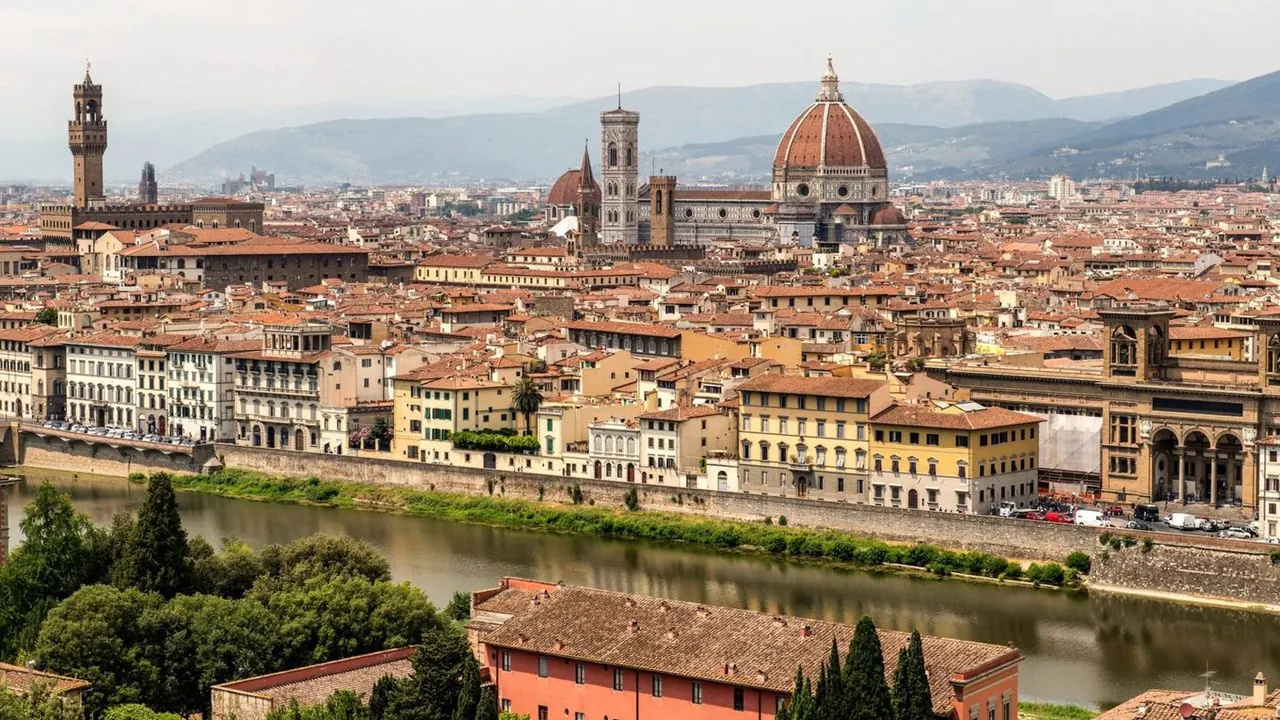
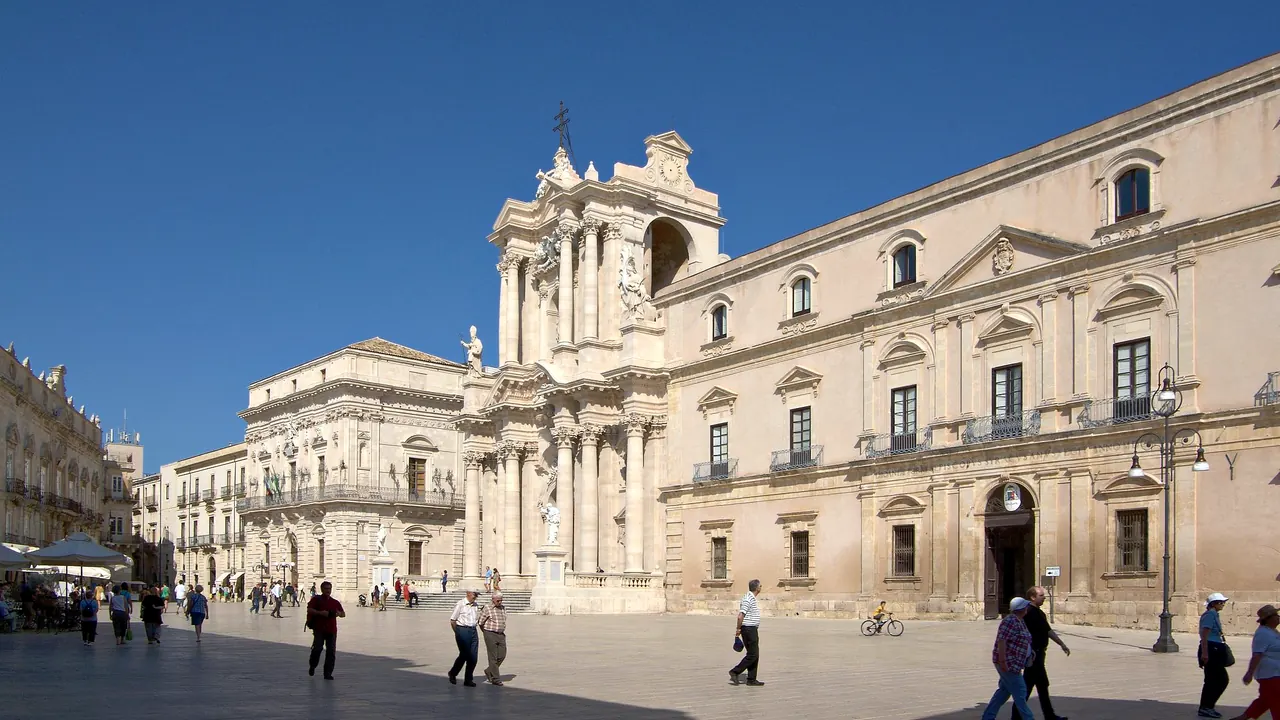
Photos: Florence by Wolfgang Weiser, Pexels License; Syracuse, Sicily by Berthold Werner, CC BY-SA 3.0, cropped.
Florence or Syracuse, Sicily?
Our verdict in twelve categories, each scored against the same fixed benchmark cities, and the climate month by month, so you can choose for your trip.
Choose Florence for
- shopping
- getting around
- live music and the arts
Florence suits the traveller who wants art, architecture and plenty to do without a car. Its Renaissance collections are among the deepest anywhere, the centre is a short walk from end to end, and Siena, Pisa and Lucca are easy by train or bus, with Bologna a quick high-speed hop. Add serious opera and classical music, craft and fashion shopping and a strong trattoria culture, and it fills a busy, varied week. It costs more, though, and it is no place for a swimming vacation.
Choose Syracuse, Sicily for
- beaches
- prices
- nature and the outdoors
For a slower Mediterranean trip that mixes the sea with history, Syracuse is the better pick. You can swim off the rocks below Ortigia's walls, spend days on the pale sand of Vendicari, walk the gorges of the Hyblaean plateau and still stand in a Greek theatre or a cathedral built around a temple. Eating out and staying off the island cost noticeably less. It works best for travellers happy to hire a car, and for those who would rather end the evening with a quiet glass by the harbour than go out late.
Scoreboard
Twelve categories on one fixed scale from 0 to 100. The shaded stretch is the gap between the two.
Your match
Pick a travel style or drag the sliders, and both match scores follow your weighting.
Too close to call, 2 points apart
Wins on shopping and getting around with your weighting.
Wins on beaches and prices with your weighting.
What matters to you?
Category by category
What the scores mean for a trip.
Beaches & swimming
This is where the two cities differ most. Florence sits inland in the Arno valley, and the sandy Versilia coast around Viareggio is a full day out by train. In summer, cooling off usually means a hotel or public pool.
In Syracuse, swimming is part of everyday life. You can climb down from Ortigia's sea walls into clear water, spend afternoons on the gently shelving sand south of the city, snorkel in the Plemmirio coves or drive to the empty pale beaches of Vendicari.
Food & drink
Both are excellent places to eat, and Florence has a slight edge for range. Its food is Tuscan and meat-led: bistecca, bread soups, lampredotto from the carts, Chianti poured by the glass, and two good markets in San Lorenzo and Sant'Ambrogio. There is also a fine-dining tier on top of the trattorie.
Syracuse cooks from the sea and the citrus groves. Think swordfish, sea urchin pasta, raw prawns and spaghetti with anchovies and capers, with granita and brioche for breakfast and Nero d'Avola to drink. The choice is more strictly regional, but the Ortigia market alone makes a good morning.
Culture & sights
Florence has more great art in one small place than almost any city in Europe. Botticelli and Leonardo in the Uffizi, Michelangelo's David, Brunelleschi's dome and the frescoes at San Marco and the Brancacci Chapel could fill a week, though you will need to book ahead and queue.
Syracuse goes back further and draws on a different past. Its highlights are the Greek theatre and the Ear of Dionysius at Neapolis, the temple columns inside Ortigia's cathedral, the Paolo Orsi museum and a Caravaggio. That is two or three rich days, set among baroque lanes rather than gallery halls.
Nightlife
Neither city is made for big nights, and in both the evening runs from aperitivo to a glass of wine. Florence's scene is spread across a few districts: drinkers spill over Piazza Santo Spirito, Sant'Ambrogio draws a more local crowd, the student pubs near the centre keep going all year and summer brings bars along the Arno.
Syracuse gathers almost everything on one small island, with drinks in Ortigia's piazzas and along its sea walls, then small cocktail bars in the lanes. In July and August the beach clubs on the southern coast add some dancing, but from November to March nights end early.
Nature & outdoors
Syracuse has the wilder and more varied outdoors. You can follow the gorge path down to the green pools at Cavagrande, look for flamingos in the Vendicari lagoons, kayak around Ortigia's sea caves, dive at Plemmirio or spend a day on Etna.
Florence's countryside is gentler and more cultivated. It means olive terraces at Fiesole, walking and cycling among the Chianti vineyards, and the beech forests of the Casentino further out. These are lovely in spring and autumn, but there is no sea and little that feels rugged.
Day trips
Both make superb bases, but Florence has the deeper list and the easier logistics. Siena, Pisa, Lucca and Bologna are all within about an hour by train or bus, and San Gimignano, Volterra, Chianti and the Val d'Orcia lie beyond them.
From Syracuse the main draw is the baroque Val di Noto. Noto, Modica, Ragusa Ibla and Scicli are all close by, with Catania, Taormina and the Piazza Armerina mosaics further away. Most of these are much easier by car than by bus.
Good for families
Syracuse works rather better with children, mainly because of the sea. Gentle sandy beaches fill the afternoons, Ortigia's lanes are mostly free of cars, and the echoing Ear of Dionysius, the papyrus boat trips and the puppet theatre all appeal to young visitors.
Florence asks children to look at a lot of paintings. Climbing the dome, the secret passages of Palazzo Vecchio, the Museo Galileo and the Boboli Gardens help, as does a day at the Pinocchio park in Collodi. Narrow, crowded pavements make it tiring with a pushchair.
Getting around
Florence is far simpler without a car. Its major sights are all within about twenty minutes' walk, trams run to the airport, and Santa Maria Novella station sits right in the centre for day trips by rail.
In Syracuse, walking is easy only on Ortigia and out to the archaeological park. Buses are sparse and trains are slow, and the beaches, gorges and baroque towns are realistically reached only by car, so most visitors hire one for at least part of their stay.
Shopping & style
Florence is the far better place to shop. Its leather goods, marbled paper, Ponte Vecchio goldsmiths, Oltrarno gilders and framers, and the fashion houses on Via de' Tornabuoni reflect centuries of craft. The Sant'Ambrogio flea market and the antique dealers of Via Maggio add more.
Syracuse offers a small, pleasant selection on Ortigia, with painted ceramics, linen, coral jewellery and papyrus pictures. The most worthwhile purchases are capers, almonds and pistachio products from the market.
Affordability
Syracuse is the cheaper of the two. Market sandwiches, arancini and trattoria meals with local wine cost noticeably less than in Florence, and site entry fees are moderate. Ortigia rooms in high summer and the cost of a hire car are the main expenses.
Florence charges for its fame. Central hotels are expensive for most of the year, and the admission fees for museums and the dome soon add up. Street food, market lunches and walking everywhere help, and so does staying across the river or near the station.
Live music & performing arts
Florence has a proper musical life. This is the city where opera began, and the Maggio Musicale company and its spring festival offer opera, concerts and ballet through the season, with theatre at the Pergola.
Syracuse has one remarkable occasion. In late spring and early summer, Greek tragedies and comedies are staged in the ancient theatre, on stone seats where Greek audiences once sat. Beyond that there are the Sicilian puppet shows and the odd summer concert, but no opera or orchestra.
Wellness & relaxation
Neither city has a bathing tradition of its own, and spas in both mean hotel spas and a few day spas. The difference is in how you unwind. From Florence you can take the train to the old spa halls of Montecatini or drive to the sulphur pools of southern Tuscany. Syracuse relies on its pace instead, with long lunches, sea-wall walks and harbour sunsets that feel most restful outside August.
When should you go?
Pick your month. The climate figures are measured averages, not a forecast.
Florence in July
Syracuse, Sicily in July
Daytime high, °C
Rainfall in the month, mm
Where the figures come from
Florence has no rain gauge within 25 km of the centre, so its rainfall comes from a gridded climate dataset read at the city rather than from a gauge further away.
Florence's sunshine is measured 71 km from the centre, at Pisa / S. Giusto.
Syracuse, Sicily's temperatures are measured 45 km from the centre, at Cozzo Spadaro.
Syracuse, Sicily has no rain gauge within 25 km of the centre, so its rainfall comes from a gridded climate dataset read at the city rather than from a gauge further away.
Temperature and rainfall are climate normals, averaged over the years shown. Florence: 1995-2020 (sunshine 1991-2020, rainfall 1991-2020) normals, Firenze / Peretola (5.6 km from centre). Syracuse, Sicily: 1991-2020 normals, Cozzo Spadaro (45 km from centre).
Florence is at its best in spring and autumn. From April to early June, and again in late September and October, it is warm enough to walk the streets in comfort. July and August are very hot, reaching 33°C, which makes queuing and long afternoon walks hard work. Rain builds through autumn and November is the wettest month at 124mm. Winters are cool and grey, with short days that suit museums more than countryside.
Syracuse has a much longer warm season and far more sun. The sea is warm enough for swimming from June to early October and reaches 26°C in August, while summers are almost rainless, with just 2mm in July. Midsummer is hot for sightseeing, so mornings and evenings work best. Rain arrives in October, but winter stays mild at around 16°C, which means a January visit is pleasant for walking Ortigia and the ruins, when Florence would be cold.
Which traveller are you?
For a beach and sun trip, Syracuse wins easily. You can swim off Ortigia's rocks, spend days on the sand at Arenella and Fontane Bianche or drive to the empty beaches of Vendicari for a proper seaside stay. From Florence, the sea is a full day out.
On a culture and arts trip, Florence wins. The Uffizi, the Accademia, the Bargello and the Duomo are a short walk apart, and in the evenings there are opera and concerts. Syracuse has superb Greek ruins, but there is little to go to after dark.
On a trip on a tight budget, Syracuse makes your money go further. Swimming off the rocks is free, granita and brioche make a cheap breakfast, and mainland rooms in spring or autumn are good value. In Florence, museum tickets and central hotels quickly push up the cost of a stay.
Before you go
| Measure | Florence | Syracuse, Sicily |
|---|---|---|
| Official language | Italian | Italian |
| Currency | Euro (EUR) | Euro (EUR) |
| Sockets | CFL230 V, 50 Hz | CFL230 V, 50 Hz |
| Driving side | Right | Right |
| Time zone | UTC+1, UTC+2 in summer | UTC+1, UTC+2 in summer |
| Emergency number | 112 | 112 |
| Elevation | 50 m | 17 m |
| Main airport | Florence Airport, Peretola (FLR)6 km from centre46 non-stop destinations | Catania-Fontanarossa Airport (CTA)48 km from centre96 non-stop destinations |
| Public holidays this year | 13 days | 13 days |
By the numbers
| Measure | Florence | Syracuse, Sicily |
|---|---|---|
| City population | 360,930 | 115,515 |
| People per km² | 3,528 | 556 |
| Museums within 10 km | 141 | 11 |
| UNESCO World Heritage sites within 50 km | 6 | 2 |
| Swim season, months above 21 °C | - | 5 months |
Where else could you go?
Every comparison below shares a destination with this one, so you can follow Florence or Syracuse, Sicily somewhere new.
- Sienavs Florence
- Cataniavs Syracuse, Sicily
- Luccavs Florence
- Pisavs Florence
- Bolognavs Florence
- Taorminavs Syracuse, Sicily