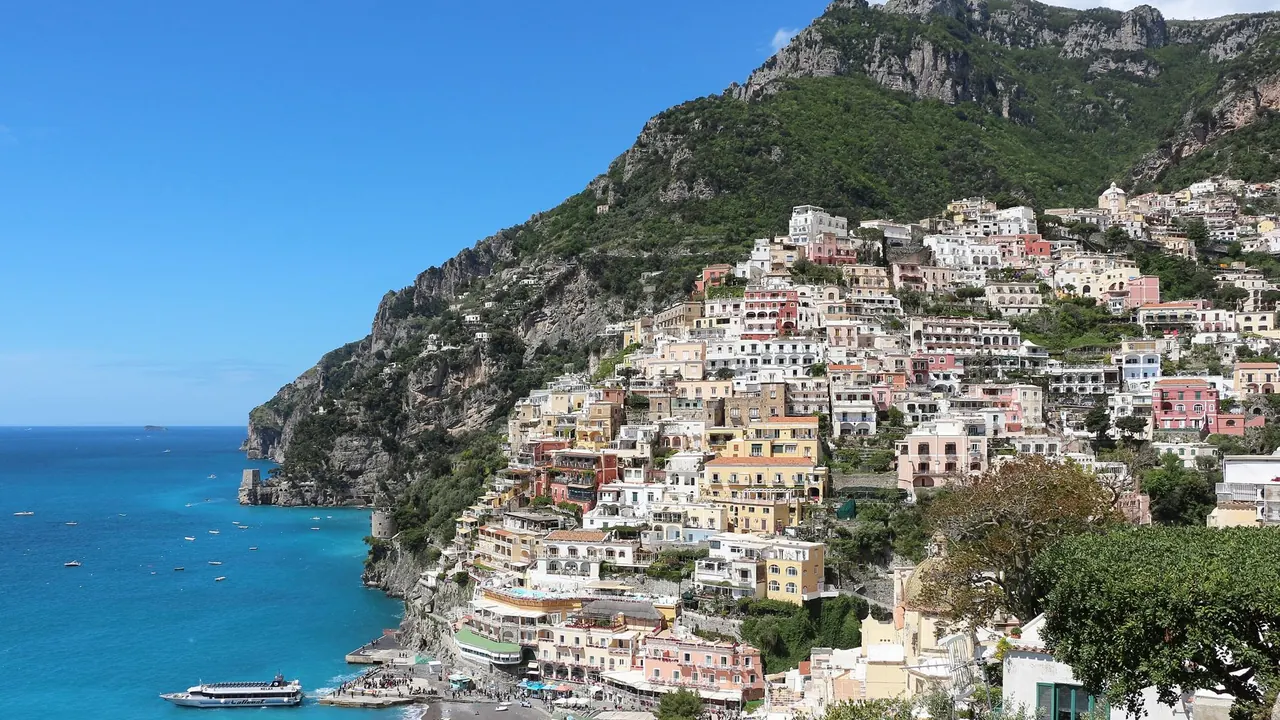
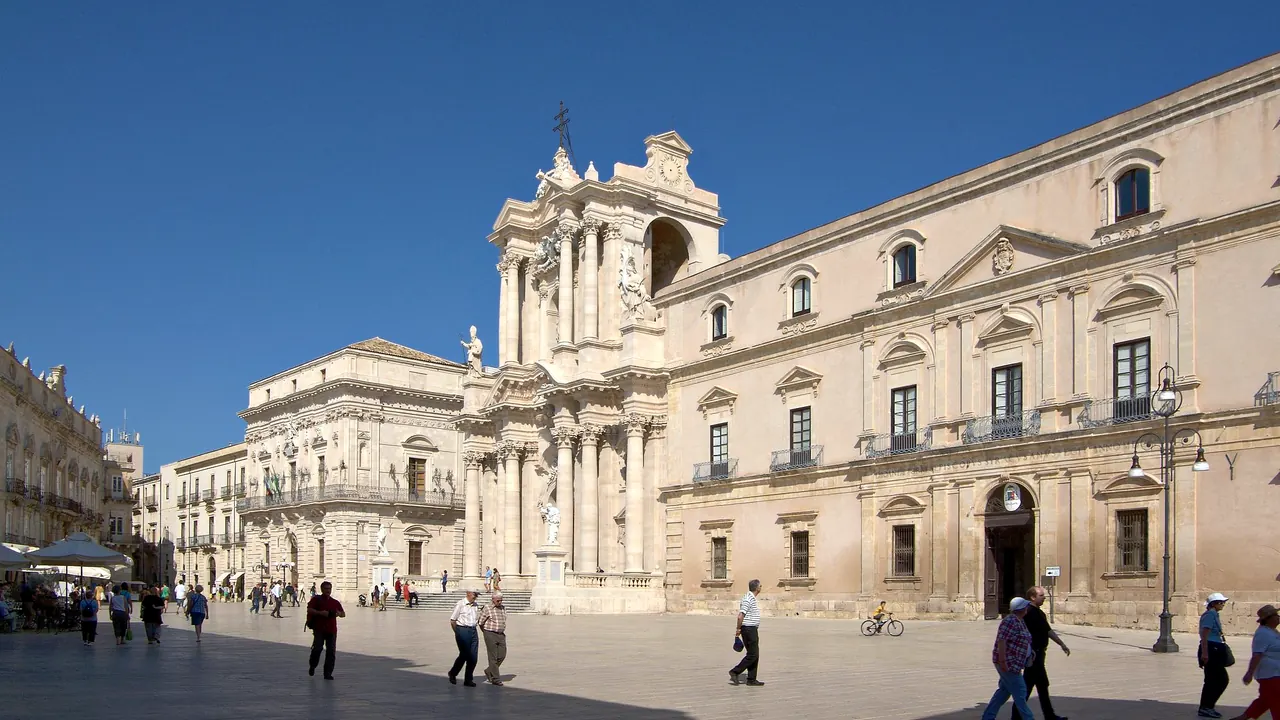
Photos: Positano by Bernard Gagnon, CC BY 4.0, cropped; Syracuse, Sicily by Berthold Werner, CC BY-SA 3.0, cropped.
Positano or Syracuse, Sicily?
Our verdict in twelve categories, each scored against the same fixed benchmark cities, and the climate month by month, so you can choose for your trip.
Choose Positano for
- shopping
- nature and the outdoors
- wellness
Positano suits travellers who want the Amalfi Coast at its most theatrical: a steep town of stairways stacked above the sea, cliff walks high over it, boat days to Capri and hidden coves, and a budget that can take some of Italy's highest prices. It is a place for couples and for doing very little in great style, not for sightseeing or a lively evening.
Choose Syracuse, Sicily for
- culture and sights
- prices
- food and drink
Syracuse gives you far more to do and costs much less. Ortigia's cathedral built around a Greek temple, the Neapolis theatre, a morning market that feeds proper Sicilian cooking and gently shelving sandy beaches make it the stronger choice for curious travellers, families and anyone watching costs, as long as they are happy to hire a car for the coast and the baroque towns.
Scoreboard
Twelve categories on one fixed scale from 0 to 100. The shaded stretch is the gap between the two.
Your match
Pick a travel style or drag the sliders, and both match scores follow your weighting.
Wins on shopping and nature and the outdoors with your weighting.
Wins on culture and sights and prices with your weighting.
What matters to you?
Category by category
What the scores mean for a trip.
Beaches & swimming
The swimming is equally good in both, but the beaches are very different. Positano's are steep strips of dark grey sand and pebbles under the cliffs, lined with loungers, with Fornillo, Arienzo and Laurito reached by path, stairs or boat, and boats out to coves and Capri. Water shoes help, and in summer space runs out early.
Syracuse offers two kinds of sea. On Ortigia you swim straight off the rocks and platforms below the old town walls. For sand, you drive south to the family bays at Arenella and Fontane Bianche or the undeveloped pale beaches of Vendicari, so a car matters far more here.
Food & drink
Syracuse is the better place to eat. Its day starts at the Ortigia market among swordfish, sea urchins and capers, then moves on to pasta with sardines, rolled swordfish, arancini, granita with brioche for breakfast, and Nero d'Avola or sweet Moscato in the glass, with cheap everyday food alongside the trattorias.
Positano's strength is the long lunch on a terrace over the sea, with clams, grilled fish and lemon desserts. But menus repeat each other, there is little street food or market life, and many kitchens close through winter.
Culture & sights
There is little contest here. Syracuse was one of the great Greek cities, and you can still see it in the temple columns built into the cathedral, the rock-cut theatre and the Ear of Dionysius, the catacombs, a first-rate archaeological museum and a Caravaggio, all around the baroque lanes of Ortigia.
Positano's sight is the town itself, the pastel houses climbing the ravine and the majolica dome of Santa Maria Assunta, with a painted Roman villa beneath it. It makes a lovely morning, after which culture means a trip to Naples or along the coast.
Nightlife
Neither is a party town, but Syracuse keeps going for longer. On summer weekends Ortigia's lanes of small wine and cocktail bars stay busy past midnight, and beach clubs to the south add some dancing in July and August.
Positano's evenings are aperitivo with a view and a long dinner, plus one cave club at the end of Spiaggia Grande for a dressed-up crowd. In both, people who want serious clubbing have to travel, and things go quiet out of season.
Nature & outdoors
For the outdoors, Positano is the stronger choice. The Lattari mountains drop sheer into the sea, the Path of the Gods follows the cliffs to Nocelle with Capri in view, and steeper trails climb through chestnut woods to ridges over 1,000m. On the water, kayaks and boats follow the rock walls to grottoes and the Li Galli islets.
Syracuse can't match that drama, but it has good outdoor days of its own, spread across a wider area: green pools at the foot of the Cavagrande gorge, rock-cut tombs along the Anapo valley, flamingos on Vendicari's lagoons, snorkelling in the Plemmirio reserve and papyrus on the Ciane river. Etna makes a longer day out.
Day trips
Both are superb bases, and the difference is in how you get around. From Positano the day trips go by water: ferries to Amalfi, Ravello and Capri, with Pompeii, Herculaneum and Paestum further afield. But the boats mostly run from spring to autumn, and the coast road crawls.
Syracuse's day trips go by road through baroque Sicily: Noto, Modica, Ragusa Ibla and Scicli, plus Catania and Taormina to the north and the mosaics at Piazza Armerina. These work all year, but they are much easier with a hire car.
Good for families
Syracuse is much the kinder choice with children. The sandy beaches shelve gently, Ortigia is small and largely free of cars, and the echoing Ear of Dionysius, the papyrus boat rides and puppet shows go down well, though there are no theme parks.
Positano is built of stairs, so pushchairs are useless, and its pebbly beaches deepen fast. It works better for older children who love swimming and boats.
Getting around
Syracuse is somewhat easier. Ortigia is flat and takes fifteen minutes to cross on foot, with the archaeological park a short taxi away. Beyond that, sparse buses and slow trains push most visitors into a hire car.
In Positano a car is more trouble than it is worth. Instead you climb hundreds of steps, take a single looping bus and, in season, the ferries.
Shopping & style
Positano is the better place to shop, because it has a style of its own. Boutiques down to the beach sell the white linen and bright prints of moda Positano, and sandal makers will make a pair to fit while you wait. It is all one look, though.
Syracuse's shopping is smaller and more about crafts and food: ceramics, coral jewellery, papyrus paintings, and capers, almonds and pistachio from the market to take home.
Affordability
This is one of the widest gaps between the two. Positano is among the most expensive places to stay in Italy, and sea-view rooms, beach loungers, terrace meals, boat trips and transfers all cost a lot. Staying in Praiano or Sorrento is the usual way to save.
Syracuse is reasonably priced for a famous Mediterranean destination, with cheap, excellent food and moderate site entry fees. The costs to plan for are Ortigia rooms in summer and a hire car.
Live music & performing arts
Positano has little of its own beyond occasional summer concerts in churches and squares. Its best evening out is along the coast at Ravello, where the classical music festival holds concerts on a terrace above the sea, and for opera or theatre you go to Naples.
Syracuse has something Positano cannot match. Each late spring and early summer, Greek tragedies and comedies are staged in the ancient theatre, on the stone seats where Greek audiences once watched plays, a tradition running since 1914. For the rest of the year, Ortigia's small family puppet theatres keep the knights of Sicilian legend fighting on stage.
Wellness & relaxation
Neither has a bathing tradition, and the two relax you in different ways. Positano relies on its upscale hotels, with spas and pools cut into the cliff, and on long afternoons looking down at the sea.
Syracuse offers pace rather than pampering: evening walks on Ortigia's sea walls, harbour sunsets and a few day spas. Both are at their calmest outside the crowded heat of August.
When should you go?
Pick your month. The climate figures are measured averages, not a forecast.
Positano in July
Syracuse, Sicily in July
Daytime high, °C
Rainfall in the month, mm
Where the figures come from
Positano's temperatures are measured 25 km from the centre, at Capri.
Positano has no rain gauge within 25 km of the centre, so its rainfall comes from a gridded climate dataset read at the city rather than from a gauge further away.
Positano's sunshine is measured 59 km from the centre, at Grazzanise.
Syracuse, Sicily's temperatures are measured 45 km from the centre, at Cozzo Spadaro.
Syracuse, Sicily has no rain gauge within 25 km of the centre, so its rainfall comes from a gridded climate dataset read at the city rather than from a gauge further away.
Temperature and rainfall are climate normals, averaged over the years shown. Positano: 2005-2025 (sunshine 1991-2020, rainfall 1991-2020) normals, Capri (25.3 km from centre). Syracuse, Sicily: 1991-2020 normals, Cozzo Spadaro (45 km from centre).
Positano's good season runs from May to early October. The sea is warm enough for swimming from June and reaches about 26°C in August, and the summer months are sunny and nearly dry. Rain returns in September and builds to a wet November of 127mm, and winters are cool and grey. May and late September are the best months for the cliff paths. They are warm, but without the punishing midday heat of July and August.
Syracuse has the same swimming season and much the same sea, but it is a little hotter, far drier and sunnier in every month. Winter afternoons stay around 16°C, mild enough to walk Ortigia and the archaeological park in comfort, though October is the wettest month, with 96mm. High summer is too hot for sightseeing in the middle of the day, so April, May and late September are the best months for walking and day trips.
Which traveller are you?
For a culture and arts trip, Syracuse is the clear choice. Ortigia's temple-cathedral, the Greek theatre at Neapolis, the Paolo Orsi museum and a Caravaggio fill two or three days, while Positano's church and buried Roman villa take a couple of hours.
On a trip on a tight budget, Syracuse makes your money go much further. Market sandwiches, arancini, granita and trattoria meals with local wine are good value and mainland rooms are reasonable, whereas Positano charges heavily for sea-view rooms, loungers, terraces and boats.
On a family trip with young children, Syracuse is far easier. Arenella and Fontane Bianche are sandy and shelve gently, and Ortigia's lanes are flat and largely car-free, while Positano's endless stairs rule out pushchairs and its pebbly shore drops off quickly.
Before you go
| Measure | Positano | Syracuse, Sicily |
|---|---|---|
| Official language | Italian | Italian |
| Currency | Euro (EUR) | Euro (EUR) |
| Sockets | CFL230 V, 50 Hz | CFL230 V, 50 Hz |
| Driving side | Right | Right |
| Time zone | UTC+1, UTC+2 in summer | UTC+1, UTC+2 in summer |
| Emergency number | 112 | 112 |
| Elevation | 142 m | 17 m |
| Main airport | Naples International Airport (NAP)33 km from centre131 non-stop destinations | Catania-Fontanarossa Airport (CTA)48 km from centre96 non-stop destinations |
| Public holidays this year | 13 days | 13 days |
By the numbers
| Measure | Positano | Syracuse, Sicily |
|---|---|---|
| City population | 3,729 | 115,515 |
| People per km² | 429 | 556 |
| Museums within 10 km | 10 | 11 |
| UNESCO World Heritage sites within 50 km | 5 | 2 |
| Swim season, months above 21 °C | 5 months | 5 months |
Where else could you go?
Every comparison below shares a destination with this one, so you can follow Positano or Syracuse, Sicily somewhere new.
- Sorrentovs Positano
- Amalfivs Positano
- Salernovs Positano
- Naplesvs Positano
- Cataniavs Syracuse, Sicily
- Taorminavs Syracuse, Sicily