Italy
Sicily
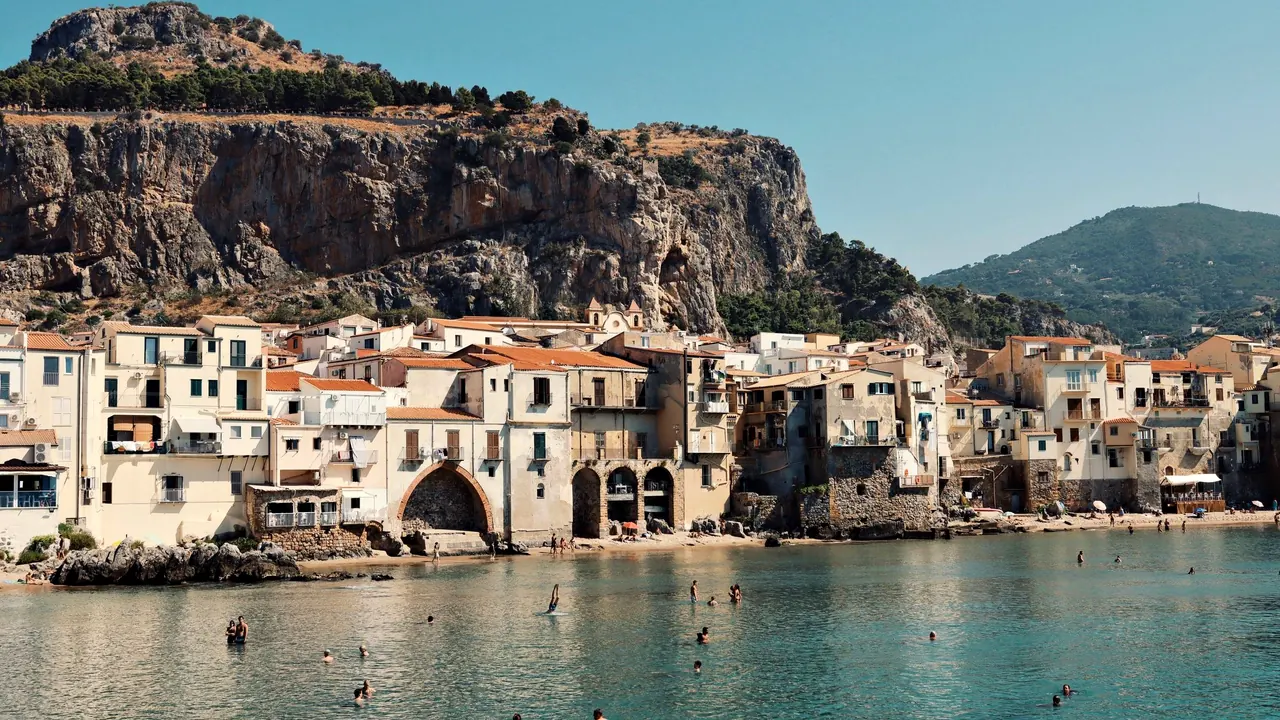
Old houses on the water at Cefalù below La Rocca
- Culture & sights87
- Beaches84
- Food & drink84
Photo: Efrem Efre, Pexels License
Match
65
Every category weighted equally
- Beach & sun67
- Culture & arts65
- Food & nightlife63
- Family trip66
- Outdoors70
- Relax & unwind66
- Shopping & style61
- On a budget64
Sicily in twelve categories
Our verdict on each, scored 0 to 100 against the same fixed benchmark cities, so a score means the same thing on every page.
Beaches & swimming. Scores 84 out of 100.
Food & drink. Scores 84 out of 100.
Culture & sights. Scores 87 out of 100.
Nightlife. Scores 50 out of 100.
Nature & outdoors. Scores 82 out of 100.
Day trips. Scores 82 out of 100.
Good for families. Scores 55 out of 100.
Getting around. Scores 38 out of 100.
Shopping & style. Scores 48 out of 100.
Affordability. Scores 62 out of 100.
Live music & performing arts. Scores 58 out of 100.
Wellness & relaxation. Scores 45 out of 100.
Sicily category by category
Beaches & swimming
84The sea around Sicily reaches about 26°C in August and is warm enough to swim from June to October, and the coast changes a lot as you go round the island. The north west has the long white crescent of San Vito Lo Capo and the coves of the Zingaro reserve. The south has the white marl cliffs of the Scala dei Turchi and wide sandy beaches near Marina di Ragusa. The south east has the nature reserve beaches of Vendicari and the swimming platforms off Ortigia in Syracuse, and below Taormina lies the pebbly bay of Isola Bella.
Offshore are some of the clearest waters in the Mediterranean. The Egadi Islands, especially Favignana, have turquoise rock pools and coves, and the Aeolian Islands have black volcanic beaches. Palermo's own beach is Mondello, a sandy bay with shallow water that is very crowded on summer weekends. In August Italian families fill much of the coast, and the best plan is to pick one stretch of coast and stay there rather than drive around looking for beaches.
Food & drink
84Sicilian food has Greek, Arab, Norman and Spanish roots, and it tastes different from the food on the Italian mainland. Palermo is its street-food capital. In the Ballarò and Capo markets you can eat arancine, chickpea fritters called panelle, the thick pizza called sfincione and spleen sandwiches, standing at the stalls. Pastry is a serious matter across the island: cannoli, cassata, almond biscuits and, on summer mornings, granita eaten with a brioche. Catania's fish market and its pasta alla Norma are reasons to spend time on the east coast too.
Each area has its own specialities: fish couscous around Trapani, grainy chocolate in Modica, pistachios from Bronte and fortified wine in Marsala. On the slopes of Etna, wineries make mineral reds and whites, and many offer tastings. Most meals are in simple trattorie and seafood places that charge fair prices. The island has some fine-dining restaurants, mainly in Taormina, the baroque south east and Palermo. Away from the cities and resorts, restaurant choice gets thin quickly.
Culture & sights
87Few places in Europe have heritage from as many civilisations as Sicily. The Valley of the Temples at Agrigento is a ridge lined with Doric temples, and Segesta's temple stands alone on a hillside. In Syracuse, Ortigia has a cathedral built around a Greek temple, and the city also has a large ancient theatre and a strong archaeological museum. At Taormina, the Greek theatre looks out towards Etna. The Roman villa at Piazza Armerina has some of the largest and best floor mosaics surviving anywhere.
Palermo is the best city base. Its Arab-Norman buildings include the gold mosaics of the Palatine Chapel and the cathedral, with the mosaic-covered cathedral of Monreale on the hill above the city, and the city also has baroque churches, a large opera house and crumbling palazzi. In the south east, Noto, Ragusa Ibla and Modica were all rebuilt in honey-coloured baroque after the earthquake of 1693. The sites are spread across the whole island, so seeing the best of them takes about a week, with two or three bases.
Nightlife
50Evenings in Sicily mostly mean a late dinner and the passeggiata, the evening stroll. The livelier going out is in the two big cities. Catania has the island's busiest bar scene, with students and locals spread through the piazzas and side streets of the historic centre until late. In Palermo, people drink in the street around the Vucciria and in small bars in the old quarters. In summer, the scene moves to the coast, with beach bars and open-air clubs at Mondello, below Taormina and along the south-eastern shore. The clubbing is seasonal and local, and there is little in the small towns and on most of the islands.
Nature & outdoors
82Etna dominates the east of the island. It is Europe's highest active volcano, and you can walk on its lava fields and around its summit craters with a guide. Its lower slopes have pine and beech forest, and there is some skiing in winter. Off the north coast, Stromboli erupts every few minutes, and the evening climb to watch it is one of the great walks in the Mediterranean. Vulcano and Salina have gentler trails, with views over the rest of the Aeolian chain.
The Zingaro reserve has a cliff path between coves on the north west coast. The Madonie and Nebrodi mountains have beech woods and quiet villages, and the Alcantara river runs through basalt gorges. In the south east, the Vendicari wetlands draw flamingos in spring and autumn. Diving and sailing are excellent around the Egadi and Aeolian Islands. Spring and autumn are the times to hike. In July and August the interior turns brown and is too hot for walking.
Day trips
82Wherever you stay in Sicily, there are plenty of good day trips. From Syracuse or Noto, it is easy to reach the other baroque hill towns of the south east, such as Modica, Ragusa and Scicli, as well as Catania and the fishing village of Marzamemi. From Taormina or Catania, you can reach Acireale and the fishing harbour of Aci Trezza, and the Etna wine villages are close by for a day of tastings.
On the western side, Palermo is the base for the seaside town of Cefalù, the medieval hilltop village of Erice, Trapani and its salt pans, and the wine town of Marsala. Ferries run from Trapani to Favignana and from Milazzo to Lipari and the other Aeolian Islands, and either makes a full day out. Getting to many of these places is easier with a car.
Good for families
55Sicilian families take their children everywhere, until late in the evening, so visiting families are made welcome without any fuss. The easiest trip is a beach stay. Shallow sandy bays such as San Vito Lo Capo, Mondello and the beaches of the south east suit small children, and many visitors rent a self-catering apartment or stay at an agriturismo with a pool. Older children usually enjoy the lava fields of Etna, boat trips around the islands and Palermo's puppet theatre.
There is little else built for children, apart from a theme park near Catania. Moving around takes effort: long drives, steep hill towns and fierce heat in July and August. June and September are the most comfortable months.
Getting around
38For most trips, Sicily means a hire car. Motorways and fast roads link Palermo, Catania, Messina and Syracuse, but inland and secondary roads are slow and winding, and driving and parking in Palermo and Catania is chaotic. Trains run along the coasts, but they are sparse and slow away from a few routes. Intercity buses are often the better choice between the main towns. Ortigia, Taormina, Cefalù and the old centre of Palermo are pleasant to explore on foot once you are there. The Egadi and Aeolian Islands are reached by ferry and hydrofoil, and rough seas can cancel crossings. A visitor who sticks to two city bases can manage without a car, but will see much less of the island.
Shopping & style
48Most shopping in Sicily is for crafts and food rather than fashion. Caltagirone is the island's ceramics town, and its staircase is decorated with majolica tiles. Painted ceramic heads and lemon-patterned plates are sold everywhere. Modica chocolate, pistachio cream from Bronte, capers from Pantelleria, Marsala wine and almond pastries make the best things to take home. Trapani has a long tradition of coral work, and Palermo has puppet makers and street markets. For fashion, the main choices are Via Libertà in Palermo, Via Etnea in Catania and the boutiques along Taormina's Corso Umberto, which also has many souvenir shops.
Affordability
62Sicily is one of the cheaper parts of Italy for a visitor. Street food and pastry cost little, and lunch at a simple trattoria is reasonable. B&Bs, guesthouses and agriturismi in the cities and inland towns are fairly priced, even in summer. Prices are higher in Taormina, on the Aeolian Islands and in the best-known beach resorts in July and August, when rooms book up early. Hire cars are also expensive in high season. A visitor who stays in Palermo, Catania, the baroque south east or the countryside will find the island good value.
Live music & performing arts
58Palermo's Teatro Massimo is one of the largest opera houses in Europe, and it stages a full season of opera, ballet and concerts. Catania's Teatro Bellini honours the composer, who was born in the city. Each spring and early summer, Greek tragedies are performed in the ancient theatre of Syracuse, as they have been since the early twentieth century. In summer, the Greek theatre at Taormina hosts concerts, opera and dance with Etna behind the stage.
The most Sicilian performance is the opera dei pupi. In this marionette theatre, knights in armour fight out tales of Charlemagne's paladins on small stages in Palermo, Catania and Acireale. Outside these places and seasons, there is little live music or theatre.
Wellness & relaxation
45Sicily has volcanic and thermal waters, but no bathing culture built around them. There are hot springs near Segesta and Sciacca and volcanic mud and warm sea vents on Vulcano. On Pantelleria, the Specchio di Venere is a crater lake where people swim and smear themselves with its mud. Most spas are in hotels, mainly around Taormina and in the bigger resorts.
The island is more restful for its pace than for its spas. A countryside agriturismo or a stone farmhouse among olive groves, a long lunch and a quiet afternoon are the Sicilian way to unwind. The slower islands, such as Salina and Favignana outside August, are well suited to it.
Where to stay in Sicily
Sicily's sights are spread across the whole island, so most visitors split a week between two or three bases and hire a car. The east is the easiest choice for a first visit. Taormina sits high above the sea with Etna in view and suits couples who want walkable streets, evening strolls and the pebbly bay of Isola Bella below, though rooms cost more in summer. Catania is cheaper and livelier, with the island's busiest bar scene, the fish market and the Etna wine villages close by.
Further south, Syracuse, Sicily's old Greek city, suits food lovers and anyone who likes exploring on foot. Ortigia has swimming platforms off its rocks, and the baroque towns of Noto, Modica and Ragusa are an easy drive away. Families looking for shallow sand do well on the south-east coast near Marina di Ragusa, or at a countryside agriturismo with a pool.
Palermo is the best city base for culture and street food and makes a natural second base, with Cefalù, Erice and Mondello within reach for day trips. In the west, beach-minded travellers should settle at San Vito Lo Capo rather than drive around. The Aeolian and Egadi Islands, reached by ferry, are best kept for a slower second trip, with Salina and Favignana suited to a quiet stay.
When should you go?
Pick a month to see what it is like. The climate figures are measured averages, not a forecast.
Sicily in July
Daytime high, °C
Rainfall in the month, mm
The whole year
Shaded against this city’s own year: the deepest cell is its best month for that figure and the palest its weakest.
Where the figures come from
Sicily's sunshine is measured 67 km from the centre, at Ustica.
Temperature and rainfall are climate normals, averaged over the years shown. Sicily: 1991-2020 normals, Palermo / Punta Raisi (24.1 km from centre).
Before you go
| Measure | Sicily |
|---|---|
| Official language | Italian |
| Currency | Euro (EUR) |
| Sockets | CFL230 V, 50 Hz |
| Driving side | Right |
| Time zone | UTC+1, UTC+2 in summer |
| Emergency number | 112 |
| Main airport | Falcone–Borsellino Airport (PMO)106 non-stop destinations |
| Public holidays this year | 13 days |
By the numbers
| Measure | Sicily |
|---|---|
| Population | 4,983,478 |
| Swim season, months above 21 °C | 5 months |
Compare Sicily with
Every comparison with a written verdict behind it.