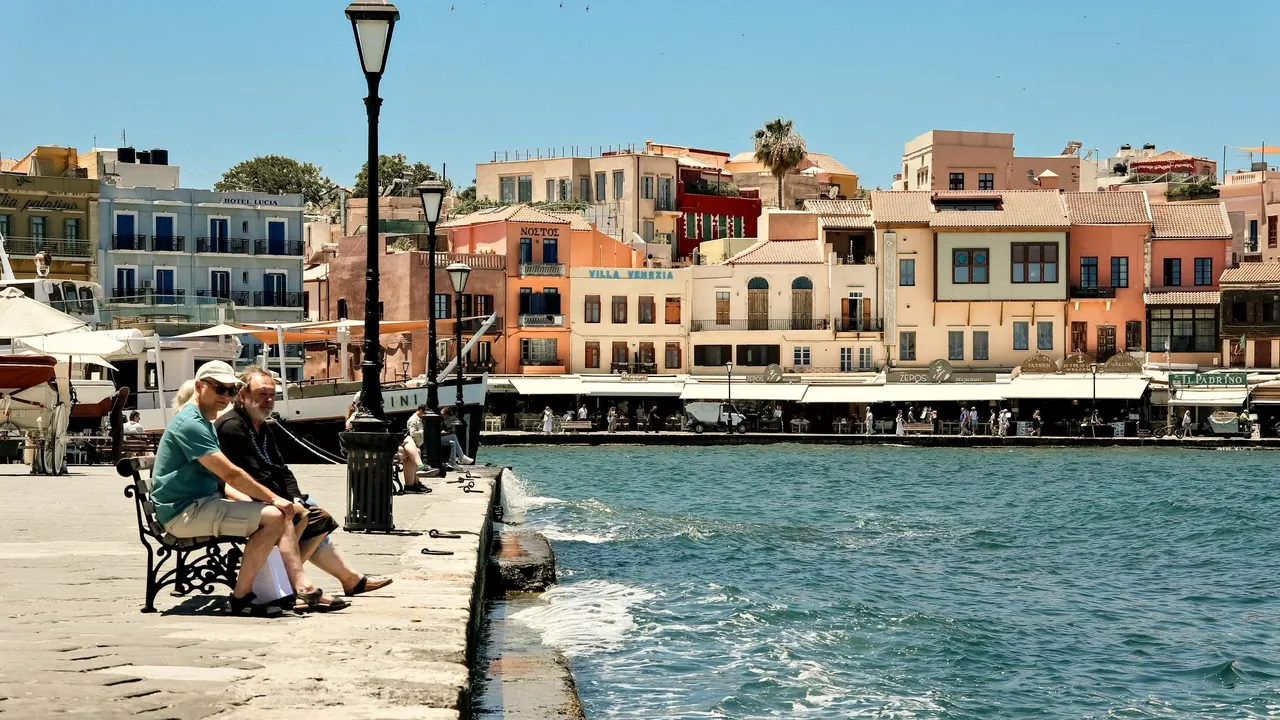
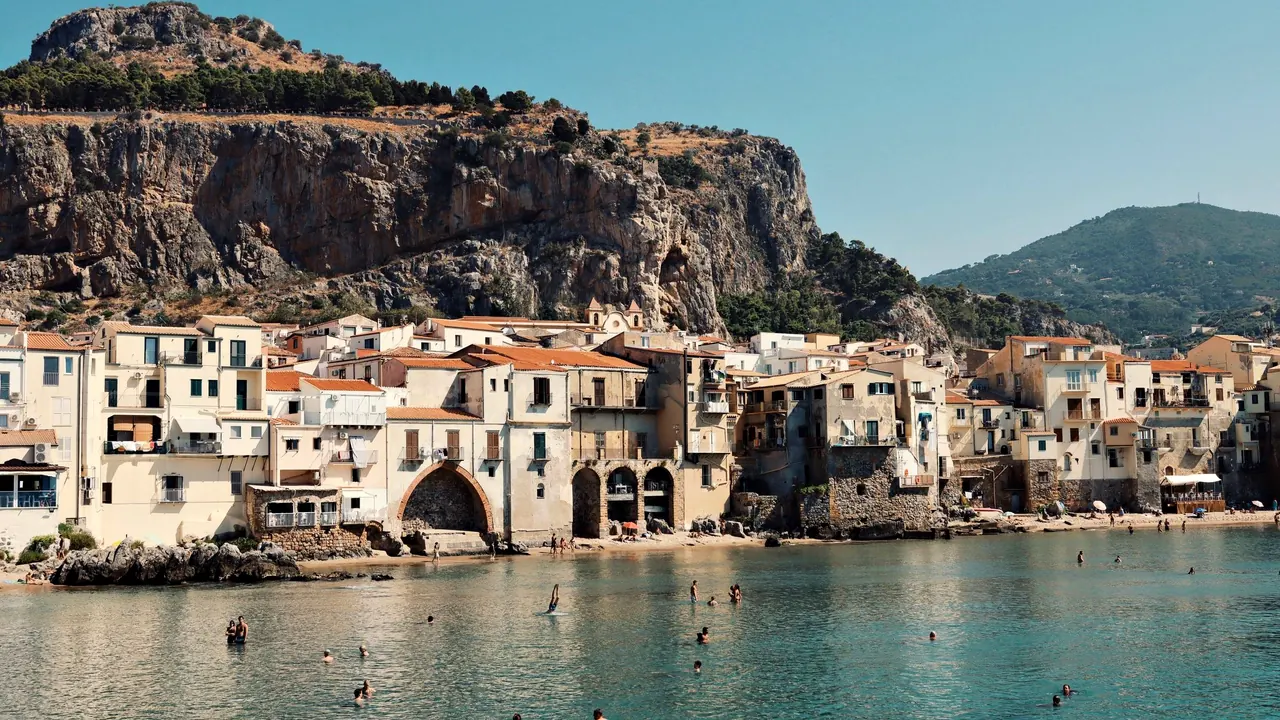
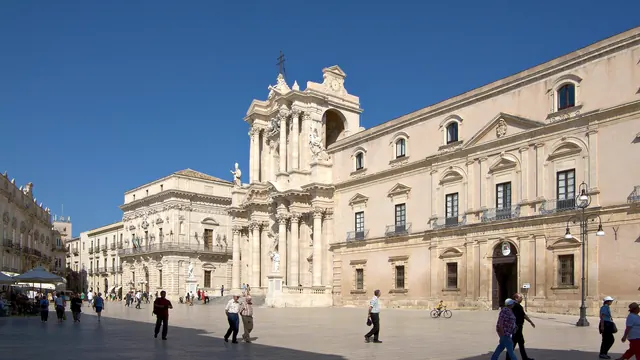
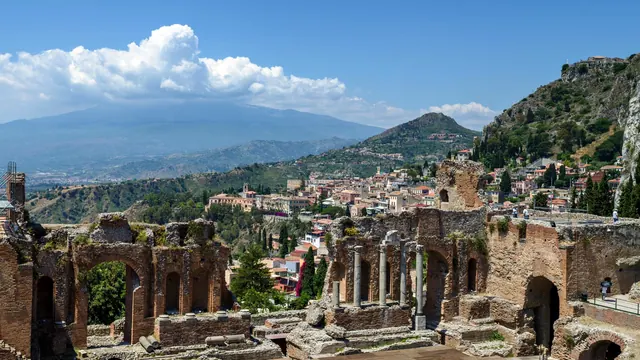
Photos: Crete by Piotr Baranowski, Pexels License; Sicily by Efrem Efre, Pexels License.
Crete or Sicily?
Our verdict in twelve categories, each scored against the same fixed benchmark cities, and the climate month by month, so you can choose for your trip.
Choose Crete for
- families
- nightlife
- beaches
Crete suits a trip built around the sea and the mountains, with a base on one coast. It is the easier island for a beach-based family vacation on the north coast. It also works for gorge walking in the White Mountains, with the Minoan palaces and Chania's Venetian harbour filling the hotter hours. Its summers are drier, and its main towns sit along one coast linked by a reliable bus line.
Choose Sicily for
- live music and the arts
- day trips
- food and drink
Travellers who want the richer cultural trip and the better food should lean towards Sicily. Greek temples, Arab-Norman mosaics, baroque hill towns and an opera season in Palermo give it more to see and hear. Its street food and pastry beat anything on Crete's resort strips, and its day trips, from Etna's wine villages to the Egadi and Aeolian ferries, are more varied. In return it asks for two or three bases and more time at the wheel.
Scoreboard
Twelve categories on one fixed scale from 0 to 100. The shaded stretch is the gap between the two.
Your match
Pick a travel style or drag the sliders, and both match scores follow your weighting.
Wins on families and nightlife with your weighting.
Wins on live music and the arts and day trips with your weighting.
What matters to you?
Category by category
What the scores mean for a trip.
Beaches & swimming
Both islands have excellent beaches, and the difference is in their character. Crete's best are in the far west: the pink-tinged sand and shallow lagoons of Elafonissi, the turquoise bay at Balos and the long strand of Falassarna. The north coast has easy resort beaches, and the south coast has pebble coves reached by boat or on foot.
Sicily's coast changes as you go round it. It runs from the white crescent of San Vito Lo Capo and the Zingaro coves to the marl cliffs of the Scala dei Turchi and the swimming platforms of Ortigia. Its real extra is offshore, with Favignana's rock pools and the black volcanic beaches of the Aeolian Islands, though August brings Italian families to most of the coast.
Food & drink
Sicily is the stronger island for eating. Its Arab, Norman and Spanish roots show in Palermo's market street food, Catania's fish market and pasta alla Norma, and a pastry culture of cannoli, cassata and summer granita. Each area adds its own speciality, from Trapani's fish couscous to Bronte pistachios and Etna wines.
Crete's cooking is distinctive in its own right: olive oil, wild greens, mountain cheeses, slow-cooked lamb and dakos, often best in village tavernas and in Chania's and Rethymno's backstreets. Its weak point is the north-coast resort strips, which have little of that character.
Culture & sights
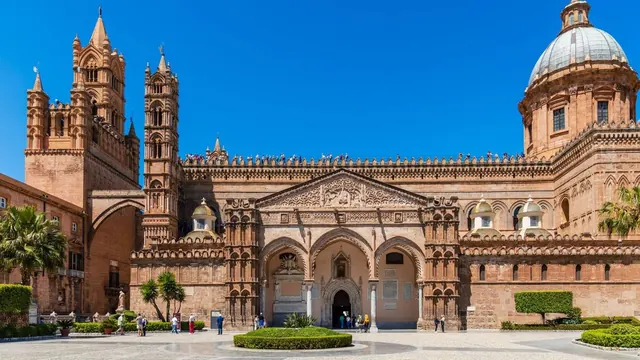
Sicily has the wider spread of history to see. The Doric temples at Agrigento and Segesta, the theatres of Syracuse and Taormina and the mosaics at Piazza Armerina sit alongside Palermo's gold Arab-Norman interiors and Monreale. The towns of Noto, Ragusa Ibla and Modica were rebuilt in baroque after 1693.
Crete's strength is narrower but deep. Knossos and the Heraklion Archaeological Museum are the core of Minoan civilisation, and Chania's Venetian harbour and Rethymno's Ottoman balconies add later layers. On both islands the best sites are spread out, but Sicily needs more bases to cover them.
Nightlife
Evenings on the two islands are broadly level, and the difference lies in the kind of night out. Crete has full party strips at Malia and Hersonissos, loud and late all summer and aimed at young groups, with a more grown-up scene of cocktail bars in Chania, Rethymno and Heraklion.
Sicily has no package-resort party towns. Its busiest scene is among students in the piazzas of Catania's centre and in the street bars around Palermo's Vucciria, moving to open-air clubs at Mondello and below Taormina in summer.
Nature & outdoors
Both islands are first-rate for the outdoors, but on Crete it is mountains and gorges and on Sicily it is volcanoes. On Crete you walk down Samaria to the Libyan Sea, follow the coast path between Loutro and Sfakia, or climb on the cliffs at Agiofarago.
On Sicily you cross Etna's lava fields with a guide, or climb Stromboli in the evening to watch it erupt. The Zingaro cliff path, the Madonie beech woods and diving around the Egadi and Aeolian Islands complete the picture.
Day trips
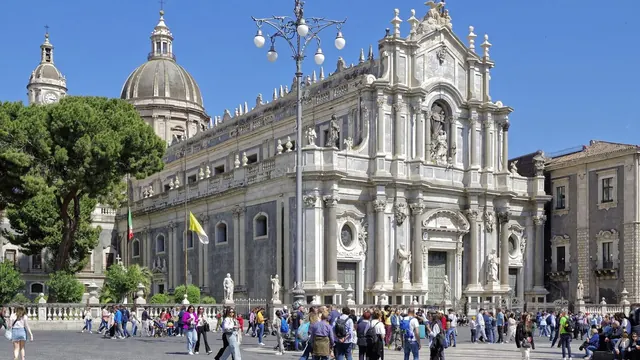
Sicily offers far more variety within a day's reach of a base. From Syracuse you can tour the baroque towns of Modica, Ragusa and Scicli, from Catania the Etna wine villages, and from Palermo Cefalù, Erice and Marsala. Ferries take you to Favignana or Lipari.
On Crete the obvious days out are the other main towns, the wine villages around Peza and Archanes, and boat trips to Chrissi or Gramvousa. Santorini is a long day by fast ferry, and the length of the island limits how far a single base can reach.
Good for families
Crete is better set up for children. Its north coast and the area around Chania combine gently shelving sand with resort hotels that have pools and children's clubs, waterparks and the large aquarium at Gournes, and Elafonissi's warm lagoon suits toddlers.
Sicily welcomes children just as warmly at late dinners and has shallow bays such as Mondello and San Vito Lo Capo. Beyond a theme park near Catania, though, little is built for them, and hill towns and long drives make it harder work.
Getting around
On either island a hire car is the realistic way to see much, and neither is easy driving. The difference is in the layout. Crete's main towns, Chania, Rethymno, Heraklion and Agios Nikolaos, lie in a line along the north coast, so a single dependable bus route ties them together. The effort starts when you head south over the mountains, on steep, winding roads to villages that are sometimes served only by summer boats.
Sicily's towns are spread around a roughly triangular island rather than strung along one shore, its trains are slow and infrequent, and its buses link the main towns but not much beyond them. Traffic and parking in Palermo and Catania are an ordeal that Crete's compact towns spare you. The offshore islands also add ferry crossings that rough seas can cancel.
Shopping & style
Sicily has more to buy. Caltagirone's ceramics, Trapani's coral work, Palermo's puppet makers and food such as Modica chocolate and Bronte pistachio cream make good souvenirs, and Via Libertà, Via Etnea and Taormina's Corso Umberto add some fashion.
Crete's shopping is limited to produce and crafts: Chania's leather-makers' lane and covered market, thyme honey, raki and pottery from Margarites, with no fashion streets to speak of.
Affordability
Sicily is somewhat easier on the budget. Street food, pastry and simple trattorie cost little, and B&Bs in Palermo, Catania and the baroque south east stay fairly priced even in summer.
Crete is mid-priced and gentler than the Cyclades, with good-value village tavernas and family-run rooms, but Elounda and Chania's old town push costs up. On both islands, car hire in July and August is the expense that hurts.
Live music & performing arts
Sicily has a real stage. Palermo's Teatro Massimo runs a full opera and ballet season, Catania has the Teatro Bellini, Greek tragedy is performed in the ancient theatre of Syracuse each spring, and the opera dei pupi puppet theatre is a tradition of its own.
Crete's music is lyra and lute in Rethymno's and Chania's music tavernas and at village saints' day festivals, with Anogia known for its players. It is a living folk tradition, but beyond summer festivals in its fortresses there is little formal theatre or concert life.
Wellness & relaxation
Neither island has a bathing culture, and both are more restful for their pace than for their spas. Crete's serious spas are in the resorts around Elounda and the Gulf of Mirabello, and its quietest retreat is car-free Loutro on the south coast.
Sicily adds natural waters that Crete lacks: hot springs near Sciacca and Segesta, volcanic mud on Vulcano and the crater lake on Pantelleria. Salina and Favignana outside August are its slower islands.
When should you go?
Pick your month. The climate figures are measured averages, not a forecast.
Crete in July
Sicily in July
Daytime high, °C
Rainfall in the month, mm
Where the figures come from
Sicily's sunshine is measured 67 km from the centre, at Ustica.
Temperature and rainfall are climate normals, averaged over the years shown. Crete: 1991-2020 normals, Heraklion Airport (3.6 km from centre). Sicily: 1991-2020 normals, Palermo / Punta Raisi (24.1 km from centre).
Both islands are warm enough for the beach from June to October, when the sea is at swimming temperature. Both reach about 29°C in high summer, which is hot for walking old towns at midday and too hot for hiking inland. The real difference is rain. Where Crete's figures are measured, summer is almost completely dry and sunnier, and the rain only returns in October, so September is a dependable beach month. Sicily's rain comes back sooner, with about 70mm in September, although its sea is slightly warmer in August at 27°C.
April and May suit walking on both islands, with Crete drier and sunnier in May. October works for sightseeing on either. From December to February both stay around 15°C and are wet, Sicily more so, which makes winter a season for towns and museums rather than the coast.
Which traveller are you?
On a family trip with young children, Crete is the easier choice. Far more is built for children there, so a family can settle at one beach resort for the week. Sicily means long drives, steep hill towns and more improvising.
For a culture and arts trip, Sicily is the stronger pick. Its history spans more civilisations, and it has a real stage for opera and ancient drama. Crete rewards travellers drawn to the Minoans in particular, but offers less breadth.
On a food and nightlife trip, Sicily is the better bet, because eating is where it pulls clearly ahead, from market stalls to pastry counters. Nights out are close: student piazzas on Sicily, party strips and harbour bars on Crete.
Before you go
| Measure | Crete | Sicily |
|---|---|---|
| Official language | Greek | Italian |
| Currency | Euro (EUR) | Euro (EUR) |
| Sockets | CF230 V, 50 Hz | CFL230 V, 50 Hz |
| Driving side | Right | Right |
| Time zone | UTC+2, UTC+3 in summer | UTC+1, UTC+2 in summer |
| Emergency number | 112 | 112 |
| Main airport | Heraklion International Nikos Kazantzakis Airport (HER)129 non-stop destinations | Falcone–Borsellino Airport (PMO)106 non-stop destinations |
| Public holidays this year | 15 days | 13 days |
By the numbers
| Measure | Crete | Sicily |
|---|---|---|
| Population | 623,065 | 4,983,478 |
| People per km² | 75 | - |
| Swim season, months above 21 °C | 5 months | 5 months |
Where else could you go?
Every comparison below shares a destination with this one, so you can follow Crete or Sicily somewhere new.