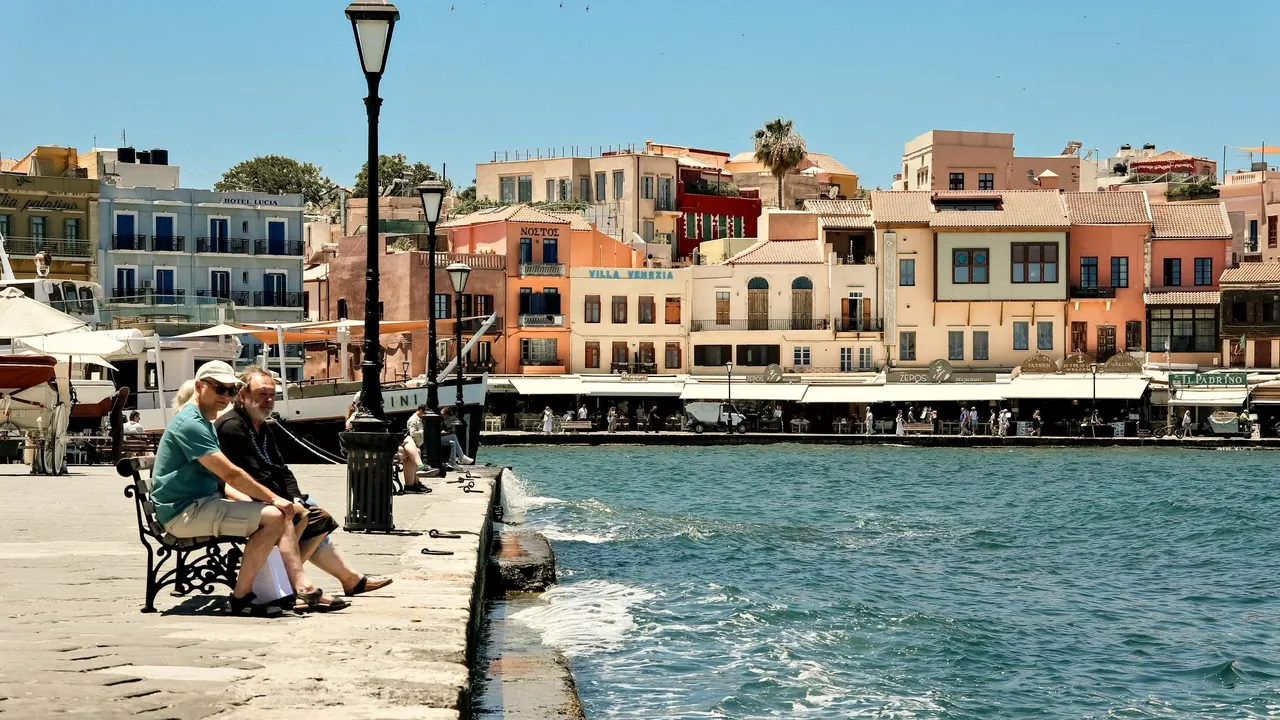
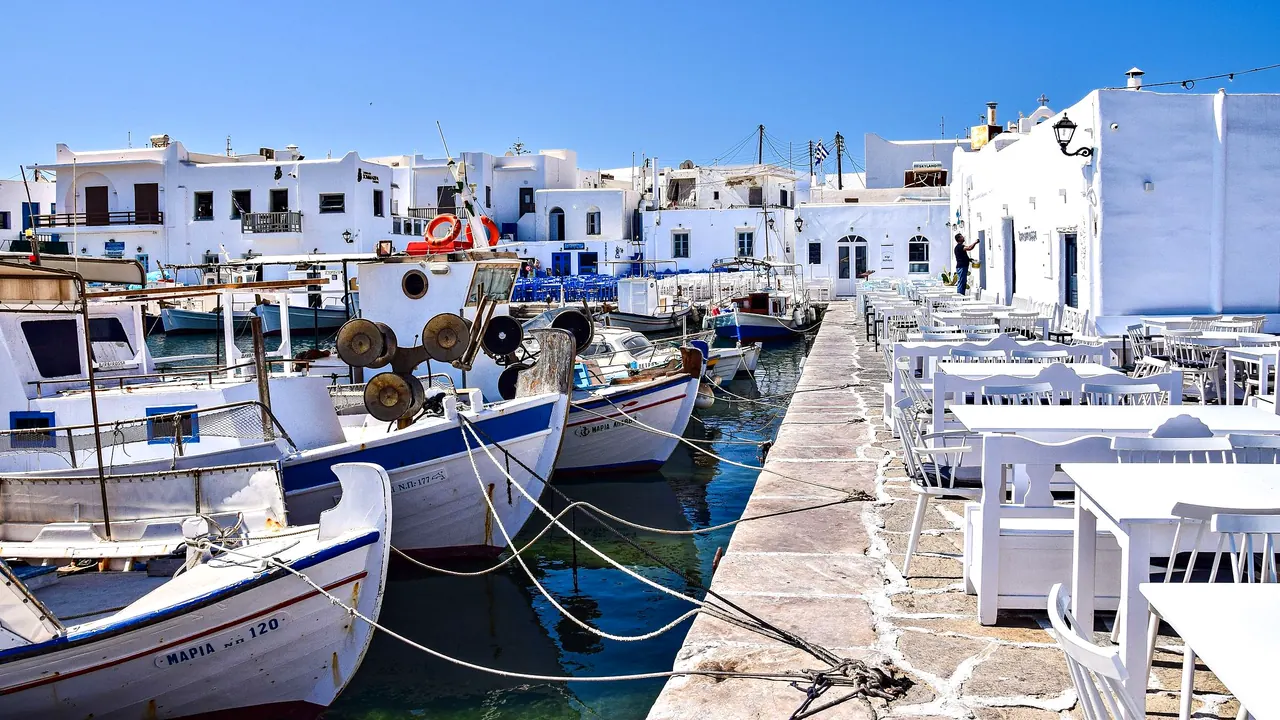
Photos: Crete by Piotr Baranowski, Pexels License; Paros by AXP Photography, Pexels License.
Crete or Paros?
Our verdict in twelve categories, each scored against the same fixed benchmark cities, and the climate month by month, so you can choose for your trip.
Choose Crete for
- nature and the outdoors
- culture and sights
- prices
Crete suits travellers who want a whole island to explore rather than just a beach to return to. Minoan palaces and the finest Minoan collection anywhere, Venetian harbour towns, gorges cutting through high mountains and a regional cuisine of real character all fit on one trip, and the island is gentler on the wallet than Paros. What it asks in return is a hire car and long, winding drives between its far ends.
Choose Paros for
- getting around
- nightlife
Paros is the better pick for a compact Cycladic beach vacation where little effort is needed. The island takes under half an hour to cross, summer buses cover the main beaches and villages, and ferries put Antiparos, Naxos and other islands within easy reach. It costs more in high summer and has far less to see, but for sandy bays, harbour evenings in Naoussa and windsurfing on the meltemi, it is simple and easy to enjoy.
Scoreboard
Twelve categories on one fixed scale from 0 to 100. The shaded stretch is the gap between the two.
Your match
Pick a travel style or drag the sliders, and both match scores follow your weighting.
Wins on nature and the outdoors and culture and sights with your weighting.
Wins on getting around and nightlife with your weighting.
What matters to you?
Category by category
What the scores mean for a trip.
Beaches & swimming
Both islands are serious beach destinations, and the difference is in range and scale. Crete covers everything from Elafonissi's pink sand and lagoons, Balos and Falassarna in the far west to palm-backed Vai in the east and boat-reached pebble coves along the Libyan Sea, though reaching the best of them can mean long drives.
Paros offers a tighter ring of sandy Aegean bays, with Kolymbithres' granite boulders, Santa Maria in the north-east and wide, gently shelving Golden Beach, all a short ride apart. When the meltemi blows, its south and west coasts give a sheltered alternative within minutes.
Food & drink
Crete has the deeper food culture: its own olive oil, wild greens, mountain cheeses, slow-cooked lamb and goat, dakos and a free raki at the end, with village tavernas often cooking best of all. Chania and Rethymno's old towns and Heraklion's market street and wine country give it real range.
Paros eats well at a smaller scale, with grilled octopus on Naoussa's harbour, clay-baked chickpeas, souma and local wines from Monemvasia and Mandilaria grapes. It also has some polished modern Greek cooking in Naoussa, but the choice shrinks sharply once the season ends.
Culture & sights
This is Crete's clearest advantage. It was the heart of Minoan civilisation, and Knossos, the frescoes and Phaistos Disc in Heraklion's museum, and the palaces of Phaistos and Malia make it a major historical destination, with Venetian walls, Ottoman balconies, Arkadi and Spinalonga layered on top.
Paros has one outstanding monument, the Panagia Ekatontapiliani in Parikia, along with a small museum, a castle built of reused marble and the ancient quarries at Marathi. These fill pleasant half-days rather than a sightseeing itinerary.
Nightlife
Evenings out are about as lively on both islands, but they are shaped differently. Crete splits into the loud package-resort strips of Malia and Hersonissos and a more grown-up scene of cocktail bars and terraces in Chania, Rethymno and Heraklion, where students and locals keep things going.
Paros has no party strip of that kind. Naoussa's harbour bars draw a well-dressed crowd past midnight, with a younger, looser seafront in Parikia, and the whole scene fades by late October.
Nature & outdoors
Crete is far stronger for the outdoors. The White Mountains and Psiloritis rise above 2,400m, the Samaria gorge runs down to the Libyan Sea, the E4 path crosses the island, and vultures and kri-kri goats live in the western cliffs, with climbing at Agiofarago and cycling on the Lasithi plateau.
Paros is low, dry Cycladic hill country with no mountains or notable wildlife. Its walks are short, such as the marble path from Lefkes to Prodromos, and its real outdoor draw is wind sports on the meltemi.
Day trips
Crete's days out are road trips across one large island, while those from Paros are ferry hops to its neighbours. On Crete that means driving to the other old towns, the wine villages around Peza and Archanes or the mountain villages of Anogia and the Amari valley. The sea adds Chrissi, Gramvousa and a long ferry day to Santorini.
On Paros nearly everything goes by boat: Antiparos and its cave after a short crossing, Naxos under an hour away and further islands in summer. Those outings depend on the timetable and the wind, and both become less reliable out of season.
Good for families
Crete gives families more to work with. Beyond long, gently shelving beaches on the north coast and Elafonissi's warm lagoon, it has resort hotels with children's clubs, waterparks and the large aquarium at Gournes for a hot or rainy day, though the long drives on winding roads can test small passengers.
Paros suits a simpler beach stay, with shallow bays at Livadia, Golden Beach and Logaras and short distances everywhere. Beyond the sea there is little built for children, so it works best for families content with sand and taverna dinners.
Getting around
Paros is much easier to get around. It takes under half an hour to cross, summer buses from Parikia reach the main beaches and villages, and small boats cross the bay from Naoussa, so a car is a convenience rather than a necessity.
On Crete a hire car is close to essential. Buses link the north-coast towns reliably, but the gorges, beaches and villages are spread over a large mountainous island with steep roads to the south coast and a demanding main highway.
Shopping & style
Crete is the place for crafts and produce. Chania has its leather-makers' lane, knife-makers and covered market, Heraklion has stalls of cheese, honey and raki, and Margarites sells pottery.
Paros is better for browsing boutiques in Naoussa's whitewashed lanes, which sell linen, resort wear, Greek designer jewellery and sandals at higher prices. Most of those shops close once the season ends.
Affordability
Crete is the noticeably cheaper island. Village tavernas and family-run rooms give good value and countryside meals are generous, with costs climbing mainly around Chania's old town, the famous western beaches and Elounda's luxury resorts. Car hire is the cost few visitors avoid.
Paros charges resort prices in high summer, especially for rooms in Naoussa and at the best-known beaches, and ferries and sunbeds add up over a week. Staying in Parikia or the inland and east-coast villages, and coming in June or September, softens the bill.
Live music & performing arts
Crete's music has more depth and more places to hear it. The lyra, lute and improvised mantinades verses are a living tradition in the music tavernas of Rethymno and Chania and in mountain Anogia, and Heraklion and Chania stage summer festivals in fortresses and open-air theatres.
Paros has village feast-day violin and lute, the mid-August feast of the Virgin at the Ekatontapiliani and Naoussa's pirate-raid festival, but little else, and nothing to attend outside summer.
Wellness & relaxation
Neither island has a bathing tradition, so on both the real tonic is the slow pace. Crete has the more serious resort spas, gathered around Elounda and the Gulf of Mirabello, and remote south-coast hideaways such as car-free Loutro.
Paros relies more on hotel spas, a few yoga and retreat centres and quiet inland villages like Lefkes and Marpissa, or a crossing to Antiparos. On both, spring or early autumn is calmer than midsummer.
When should you go?
Pick your month. The climate figures are measured averages, not a forecast.
Crete in July
Paros in July
Daytime high, °C
Rainfall in the month, mm
Where the figures come from
Paros's temperatures are measured 82 km from the centre, at Santorini Island / Monólithos.
Paros has no rain gauge within 25 km of the centre, so its rainfall comes from a gridded climate dataset read at the destination rather than from a gauge further away.
Temperature and rainfall are climate normals, averaged over the years shown. Crete: 1991-2020 normals, Heraklion Airport (3.6 km from centre). Paros: 2000-2025, 12 years observed (rainfall 1991-2020) normals, Santorini Island / Monólithos (81.8 km from centre).
The two islands share almost the same calendar. Both are cool and showery from November to March, warm and dry from May, and hot in July and August, when highs reach about 30°C on Paros and a degree less where most visitors stay on Crete. That heat makes walking ruins or gorges hard work in midsummer, so May, June, September and early October are the best months for doing more than swimming. Crete has the long sunny days to match, with sunshine strongest in June and July.
The sea is where they differ a little. Crete's water holds at about 25°C from July right through September, while Paros peaks at around 24°C in August and cools a touch sooner, so late September swimming is slightly warmer on Crete. Winter is wetter on Crete, with close to 96mm in December, while Paros stays somewhat drier from October to January.
Which traveller are you?
On a culture and arts trip, choose Crete. Knossos, the Heraklion Archaeological Museum, Phaistos and Gortyn, along with Venetian Chania and Ottoman-era Rethymno, fill a full sightseeing programme. Paros offers one remarkable early church and pleasant village half-days.
For a trip on a tight budget, Crete makes saving painless, because staying and eating in its villages costs little and gives up nothing. The hire car is the main expense. On Paros, keeping costs down means trading Naoussa for plainer bases.
Windsurfers and kitesurfers are better off on Paros. The summer meltemi that spoils a beach day elsewhere is the whole point here. Lessons and kit wait on the beach, and every spot is only a short drive from wherever you stay.
Before you go
| Measure | Crete | Paros |
|---|---|---|
| Official language | Greek | Greek |
| Currency | Euro (EUR) | Euro (EUR) |
| Sockets | CF230 V, 50 Hz | CF230 V, 50 Hz |
| Driving side | Right | Right |
| Time zone | UTC+2, UTC+3 in summer | UTC+2, UTC+3 in summer |
| Emergency number | 112 | 112 |
| Main airport | Heraklion International Nikos Kazantzakis Airport (HER)129 non-stop destinations | Paros National Airport (PAS)5 non-stop destinations |
| Public holidays this year | 15 days | 15 days |
By the numbers
| Measure | Crete | Paros |
|---|---|---|
| Population | 623,065 | 13,715 |
| People per km² | 75 | 71 |
| Swim season, months above 21 °C | 5 months | 5 months |
Where else could you go?
Every comparison below shares a destination with this one, so you can follow Crete or Paros somewhere new.