Greece
Paros
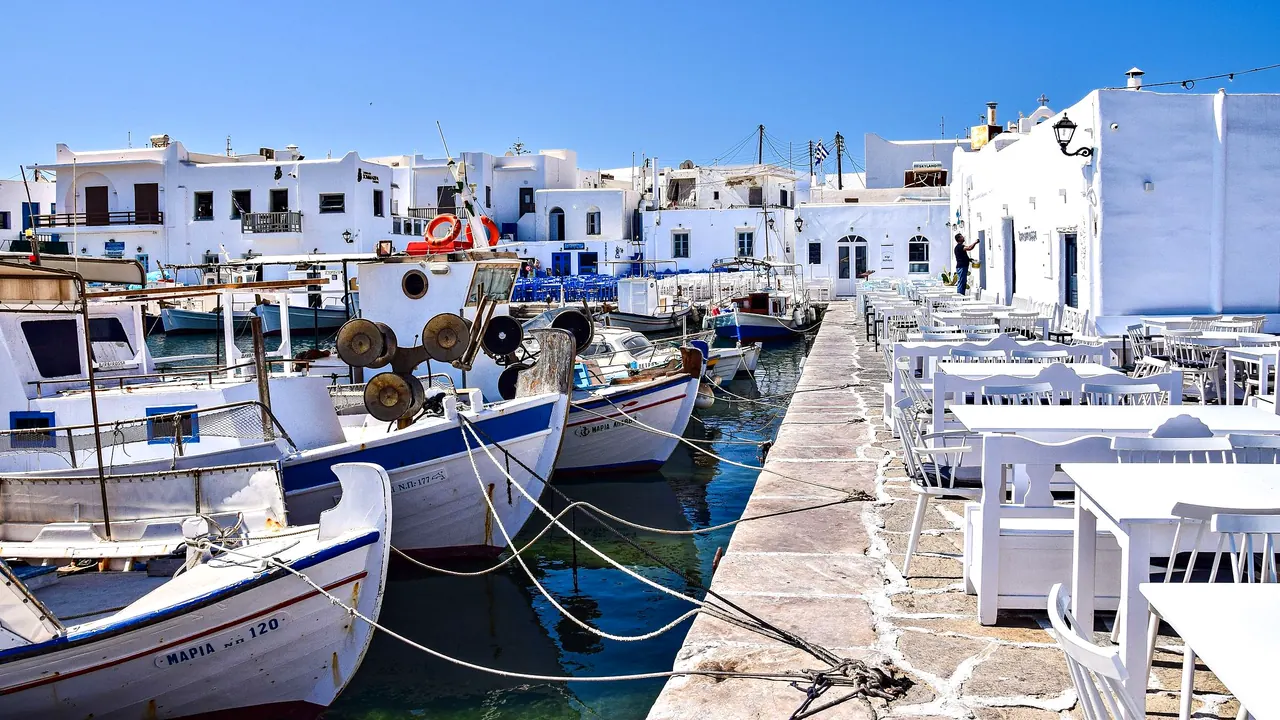
Fishing boats in the harbour at Naoussa
- Beaches83
- Day trips62
- Food & drink60
Photo: AXP Photography, Pexels License
Match
50
Every category weighted equally
- Beach & sun54
- Culture & arts46
- Food & nightlife48
- Family trip53
- Outdoors52
- Relax & unwind51
- Shopping & style48
- On a budget48
Paros in twelve categories
Our verdict on each, scored 0 to 100 against the same fixed benchmark cities, so a score means the same thing on every page.
Beaches & swimming. Scores 83 out of 100.
Food & drink. Scores 60 out of 100.
Culture & sights. Scores 48 out of 100.
Nightlife. Scores 56 out of 100.
Nature & outdoors. Scores 45 out of 100.
Day trips. Scores 62 out of 100.
Good for families. Scores 58 out of 100.
Getting around. Scores 55 out of 100.
Shopping & style. Scores 37 out of 100.
Affordability. Scores 36 out of 100.
Live music & performing arts. Scores 14 out of 100.
Wellness & relaxation. Scores 40 out of 100.
Paros category by category
Beaches & swimming
83Beach life is the reason most people come. The island is ringed with sandy bays on clear Aegean water, and the sea is warm enough to swim from June to early October, reaching about 24°C in August. Kolymbithres, on the bay opposite Naoussa, is the best known, with small coves between smooth granite boulders. Santa Maria and Lageri in the north-east have longer stretches of sand, while Golden Beach and the beaches around Drios on the south-east coast are wide and shelve gently.
The summer meltemi wind matters. When it blows hard from the north, the south and west coasts, such as Farangas and the bays near Pounta, stay calmer. Antiparos, a short ferry crossing away, adds more quiet sandy coves. Parikia's town beach of Livadia is handy, but the better swimming needs a bus or a short drive.
Food & drink
60Eating here means island tavernas, and at their best they are very good: grilled octopus and fresh fish, chickpeas slow-baked in clay pots, local graviera and soft goat's cheeses, capers, and the strong grape spirit called souma. The tables set out along Naoussa's small fishing harbour, where octopus hangs drying in the sun, are the classic setting. The inland villages of Lefkes and Marpissa have simpler, cheaper places with more home cooking.
The island makes its own wines from local grapes such as Monemvasia and Mandilaria, and you can try them in the tavernas or at the wineries. Naoussa also has more polished modern Greek restaurants. Outside the summer season, many kitchens close and the choice shrinks sharply.
Culture & sights
48The great sight is the Panagia Ekatontapiliani in Parikia, one of the oldest surviving churches in Greece. Its early Christian core, with a baptistery and later Byzantine additions, makes it a real pilgrimage site. Nearby, the small archaeological museum holds finds from the island's ancient past, and the ruined Frankish castle in the old town is built partly from reused ancient marble.
Beyond Parikia, the heritage lies in the fabric of the villages: Naoussa's small Venetian fort at the harbour mouth, the whitewashed lanes and windmills of Lefkes, and the ancient marble quarries at Marathi that supplied Parian marble for classical sculpture. All of this makes for pleasant half-days rather than a full sightseeing programme.
Nightlife
56In July and August, Naoussa is the island's evening centre. Cocktail bars spill onto the harbour and into the lanes behind it, and the crowd is well dressed and stays out past midnight. Parikia's seafront has a looser strip of bars and a few late clubs that draw a younger crowd, and a couple of beach bars on the coast hold parties into the night.
The scene runs from June to September, peaks in August and is largely gone by late October. It is a lively place to go out without being a party island, so you can easily have a sociable night and still be on the beach the next morning.
Nature & outdoors
45The landscape is typical of the Cyclades: low, dry hills of stone terraces, thyme and scattered chapels, sloping down to a heavily indented coast. The best walk is the old marble-paved Byzantine path from Lefkes down to Prodromos, and the protected headland at Agios Ioannis Detis, across the bay from Naoussa, has coastal trails and lighthouse views.
The real outdoor draw is the wind. The strong summer meltemi makes Golden Beach, New Golden Beach and Pounta some of the best windsurfing and kitesurfing spots in the Aegean, with schools and equipment hire at all three. Sailing trips around Antiparos and its islets are also popular. There are no mountains, forests or notable wildlife.
Day trips
62Ferries are the key to day trips. Antiparos is the easiest, a short crossing from Pounta or a slightly longer boat ride from Parikia. It has a small Cycladic town and its large stalactite cave. Naxos is under an hour away by fast boat. Its Chora, with the marble Portara gateway and Venetian quarter, makes a full and satisfying day.
In summer, fast ferries also reach Mykonos, Ios and Sifnos in about an hour or two, and organised boats go to Delos and Santorini, though those make for long days. Boats run frequently from June to September but much less often outside the season, and a strong meltemi can cancel or delay the smaller ones.
Good for families
58Paros suits a simple family beach stay. Shallow sandy bays such as Livadia near Parikia, Golden Beach and the beaches around Logaras and Piso Livadi on the east coast suit small children. The villages feel safe, and children are welcome at taverna tables late into the evening.
There is little built for children beyond the sea: no zoo, aquarium or theme park, and the sights are mostly churches and lanes. On windy days, choose beaches on the sheltered side of the island. For a calmer base with short distances, families often prefer Parikia or the east-coast villages to the busier lanes of Naoussa in August.
Getting around
55The island is small, and a drive from one side to the other takes less than half an hour. In summer, a bus network runs out of Parikia's port to Naoussa, Lefkes, the east-coast villages and the main beaches, and it serves a beach-and-village stay reasonably well. Small boats also cross the bay from Naoussa to Kolymbithres and Agios Ioannis Detis.
The smaller coves and inland villages are easier to reach with a hired car, scooter or quad, and the roads are generally good. Parikia and Naoussa are pleasant to walk, though Naoussa's centre is closed to cars and parking around it is tight in August. Outside the summer months, the buses are much less frequent.
Shopping & style
37Shopping means browsing the whitewashed lanes of Naoussa and Parikia's old market street. You will find small boutiques selling linen and resort wear, Greek designer jewellery, sandals, ceramics and local products such as capers, honey and wine. Lefkes has a few craft workshops.
The browsing is enjoyable on a summer evening, but the range is narrow, prices in Naoussa run high and most shops close at the end of the season. There are no department stores, malls or real markets.
Affordability
36Paros is not a cheap island in high summer. Rooms in Naoussa and at the well-known beaches are expensive in July and August, and the harbour restaurants and cocktail bars charge resort prices. Hired cars, sunbeds and ferry hops add up over a week.
There are cheaper ways to stay. Parikia, the east-coast villages and the inland villages have simpler rooms, everyday tavernas serve honest food at fair prices, and the buses are inexpensive. June and September cost noticeably less than the August peak while the sea is still warm.
Live music & performing arts
14There is little formal performance here. The live music that matters is traditional: at the village feast days through the summer, musicians play island violin and lute while people eat and dance, and the great feast of the Virgin in mid-August centres on the Ekatontapiliani in Parikia. Naoussa holds a summer festival that re-enacts a pirate raid, with music and fireworks. Otherwise, the summer brings occasional open-air concerts and a few bars with live sets, and there is nothing to attend outside the season.
Wellness & relaxation
40Paros has no bathing tradition. Wellness here means hotel spas, a handful of yoga and retreat centres, and massages offered near the beaches. What restores people is the pace: long lunches, siestas through the heat, and evenings in quiet villages like Lefkes, Marpissa or Prodromos, or across the water on Antiparos.
To unwind, stay inland or on the south-east coast rather than in Naoussa, and come in June or September, when the island is noticeably calmer than in August.
Where to stay in Paros
Naoussa, on the north coast, is the base for food and evenings out. Its harbour tavernas and cocktail bars stay full late into the night in July and August, boats to Kolymbithres leave from the quay, and the car-free lanes are easy to walk. It suits couples and groups who want a sociable stay. Rooms here cost the most, though, and the centre is crowded in August.
Parikia, the port town, is the practical choice. The island's buses start from its harbour, boats leave for Antiparos and Naxos, and the Ekatontapiliani and the old market street are close by. Its town beach is shallow and its rooms are simpler and cheaper, so it works well for families and for anyone planning day trips by boat.
For a quieter beach stay, look to the east coast. Piso Livadi and Logaras have gentle sandy bays that suit small children, while Golden Beach and Drios further south suit windsurfers and kitesurfers. Inland, Lefkes and Marpissa suit walkers and anyone who wants calm evenings, though a car helps there. The island is small enough that one base covers it, since no drive takes more than half an hour.
When should you go?
Pick a month to see what it is like. The climate figures are measured averages, not a forecast.
Paros in July
Daytime high, °C
Rainfall in the month, mm
The whole year
Shaded against this city’s own year: the deepest cell is its best month for that figure and the palest its weakest.
Where the figures come from
Paros's temperatures are measured 82 km from the centre, at Santorini Island / Monólithos.
Paros has no rain gauge within 25 km of the centre, so its rainfall comes from a gridded climate dataset read at the destination rather than from a gauge further away.
Temperature and rainfall are climate normals, averaged over the years shown. Paros: 2000-2025, 12 years observed (rainfall 1991-2020) normals, Santorini Island / Monólithos (81.8 km from centre).
Before you go
| Measure | Paros |
|---|---|
| Official language | Greek |
| Currency | Euro (EUR) |
| Sockets | CF230 V, 50 Hz |
| Driving side | Right |
| Time zone | UTC+2, UTC+3 in summer |
| Emergency number | 112 |
| Main airport | Paros National Airport (PAS)5 non-stop destinations |
| Public holidays this year | 15 days |
By the numbers
| Measure | Paros |
|---|---|
| Population | 13,715 |
| People per km² | 71 |
| Swim season, months above 21 °C | 5 months |
Compare Paros with
Every comparison with a written verdict behind it.