Greece
Crete
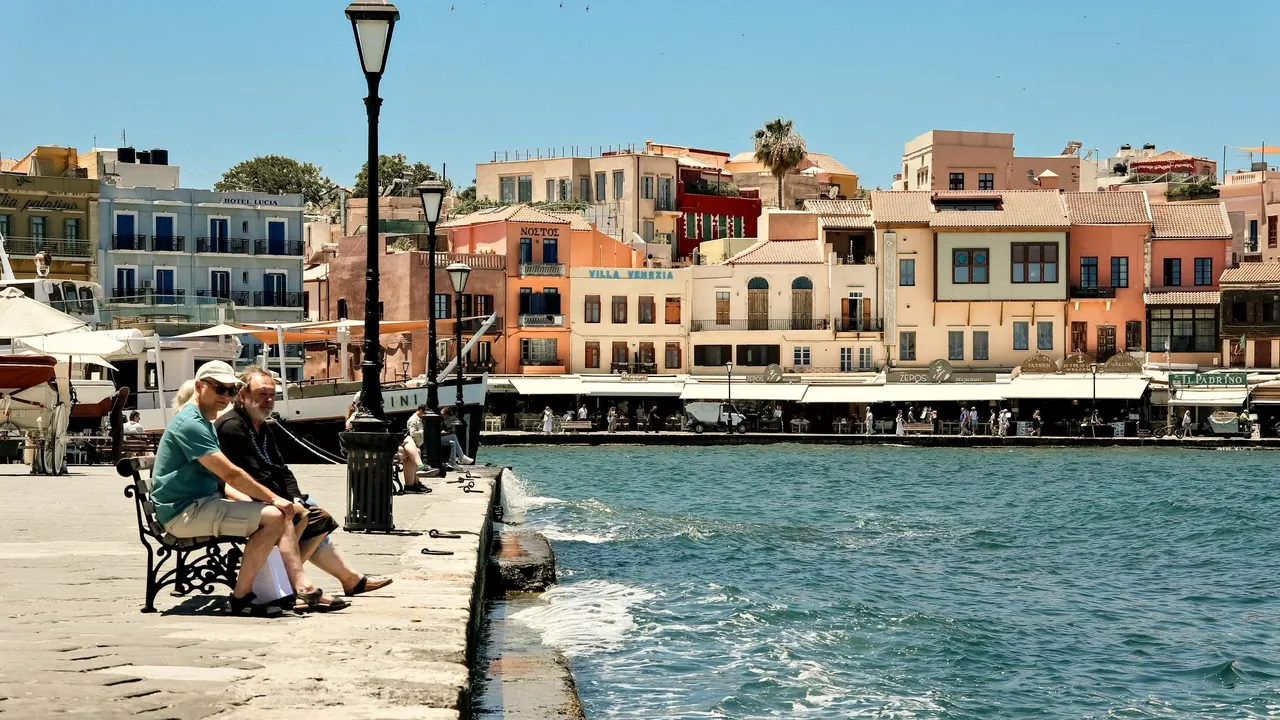
Colourful houses on Chania's Venetian harbour
- Beaches88
- Nature & outdoors80
- Culture & sights76
Photo: Piotr Baranowski, Pexels License
Match
59
Every category weighted equally
- Beach & sun63
- Culture & arts56
- Food & nightlife55
- Family trip63
- Outdoors65
- Relax & unwind62
- Shopping & style55
- On a budget59
Crete in twelve categories
Our verdict on each, scored 0 to 100 against the same fixed benchmark cities, so a score means the same thing on every page.
Beaches & swimming. Scores 88 out of 100.
Food & drink. Scores 72 out of 100.
Culture & sights. Scores 76 out of 100.
Nightlife. Scores 55 out of 100.
Nature & outdoors. Scores 80 out of 100.
Day trips. Scores 63 out of 100.
Good for families. Scores 68 out of 100.
Getting around. Scores 40 out of 100.
Shopping & style. Scores 38 out of 100.
Affordability. Scores 55 out of 100.
Live music & performing arts. Scores 30 out of 100.
Wellness & relaxation. Scores 45 out of 100.
Crete category by category
Beaches & swimming
88Beaches are why many people come, and the island has a long list of excellent ones. In the far west, Elafonissi has pink-tinged sand and shallow lagoons, Balos is a turquoise bay under the Gramvousa peninsula, and Falassarna is a long open strand with sunsets over the sea. The east has the palm-backed bay at Vai and quieter coves around Sitia. The north coast between Heraklion and Agios Nikolaos has the long, easy resort beaches.
The south coast faces the Libyan Sea and feels different: small villages, pebble coves and beaches reached by boat or on foot, such as Preveli at the mouth of its palm gorge. The sea is warm enough to swim from June to October, reaching about 25°C in August. The famous western beaches get crowded at midday in high summer, and the meltemi wind can stir up the north coast.
Food & drink
72Crete has one of the most distinctive regional cuisines in the Mediterranean. It is built on the island's own olive oil, wild greens, mountain cheeses such as graviera and mizithra, snails, slow-cooked lamb and goat, and dakos, the barley rusk topped with tomato and soft cheese. Meals usually end with a free glass of raki, and in the countryside the village taverna cooking is often the best on the island.
Chania and Rethymno have the most rewarding eating in their old towns and backstreets, and Heraklion has a busy market street and a serious wine trade drawn from the vineyards to its south. The weak spots are the resort strips on the north coast, where the menus are written for package tourists. There is little international cooking or high-end dining away from a few luxury hotels.
Culture & sights
76Crete was the heart of Europe's first great civilisation, and the Minoan sites are the core of any visit. Knossos, just outside Heraklion, is the best known. The Heraklion Archaeological Museum holds the frescoes, the Phaistos Disc and the finest Minoan objects anywhere, and the palaces of Phaistos and Malia and the Roman city of Gortyn add more in the south and east.
Later history is layered on top. Chania's Venetian harbour, lighthouse and old quarter are among the loveliest townscapes in Greece. Rethymno has a fortress, mosques and Ottoman wooden balconies, and Heraklion is ringed by Venetian walls. The leper island of Spinalonga, the monastery of Arkadi and many Byzantine frescoed chapels in the countryside complete the picture. Seeing it all takes driving across the island.
Nightlife
55Going out on Crete splits into two very different scenes. Malia and Hersonissos on the north coast are package-resort party strips of bars and clubs that run loud and late from early summer to early autumn, and they appeal mainly to young groups. Chania's harbour and old town, Rethymno's waterfront and Heraklion's café-bar quarter around the old centre offer a more grown-up evening of cocktail bars and late terraces, busy with Greek students and locals as well as visitors.
Elsewhere nights are long dinners and a slow walk along a seafront. Away from the towns and the two party resorts, most villages are quiet by midnight.
Nature & outdoors
80Crete is a mountainous island, and its interior surprises visitors who come only for the coast. The White Mountains in the west and Psiloritis in the centre both rise above 2,400m and hold snow into spring. Gorges cut through them, the best known being Samaria, a long walk down to the Libyan Sea. Imbros, Aradena, Kotsifou and the gorges of the east are shorter and quieter. Griffon vultures circle the cliffs, and the wild kri-kri goat survives in the western mountains.
The European long-distance path E4 crosses the island, and the coast path linking Loutro, Sfakia and Agia Roumeli is a great walk. On the south coast, the limestone walls of the Agiofarago gorge draw sport climbers, and the Lasithi plateau suits cycling. Windsurfing and diving add more. Spring and autumn are the seasons for hiking, because July and August are hot and dry.
Day trips
63Wherever a visitor stays, the other towns make the obvious days out. Chania, Rethymno, Heraklion and Agios Nikolaos each have a distinct character, though the drive between the far ends of the island takes most of a day. Inland, the wine villages south of Heraklion around Peza and Archanes make an easy afternoon, and potters' villages such as Margarites and the mountain villages of Anogia and the Amari valley show rural Crete.
By boat, the islet of Chrissi off Ierapetra and Gramvousa in the west make outings, and from Heraklion the fast ferry reaches Santorini in about two hours, a long but popular day. Gavdos, Europe's southernmost island, is better for an overnight stay than a day trip.
Good for families
68Crete works well for a beach-based family vacation. The north coast between Heraklion and Agios Nikolaos, and the area around Chania, have long sandy beaches with gentle shelving water and many resort hotels with pools and children's clubs. Elafonissi's warm shallow lagoon suits small children particularly well. Several waterparks lie along the north coast, and the large aquarium at Gournes east of Heraklion is a good rainy or hot-day outing.
Greek tavernas welcome children happily and late family dinners are normal. The difficulties are the midsummer heat, long car journeys on winding roads, and sights such as Knossos that hold small children's interest only briefly. The south-coast villages reached by steep roads or by boat are better for older children.
Getting around
40Most visitors hire a car, and on Crete it is close to essential. A long-distance bus network links Chania, Rethymno, Heraklion and Agios Nikolaos along the north coast reliably and serves some south-coast villages and trailheads. The old towns themselves are compact and best explored on foot.
The beaches, gorges and villages that make the island special are spread across a large, mountainous island. The roads to the south coast are steep and winding, distances take longer than the map suggests, and the main north-coast highway is fast but busy and demanding to drive. Some south-coast villages are reachable only by boat, and their small coastal ferries run on a summer schedule.
Shopping & style
38Shopping on Crete is about local produce and crafts rather than fashion. Chania is the best town for it, with its old leather-makers' lane, knife-makers and craft shops in the Venetian quarter and a cross-shaped covered market hall. Heraklion's market street sells cheeses, herbs, honey and raki. Olive oil, thyme honey, hand-woven textiles and ceramics from potters' villages such as Margarites are the things worth bringing home.
The resort strips are full of identical souvenir shops, and there are no luxury streets or department stores worth seeking out.
Affordability
55Crete is mid-priced for a Mediterranean island and clearly gentler than the famous Cycladic islands. Village tavernas and family-run rented rooms and apartments are good value. Meals in the countryside are generous and often come with free raki and dessert. Costs rise in high summer around the best-known western beaches, in Chania's old town and especially around Elounda, where the island's luxury resorts gather.
Car hire is the expense most visitors cannot avoid, and it climbs in July and August. Travelling in May, June, September or October gives the best balance of warm sea and lower prices.
Live music & performing arts
30Crete's live music is its own: the three-stringed lyra and the lute, with improvised mantinades verses and fast circle dances. It is a living tradition rather than a show. A visitor hears it best in the music tavernas of Rethymno and Chania, and at summer village festivals for saints' days, where locals dance until late. Anogia in the mountains is famous for its musicians.
Heraklion and Chania run summer cultural festivals in fortresses and open-air theatres. Beyond these, the formal offer of theatre, classical concerts and opera is small, and the hotel "Greek nights" are staged for visitors.
Wellness & relaxation
45Crete has no bathing culture of its own, and its few old Ottoman bathhouses survive as buildings rather than working baths. Wellness here means resort spas, and the most serious of them gather around Elounda and the Gulf of Mirabello, with others along the north coast near Chania and Heraklion.
The island's real restorative quality is its pace. Small south-coast villages such as Loutro, reached only by boat or on foot, hill villages among olive groves and long, slow evenings over food are where visitors unwind. Spring and autumn suit a quiet stay best, since the north-coast resorts are crowded in midsummer.
Where to stay in Crete
Crete is large enough that most visitors split a week or two between two bases, with a car to link them. For a first visit, Chania is the strongest choice. Its Venetian harbour and old town give the best eating and the most grown-up evenings, and the western beaches at Balos, Falassarna and Elafonissi are all within a day's drive. Rethymno, about an hour east, is a smaller and calmer alternative with its own old town, a long town beach and easy roads up to the Amari valley and the mountain villages.
Heraklion suits travellers who put the Minoan sites first, with Knossos and the archaeological museum close at hand and the wine villages just to the south. The resort coast running east towards Agios Nikolaos is the place for families who want long sandy beaches and hotels with pools. Malia and Hersonissos are best avoided unless late nights out are the point. Agios Nikolaos and the Gulf of Mirabello are quieter, with Elounda the choice for a spa stay and Spinalonga a short boat ride away.
A second visit is the time for the south coast. Villages such as Loutro and Sfakia, reached by steep roads or by boat, suit walkers and anyone after a slow, quiet stay. Allow most of a day to move between the far ends of the island.
When should you go?
Pick a month to see what it is like. The climate figures are measured averages, not a forecast.
Crete in July
Daytime high, °C
Rainfall in the month, mm
The whole year
Shaded against this city’s own year: the deepest cell is its best month for that figure and the palest its weakest.
Temperature and rainfall are climate normals, averaged over the years shown. Crete: 1991-2020 normals, Heraklion Airport (3.6 km from centre).
Before you go
| Measure | Crete |
|---|---|
| Official language | Greek |
| Currency | Euro (EUR) |
| Sockets | CF230 V, 50 Hz |
| Driving side | Right |
| Time zone | UTC+2, UTC+3 in summer |
| Emergency number | 112 |
| Main airport | Heraklion International Nikos Kazantzakis Airport (HER)127 non-stop destinations |
| Public holidays this year | 15 days |
By the numbers
| Measure | Crete |
|---|---|
| Population | 623,065 |
| People per km² | 75 |
| Swim season, months above 21 °C | 5 months |
Compare Crete with
Every comparison with a written verdict behind it.