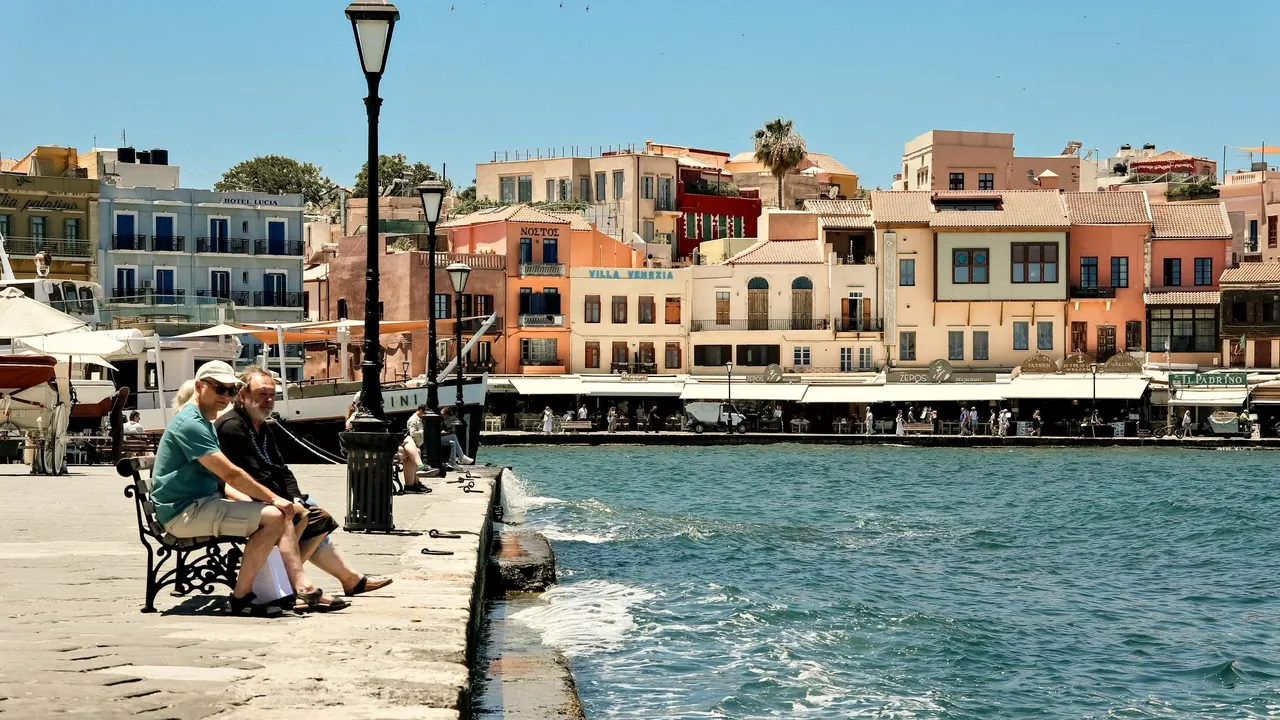
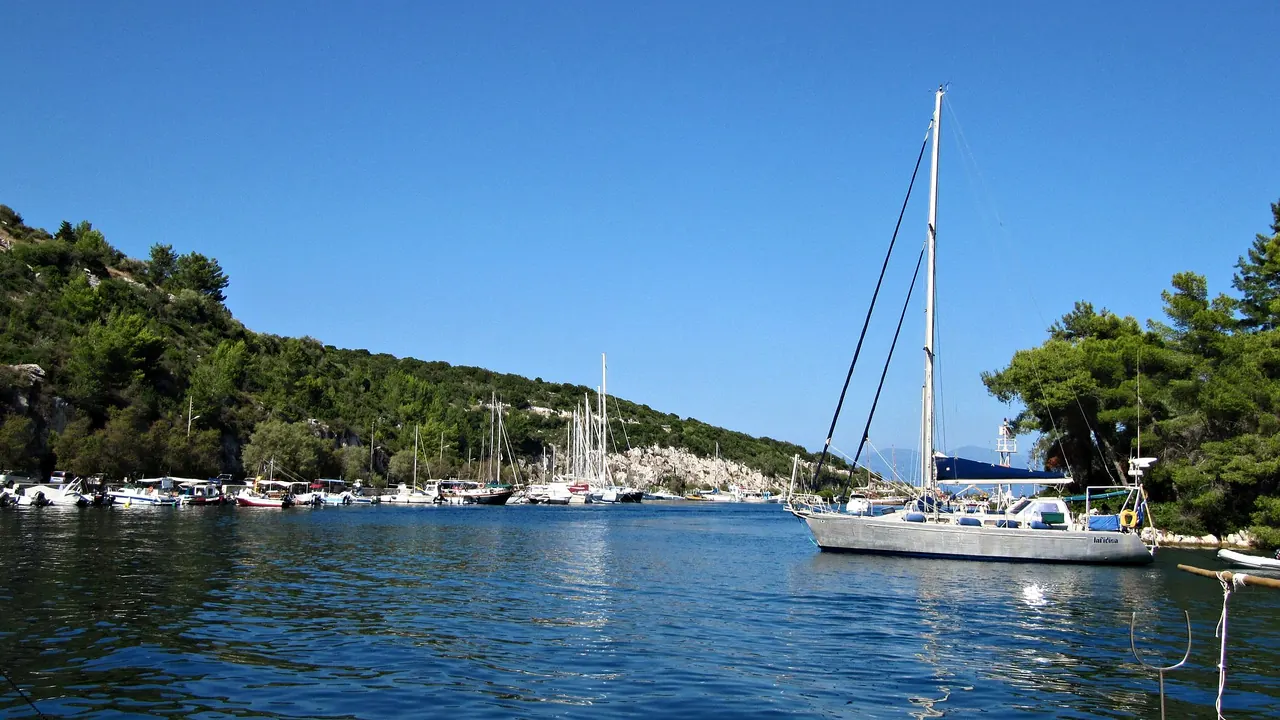
Photos: Crete by Piotr Baranowski, Pexels License; Paxos by Poiesia, CC BY-SA 4.0, cropped.
Crete or Paxos?
Our verdict in twelve categories, each scored against the same fixed benchmark cities, and the climate month by month, so you can choose for your trip.
Choose Crete for
- culture and sights
- nightlife
- food and drink
Crete is the choice for a trip that mixes several things. In a single stay you can walk through Knossos and the Minoan treasures in Heraklion, hike a gorge down to the Libyan Sea, eat some of the best regional cooking in Greece and still spend half your days on a beach. It is a large island and you will need to drive, but it is cheaper than Paxos and gives you far more to do.
Choose Paxos for
- getting around
Paxos suits travellers who want very little apart from clear water, olive groves and a quiet harbour at dusk. It is a small island where days go by in a hired boat, moving between coves and the sandy bays of Antipaxos, with a long dinner by the yachts to follow. The price is higher and there is little to see on land, so it works best for people who are happy to do almost nothing.
Scoreboard
Twelve categories on one fixed scale from 0 to 100. The shaded stretch is the gap between the two.
Your match
Pick a travel style or drag the sliders, and both match scores follow your weighting.
Wins on culture and sights and nightlife with your weighting.
Wins on getting around with your weighting.
What matters to you?
Category by category
What the scores mean for a trip.
Beaches & swimming
Crete has more beaches and more kinds of beach. In the west there are the lagoons of Elafonissi, the turquoise bay at Balos and the long sunset strand at Falassarna. The east has the palm-backed bay at Vai, and the north coast has long sandy resort beaches. The pebble coves of the south coast add a wilder option.
Paxos has clear, calm water on a much smaller scale. Its own beaches are mostly pebble coves on the east coast, and Lakka bay has the sandy shallows. The pale sand of Voutoumi and Vrika is on Antipaxos, a boat ride away, and both fill at midday in high summer, just as Crete's famous western beaches do.
Food & drink
Food is a reason to go to Crete in its own right. The cooking is built on the island's olive oil, mountain cheeses such as graviera, slow-cooked lamb and dakos, and it is best in village tavernas and in the backstreets of Chania and Rethymno. Heraklion's market street and the vineyards to its south add a wine side as well.
On Paxos, eating means harbourside tavernas in Gaios, Lakka and Loggos serving grilled fish, bourdeto and sofrito. The cooking is often more careful than at a typical resort, but the menus are much alike and many kitchens close out of season.
Culture & sights
This is where the two islands differ most. Crete was the centre of the Minoan civilisation, with Knossos, Phaistos and Malia, and the Heraklion museum holds the frescoes and the Phaistos Disc. Venetian Chania, Ottoman Rethymno, Spinalonga and Arkadi monastery add later history, though seeing it all means driving around the island.
Paxos has a ruined Venetian fort and a small monastery on the islets off Gaios, a folk museum in an old schoolhouse, and old olive presses along the inland lanes. Anyone who wants more takes the ferry to Corfu Town.
Nightlife
Crete gives you a choice of nights out. Malia and Hersonissos are loud party strips for young groups, while Chania's harbour, Rethymno's waterfront and Heraklion's old centre have cocktail bars and late terraces that Greek students use as well as visitors.
Paxos has a drink by the moored yachts in Gaios or Lakka and not much more. In July and August the Gaios harbour stays up late and there are one or two places to dance. The rest of the year the island is quiet soon after dinner.
Nature & outdoors
Crete has real mountains. The White Mountains and Psiloritis rise above 2,400m and are cut by gorges such as Samaria, Imbros and Aradena. There is the E4 long-distance path, the coast path to Loutro and Agia Roumeli, and climbing in Agiofarago, with vultures and kri-kri goats in the high country.
Paxos is low and gentle, a walk through olive groves on stone-walled mule tracks along its end-to-end trail. Its best scenery is the west coast, with the Erimitis cliffs, the Tripitos arch and sea caves that are best seen by kayak or boat. The clear water also makes for good snorkelling.
Day trips
From a base on Crete you have the island's other towns, the wine villages around Peza and Archanes, mountain Anogia and potters' villages such as Margarites. Boats run to Chrissi and Gramvousa, and there is a long fast-ferry day to Santorini.
Every outing from Paxos starts with a boat: Corfu Town's UNESCO-listed old town about an hour away, Parga under its castle on the mainland, the coves of Sivota, or the beaches of Antipaxos. The weather and the timetables decide what you can do, and after a few trips the options run out.
Good for families
Crete is better set up for children. Resort hotels along the north coast and around Chania have pools and kids' clubs, the beaches shelve gently, and there are waterparks and the aquarium at Gournes for a hot or rainy day. Elafonissi's shallow lagoon is ideal for toddlers. The drawbacks are the long drives on winding roads and the summer heat.
Paxos is safe and quiet, and Lakka's sheltered bay suits small children. Beyond that there are no attractions for children, most beaches are pebble at the bottom of steep paths, and a day out on a boat is the main event. Families with older children who like to swim and snorkel enjoy it most.
Getting around
Both islands are awkward to get around, for opposite reasons. Crete is large and mountainous. A car is close to essential, the drives to the south coast are steep and slow, and only the north-coast towns have a reliable bus link.
Paxos is only about 10km long, so nothing on the island is far away, and a small car, a scooter or the footpaths between the three villages will do. The hard part is getting there: there is no airport, ferries from Corfu can be cancelled in rough seas, and the best coves can only be reached by hired boat.
Shopping & style
Neither island is for fashion, but Crete has more to shop for. Chania has its old leather-makers' lane, knife-makers and a cross-shaped covered market, and Heraklion's market street sells cheese, honey and raki. Pottery from Margarites and hand-woven textiles are also good buys.
On Paxos, shopping means a few summer boutiques with linen and jewellery behind the harbours of Gaios and Lakka, plus olive oil and honey to take home. Anything more practical than groceries means a trip to Corfu.
Affordability
Crete is noticeably cheaper. Rented rooms, apartments and generous village meals keep costs down, and prices only climb around Elounda's luxury resorts, Chania's old town and the famous western beaches. Car hire is the cost few visitors can avoid.
Paxos is one of the dearer Greek islands. Most places to stay are villas that book up early for summer, the harbourside restaurants charge for the view, and ferries plus boat or car hire add up. On both islands the shoulder months bring the cost down.
Live music & performing arts
Crete has more live music, and you do not have to time your trip around a date to hear it. Its lyra music is a living tradition that locals play for each other, so a night in a music taverna in Rethymno or Chania, or an evening up in Anogia, can give you the real thing on an ordinary night. In summer the fortress and open-air stages of Heraklion and Chania add a short season of performances, though neither island offers much theatre or opera.
On Paxos the music comes on a few fixed dates, the late-summer chamber concerts and the August feast in Gaios, so you would need to plan your stay around them. The saints' day festivals are what the two islands have in common. On both, a village feast is where people dance to traditional music late into the night, and on Paxos it is almost your only chance to see it.
Wellness & relaxation
Neither island has a bathing tradition, so the difference is in the setting. On Crete wellness means proper resort spas, mostly around Elounda and the Gulf of Mirabello, and real quiet means seeking out places like Loutro or the hill villages away from the busy north coast.
Paxos has only a few treatment rooms and some yoga or retreat weeks on private estates. Still, the whole island is calm, with no high-rise, little traffic and villas among the olive trees, so you do not have to look for peace there.
When should you go?
Pick your month. The climate figures are measured averages, not a forecast.
Crete in July
Paxos in July
Daytime high, °C
Rainfall in the month, mm
Where the figures come from
Paxos's temperatures are measured 52 km from the centre, at Kerkyra Airport.
Paxos has no rain gauge within 25 km of the centre, so its rainfall comes from a gridded climate dataset read at the destination rather than from a gauge further away.
Temperature and rainfall are climate normals, averaged over the years shown. Crete: 1991-2020 normals, Heraklion Airport (3.6 km from centre). Paxos: 1991-2020 normals, Kerkyra Airport (52.1 km from centre).
The two islands have much the same summer, but Paxos ends it sooner. On both the sea is warm enough to swim from June and reaches about 25°C by August. Around the main resorts Crete peaks at about 29°C in July and August, which is hot but manageable, with bright sun almost every day. Paxos gets hotter, close to 32°C, so midsummer there is for the water and not for walking the olive-grove paths at midday.
Autumn is where they part. Crete stays dry through September, so the sea is still warm and the days are settled, and the rain comes back in October with about 55mm. On Paxos the rain arrives a month earlier, with about 91mm in September and more after that, and winter is wet on both islands. April and May suit walking on either island before the heat builds. For a late-season trip Crete is the safer choice. On Paxos, June gives the best balance of warm sea, dry days and moderate heat.
Which traveller are you?
On a culture and arts trip, Crete is the clear choice. Knossos, the Heraklion Archaeological Museum, Chania's Venetian harbour and Rethymno's Ottoman streets fill a week. Paxos has a ruined islet fort and a small museum, and most visitors take the boat to Corfu for history.
For a trip on a tight budget, Crete is easier. Village tavernas and family-run rented rooms are good value, and meals often come with free raki. Paxos is mostly private villas and harbourside restaurants, and the ferries and boat hire add to the cost.
For a relaxing and wellness trip, Paxos has the edge in atmosphere. It has no high-rise, few cars and slow harbour mornings, plus yoga weeks on some estates. Crete has the bigger resort spas around Elounda, but its calm is found in places like Loutro, not across the whole island.
Before you go
| Measure | Crete | Paxos |
|---|---|---|
| Official language | Greek | Greek |
| Currency | Euro (EUR) | Euro (EUR) |
| Sockets | CF230 V, 50 Hz | CF230 V, 50 Hz |
| Driving side | Right | Right |
| Time zone | UTC+2, UTC+3 in summer | UTC+2, UTC+3 in summer |
| Emergency number | 112 | 112 |
| Main airport | Heraklion International Nikos Kazantzakis Airport (HER)129 non-stop destinations | Corfu Ioannis Kapodistrias International Airport (CFU)88 non-stop destinations |
| Public holidays this year | 15 days | 15 days |
By the numbers
| Measure | Crete | Paxos |
|---|---|---|
| Population | 623,065 | 2,300 |
| People per km² | 75 | 91 |
| Swim season, months above 21 °C | 5 months | 5 months |
Where else could you go?
Every comparison below shares a destination with this one, so you can follow Crete or Paxos somewhere new.