Greece
Paxos
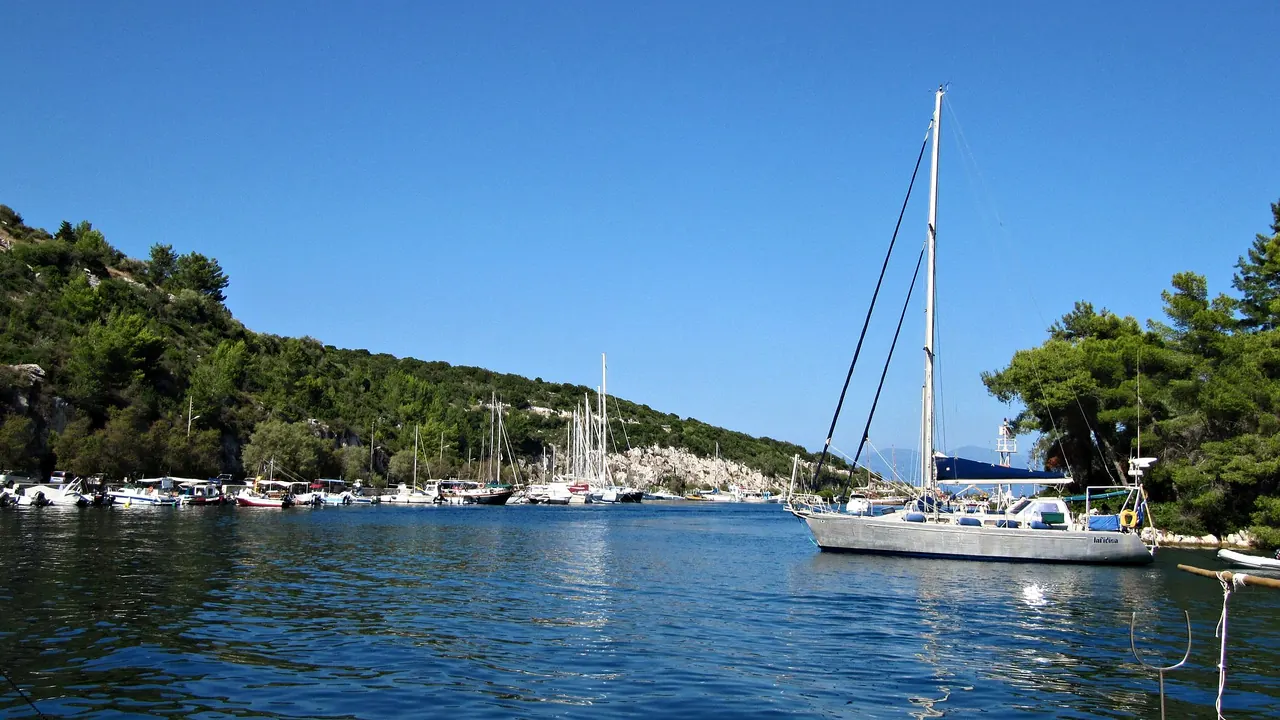
A sailing boat in the sheltered harbour of Gaios
- Beaches80
- Nature & outdoors48
- Wellness & relaxation45
Photo: Poiesia, CC BY-SA 4.0, cropped
Match
35
Every category weighted equally
- Beach & sun42
- Culture & arts30
- Food & nightlife30
- Family trip41
- Outdoors41
- Relax & unwind42
- Shopping & style31
- On a budget35
Paxos in twelve categories
Our verdict on each, scored 0 to 100 against the same fixed benchmark cities, so a score means the same thing on every page.
Beaches & swimming. Scores 80 out of 100.
Food & drink. Scores 38 out of 100.
Culture & sights. Scores 18 out of 100.
Nightlife. Scores 15 out of 100.
Nature & outdoors. Scores 48 out of 100.
Day trips. Scores 40 out of 100.
Good for families. Scores 40 out of 100.
Getting around. Scores 42 out of 100.
Shopping & style. Scores 15 out of 100.
Affordability. Scores 30 out of 100.
Live music & performing arts. Scores 12 out of 100.
Wellness & relaxation. Scores 45 out of 100.
Paxos category by category
Beaches & swimming
80Swimming is the reason to come. The sea is very clear and turns warm enough from June to October, reaching about 25°C in August. The beaches on Paxos itself are mostly small pebble coves along the sheltered east coast, such as Kipiadi, Monodendri and Marmari. The best sandy shallows ring the almost-round bay at Lakka in the north, where the water stays calm and shallow.
The finest beaches are a short boat ride south on Antipaxos. Voutoumi and Vrika have pale sand and bright turquoise water that draw boats from Corfu and the mainland, so they fill at midday in high summer. Many visitors hire a small motorboat and spend their days moving between coves the roads cannot reach. The west coast is all cliffs, with no beaches at all.
Food & drink
38Most eating happens in harbourside tavernas in Gaios, Lakka and Loggos. They serve grilled fish, Ionian dishes such as bourdeto and sofrito, and plenty of salads dressed with the island's own olive oil, which comes from groves that cover almost every hillside. Because the island attracts many villa guests, the cooking is often more careful than at a typical Greek resort, and a few places do a more modern take on island produce. Still, the choice is small and largely the same from one menu to the next, and many kitchens close outside the summer season. Few people would come to Paxos for the food alone.
Culture & sights
18There are few sights, and the ones there are sit mostly at the water's edge. Gaios harbour looks out on two islets, one with the ruins of the Venetian fort of Agios Nikolaos and the other with the small Panagia monastery. In Gaios a small museum in an old schoolhouse covers island life and olive farming. Away from the harbours, the inland lanes pass Venetian-era stone houses, dry-stone terraces, small churches and old olive presses, which are pleasant to come across on a walk but are not sights to plan a day around. Visitors who want serious history usually take the boat to Corfu Town.
Nightlife
15Evenings mean a long dinner on the harbour and then a drink at one of the waterfront bars in Gaios or Lakka, with yachts moored a few metres away. In July and August the harbour in Gaios stays lively until late, and there are one or two places where people dance. Outside those weeks the island goes quiet soon after dinner. Nobody comes to Paxos to go out, and the people it suits are those who like a slow evening by the sea.
Nature & outdoors
48The island is small and low, covered in ancient olive groves crossed by stone-walled mule tracks and footpaths. A long waymarked trail runs from end to end, and walking it is most comfortable in spring and autumn. The real scenery is on the west coast, where white limestone cliffs fall straight into the sea. Along them are the Erimitis cliffs at sunset, the Tripitos rock arch and a series of sea caves that are best seen from a boat or a kayak. Snorkelling in the clear water is good, and sailing yachts use the island as a stop. Beyond that the range is narrow, with no high ground or wild country.
Day trips
40Everything starts with a boat. Corfu Town, with its Venetian fortresses, arcaded streets and UNESCO-listed old town, is about an hour away by fast ferry. Excursion boats also cross to the mainland at Parga, a colourful harbour town below a Venetian castle, and often stop at the coves around Sivota. Neighbouring Antipaxos is a short hop away, but it is a trip for its beaches, not a place with a town of its own. Sea conditions and the boat schedules limit what you can do, and once those few outings are done there is little else.
Good for families
40Paxos is safe, quiet and easy for families who want a simple seaside stay. The shallow, sheltered bay at Lakka suits small children best, and a day spent by boat between coves is the highlight for most families. There are no attractions made for children, few playgrounds and almost nothing to do when the weather turns. Most beaches are pebble with steep paths down to them, and many villas sit up in the olive groves, so a car is usually needed. The island works best for families with older children who enjoy swimming and snorkelling.
Getting around
42There is no airport, so getting to Paxos means a ferry from Corfu or the mainland, and in rough seas boats may be cancelled. The island itself is only about 10km long, so nothing is far. Still, buses run only now and then, the roads are narrow and winding, and most visitors rent a small car or scooter. Each of the three villages is easy to walk round, and the footpaths join them for anyone happy to walk through the olive groves. Many visitors find a small hired boat the most useful way of getting about, as the best coves can only be reached from the sea.
Shopping & style
15Shopping is limited to a few lanes behind the harbours in Gaios and Lakka, with summer boutiques selling linen, jewellery and beachwear alongside ceramics and souvenirs. The best thing to take home is the island's olive oil, along with local honey and preserves. There is nothing more, and anything practical beyond groceries means a trip to Corfu.
Affordability
30Paxos is one of the dearer Greek islands. Most accommodation is in private villas and small guesthouses that fill early for July and August, and the harbourside restaurants charge for their location and their clientele. Hiring a boat or a car, plus ferry crossings, adds noticeably to the cost of a stay. Simple tavernas and self-catering keep spending down, and the shoulder months of May, June and September are noticeably easier on the budget.
Live music & performing arts
12There is almost no performing arts life. The exceptions are a small chamber music festival held each year at the end of summer, in churches and village squares, and the island's saints' day festivals, with the August feast of the Panagia in Gaios the largest. At these, traditional Greek music and dancing run late into the night. Apart from those dates, live music means an occasional guitarist in a taverna.
Wellness & relaxation
45What Paxos offers is calm rather than treatments. There are no baths or spa traditions, only a few massage and treatment rooms in the larger hotels and villas, plus yoga and retreat weeks on some estates. The island's pace does most of the work: few cars, no high-rise building, harbours that wake up slowly, and villas set among the olive trees with views of the sea. May, June and September are the most peaceful months, when the boats from Corfu thin out and the island is at its quietest.
Where to stay in Paxos
Paxos is only about 10km long, so one base does for the whole stay. The choice is between its three harbour villages and a villa up in the olive groves. Gaios, the main harbour on the east coast, is the practical pick for a first visit. Ferries arrive here, it has the widest choice of tavernas and the liveliest evenings in July and August, and boats leave from its quay for the beaches of Antipaxos. It suits anyone staying without a car.
Lakka, at the northern tip, sits around an almost circular bay with the island's best sandy shallows. That makes it the easiest base for families with small children and for long beach days in calm water, and it has a few waterfront bars for the evening. Loggos, between the two, is the smallest and quietest: a handful of houses and tavernas around a little harbour, with pebble coves along the coast nearby. It suits couples who want a slow stay by the sea.
Most accommodation is in private villas scattered through the olive groves, often with views of the sea. These are the most peaceful places to stay and work well for walkers on the trail that runs the length of the island. A car or scooter is usually needed, though, and dinner means a drive down to one of the harbours.
When should you go?
Pick a month to see what it is like. The climate figures are measured averages, not a forecast.
Paxos in July
Daytime high, °C
Rainfall in the month, mm
The whole year
Shaded against this destination’s own year: the deepest cell is its best month for that figure and the palest its weakest.
Where the figures come from
Paxos's temperatures are measured 52 km from the centre, at Kerkyra Airport.
Paxos has no rain gauge within 25 km of the centre, so its rainfall comes from a gridded climate dataset read at the destination rather than from a gauge further away.
Temperature and rainfall are climate normals, averaged over the years shown. Paxos: 1991-2020 normals, Kerkyra Airport (52.1 km from centre).
Before you go
| Measure | Paxos |
|---|---|
| Official language | Greek |
| Currency | Euro (EUR) |
| Sockets | CF230 V, 50 Hz |
| Driving side | Right |
| Time zone | UTC+2, UTC+3 in summer |
| Emergency number | 112 |
| Main airport | Corfu Ioannis Kapodistrias International Airport (CFU)88 non-stop destinations |
| Public holidays this year | 15 days |
By the numbers
| Measure | Paxos |
|---|---|
| Population | 2,300 |
| People per km² | 91 |
| Swim season, months above 21 °C | 5 months |
Compare Paxos with
Every comparison with a written verdict behind it.
- Aegina
- Aeolian Islands
- Corfu
- Crete
- Folegandros
- Halkidiki
- Hydra
- Ios
- Kefalonia
- Korčula
- Kos
- Lefkada
- Milos
- Mykonos
- Naxos
- Paros
- Peloponnese
- Puglia
- Rhodes
- Samos
- Santorini
- Sifnos
- Skiathos
- Skopelos
- Thassos
- Zakynthos