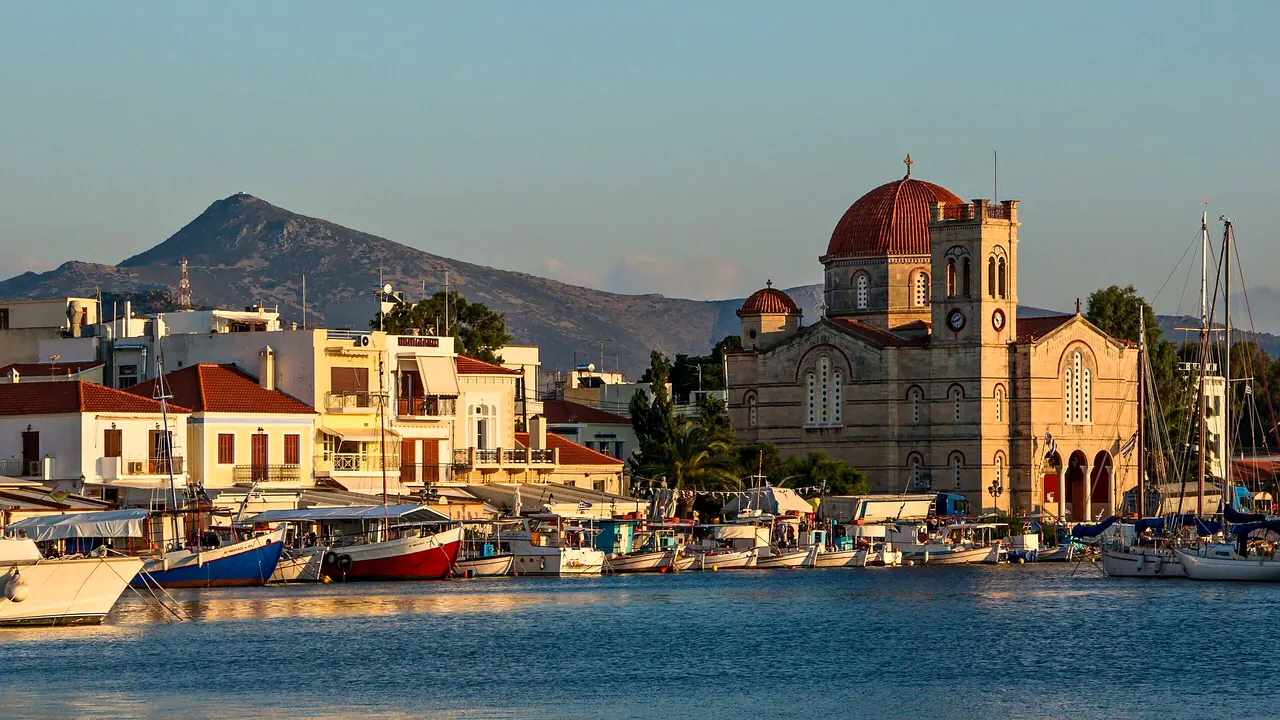
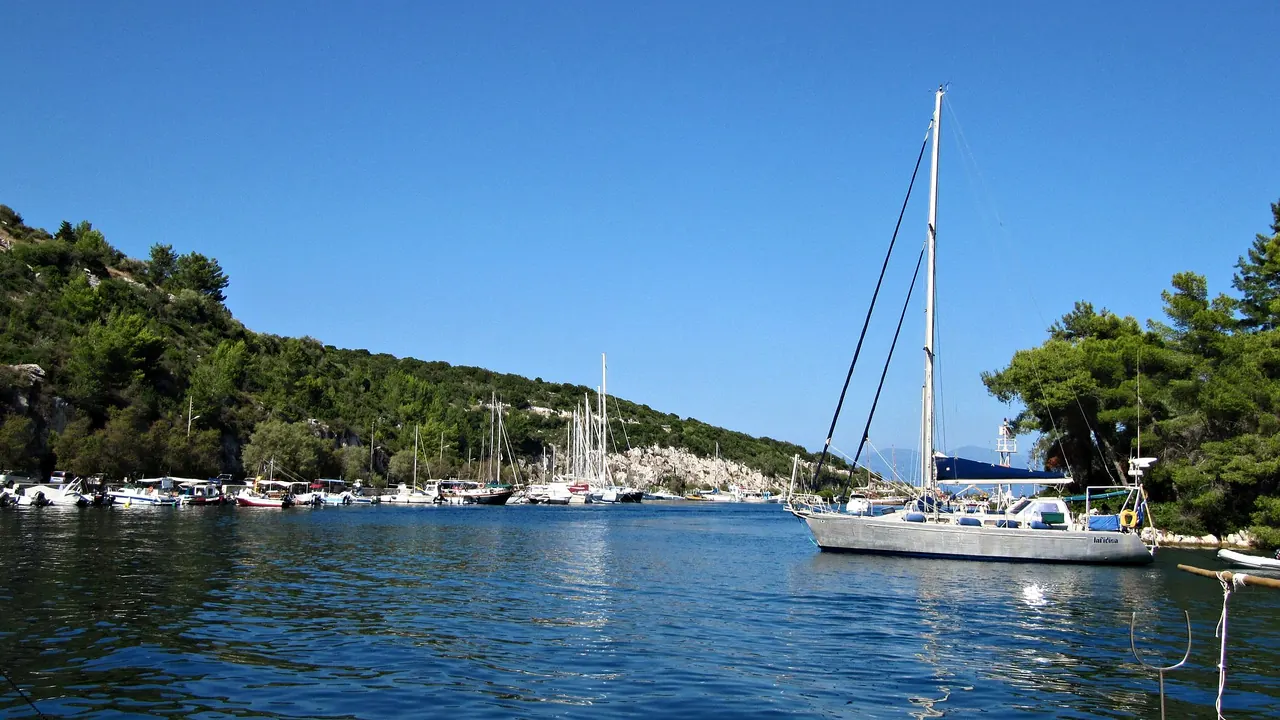
Photos: Aegina by Jebulon, CC0; Paxos by Poiesia, CC BY-SA 4.0, cropped.
Aegina or Paxos?
Our verdict in twelve categories, each scored against the same fixed benchmark cities, and the climate month by month, so you can choose for your trip.
Choose Aegina for
- culture and sights
- prices
- day trips
Aegina suits travellers who want a Greek island with some history to it and Athens close by. The Temple of Aphaia, the Byzantine chapels of Paleochora and the neoclassical streets of modern Greece's first capital give it more to see. The short fast-boat crossing from Piraeus makes a day at the Acropolis easy, and because most visitors are Greek, prices stay close to mainland levels. Its beaches are pleasant but modest, so pick it for a mixed trip rather than one built around the sea.
Choose Paxos for
- beaches
- wellness
- nature and the outdoors
Paxos is the island for swimming and very little else, and that is its appeal. The clear water off the east-coast pebble coves and the pale sand of Antipaxos are better than anything on Aegina, and a day in a hired motorboat moving between coves is the heart of a stay. It is calmer too, with villas among the olive groves and harbours that wake up slowly. In return it costs more, takes a ferry from Corfu to reach and has few sights.
Scoreboard
Twelve categories on one fixed scale from 0 to 100. The shaded stretch is the gap between the two.
Your match
Pick a travel style or drag the sliders, and both match scores follow your weighting.
Wins on culture and sights and prices with your weighting.
Wins on beaches and wellness with your weighting.
What matters to you?
Category by category
What the scores mean for a trip.
Beaches & swimming
Paxos is the better island for swimming. The water is clearer, the east coast is lined with small pebble coves such as Kipiadi and Monodendri, and Lakka's round bay has calm sandy shallows. The real prize is Antipaxos, a short boat ride south, where Voutoumi and Vrika have pale sand and turquoise water.
Aegina's swimming is pleasant but more ordinary: small coves at Marathonas and Aiginitissa, rocks to dive from near Perdika, and the longer sunbed-lined sand at Agia Marina. Its best spot, the pine-backed pebble cove on Moni, would be an average day out on Paxos.
Food & drink
Aegina eats a little better and has something Paxos lacks: a real local speciality. Its pistachios turn up in pastries, spreads and liqueurs, and the ouzeries behind the old fish market serve octopus and sardines with tsipouro to a demanding crowd of weekend Athenians. Evenings at the fish tavernas on Perdika's quay are a highlight.
Paxos has careful harbourside cooking in Gaios, Lakka and Loggos, with Ionian dishes such as bourdeto and sofrito and its own olive oil, but the menus repeat from one place to the next and many kitchens close out of season. Neither island has fine dining.
Culture & sights
This is where the two differ most. Aegina has one of the best-preserved Doric temples in Greece in the Temple of Aphaia, plus the column and ruins at Kolona, the frescoed chapels of ruined Paleochora, the great church of Agios Nektarios and an old town built when it was briefly the national capital.
Paxos has the Venetian fort and the small monastery on the islets off Gaios, a small folk museum and the stone houses and olive presses you pass on inland walks. Anyone wanting serious history there takes the boat to Corfu Town.
Nightlife
Neither island is for clubbing, but Aegina has more going on after dinner. On summer weekends Athenians fill the cocktail bars along Aegina town's harbour past midnight, Agia Marina has beach bars, and Athens is a ferry ride away for a proper night out. Paxos's evenings end with a drink beside the moored yachts in Gaios or Lakka, with only one or two places to dance in high summer.
Nature & outdoors
The two are broadly level outdoors, but you see them in different ways. Aegina is a land island: the walk up the cone of Mount Oros past the sanctuary of Zeus, quiet roads through pistachio orchards for cycling, and the wooded islet of Moni.
Paxos is best seen from the water. Its white west-coast cliffs at Erimitis, the Tripitos arch and the sea caves are reached by boat or kayak, and the snorkelling is good. On land there is a waymarked trail running the length of the island through old olive groves, but no high ground.
Day trips
Aegina has much more within reach. Athens and Piraeus are about forty minutes away by fast boat, so the Acropolis is an easy day, and quiet Agistri, Poros and car-free Hydra make good island days along the Saronic Gulf. With a car from the mainland ports, Epidaurus and Methana are also possible.
From Paxos the list is short: Corfu Town's Venetian old town about an hour away, Parga and the coves at Sivota on the mainland, and the beaches of Antipaxos. Rough seas can cancel even those.
Good for families
Aegina is the easier island with children, especially small ones. The crossing from Piraeus is short, the sandy shallows at Agia Marina and Marathonas suit toddlers, and the peacocks and deer on Moni make a good half-day.
Paxos has the gentle bay at Lakka, and boat days between coves are the highlight for most families. Most beaches, though, are pebble with steep paths down, and villas up in the groves mean a car. It suits older children who like snorkelling better than toddlers. Neither island has attractions built for children.
Getting around
Aegina is simpler to reach and to use. Boats cross from Piraeus all day, the old town is flat enough to walk, and buses run past the Temple of Aphaia to Agia Marina and along the west coast to Perdika, though not often enough to rely on alone.
Paxos has no airport, so you arrive by ferry from Corfu or the mainland, and in rough seas boats may be cancelled. Buses are rare on its winding roads, so most visitors rent a car or scooter, and a small hired boat is often the most useful transport of all.
Shopping & style
Neither island is a shopping destination, and what differs is what you take home. On Aegina it is pistachios, sold along the harbour in every form, alongside ordinary Greek shops. Paxos has a few summer boutiques with linen and jewellery behind the harbours in Gaios and Lakka, and its best souvenirs are olive oil and honey.
Affordability
Aegina is noticeably cheaper. Because most of its visitors are Greek, tavernas, cafés and family-run guesthouses charge mainland prices, and the ferry, buses and scooter hire cost little. Rooms are the main expense, and they rise on summer weekends and in August.
Paxos is one of the dearer Greek islands. Accommodation is mostly private villas that fill early, harbourside restaurants charge for the setting, and the boat, car and ferry crossings add up. Self-catering and the shoulder months help.
Live music & performing arts
Both islands are quiet here, and the difference lies in the few dates they have. Aegina offers summer open-air concerts, festival evenings and its traditional open-air cinema, with Athens and the Epidaurus theatre within reach for anything bigger. Paxos has a small end-of-summer chamber music festival in churches and squares, and the August feast of the Panagia in Gaios, with Greek music and dancing late into the night.
Wellness & relaxation
On Aegina, how restful a stay feels depends on the day of the week. Weekdays are calm, with long lunches in Perdika, the stillness of Paleochora's chapels and a few small hotel spas. Summer weekends, though, bring boatloads of Athenians and their cars.
Paxos is slower by nature, which makes it the better place to unwind. There are few cars and no high-rise buildings, the villas sit among the olive trees, and some estates run yoga and retreat weeks. Neither island has baths or a spa tradition.
When should you go?
Pick your month. The climate figures are measured averages, not a forecast.
Aegina in July
Paxos in July
Daytime high, °C
Rainfall in the month, mm
Where the figures come from
Aegina's temperatures are measured 32 km from the centre, at Athinai Airport.
Aegina has no rain gauge within 25 km of the centre, so its rainfall comes from a gridded climate dataset read at the destination rather than from a gauge further away.
Paxos's temperatures are measured 52 km from the centre, at Kerkyra Airport.
Paxos has no rain gauge within 25 km of the centre, so its rainfall comes from a gridded climate dataset read at the destination rather than from a gauge further away.
Temperature and rainfall are climate normals, averaged over the years shown. Aegina: 1991-2020 normals, Athinai Airport (31.8 km from centre). Paxos: 1991-2020 normals, Kerkyra Airport (52.1 km from centre).
Both islands follow the same summer pattern. The sea is warm enough for swimming from June to October, reaching about 26°C in August, and July and August are hot, with highs around 33°C on Aegina and 32°C on Paxos. That makes walking at midday hard on both, so the town strolls and hill walks belong to the morning and evening. April, May and late September are the comfortable months for walking the Paxos trail or climbing Mount Oros, and they are warm without being tiring.
Rain is where the two part company. Aegina, in the Saronic Gulf, is the drier and slightly sunnier island all year, and autumn stays fairly settled there into October. Paxos, on the greener Ionian side, turns wet early: September already brings real rain, and by November it gets about 163mm against Aegina's 76mm. For a late-season trip, Aegina is the safer bet.
Which traveller are you?
On a beach and sun trip, Paxos is the clear choice. Its very clear water, sheltered east-coast coves and the turquoise sand beaches of Antipaxos beat Aegina's low-key town beaches, and a hired motorboat reaches coves the roads cannot.
For a culture and arts trip, Aegina wins easily. The Temple of Aphaia, the chapels of Paleochora and the neoclassical old capital are worth a few days on their own, and the Acropolis and the Athens museums are a short boat ride away.
On a trip on a tight budget, Aegina is the kinder island. Its mostly Greek visitors keep tavernas and guesthouses at ordinary mainland prices, and buses and scooters are cheap. Paxos runs on villas, dearer harbour restaurants and boat hire.
Before you go
| Measure | Aegina | Paxos |
|---|---|---|
| Official language | Greek | Greek |
| Currency | Euro (EUR) | Euro (EUR) |
| Sockets | CF230 V, 50 Hz | CF230 V, 50 Hz |
| Driving side | Right | Right |
| Time zone | UTC+2, UTC+3 in summer | UTC+2, UTC+3 in summer |
| Emergency number | 112 | 112 |
| Main airport | Athens Eleftherios Venizelos International Airport (ATH)176 non-stop destinations | Corfu Ioannis Kapodistrias International Airport (CFU)88 non-stop destinations |
| Public holidays this year | 15 days | 15 days |
By the numbers
| Measure | Aegina | Paxos |
|---|---|---|
| Population | 13,056 | 2,300 |
| People per km² | 149 | 91 |
| Swim season, months above 21 °C | 5 months | 5 months |
Where else could you go?
Every comparison below shares a destination with this one, so you can follow Aegina or Paxos somewhere new.