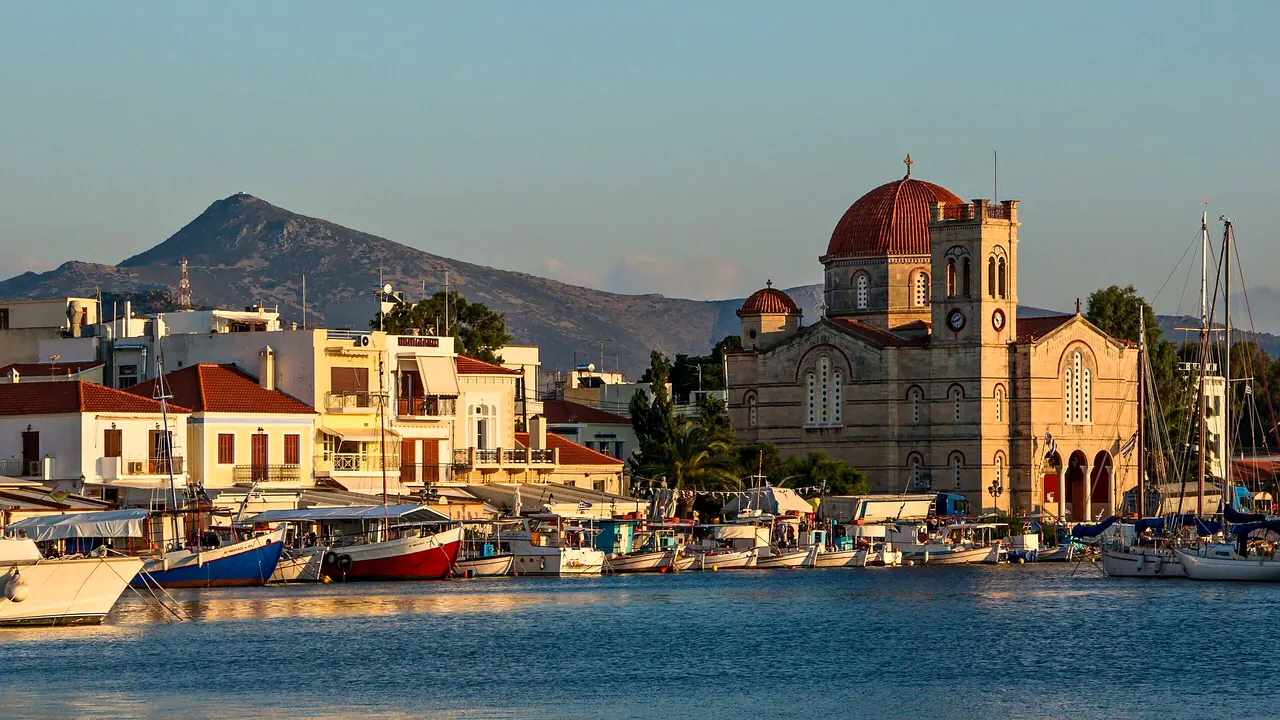
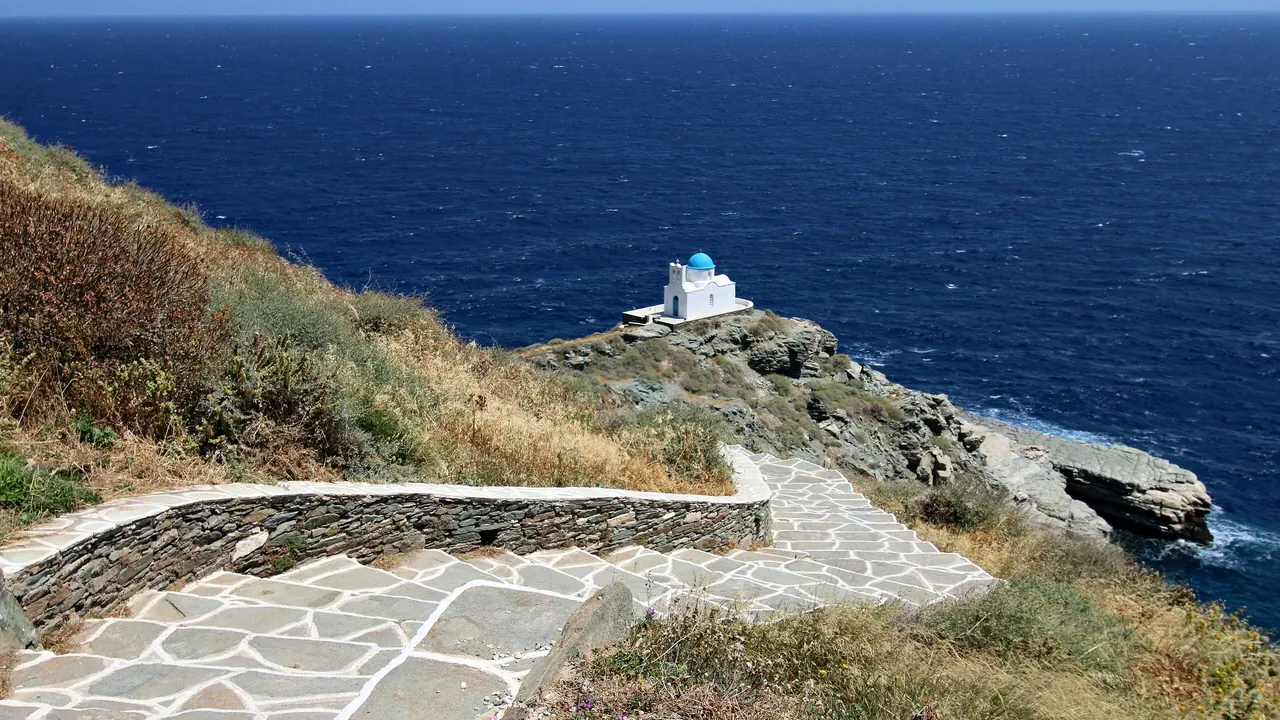
Photos: Aegina by Jebulon, CC0; Sifnos by Zde, CC BY-SA 4.0, cropped.
Aegina or Sifnos?
Our verdict in twelve categories, each scored against the same fixed benchmark cities, and the climate month by month, so you can choose for your trip.
Choose Aegina for
- prices
- day trips
- culture and sights
Aegina suits a traveller who wants a Greek island without the long voyage, or one who wants to fit Athens into the same trip. The fast boat from Piraeus is short, the Temple of Aphaia is a genuine ancient monument, and Hydra, Poros and the Acropolis are all within a day's reach. Rooms and taverna meals cost ordinary mainland money, which makes a longer stay or a weekend add-on easy to afford.
Choose Sifnos for
- beaches
- food and drink
- shopping
Sifnos is the better choice for people who want to settle in one place and let the island fill the days. Its beaches are finer and sandier, its clay-pot cooking is a reason to travel in itself, and the old mule tracks between white villages make it one of the better Cycladic islands to walk. The cost is a longer ferry, fewer outings and summer prices well above Aegina's.
Scoreboard
Twelve categories on one fixed scale from 0 to 100. The shaded stretch is the gap between the two.
Your match
Pick a travel style or drag the sliders, and both match scores follow your weighting.
Too close to call, 2 points apart
Wins on prices and day trips with your weighting.
Wins on beaches and food and drink with your weighting.
What matters to you?
Category by category
What the scores mean for a trip.
Beaches & swimming
Sifnos is the island to choose if the beach is the point of the trip. Platis Gialos is a long arc of fine sand on shallow water, Vathi is an almost enclosed bay that stays calm in the meltemi, and Kamares gives easy sand right at the port. Sandy beaches like these are the shape of a Sifnos stay.
Aegina's swimming is smaller and more local: coves at Marathonas and Aiginitissa, diving off the rocks near Perdika, and the pebbly pine-backed cove on Moni. Agia Marina is its one proper sandy resort beach. The sea is warmer by late summer, but the beaches themselves are more modest.
Food & drink
Eating is a reason to choose Sifnos. The island keeps a tradition of slow-cooked clay-pot dishes such as Sunday revithia and mastelo, plus manoura cheese, capers and almond sweets, and its tavernas are spread across Apollonia, Artemonas, Vathi and the fishing hamlet of Cheronissos. A few more ambitious modern kitchens add some range.
Aegina eats well but more simply: meze and ouzo in the lanes behind the old fish market, fish tavernas on the quay at Perdika, and pistachios in every possible form. The cooking is honest and rarely touristy, but it lacks the distinct island cuisine Sifnos is known for.
Culture & sights
Aegina has the stronger sights, led by the Temple of Aphaia, one of the best-preserved Doric temples in Greece, standing among pines and looking across to Athens. Kolona's lone column and museum, the frescoed chapels of ruined Paleochora and the neoclassical streets of the first modern Greek capital fill out a short but rewarding list.
On Sifnos the interest lies in the setting more than in monuments: the cliff-top fortified village of Kastro, the white villages of Apollonia and Artemonas, Chrysopigi on its rock and the scattered Hellenistic watchtowers. It is lovely to wander through but holds less to visit.
Nightlife
Neither island is for clubbing, and on both an evening means a long dinner followed by a drink. The difference is in where the drink happens. On Aegina it is the harbour front in town, busy with weekending Athenians, plus a few beach bars at Agia Marina. On Sifnos it is the narrow pedestrian lane through Apollonia, where small music bars stay lively into the early hours in July and August.
Nature & outdoors
Sifnos is the better island for walkers. Waymarked paths, many of them old stone-paved mule tracks, link villages, monasteries and bays across the whole island, and Profitis Ilias at about 680m gives views over the western Cyclades. Boat trips reach bays with no road access.
Aegina's countryside is gentler and smaller in scale: pistachio orchards and pine woods on low volcanic hills. The climb up Mount Oros past the sanctuary of Zeus is its one real walk, and the quiet orchard roads suit a bicycle or scooter better than boots.
Day trips
Aegina is far better placed for outings. Athens and Piraeus are about forty minutes away by fast boat, Agistri is a short hop, and Poros, car-free Hydra and, with a car, Epidaurus make full days out.
From Sifnos the choice comes down to neighbouring islands: Milos with its Plaka and painted boathouses, the striking chora of Serifos, and Kimolos. Ferries thin out in wind and outside high summer, so most people stay put on Sifnos.
Good for families
For families the two come out much the same: safe, easy islands with shallow sandy water and tavernas that welcome children late, with nothing built specifically for them. Aegina's edge is the short crossing and the boat trip to Moni with its peacocks and deer. Sifnos has more good sandy beaches, but its steep, stepped villages are hard going with a pushchair and the longer ferry can be rough.
Getting around
Once you have arrived, both islands are small and easy to cover with a hired scooter or car, plus local buses that do not cover everything. The real difference is the journey there. Aegina is a short, frequent crossing from Piraeus with a flat, walkable harbour town. Sifnos is a ferry voyage of a few hours with no airport, open to wind delays, though its footpaths and car-free lanes reward exploring on foot.
Shopping & style
Sifnos has something specific to buy: pottery from workshops around Kamares, Vathi and Platis Gialos, where potters still make the clay casseroles used in the local kitchen. Add a few boutiques in Apollonia and shops selling capers, honey and cheese.
On Aegina, shopping hardly goes beyond pistachio shops and souvenir stores along the harbour.
Affordability
Aegina is distinctly cheaper. Because its visitors are mostly Greek, guesthouses and tavernas charge ordinary mainland prices, and ferries, buses and scooters cost little. Only summer weekends and August push room prices up.
Sifnos is an upmarket island in high season, with boutique hotels and stylish rental houses that book out early, and meals that cost more than on the mainland. June and September soften the bill there too.
Live music & performing arts
Neither island has a stage of its own, but Sifnos has the more memorable summer music: the panigyria, saints' day feasts at chapels and monasteries where violin, lute and circle dancing can go on all night and visitors join in. Aegina offers open-air cinema, the odd concert and live Greek music in some tavernas. For theatre, it has the advantage that Athens and the Epidaurus festival are within reach.
Wellness & relaxation
Neither has spas worth the name or any bathing tradition, so restfulness on both comes down to pace. Sifnos does it better, with car-free village lanes, evening walks between Apollonia and Artemonas, and quiet bays with no fixed plan, especially in June and September.
Aegina can be calm on weekdays, at a long lunch in Perdika or among Paleochora's chapels, but weekend crowds from Athens make it less of a retreat.
When should you go?
Pick your month. The climate figures are measured averages, not a forecast.
Aegina in July
Sifnos in July
Daytime high, °C
Rainfall in the month, mm
Where the figures come from
Aegina's temperatures are measured 32 km from the centre, at Athinai Airport.
Aegina has no rain gauge within 25 km of the centre, so its rainfall comes from a gridded climate dataset read at the destination rather than from a gauge further away.
Sifnos has no weather station within reach, so its figures come from a gridded climate model rather than a measured record, and read a broad area rather than one spot.
Temperature and rainfall are climate normals, averaged over the years shown. Aegina: 1991-2020 normals, Athinai Airport (31.8 km from centre). Sifnos: 2001-2020 normals, NASA POWER reanalysis grid, no weather station within 90 km.
Both islands are swimming destinations from June to October, but they feel quite different in high summer. Aegina sits in the sheltered Saronic Gulf close to Athens and gets properly hot, with daytime highs around 33°C in July and August and a sea that reaches about 26°C. Midday sightseeing at Aphaia or Paleochora is hard work then, so May, June and September are the comfortable months for combining ruins with the beach. Sifnos, out in the open Aegean, stays cooler, with summer highs around 27°C. The meltemi takes the edge off the heat but can make exposed beaches choppy.
From November the two diverge again. Sifnos takes much more winter rain, over 100mm in December and January, while Aegina is drier and mild enough for a quiet off-season visit linked to Athens. For walking on Sifnos, April, May and October are the months to pick: green or golden hillsides, little rain and no fierce heat.
Which traveller are you?
For a beach and sun trip, Sifnos is the clear pick. Platis Gialos and Kamares offer real stretches of fine sand on clear, shallow water, and Vathi stays calm in the wind. Aegina's swimming happens mostly off rocks and in small coves.
On a culture and arts trip, Aegina gives more. The Temple of Aphaia, Kolona and the chapels of Paleochora outrank Sifnos's villages and watchtowers, and Athens's museums and the Acropolis are an easy day trip by fast boat.
On a trip with a tight budget, Aegina stretches the money further. Its visitors are mostly Greek, so guesthouses and tavernas charge mainland prices and the ferry is cheap. Sifnos fills up with boutique hotels and costly rooms in summer.
Before you go
| Measure | Aegina | Sifnos |
|---|---|---|
| Official language | Greek | Greek |
| Currency | Euro (EUR) | Euro (EUR) |
| Sockets | CF230 V, 50 Hz | CF230 V, 50 Hz |
| Driving side | Right | Right |
| Time zone | UTC+2, UTC+3 in summer | UTC+2, UTC+3 in summer |
| Emergency number | 112 | 112 |
| Main airport | Athens Eleftherios Venizelos International Airport (ATH)176 non-stop destinations | Milos Airport (MLO)2 non-stop destinations |
| Public holidays this year | 15 days | 15 days |
By the numbers
| Measure | Aegina | Sifnos |
|---|---|---|
| Population | 13,056 | - |
| People per km² | 149 | - |
| Swim season, months above 21 °C | 5 months | 5 months |
Where else could you go?
Every comparison below shares a destination with this one, so you can follow Aegina or Sifnos somewhere new.