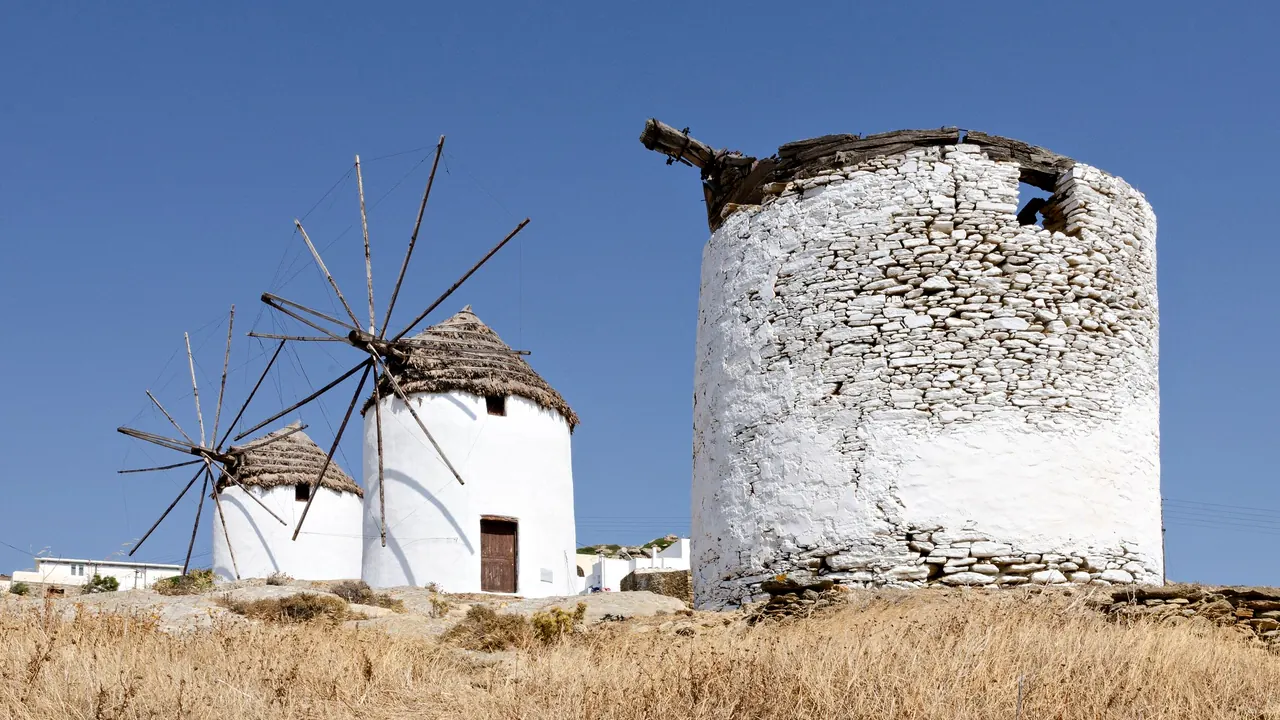
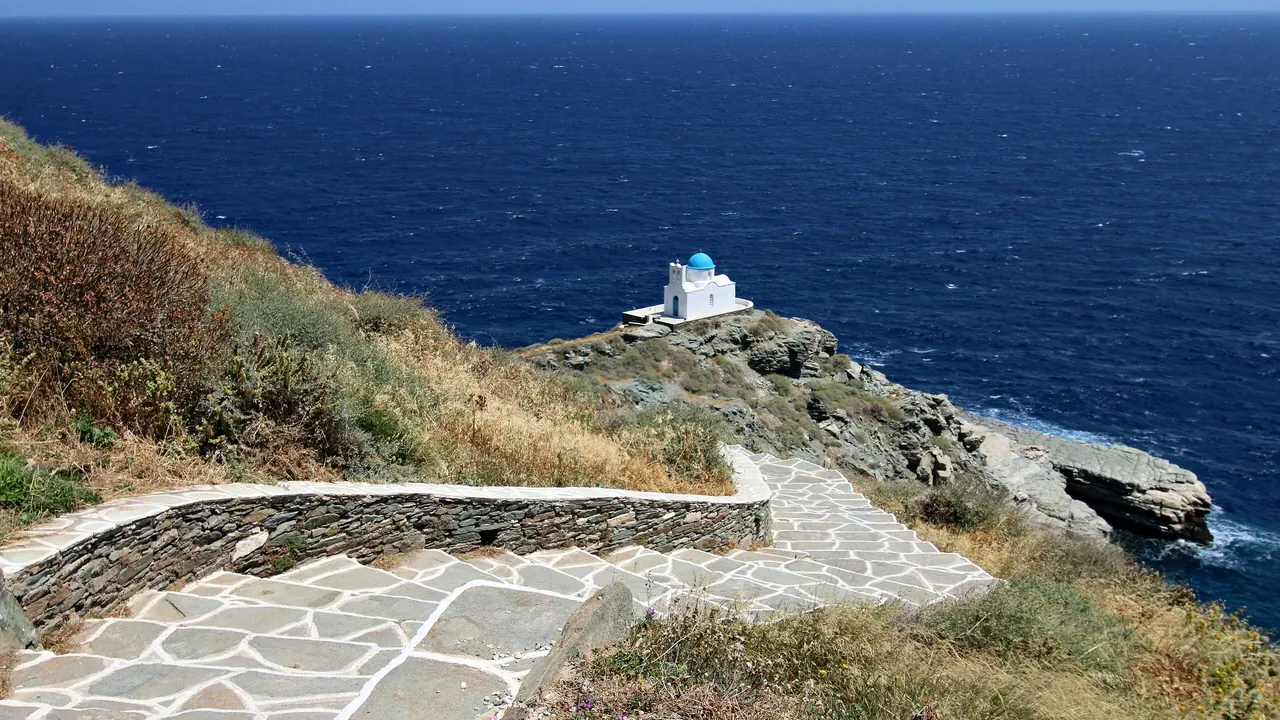
Photos: Ios by NorbertNagel, CC BY-SA 4.0, cropped; Sifnos by Zde, CC BY-SA 4.0, cropped.
Ios or Sifnos?
Our verdict in twelve categories, each scored against the same fixed benchmark cities, and the climate month by month, so you can choose for your trip.
Choose Ios for
- nightlife
- prices
- day trips
Ios is for travellers who want the nights to be the point of the trip. From June to September, Chora's lanes turn into one long bar crawl that runs until dawn, and Mylopotas adds afternoon beach parties. It is also the cheaper of the two, and its ferry links make Santorini an easy day out. In return you get thinner food and little calm in high summer.
Choose Sifnos for
- food and drink
- wellness
- shopping
Sifnos suits a slower trip built around meals, walks and quiet bays. Its clay-pot cooking is the best reason to eat your way round an island in the Cyclades. Waymarked mule tracks join villages such as Kastro and Apollonia, and the evenings end over a drink rather than on a dance floor. That calm makes it the better pick for couples and families, as long as they accept higher room prices and fewer day trips.
Scoreboard
Twelve categories on one fixed scale from 0 to 100. The shaded stretch is the gap between the two.
Your match
Pick a travel style or drag the sliders, and both match scores follow your weighting.
Too close to call, 1 point apart
Wins on nightlife and prices with your weighting.
Wins on food and drink and wellness with your weighting.
What matters to you?
Category by category
What the scores mean for a trip.
Beaches & swimming
Both islands have sandy beaches and clear water, and the August sea is equally warm, so the choice comes down to atmosphere. Ios has the social beach in Mylopotas, with sunbeds, water sports and a lively crowd. It also has the sheltered southern coves of Manganari and, for anyone with a scooter, the wilder and emptier bays of the east and north.
Sifnos keeps its beaches low-key, with no resort strip. Platis Gialos is the long sandy one, and Vathi's nearly enclosed bay stays calm when the meltemi blows, which is a real advantage over the exposed north-facing bays of Ios. Small coves around Faros and the swimming spots beside the chapel of Chrysopigi complete the choice.
Food & drink
Food is where Sifnos pulls clearly ahead. Its clay-pot cooking gives a meal there a strong sense of place: chickpeas baked overnight in a wood oven, and mastelo, lamb cooked with red wine and dill. The tavernas run from Apollonia to the fishing hamlet of Cheronissos, and the bakeries in Artemonas supply the almond sweets.
Ios has good grilled fish at the harbour in Yialos and its own tangy skotyri cheese. In high summer, though, many of its kitchens switch to gyros and pizza for the night crowd, so a careful meal there takes some searching.
Culture & sights
Neither island is a sightseeing trip, but Sifnos gives more to explore over several days. There is the fortified cliff village of Kastro, the mansions and dovecotes of Apollonia and Artemonas, the Mycenaean acropolis at Agios Andreas, and old watchtowers from the island's mining past. On Ios, the windmills and chapels of Chora, the Early Cycladic site at Skarkos and the legendary tomb of Homer fill a few pleasant hours rather than days.
Nightlife
This is the sharpest difference between the two. In summer Ios is a party island: dozens of bars and a few clubs are packed into Chora's lanes and main square and stay open until dawn, and afternoon parties at Mylopotas roll on into the evening. The crowd is young and the drinks are cheap.
On Sifnos, going out means a drink after a long dinner. That might be a cocktail or music bar on the pedestrian lane in Apollonia, or a sunset glass at Kamares. There are no clubs, and outside July and August the island goes quiet soon after dinner.
Nature & outdoors
Both are dry, terraced islands topped by a peak called Profitis Ilias at around 700m, but Sifnos is the better one for walking. Its waymarked network of stone-paved mule tracks links villages, monasteries, watchtowers and bays across most of the island. Ios has old tracks too, to the windmills and the northern bays, and the summer wind makes Mylopotas good for windsurfing, but its paths are less organised and its midday heat is fiercer.
Day trips
Ios is better placed for a day on another island. Santorini, with its caldera villages and the Bronze Age town at Akrotiri, is about an hour away by fast boat, and in summer Naxos, Sikinos and Folegandros are also within reach.
From Sifnos the best outing is Milos, with Serifos close by and Kimolos as a quieter extra. The list is shorter, though, and most visitors simply stay put. On both islands the spring and autumn timetables can make a same-day return unreliable.
Good for families
Sifnos is the easier family choice, mainly because it stays calm. It has sandy, shallow bays at Platis Gialos, Kamares and Vathi, short drives and tavernas that welcome children late into the evening. Manganari on Ios has sand just as good for children, but in July and August the party crowd sets the tone of the island, so families there do best in June or September near the southern beaches. Neither island has attractions built for children, and the villages on both are all steps for a pushchair.
Getting around
Neither island has an airport, so both mean a ferry. Ios is often reached via Santorini, and Sifnos is a few hours from Piraeus on sailings that summer wind can disrupt. On Ios, getting around is easy within the triangle of harbour, Chora and Mylopotas, which has frequent summer buses and a stepped footpath. The eastern and northern bays, though, need a car or quad on winding roads.
Sifnos is laid out more evenly. From Apollonia, buses reach most villages and beaches, footpaths connect the villages, and nothing is a long drive.
Shopping & style
Sifnos has a real reason to browse. Its potters still make clay casseroles and jugs in workshops around Kamares, Vathi and Platis Gialos, and the shops in Apollonia sell capers, honey and almond sweets to take home. On Ios, shopping means beachwear, sandals and souvenirs in Chora's late-opening lanes, and little more.
Affordability
Ios is the cheaper island, thanks to its backpacker roots: hostels, campsites and simple rooms near Mylopotas, plus plenty of grill food and drinks offers. Sifnos leans upmarket, with boutique hotels and rented houses that book out early for July and August, although its taverna meals are fair for the quality. On both, June and September bring lower room prices and the same sea.
Live music & performing arts
Neither island is a place for theatre or concerts. Sifnos has the edge through its panigyria, the saint's day feasts at chapels and monasteries where violin, lute and circle dancing can last all night and visitors are welcome to join. Ios has its own village festivals and occasional summer events at the open-air Odysseas Elytis theatre, but most of its music is played in the bars.
Wellness & relaxation
Sifnos suits rest better because its whole rhythm is slow: long lunches, evening walks between Apollonia and Artemonas, and quiet bays with no plan for the day. Ios can be calm in June or September near Manganari, and some hotels at Mylopotas offer massage and yoga, but in high summer the days there start late after long nights. Neither island has a bathing tradition, and spa treatments on both are limited to a few boutique hotels.
When should you go?
Pick your month. The climate figures are measured averages, not a forecast.
Ios in July
Sifnos in July
Daytime high, °C
Rainfall in the month, mm
Where the figures come from
Ios's temperatures are measured 41 km from the centre, at Santorini Island / Monólithos.
Ios has no rain gauge within 25 km of the centre, so its rainfall comes from a gridded climate dataset read at the destination rather than from a gauge further away.
Sifnos has no weather station within reach, so its figures come from a gridded climate model rather than a measured record, and read a broad area rather than one spot.
Temperature and rainfall are climate normals, averaged over the years shown. Ios: 2000-2025, 12 years observed (rainfall 1991-2020) normals, Santorini Island / Monólithos (40.9 km from centre). Sifnos: 2001-2020 normals, NASA POWER reanalysis grid, no weather station within 90 km.
The two islands follow the same Cycladic pattern. Both are dry from May to September and warm enough to swim from June into early October, and by August the sea on each is about 24°C. The real difference is summer heat. Ios runs hotter, around 30°C in July and August, so climbing Chora's stairs or walking the hills is best kept to mornings and evenings. Sifnos peaks a few degrees lower at 27°C, which makes high summer easier on foot.
April, May and October are the walking months on both islands: mild on land, though the sea is still cool in spring. Rain returns from October and falls through the winter. Sifnos is the wetter of the two, with over 100mm in December and January against around 80mm on Ios.
Which traveller are you?
On a trip on a tight budget, Ios is the better bet. Its backpacker past means hostels, campsites and simple rooms, cheap gyros and grill food, and drinks offers in Chora's bars. Sifnos is built around boutique stays that cost more in summer.
On a family trip with young children, Sifnos is the calmer base. Its sandy, shallow bays, short distances and welcoming tavernas suit small children. Ios in July and August belongs to a party crowd whose noise carries late into the night.
For a relaxing and wellness trip, Sifnos wins on pace. Long lunches, car-free village lanes and quiet bays like Vathi make unwinding easy. On Ios you would need to avoid the peak weeks and stay well away from Chora to find the same calm.
Before you go
| Measure | Ios | Sifnos |
|---|---|---|
| Official language | Greek | Greek |
| Currency | Euro (EUR) | Euro (EUR) |
| Sockets | CF230 V, 50 Hz | CF230 V, 50 Hz |
| Driving side | Right | Right |
| Time zone | UTC+2, UTC+3 in summer | UTC+2, UTC+3 in summer |
| Emergency number | 112 | 112 |
| Main airport | Santorini International Airport (JTR)60 non-stop destinations | Milos Airport (MLO)2 non-stop destinations |
| Public holidays this year | 15 days | 15 days |
By the numbers
| Measure | Ios | Sifnos |
|---|---|---|
| Swim season, months above 21 °C | 5 months | 5 months |
Where else could you go?
Every comparison below shares a destination with this one, so you can follow Ios or Sifnos somewhere new.