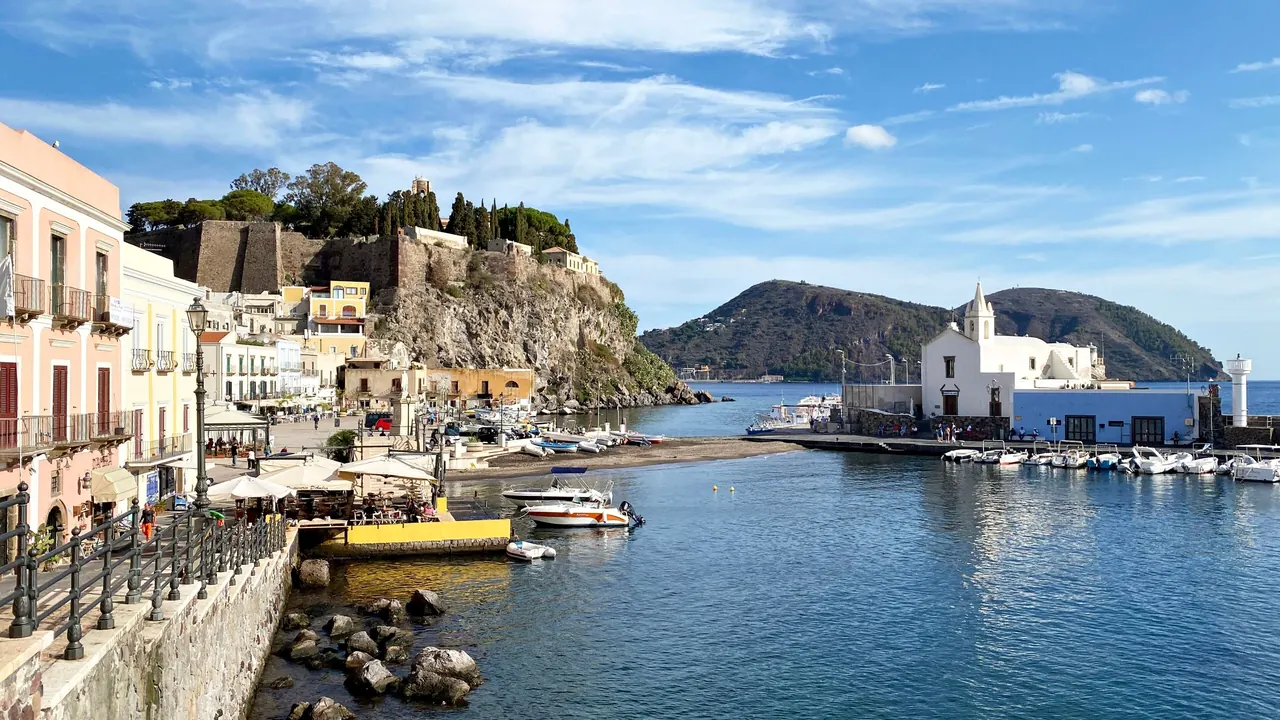
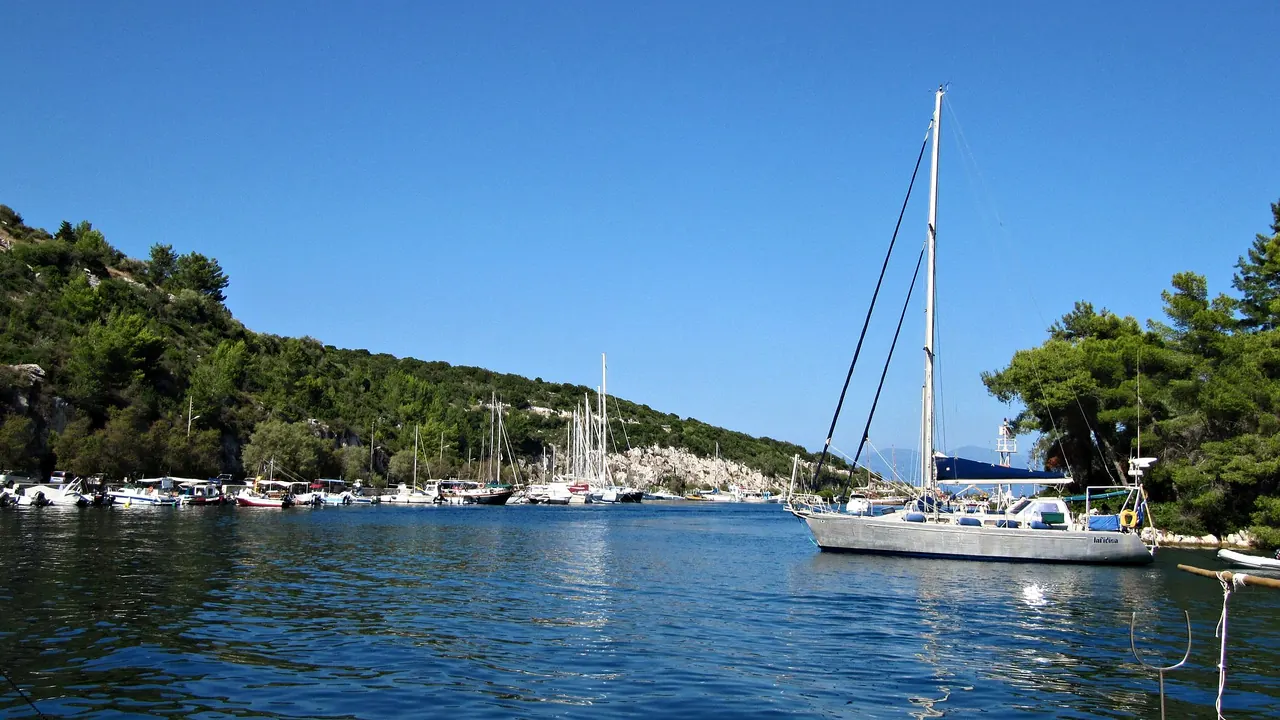
Photos: Aeolian Islands by Bernard Gagnon, CC BY 4.0, cropped; Paxos by Poiesia, CC BY-SA 4.0, cropped.
Aeolian Islands or Paxos?
Our verdict in twelve categories, each scored against the same fixed benchmark cities, and the climate month by month, so you can choose for your trip.
Choose Aeolian Islands for
- nature and the outdoors
- nightlife
- culture and sights
The Aeolian Islands suit travellers who want a vacation with more going on. Several quite different islands sit within a hydrofoil ride of each other: Stromboli erupting after dark, Vulcano's steaming crater, green and wine-growing Salina, and Lipari with its citadel and one of the Mediterranean's great prehistory museums. The food is better, Panarea gives you a real night out in high summer, and moving between islands keeps a fortnight varied. In return you swim from dark pebble and black sand rather than pale beaches.
Choose Paxos for
- beaches
- live music and the arts
Paxos is the choice for settling on one small, quiet island and staying put. It suits a villa among the olive groves, a hired boat, and long days moving between clear coves, with the pale sand of Antipaxos a short hop south and gentle shallows at Lakka. Evenings mean a harbourside dinner and little else, and there are few sights. Anyone who wants history takes the ferry to Corfu Town.
Scoreboard
Twelve categories on one fixed scale from 0 to 100. The shaded stretch is the gap between the two.
Your match
Pick a travel style or drag the sliders, and both match scores follow your weighting.
Wins on nature and the outdoors and nightlife with your weighting.
Wins on beaches and live music and the arts with your weighting.
What matters to you?
Category by category
What the scores mean for a trip.
Beaches & swimming
Both are swimming destinations first and both reward a hired boat, but the shores feel different. The Aeolians are volcanic: black sand on Vulcano's western bay, pebbles at Canneto on Lipari, and deep blue water under cliffs on Salina and Panarea. The sand gets painfully hot by midday and there is little shade.
Paxos has small, sheltered pebble coves along its east coast and a shallow sandy bay at Lakka. Its real asset is Antipaxos, a short boat ride south, where Voutoumi and Vrika have the pale sand and turquoise water the Aeolians cannot match, though the excursion boats crowd them at midday.
Food & drink
The Aeolians eat noticeably better. Salina is the reason, with its capers, caper leaves and sweet Malvasia wine from terraced slopes, plus family trattorias and wine estates that offer tastings. Add pane cunzato at lunch, granita and brioche for breakfast, and the widest choice in Lipari town.
On Paxos you eat in harbourside tavernas in Gaios, Lakka and Loggos: grilled fish, bourdeto, sofrito and salads dressed in the island's own olive oil. The cooking is careful for a Greek resort, but the menus repeat from one taverna to the next. Both scenes shrink sharply once summer ends.
Culture & sights
The Aeolians have far more to see, and nearly all of it is on Lipari. The citadel on its rock holds the cathedral, a dig showing thousands of years of settlement and the archaeological museum, which an archaeology lover could spend a long visit in. Bronze Age hut villages on Panarea and Filicudi add some atmosphere further out.
Paxos has little beyond the view from Gaios harbour: the ruined Venetian fort of Agios Nikolaos and the Panagia monastery on their islets, and a small museum of island life in an old schoolhouse. For anything more substantial you have to take the boat to Corfu Town.
Nightlife
If you want a night out, go to the Aeolians, or more precisely Panarea in July and August, with sunset aperitivo, yachts in the bay and dancing on terraces until late. It is crowded and expensive. Lipari's marina bars offer an easier evening.
Paxos has a drink on the waterfront in Gaios or Lakka after dinner, and one or two places to dance at the height of summer. On both, the quieter islands and the months outside high summer end the evening early.
Nature & outdoors
This is where the two differ most. The Aeolians are a UNESCO-listed volcanic landscape. You can watch Stromboli erupting every few minutes from its flanks or from a boat below the Sciara del Fuoco, walk up to Vulcano's steaming crater, and hike the ferns and chestnut woods of Monte Fossa delle Felci on Salina. Diving over volcanic rock and kayaking around sea stacks complete it.
Paxos is gentler and smaller in scale. It has a waymarked trail through ancient olive groves and stone-walled mule tracks, and its best scenery is on the west coast: the white Erimitis cliffs, the Tripitos arch and sea caves best reached by kayak. It is lovely, but there is no high ground.
Day trips
On the Aeolians, day trips mostly mean hopping to the other islands, and each is distinct: Salina's caper-terraced wine villages, Panarea's whitewashed lanes, Stromboli's shoreline village, and car-free Alicudi with its stone steps. On the mainland side there is Milazzo's castle and the Greek theatre below the sanctuary at Tindari.
From Paxos the choice is narrower, though one outing is excellent. Corfu Town's UNESCO-listed old town and Venetian fortresses are about an hour away by fast ferry. Beyond that there is Parga's harbour and castle, the coves at Sivota and the beaches of Antipaxos.
Good for families
Neither has anything built for children, so both work best for families with older children who love the water. On the Aeolians, Vulcano and Lipari are the easiest bases, and watching Stromboli erupt from a boat at night is the experience children remember. Steep lanes, rocky entries and rough hydrofoil hops make toddlers hard work.
Paxos is calmer and has one real advantage for small children: the shallow, sheltered bay at Lakka. Against that, most beaches have steep paths down, and villas up in the olive groves usually mean driving everywhere.
Getting around
Both depend on boats that rough seas can cancel, but they work differently once you arrive. The Aeolians are a network of islands linked by hydrofoils and ferries from Milazzo. Hopping between them is easy in summer, a car is more trouble than help, and Stromboli and Panarea have no cars at all.
Paxos is a single island about 10km long, with no airport. Buses are infrequent and the roads are narrow, so most visitors hire a car or scooter, plus a small boat for the coves the roads cannot reach.
Shopping & style
There is little to shop for on either, though the Aeolians give you more to take home. You can buy Salina capers and Malvasia, browse the delis, linen shops and obsidian and pumice souvenirs along Lipari's main street, or visit Panarea's resort boutiques.
Paxos has a few summer lanes behind the harbours in Gaios and Lakka, and its olive oil and honey are the best things to bring back. For anything practical you go to Corfu.
Affordability
On the Aeolians, the island you pick sets the budget. Lipari has the most rooms and is the sensible base for a moderate spend, and Vulcano can be reasonable too. Panarea is the costliest island by a distance, and Salina leans upmarket. Hydrofoils, boat hire and guided volcano walks add up wherever you stay.
Paxos gives you less room to choose. Most beds are in villas and small guesthouses, and it is hard to avoid hiring a car or a boat or paying for the ferry from Corfu or the mainland. The savings come from self-catering and simple tavernas instead. Overall the two cost much the same, and on both the months either side of July and August are kinder on the budget.
Live music & performing arts
Neither is a place for live performance. The Aeolians manage occasional summer concerts in village squares and churches, plus religious feasts with processions and band music. Paxos has its small chamber music festival at the end of summer and the August feast of the Panagia in Gaios, where Greek music and dancing go on late, so it has more fixed dates worth timing a visit around.
Wellness & relaxation
Only the Aeolians have a bathing tradition, and it is volcanic. Bathers have used a sulphurous mud pool near Vulcano's harbour for generations, though gas levels sometimes close it. Just offshore, vents bubble up and warm the sea in patches, and a few hotels on Vulcano and Lipari add thermal pools. For plain rest, Salina, Filicudi and Alicudi have almost no traffic and beat Lipari's harbour or Panarea in August.
Paxos offers calm rather than treatments. There are massage rooms in some of the larger hotels and villas and yoga and retreat weeks on a few estates. It is an island of few cars and no high-rise building, where the harbours wake slowly. You can unwind there without having to choose the right island, but the only place to bathe is the sea.
When should you go?
Pick your month. The climate figures are measured averages, not a forecast.
Aeolian Islands in July
Paxos in July
Daytime high, °C
Rainfall in the month, mm
Where the figures come from
Aeolian Islands's temperatures are measured 60 km from the centre, at Messina.
Aeolian Islands has no rain gauge within 25 km of the centre, so its rainfall comes from a gridded climate dataset read at the destination rather than from a gauge further away.
Paxos's temperatures are measured 52 km from the centre, at Kerkyra Airport.
Paxos has no rain gauge within 25 km of the centre, so its rainfall comes from a gridded climate dataset read at the destination rather than from a gauge further away.
Temperature and rainfall are climate normals, averaged over the years shown. Aeolian Islands: 1991-2020 normals, Messina (59.7 km from centre). Paxos: 1991-2020 normals, Kerkyra Airport (52.1 km from centre).
The two run on almost the same summer. Daytime highs climb to about 31°C on the Aeolians and 32°C on Paxos in July and August, hot enough that walking and hiking are best left for early morning. The sea is warm enough to swim from June to October in both, peaking at around 27°C off the Aeolians in August, about a degree warmer than Paxos. June and early September give the best balance of warm water and bearable heat, and July is the sunniest and driest month in both.
The rain arrives in September and the two then go separate ways. The Aeolians have a fairly mild, moderately wet winter. Paxos is much wetter from October onwards, with about 163mm in November, so late autumn and winter there are grey and damp. April and May are pleasant on both for walking, but the sea is still too cool for most swimmers.
Which traveller are you?
On an outdoors trip, the Aeolian Islands win clearly. You can watch Stromboli throw up lava at night, climb to the rim of Vulcano's Gran Cratere and walk through Salina's chestnut woods. Paxos has gentle olive-grove trails and sea caves, but no high or wild ground.
For a culture and arts trip, choose the Aeolians. Lipari's walled citadel and its archaeological museum, with obsidian tools, Greek pottery and theatrical masks, outweigh anything Paxos has. The best Paxos can offer is a Venetian fort ruin on an islet and a day trip to Corfu Town.
On a beach and sun trip, Paxos has the slight edge. The pale sand and turquoise water of Voutoumi and Vrika on Antipaxos, and the calm shallow bay at Lakka, are softer and easier than the Aeolians' black sand, hot pebble and rock ledges.
Before you go
| Measure | Aeolian Islands | Paxos |
|---|---|---|
| Official language | Italian | Greek |
| Currency | Euro (EUR) | Euro (EUR) |
| Sockets | CFL230 V, 50 Hz | CF230 V, 50 Hz |
| Driving side | Right | Right |
| Time zone | UTC+1, UTC+2 in summer | UTC+2, UTC+3 in summer |
| Emergency number | 112 | 112 |
| Main airport | Catania-Fontanarossa Airport (CTA)96 non-stop destinations | Corfu Ioannis Kapodistrias International Airport (CFU)88 non-stop destinations |
| Public holidays this year | 13 days | 15 days |
By the numbers
| Measure | Aeolian Islands | Paxos |
|---|---|---|
| Population | 15,419 | 2,300 |
| People per km² | 134 | 91 |
| Swim season, months above 21 °C | 5 months | 5 months |
Where else could you go?
Every comparison below shares a destination with this one, so you can follow Aeolian Islands or Paxos somewhere new.
- Corfuvs Paxos
- Lefkadavs Paxos
- Kefaloniavs Paxos
- Sicilyvs Aeolian Islands
- Zakynthosvs Paxos
- Caprivs Aeolian Islands