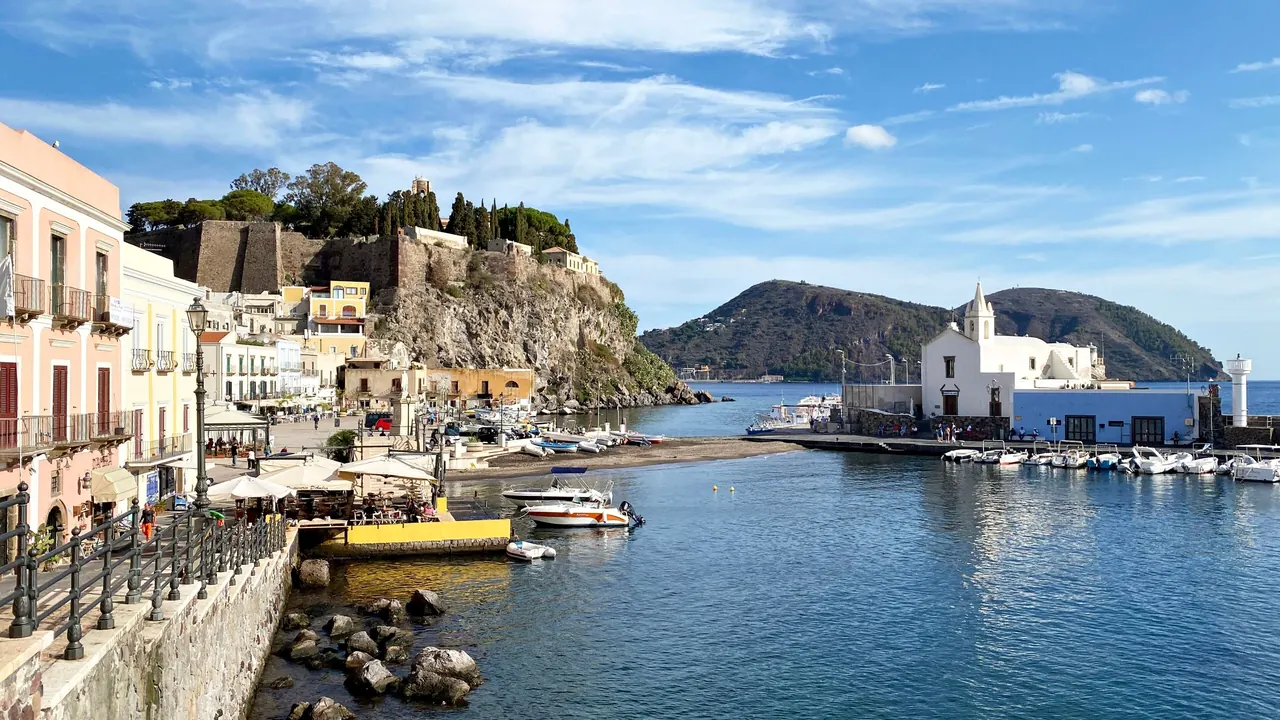
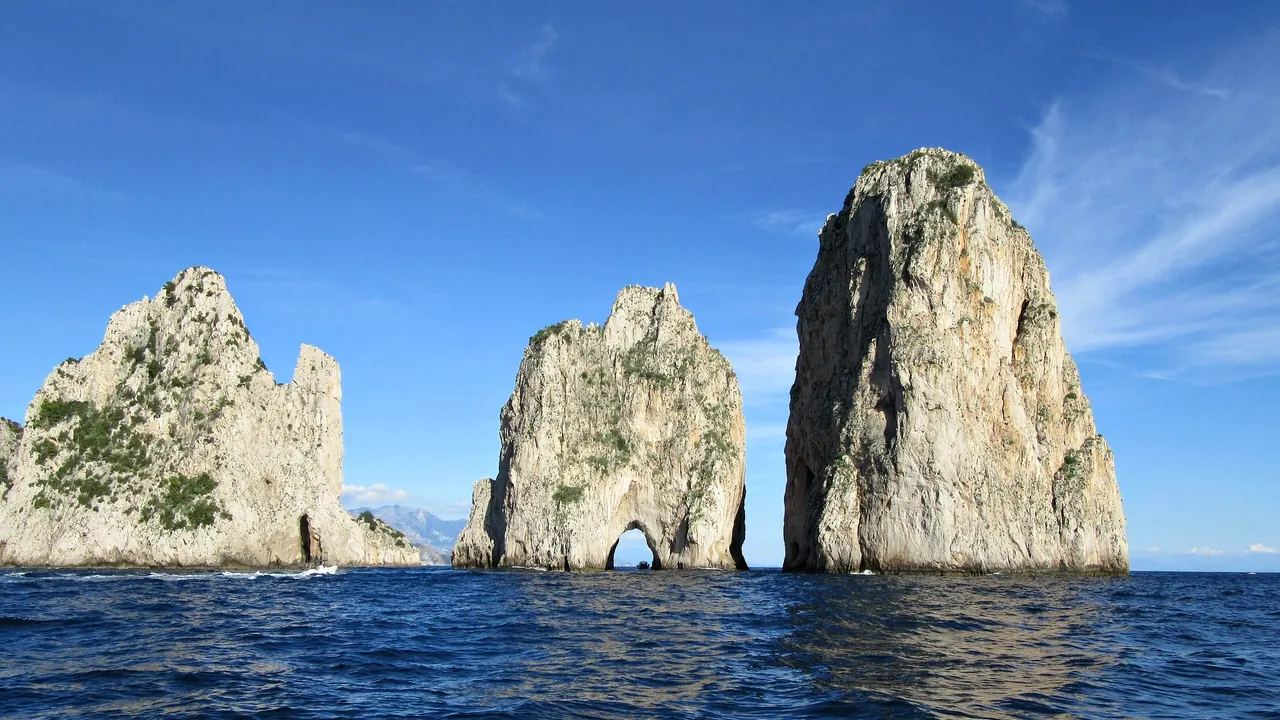
Photos: Aeolian Islands by Bernard Gagnon, CC BY 4.0, cropped; Capri by Sheeba Samuel, CC BY-SA 4.0, cropped.
Aeolian Islands or Capri?
Our verdict in twelve categories, each scored against the same fixed benchmark cities, and the climate month by month, so you can choose for your trip.
Choose Aeolian Islands for
- prices
- nature and the outdoors
- food and drink
The Aeolian Islands suit a traveller who wants the sea and the landscape to fill the days, and who is happy to move between islands to get them. You can watch Stromboli throw up lava after dark, climb to the steaming crater on Vulcano, spend a day hopping between coves by boat, and eat capers and Malvasia on Salina. The quieter islands make a slower, more restful stay than Capri, and the bill, though not small, is easier to bear. In exchange you lose easy transport, which depends on hydrofoils and the weather, and Sicily's great sights are too far for a day out.
Choose Capri for
- shopping
- day trips
- getting around
Capri is the better pick for a compact, polished stay on one island, with the whole Bay of Naples within reach by boat. Its limestone cliffs, the Faraglioni and the Blue Grotto fit into a few days, and the evenings revolve around the Piazzetta. Its lanes hold a surprising amount of luxury and handmade shopping, and Naples, Sorrento, Pompeii and the Amalfi Coast all make day trips. Expect to pay heavily for it, and leave small children for an easier coast.
Scoreboard
Twelve categories on one fixed scale from 0 to 100. The shaded stretch is the gap between the two.
Your match
Pick a travel style or drag the sliders, and both match scores follow your weighting.
Wins on prices and nature and the outdoors with your weighting.
Wins on shopping and day trips with your weighting.
What matters to you?
Category by category
What the scores mean for a trip.
Beaches & swimming
The Aeolians have the better swimming because there are more places to do it. You get black sand on Vulcano's western bay, pebbles at Canneto on Lipari, pale pumice coves on Lipari's north-east coast and rocky spots on Salina and Panarea. A hired boat opens up deep, clear coves under the cliffs, and the sea is a touch warmer.
Capri's water is just as clear, but the shore is tighter: small pebble coves at Marina Piccola and Marina Grande, and rock or concrete platforms with ladders, mostly run as bathing clubs. Punta Carena on the Anacapri side is the best spot, and space runs short in high summer. Neither place will please anyone who wants soft sand.
Food & drink
The Aeolians eat better and with more character. Salina is the reason, with capers grown on its terraces, wine estates making sweet Malvasia, and family trattorias. Pane cunzato for lunch and granita with brioche for breakfast are rituals worth the trip. The catch is the season, since many kitchens close outside summer.
Capri has famous dishes, the insalata caprese, ravioli capresi and torta caprese, but the restaurants around the Piazzetta and the marinas cater to day-trippers and charge for the view. The good meals are in Anacapri's trattorias under lemon pergolas, and there is little beyond them to explore.
Culture & sights
Neither is a heritage destination, and they offer about the same amount, in different forms. The Aeolians put it all in one place: Lipari's walled citadel, with the cathedral, the excavations and an archaeological museum of Mediterranean prehistory that holds obsidian tools, Greek pottery and theatrical masks. Beyond it are Bronze Age hut villages on Panarea and Filicudi.
Capri spreads its sights around the island. Tiberius's Villa Jovis stands on its headland, Villa San Michele sits in Anacapri, and the Certosa di San Giacomo and Gardens of Augustus are in town. It suits a visitor who likes Roman emperors and famous villas more than archaeology, and two days covers it.
Nightlife
Both are quiet by most standards, but the nights differ. In the Aeolians, going out depends on which island you are on. Panarea in July and August has terrace dancing until late among the yacht crowd, Lipari has ordinary marina bars, and the other islands end the evening with dinner.
On Capri the whole island gathers on the Piazzetta for a dressed-up aperitivo once the last ferries leave. After that come piano bars and taverns where Neapolitan songs and dancing on the tables carry on into the early hours. There are no clubs on Capri, and Panarea does more late dancing.
Nature & outdoors
The Aeolians are the stronger choice by a distance. This is a UNESCO-listed volcanic landscape: Stromboli erupting below the Sciara del Fuoco, best seen at night from its paths or a boat, the walk to Vulcano's Gran Cratere, Salina's ferns and chestnut woods, and the mule tracks of Filicudi and Alicudi. Diving and sailing among the sea stacks add to it.
Capri's scenery is famous rather than varied. It has the Faraglioni, the Arco Naturale, the chairlift up Monte Solaro and the wilder Sentiero dei Fortini, all very beautiful, but you will have walked all of it within a few days.
Day trips
Capri sits in a far richer spot. Sorrento is half an hour away by fast ferry, Naples under an hour, and in season boats run to Positano, Amalfi and Ischia. Pompeii and Herculaneum make a long but manageable day.
From the Aeolians, day trips mostly mean moving between the islands, such as Salina's wine villages, Panarea's lanes and Alicudi's stone steps. On the mainland side there are only Milazzo's castle and the Greek theatre at Tindari, because Sicily's major cities are too far away.
Good for families
Neither destination is made for young children, but the Aeolians give a family more room to choose. With several islands to pick from, you can settle on Lipari or Vulcano, where the water is gentler in spots and rooms and everyday shops are easier to find. The volcano works as the attraction that neither place otherwise has, and a boat out after dark to see Stromboli's lava is the evening a child is most likely to talk about afterwards. The shared weaknesses are still there: stony ways into the sea, dark sand that scorches bare feet by noon, and choppy crossings between islands.
Capri has the same problems and fewer ways round them. On one small, steep island there is no easier shore to move to, only the bathing clubs' ladders into deep water and lanes that are stairs from end to end, and in summer families squeeze onto the buses and funicular with the day crowds. It suits confident swimmers old enough to enjoy the grottoes and the ride up Monte Solaro, based in quieter Anacapri. Parents of toddlers would do better on a coast with sand.
Getting around
Capri is much simpler. Everything is close: the funicular climbs from Marina Grande to town in minutes, small buses link the marinas with Anacapri, and taxis fill the gaps. The only problems are the steep walking and the summer queues.
In the Aeolians, everything depends on hydrofoils and ferries, and rough seas cancel crossings, so plans need slack days. On land you use scooters and buses on Lipari and Salina, and on car-free Stromboli and Panarea you walk or take electric carts.
Shopping & style
Capri is a real shopping destination for its size. Via Camerelle and Via Vittorio Emanuele are lined with luxury boutiques and resort fashion, and there are sandals made by hand while you wait, linen, ceramics and perfumes made from island flowers.
The Aeolians offer little more than things to eat and drink. Salina's capers and Malvasia are the best buys, Lipari's main street has delis and pumice or obsidian souvenirs, and Panarea's resort-wear boutiques are the only fashion.
Affordability
The Aeolians cost noticeably less than Capri, though in summer they are still an expensive corner of southern Italy, because so much has to come in by sea. Lipari has the most rooms and suits a moderate budget, and Vulcano can be reasonable. Panarea and Salina's upmarket stays are where the costs climb.
Capri sits near the top of the Mediterranean for summer hotel rates, and bathing clubs, restaurants with a view and private boats all charge accordingly. The cheap buses, free walks and Anacapri bakeries help. Sleeping in Sorrento and coming over for the day saves money, but you miss the island's evenings.
Live music & performing arts
Neither has a theatre or a concert season, so this should not decide a trip. The Aeolians offer village-square concerts, small festivals and religious feasts with processions and band music.
Capri has summer concerts in the Certosa cloisters and at Villa San Michele, and Neapolitan song late in the piano taverns. Its one real edge is Naples, an hour away by boat, for opera.
Wellness & relaxation
The Aeolians are the better place to unwind. Vulcano has a real volcanic bathing tradition, with its sulphurous mud pool near the harbour and gas vents warming the sea offshore, though gas levels sometimes close the pool. Some hotels have thermal pools. Salina, Filicudi and Alicudi offer traffic-free days of swimming and long lunches.
Capri's calm is spread more thinly. It has upmarket hotel spas, and the lanes are quiet and scented with lemon and jasmine early and late, but the day-trip crowds take over the middle of the day. Thermal bathing means the boat across to Ischia.
When should you go?
Pick your month. The climate figures are measured averages, not a forecast.
Aeolian Islands in July
Capri in July
Daytime high, °C
Rainfall in the month, mm
Where the figures come from
Aeolian Islands's temperatures are measured 60 km from the centre, at Messina.
Aeolian Islands has no rain gauge within 25 km of the centre, so its rainfall comes from a gridded climate dataset read at the destination rather than from a gauge further away.
Capri has no rain gauge within 25 km of the centre, so its rainfall comes from a gridded climate dataset read at the destination rather than from a gauge further away.
Capri's sunshine is measured 58 km from the centre, at Grazzanise.
Temperature and rainfall are climate normals, averaged over the years shown. Aeolian Islands: 1991-2020 normals, Messina (59.7 km from centre). Capri: 2005-2025 (sunshine 1991-2020, rainfall 1991-2020) normals, Capri (3.6 km from centre).
Both are summer destinations with almost the same rhythm. The sea is warm enough to swim in from June to October, and it is slightly warmer in the Aeolians, reaching about 27°C in August. Where most Aeolian visitors stay, July and August are hotter, with highs around 31°C, and almost dry, with only 7mm of rain in July. Capri runs a degree or two cooler. Both get plenty of summer sunshine, the Aeolians a little more. Midday heat makes high-summer walking hard on both, so May, June, September and early October are the months for hiking volcano paths or the cliff tracks.
The difference shows from autumn on. Rain arrives in September on both, but Capri's late autumn and winter are clearly wetter, with about 146mm in November, while the Aeolians stay milder and drier. In neither place is winter a beach season: the sea cools to about 15°C and rougher water makes boat crossings less reliable.
Which traveller are you?
On an outdoors trip, choose the Aeolian Islands. An active volcano erupting every few minutes, the crater rim on Vulcano, Salina's chestnut woods and sea kayaking among stacks and arches give far more range than Capri's few short cliff walks.
For a shopping trip, Capri wins easily. The lanes off the Piazzetta pack in luxury boutiques and resort fashion, with sandals made to measure and island perfumes, while the Aeolians offer little beyond capers, wine and pumice souvenirs.
On a trip on a tight budget, the Aeolian Islands are the gentler choice. Neither is cheap, but a base on Lipari or Vulcano in June or September costs far less than Capri, one of the most expensive islands in Italy.
Before you go
| Measure | Aeolian Islands | Capri |
|---|---|---|
| Official language | Italian | Italian |
| Currency | Euro (EUR) | Euro (EUR) |
| Sockets | CFL230 V, 50 Hz | CFL230 V, 50 Hz |
| Driving side | Right | Right |
| Time zone | UTC+1, UTC+2 in summer | UTC+1, UTC+2 in summer |
| Emergency number | 112 | 112 |
| Main airport | Catania-Fontanarossa Airport (CTA)96 non-stop destinations | Naples International Airport (NAP)131 non-stop destinations |
| Public holidays this year | 13 days | 13 days |
By the numbers
| Measure | Aeolian Islands | Capri |
|---|---|---|
| Population | 15,419 | 12,903 |
| People per km² | 134 | 1,241 |
| Swim season, months above 21 °C | 5 months | 5 months |
Where else could you go?
Every comparison below shares a destination with this one, so you can follow Aeolian Islands or Capri somewhere new.
- Positanovs Capri
- Procidavs Capri
- Amalfi Coastvs Capri
- Ischiavs Capri
- Sicilyvs Aeolian Islands
- Amalfi Coastvs Aeolian Islands