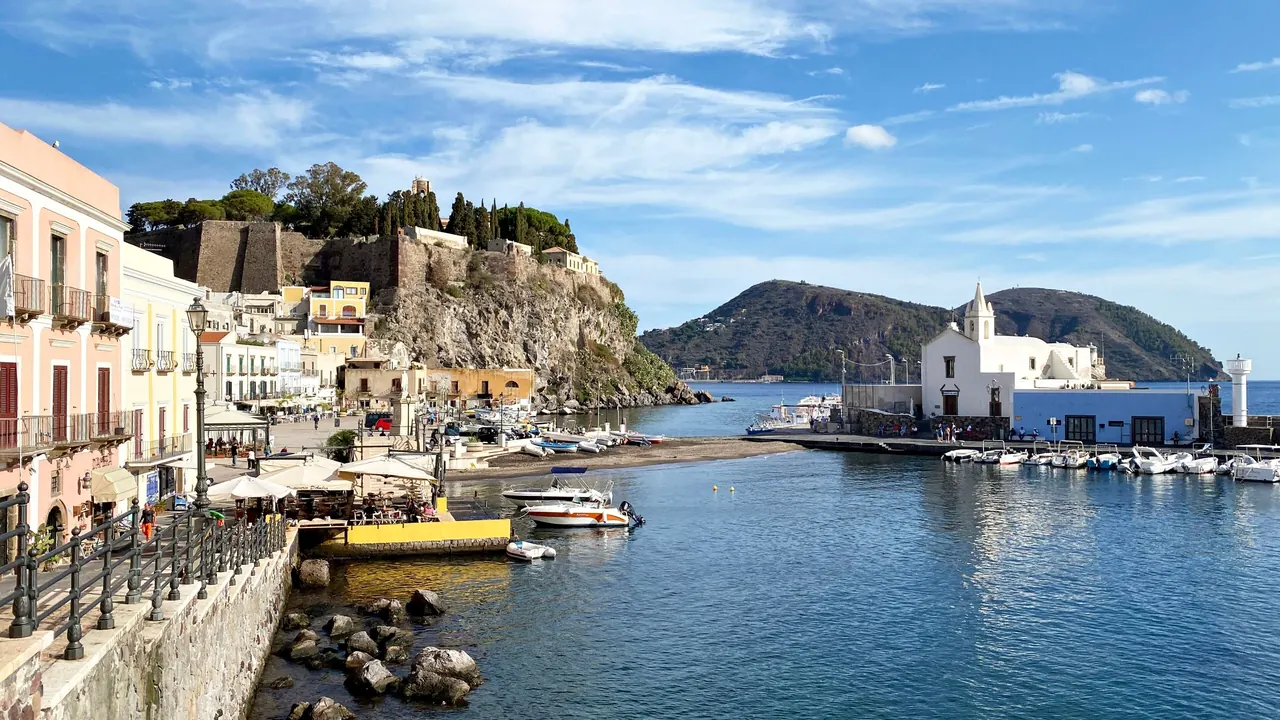
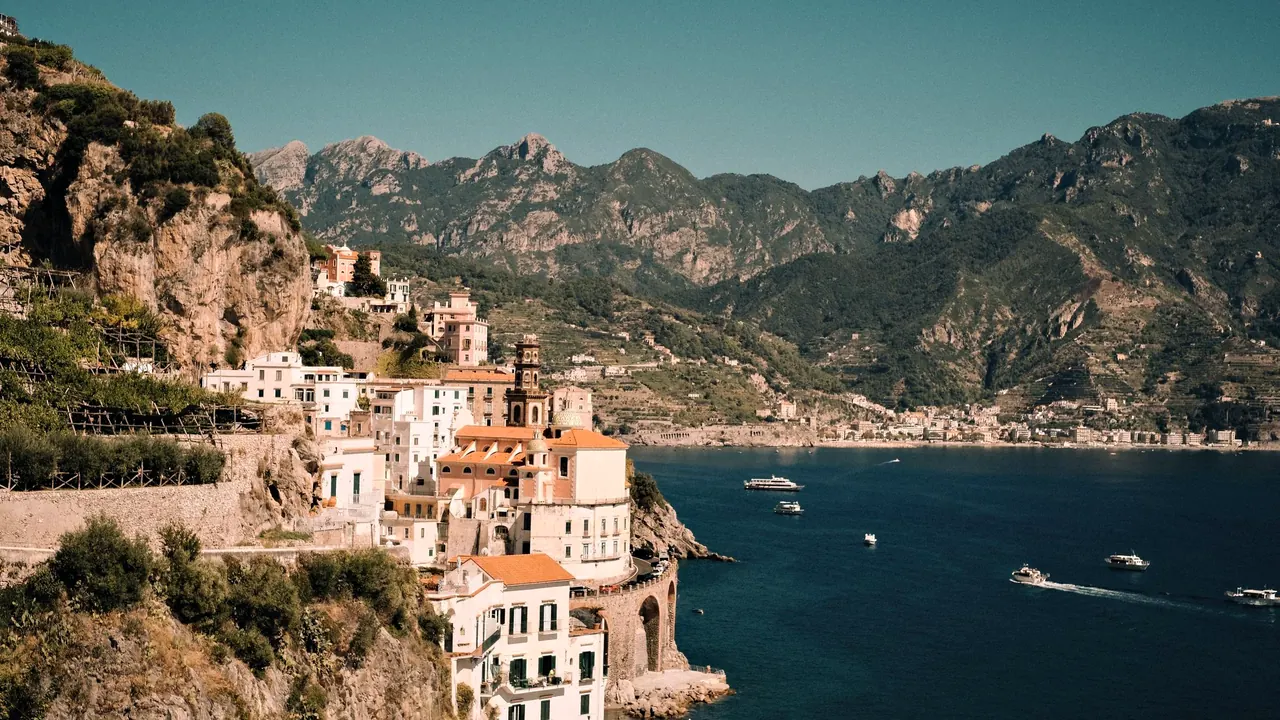
Photos: Aeolian Islands by Bernard Gagnon, CC BY 4.0, cropped; Amalfi Coast by Alina Chernii, Pexels License.
Aeolian Islands or Amalfi Coast?
Our verdict in twelve categories, each scored against the same fixed benchmark cities, and the climate month by month, so you can choose for your trip.
Choose Aeolian Islands for
- prices
- nightlife
- getting around
The Aeolian Islands suit travellers who want the sea and the volcanoes to be the whole trip. You can watch Stromboli throw up lava after dark, walk to the steaming crater on Vulcano and hop between islands that each feel different, from green, wine-growing Salina to Alicudi, where steps take the place of roads. The islands are noticeably cheaper, especially if you base yourself on Lipari. They also have proper summer nightlife on Panarea, and the quiet islands are the better place to slow right down. What you give up is the mainland's food, its famous sights and its music.
Choose Amalfi Coast for
- day trips
- shopping
- live music and the arts
The Amalfi Coast is the better choice when the coast is one half of the trip and great sightseeing is the other. Pompeii, Herculaneum, Capri, Paestum and Naples are all within a day, and nearer to hand are Amalfi's cathedral, the gardens of Ravello and its summer concerts above the cliffs. The food is deeper, and Positano and Vietri are good for crafts. In return you pay some of the highest prices in Europe and spend time stuck on one crowded cliff road.
Scoreboard
Twelve categories on one fixed scale from 0 to 100. The shaded stretch is the gap between the two.
Your match
Pick a travel style or drag the sliders, and both match scores follow your weighting.
Wins on prices and nightlife with your weighting.
Wins on day trips and shopping with your weighting.
What matters to you?
Category by category
What the scores mean for a trip.
Beaches & swimming
The swimming is equally good in both places, and in both you get the best of it from a hired boat, anchored in clear, deep water under cliffs. The difference is the shore. The islands give you volcanic beaches: black sand on Vulcano's western bay, pebbles at Canneto on Lipari, pale pumice coves on Lipari's north-east coast and rock ledges on Salina and Panarea. Shade is scarce, and the dark sand gets very hot.
The Amalfi Coast has grey-pebble coves at Positano, Amalfi and Atrani, often packed with rows of hired sunbeds and reached by long stairways. It also has the one thing the islands lack: Maiori's long, sandier beach, with room to spread out.
Food & drink
The Amalfi Coast eats better and more widely. Cetara's cured anchovies and colatura, scialatielli with clams, fish baked in lemon leaves and the sfogliatella of Conca dei Marini come from a whole string of towns, and mozzarella comes down from the hinterland. Family trattorias in Minori and Agerola give you a good alternative to the tired waterfront menus.
Aeolian cooking is simpler and narrower: morning-caught fish, Salina's capers, pane cunzato for lunch and granita with brioche for breakfast. Salina has the best tables and wine estates pouring Malvasia, but on the smaller islands only a few kitchens stay open outside summer.
Culture & sights
The Amalfi Coast has more to see. It has the striped cathedral and Cloister of Paradise left by Amalfi's maritime republic, the terraced villa gardens of Ravello and a Roman villa at Minori. The cliffside towns and lemon terraces are a sight in their own right, and you take them in on every walk.
On the islands, almost everything is in one place: Lipari's walled citadel and its archaeological museum, which is world-class for Mediterranean prehistory, Greek pottery and theatrical masks. Beyond that there are Bronze Age hut villages on Panarea and Filicudi, rewarding for archaeology lovers but slight for anyone else.
Nightlife
If you want to go out, the islands win, but only in July and August and mostly on Panarea. There, yachts fill the bay and people dance late on terraces, although it is crowded and costly. Lipari's marina bars offer a more ordinary late evening.
The Amalfi Coast rarely goes further than a terrace dinner, a few cocktail bars in Positano and café tables in Amalfi's cathedral square until about midnight. People who want a real night out make the trip to Naples or Salerno.
Nature & outdoors
Both are superb outdoors, but the landscapes are of very different kinds. The islands are an active volcanic landscape. Stromboli erupts every few minutes, best seen at night from its flanks or from a boat below the Sciara del Fuoco, and on Vulcano a short climb takes you to a steaming crater rim. Salina adds fern and chestnut woods, and you can kayak around the sea stacks.
The Amalfi Coast is mountains falling into the sea, and it is the stronger choice for long walks. The Path of the Gods high above Positano, the mule tracks between lemon terraces and the shaded gorge of the Valle delle Ferriere are all here. The protected waters off Punta Campanella are good for snorkelling.
Day trips
This is the widest gap between the two. From the Amalfi Coast you can reach Pompeii and Herculaneum, Capri by ferry, the Greek temples of Paestum and the whole of Naples, so a week here can easily include several of Italy's best-known sites.
From the islands, a day trip mostly means hopping to another island: Salina's caper villages, Panarea's white lanes or Alicudi's stone steps. On the mainland side there are Milazzo's castle and the Greek theatre at Tindari, but the major Sicilian sites are too far away.
Good for families
Neither place is made for small children, but the islands are a little easier. Lipari and Vulcano have shallower water in places and simple shops, and an evening boat to watch Stromboli erupt is a highlight for older children.
On the Amalfi Coast, the towns are built up the cliffs, with hundreds of steps and a main road that often has no pavement, so pushchairs are almost useless. If you bring children here, base yourself in flatter Maiori or Minori.
Getting around
The islands are easier to get around. Hydrofoils and ferries link them all in summer, scooters cover Lipari and Salina, and Stromboli and Panarea have no cars at all. The catch is weather: rough seas cancel crossings, so leave slack in your plans.
The Amalfi Coast has a single narrow cliff road that jams for hours in summer, and its buses are packed. The ferries between Positano, Amalfi and Salerno are the escape from spring to autumn.
Shopping & style
The Amalfi Coast has real crafts to buy. Positano has linen clothing and made-to-measure sandals, Amalfi has paper from its old mills and Vietri sul Mare has painted majolica, from single tiles to full dinner services.
The islands offer little beyond food and drink: Salina's capers and Malvasia, delis on Lipari's main street, pumice and obsidian trinkets and a few expensive boutiques on Panarea.
Affordability
Both places are expensive in summer, but the islands cost noticeably less. Lipari has the most rooms and suits a moderate budget, Vulcano can be reasonable and June and September ease prices. Panarea and much of Salina are the exceptions.
On the Amalfi Coast, sea-view rooms in Positano and Ravello, waterfront lunches and coast-road taxis put it among Europe's priciest coasts. Staying in Atrani, Maiori or up in Agerola, and travelling by bus and ferry, softens the bill.
Live music & performing arts
Ravello gives the Amalfi Coast a genuine music season. Orchestras play on a stage built out over the cliff in Villa Rufolo's gardens, and chamber concerts fill its churches and halls on many summer evenings, a tradition going back to Wagner's stay.
The islands have nothing to match it, only the odd concert in a village square and band music at religious feasts. The evening show there is Stromboli itself.
Wellness & relaxation
The islands have the edge, because they have a bathing tradition of their own. Vulcano has its sulphurous mud pool and gas vents that warm the sea offshore, although gas levels sometimes close the pool. For pure calm there are Salina, Filicudi and Alicudi, where there is almost no traffic.
The Amalfi Coast has no springs of its own. Its spas are in the luxury cliff hotels, and the calmest bases are Ravello, Atrani and Praiano, well away from Positano in August.
When should you go?
Pick your month. The climate figures are measured averages, not a forecast.
Aeolian Islands in July
Amalfi Coast in July
Daytime high, °C
Rainfall in the month, mm
Where the figures come from
Aeolian Islands's temperatures are measured 60 km from the centre, at Messina.
Aeolian Islands has no rain gauge within 25 km of the centre, so its rainfall comes from a gridded climate dataset read at the destination rather than from a gauge further away.
Amalfi Coast's temperatures are measured 65 km from the centre, at Grazzanise.
Amalfi Coast has no rain gauge within 25 km of the centre, so its rainfall comes from a gridded climate dataset read at the destination rather than from a gauge further away.
Temperature and rainfall are climate normals, averaged over the years shown. Aeolian Islands: 1991-2020 normals, Messina (59.7 km from centre). Amalfi Coast: 1991-2020 normals, Grazzanise (64.7 km from centre).
The two have almost the same summer. Daytime highs climb to 31°C in July and August, which is good for swimming but hard going on steep walks or in the villages at midday. In both places the sea is warm enough to swim from June to early October. Around the islands it gets a touch warmer, reaching 27°C in August, and the islands also get slightly more summer sunshine. May is warm and pleasant for walking, but the sea is still cool. June and late September are the most comfortable months for combining walks with swimming.
They differ once the rain returns in September. The Aeolian Islands stay drier and a little milder through the cooler months, while the Amalfi Coast becomes noticeably wet, with about 143mm in November. The islands' driest stretch is July, with just 7mm. For a spring or autumn walking trip, the islands give you better odds of dry days, although rough seas can still cancel the boats.
Which traveller are you?
On a culture and arts trip, choose the Amalfi Coast. Pompeii, Herculaneum, Paestum and the archaeological museum in Naples are all within a day, and Ravello adds villa gardens and a summer music festival. The islands offer one superb archaeological museum on Lipari and little else.
For a trip on a tight budget, the Aeolian Islands are the easier choice. Neither place is cheap, but Lipari and Vulcano offer moderate rooms, and the hydrofoils make island-hopping simple. On the Amalfi Coast, even the cheaper bases in Maiori or Agerola still cost more.
For a shopping trip, choose the Amalfi Coast, as long as you want local crafts and summer clothes rather than big brands. Each town along the coast has its own speciality, so browsing fits easily between swims and boat days. On the islands, shopping barely goes beyond the deli.
Before you go
| Measure | Aeolian Islands | Amalfi Coast |
|---|---|---|
| Official language | Italian | Italian |
| Currency | Euro (EUR) | Euro (EUR) |
| Sockets | CFL230 V, 50 Hz | CFL230 V, 50 Hz |
| Driving side | Right | Right |
| Time zone | UTC+1, UTC+2 in summer | UTC+1, UTC+2 in summer |
| Emergency number | 112 | 112 |
| Main airport | Catania-Fontanarossa Airport (CTA)96 non-stop destinations | Naples International Airport (NAP)131 non-stop destinations |
| Public holidays this year | 13 days | 13 days |
By the numbers
| Measure | Aeolian Islands | Amalfi Coast |
|---|---|---|
| Population | 15,419 | - |
| People per km² | 134 | - |
| Swim season, months above 21 °C | 5 months | 5 months |
Where else could you go?
Every comparison below shares a destination with this one, so you can follow Aeolian Islands or Amalfi Coast somewhere new.
- Caprivs Amalfi Coast
- Naplesvs Amalfi Coast
- Procidavs Amalfi Coast
- Ischiavs Amalfi Coast
- Sicilyvs Aeolian Islands
- Pugliavs Amalfi Coast