Italy
Aeolian Islands
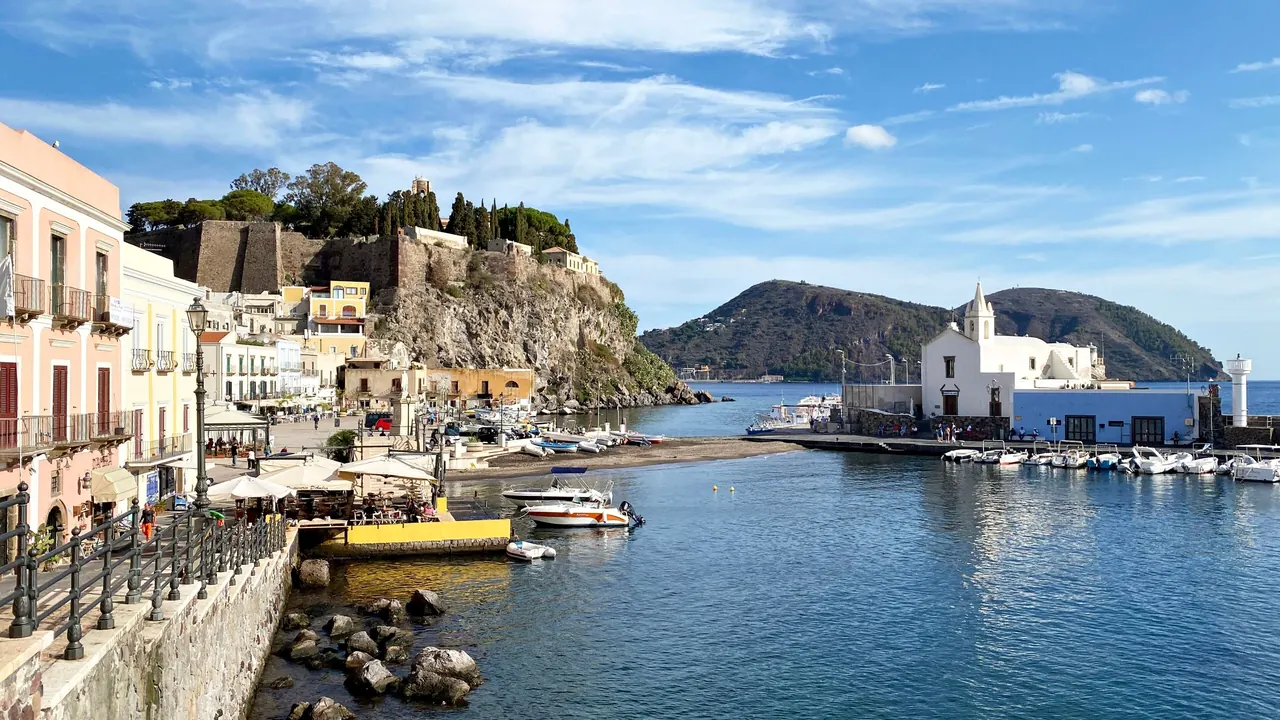
Marina Corta on Lipari below the citadel
- Nature & outdoors85
- Beaches75
- Food & drink60
Photo: Bernard Gagnon, CC BY 4.0, cropped
Match
47
Every category weighted equally
- Beach & sun53
- Culture & arts41
- Food & nightlife42
- Family trip50
- Outdoors54
- Relax & unwind53
- Shopping & style42
- On a budget45
Aeolian Islands in twelve categories
Our verdict on each, scored 0 to 100 against the same fixed benchmark cities, so a score means the same thing on every page.
Beaches & swimming. Scores 75 out of 100.
Food & drink. Scores 60 out of 100.
Culture & sights. Scores 42 out of 100.
Nightlife. Scores 42 out of 100.
Nature & outdoors. Scores 85 out of 100.
Day trips. Scores 50 out of 100.
Good for families. Scores 42 out of 100.
Getting around. Scores 42 out of 100.
Shopping & style. Scores 25 out of 100.
Affordability. Scores 33 out of 100.
Live music & performing arts. Scores 8 out of 100.
Wellness & relaxation. Scores 55 out of 100.
Aeolian Islands category by category
Beaches & swimming
75Swimming is the centre of a summer stay here, but this is volcanic coast, not soft sand. Most beaches are dark pebble, black sand or rock ledges, and the best swimming is often from a boat, in coves under cliffs where the water is very clear and deep blue. Vulcano has the most beach-like shore, with black sand on its western bay, and Lipari has pebble beaches at Canneto and pumice-pale coves on its north-east coast. On Stromboli the beach at Ficogrande sits below the volcano, and Salina and Panarea are best for rocky swimming spots.
The sea is warm enough to swim from June to October, reaching about 26°C in August. Black sand gets very hot by midday, so beach shoes help, and sunbeds and shade are limited on many stretches. Hiring a small boat for a day of cove-hopping is how most visitors get the most out of the water.
Food & drink
60The cooking is Sicilian island food built on a few things done well: fish caught that morning, capers and caper leaves from Salina, wild fennel, cherry tomatoes and the sweet Malvasia delle Lipari wine made on Salina's terraced slopes. Pane cunzato, a toasted bread piled with tomato, capers, tuna and cheese, is the classic lunch, and granita with a warm brioche is the island breakfast. Salina has the most serious eating, from family trattorias to wine estates with tastings, and Lipari town has the widest choice. Panarea's restaurants are polished and expensive. The scene is narrow and seasonal: outside summer many kitchens close and the smaller islands offer only a handful of places.
Culture & sights
42The heritage is concentrated on Lipari, where the walled citadel stands on a rock above the harbour. Inside are the cathedral, ruined churches, an excavated area showing thousands of years of settlement and the Aeolian archaeological museum, one of the finest collections of Mediterranean prehistory, with obsidian tools, Greek painted pottery and a remarkable set of theatrical masks.
Beyond Lipari the sights are small and atmospheric: Bronze Age hut villages on the headlands of Panarea and Filicudi, whitewashed villages and old churches. A visitor interested in archaeology will find the museum alone worth a long visit, but the islands are chosen for the volcanoes and the sea, not for their monuments.
Nightlife
42Going out here means Panarea in high summer. The smallest inhabited island has a long-standing reputation as a glamorous party island, with yachts in the bay, aperitivo at sunset and dancing late into the night on terraces in July and August. It is small, crowded and costly, and outside those weeks it falls quiet. Lipari town has the most ordinary nightlife, with bars along the marina and the main street busy until late in summer. Salina, Stromboli, Filicudi and Alicudi are places where the evening ends with dinner and a walk, and many visitors choose them precisely for that.
Nature & outdoors
85This is a living volcanic landscape, listed by UNESCO for it. Stromboli is the star: a cone rising straight from the sea that throws up bursts of lava every few minutes, best watched after dark from the guided paths on its flanks or from a boat below the Sciara del Fuoco, the black slope where the lava rolls into the water. Access to the summit depends on volcanic activity and is often limited to lower viewpoints. On Vulcano a short, steep walk leads to the rim of the steaming Gran Cratere with views over the whole archipelago.
Salina is the green island, with ferns and chestnut woods on Monte Fossa delle Felci, the highest point in the group. Lipari has quarried pumice slopes and cliff paths, and Filicudi and Alicudi offer mule tracks and near-empty hillsides. At sea there is sea kayaking, sailing around sea stacks and arches, and diving over volcanic rock. Spring and autumn are the best months to hike; summer heat makes midday walks hard.
Day trips
50Day trips here mean hopping to the other islands. From Lipari, the usual base, hydrofoils reach Vulcano in minutes and Salina, Panarea and Stromboli in about an hour, while Filicudi and Alicudi are longer rides to the west. They are small places, but each has its own character: Salina's wine villages of Malfa and Santa Marina among caper terraces, Panarea's whitewashed lanes and harbour, the village of Stromboli strung along the shore, and Alicudi's scattered houses linked by stone steps instead of roads. Organised boat trips often cover two islands in a day.
On the mainland side, the port town of Milazzo has a large castle above its old quarter, and beyond it the hilltop sanctuary of Tindari overlooks the ruins of a Greek and Roman town with its theatre. The major Sicilian cities and sites are too far for a comfortable day, so a visitor gets variety from moving between the islands, not from heritage outings.
Good for families
42Families come for the sea, and older children who like boats, snorkelling and volcanoes can have a memorable trip. Vulcano and Lipari are the easiest bases, with shallower water in places, more accommodation and simple shops. Watching Stromboli erupt from a boat at night is something children remember for years. What the islands lack is anything made for children: no parks, attractions or long sandy beaches, rocky entries, black sand too hot to walk on at midday, steep lanes and hydrofoil hops that can be rough. Italian village life is warm towards children, but toddlers and pushchairs are hard work here.
Getting around
42Everything runs on the sea. Hydrofoils and slower car ferries link the islands with each other and with the port of Milazzo on Sicily, and in summer the network is busy enough to island-hop easily. Rough seas cancel crossings, especially outside summer, so plans need slack. On land, Lipari and Salina have local buses and roads, and scooter hire is the usual way round them. Stromboli and Panarea have no cars, only narrow lanes, electric carts and walking, and Alicudi relies on steps and mules. A car is not needed and is more trouble than help.
Shopping & style
25Shopping is small and mostly edible. Salina's capers, caper berries and Malvasia wine are the things to take home, and Lipari's main street has delis, linen and beachwear shops alongside souvenirs made from pumice and obsidian. Panarea has a cluster of expensive resort-wear boutiques for the summer crowd. Beyond that there is little to browse, and nobody plans a trip here to shop.
Affordability
33In the summer season the islands are an expensive part of southern Italy. Rooms are limited and fill early, food and drink carry the cost of shipping everything in, and boat hire, hydrofoils and guided volcano walks add up. Panarea is the costliest island by a distance and Salina has many upmarket stays. Lipari, with the most accommodation, is the sensible base for a moderate budget, and Vulcano can be reasonable too. June and September are calmer on price than July and August.
Live music & performing arts
8There is essentially no performing arts scene. Summer brings occasional concerts in village squares and churches, a few small festivals, and religious feasts with processions and band music, but no theatre or regular live-music venue. Evenings here are spent at dinner or watching Stromboli.
Wellness & relaxation
55The islands' bathing tradition is volcanic. On Vulcano a sulphurous mud pool near the harbour has drawn bathers for generations, though volcanic gas levels sometimes force it shut, and just offshore gas vents bubble up through the sea and warm the water in patches. A few hotels on Vulcano and Lipari have thermal pools and spa treatments. The smell of sulphur hangs over that corner of Vulcano.
The greater draw is the pace. Salina is green and unhurried, and Filicudi and Alicudi have no traffic to speak of, so days run on swimming, long lunches and early nights. For rest, stay on one of these rather than on Lipari's busy harbour or Panarea in August.
Where to stay in Aeolian Islands
Lipari is the practical first base. It has the most rooms, the widest choice of places to eat, the citadel and museum, bars along the marina and hydrofoils to every other island. That makes it the best fit for a first visit, a moderate budget and anyone planning plenty of day trips. Vulcano is a short hop away and is the other easy choice for families. It has the most beach-like shore and is often cheaper, though some people dislike the sulphur smell around the harbour.
Salina suits a slower stay built around food, wine and walking. Its green slopes, caper terraces and wine villages are quiet in the evening, and many of the places to stay are upmarket. Stromboli deserves at least a night or two so you can watch the eruptions after dark, and its car-free village is good for a quiet stay. Panarea is the place for nightlife in July and August, but it is small and expensive.
Many visitors stay in one place and travel to the other islands by hydrofoil, but splitting the stay also works well: Lipari or Vulcano first, then Salina or Stromboli. Save Filicudi or Alicudi for a second visit. They are remote and have almost no traffic, with mule tracks and long empty days. Leave spare time between moves, because rough seas can cancel crossings.
When should you go?
Pick a month to see what it is like. The climate figures are measured averages, not a forecast.
Aeolian Islands in July
Daytime high, °C
Rainfall in the month, mm
The whole year
Shaded against this destination’s own year: the deepest cell is its best month for that figure and the palest its weakest.
Where the figures come from
Aeolian Islands's temperatures are measured 60 km from the centre, at Messina.
Aeolian Islands has no rain gauge within 25 km of the centre, so its rainfall comes from a gridded climate dataset read at the destination rather than from a gauge further away.
Temperature and rainfall are climate normals, averaged over the years shown. Aeolian Islands: 1991-2020 normals, Messina (59.7 km from centre).
Before you go
| Measure | Aeolian Islands |
|---|---|
| Official language | Italian |
| Currency | Euro (EUR) |
| Sockets | CFL230 V, 50 Hz |
| Driving side | Right |
| Time zone | UTC+1, UTC+2 in summer |
| Emergency number | 112 |
| Main airport | Catania-Fontanarossa Airport (CTA)96 non-stop destinations |
| Public holidays this year | 13 days |
By the numbers
| Measure | Aeolian Islands |
|---|---|
| Population | 15,419 |
| People per km² | 134 |
| Swim season, months above 21 °C | 5 months |
Compare Aeolian Islands with
Every comparison with a written verdict behind it.
- Amalfi Coast
- Capri
- Cinque Terre
- Corfu
- Dolomites
- Elba
- Ischia
- Kefalonia
- Lake Como
- Lake Garda
- Lake Maggiore
- Paxos
- Procida
- Puglia
- Sardinia
- Sicily
- Tuscany
- Umbria