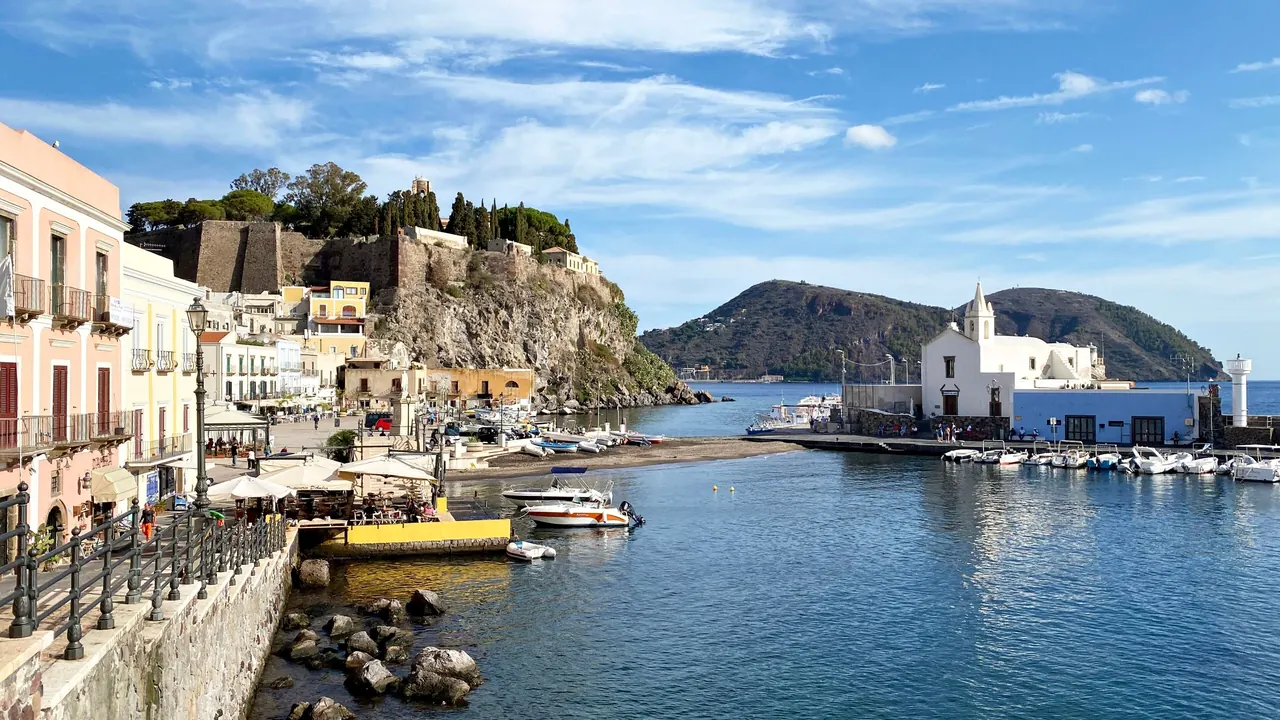
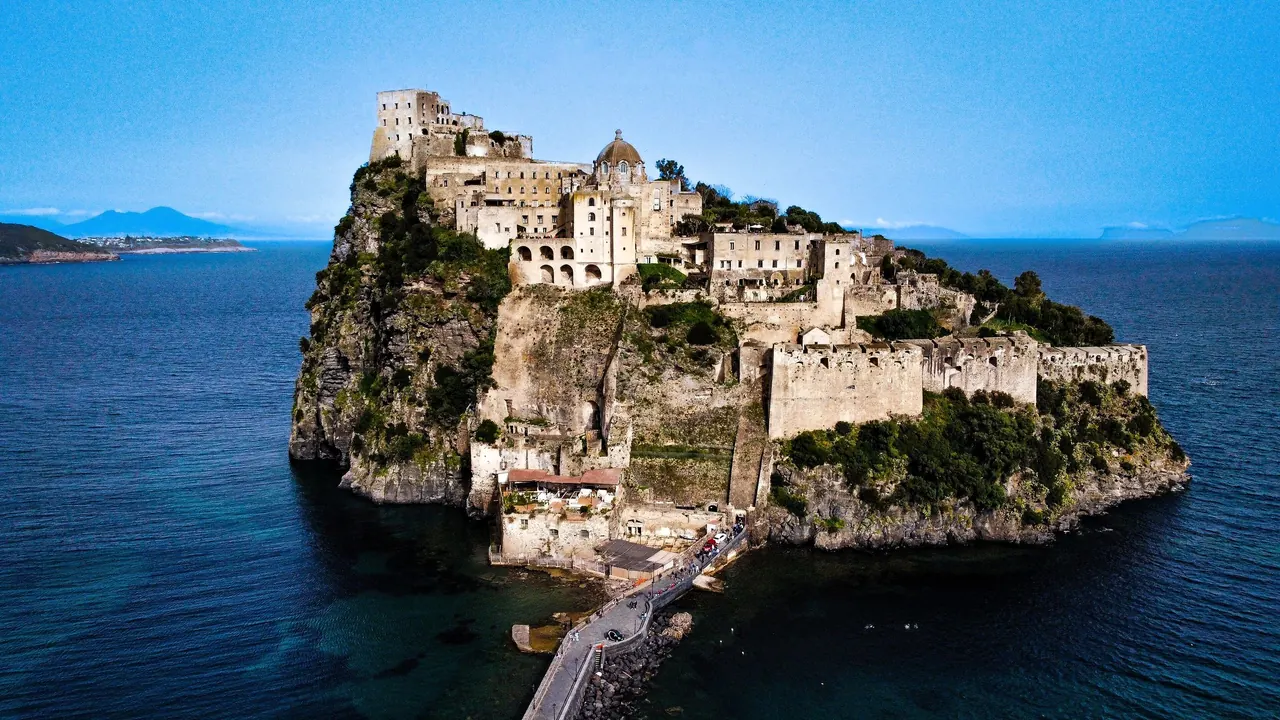
Photos: Aeolian Islands by Bernard Gagnon, CC BY 4.0, cropped; Ischia by Pipito93, CC BY-SA 4.0, cropped.
Aeolian Islands or Ischia?
Our verdict in twelve categories, each scored against the same fixed benchmark cities, and the climate month by month, so you can choose for your trip.
Choose Aeolian Islands for
- nature and the outdoors
- nightlife
- food and drink
The Aeolian Islands suit travellers who want the landscape to be the point of the trip. Watching Stromboli throw up lava after dark, walking to the steaming rim on Vulcano and spending days cove-hopping by boat under volcanic cliffs give a wilder, more varied week than Ischia can. Moving between seven islands, each with its own character, is part of the appeal. Expect to pay more, plan around the sea, and do without much in the way of spas or outings to the mainland.
Choose Ischia for
- wellness
- day trips
- live music and the arts
Ischia is the better choice for a slower, softer stay built around warm water. Its thermal parks, hot springs and spa hotels are in a different league, it has more sand and gentler bays for children, and it costs less to stay there. Naples, Procida and the Phlegraean Fields are all a ferry ride away when you want a change of scene. What you give up is the drama: the island's landscapes are green and pleasant, but a week covers them.
Scoreboard
Twelve categories on one fixed scale from 0 to 100. The shaded stretch is the gap between the two.
Your match
Pick a travel style or drag the sliders, and both match scores follow your weighting.
Wins on nature and the outdoors and nightlife with your weighting.
Wins on wellness and day trips with your weighting.
What matters to you?
Category by category
What the scores mean for a trip.
Beaches & swimming
Both make swimming the heart of a summer stay, but the shores feel different. The Aeolian Islands are mostly pebble, black sand and rock ledges, with Vulcano's western bay the nearest thing to a proper beach, and the best water is reached by boat in deep, clear coves under the cliffs.
Ischia has more actual sand: the long dark curve of Maronti, sunset-facing Citara and the calm, shallow bay of San Montano. Its popular beaches come with rows of sunbeds and day boats, where on the Aeolian Islands shade and loungers are scarce.
Food & drink
Both islands eat well within a narrow range, and the difference is in what lands on the plate. The Aeolian table is about the sea and Salina: morning fish, capers, pane cunzato at lunch, granita with brioche at breakfast and sweet Malvasia wine. Ischia turns inland for its signature dish, rabbit braised in terracotta, and pours dry whites from Epomeo's terraces. Its weakness is the half-board habit of the big spa hotels, while the Aeolian Islands' is the season, with many kitchens shut outside summer.
Culture & sights
Neither is a place for monuments, and each has one strong site and one fine museum. On the Aeolian Islands it all sits on Lipari, where the walled citadel holds the cathedral, excavations and a museum of Mediterranean prehistory famous for its obsidian tools and theatrical masks.
Ischia's set piece is the Aragonese Castle on its rock off Ischia Ponte, and the museum at Lacco Ameno holds the Greek finds from Pithekoussai, including Nestor's Cup. Ischia also has the Mortella gardens. The Aeolian Islands add scattered Bronze Age villages on Panarea and Filicudi.
Nightlife
The Aeolian Islands have the livelier evenings, mostly thanks to Panarea, where yachts, sunset aperitivo and late dancing on terraces fill July and August. Lipari's marina bars give a more ordinary night out, and the other islands go to bed after dinner.
Ischia is quieter. Ischia Porto has wine bars, cocktail terraces and a couple of summer discos, but many visitors come for the waters, and a real club night is hard to find. Neither has much going on outside high summer.
Nature & outdoors
This is where the Aeolian Islands pull far ahead. Their UNESCO-listed volcanic landscape includes Stromboli erupting every few minutes above the Sciara del Fuoco, the steaming Gran Cratere on Vulcano and the ferns and chestnut woods of Salina. Mule tracks cross near-empty Filicudi and Alicudi, and the sea brings kayaking, sailing and diving over volcanic rock.
Ischia's nature is gentler and smaller in scale. The climb up Monte Epomeo through vineyards and chestnut woods is a good day out, and the Regno di Nettuno marine reserve suits snorkellers, but a week is enough to see it all.
Day trips
Ischia has the far stronger list of outings because it sits in the Bay of Naples. Procida's pastel harbours are a short hop away, Naples is about an hour by fast ferry, and Pozzuoli opens up the Solfatara, the Roman amphitheatre and sunken Baia. Summer boats run to Capri and Sorrento.
From the Aeolian Islands, a day out mostly means another island: Salina's caper terraces, Panarea's white lanes or Alicudi's stepped paths. Milazzo's castle and Tindari's Greek theatre are the only mainland options, and Sicily's great cities are too far away for a day trip.
Good for families
Ischia is the easier island for children, especially young ones. San Montano and Maronti have gentle water, and the thermal parks around Forio and Lacco Ameno make simple pool days with shade.
The Aeolian Islands reward older children who love boats and snorkelling, and a night trip to watch Stromboli erupt is hard to beat. With toddlers, though, rocky entries, black sand too hot to walk on, steep lanes and choppy hydrofoils make it hard work.
Getting around
Neither is effortless, and the problems are different. In the Aeolian Islands every move between islands is by hydrofoil or ferry, which rough seas can cancel, and on land it is scooters on Lipari and Salina and walking or electric carts on car-free Stromboli and Panarea.
Ischia is a single island with one looping coast road and buses to every village, so there are no crossings to plan, but in summer the buses are slow and packed. On either one a car is more trouble than it is worth.
Shopping & style
Shopping is a sideline on both. Ischia at least has a proper evening stroll along Via Roma and Corso Vittoria Colonna, lined with linen, sandals, jewellery, ceramics and thermal cosmetics. On the Aeolian Islands the best things to take home are edible, Salina capers and Malvasia, plus pumice and obsidian trinkets on Lipari and pricey resort wear on Panarea.
Affordability
Ischia is the cheaper stay. Hundreds of family-run spa hotels sell half-board with their own thermal pools, and buses, ferries and village trattorias are fairly priced away from the harbour fronts.
The Aeolian Islands cost more in summer, because rooms are few, supplies come in by boat and hydrofoils, boat hire and volcano guides add up. Panarea and much of Salina sit at the top end. Lipari is the sensible base on a moderate budget, and on both, June and September are kinder than July and August.
Live music & performing arts
Neither is a destination for performances, but Ischia has a little more to attend. Summer chamber concerts in the Mortella gardens and the film festival at the Aragonese Castle give it a short cultural season, and Naples' stages are a ferry ride away. On the Aeolian Islands an evening's entertainment amounts to a village feast with a band, or watching Stromboli erupt.
Wellness & relaxation
Ischia is built around taking the waters, and nothing on the Aeolian Islands comes close. It has terraced thermal parks stepping down to the sea at Citara and Lacco Ameno, the hot rock pools of Sorgeto in the sea, the steam caves of Cavascura and mud treatments, with spa hotels all over the island.
The Aeolian Islands offer Vulcano's sulphurous mud pool, which gas levels sometimes close, a few hotel spas and warm vents in the sea. Their real restorative appeal is the quiet of Salina, Filicudi and Alicudi, where the days run on swimming and long lunches.
When should you go?
Pick your month. The climate figures are measured averages, not a forecast.
Aeolian Islands in July
Ischia in July
Daytime high, °C
Rainfall in the month, mm
Where the figures come from
Aeolian Islands's temperatures are measured 60 km from the centre, at Messina.
Aeolian Islands has no rain gauge within 25 km of the centre, so its rainfall comes from a gridded climate dataset read at the destination rather than from a gauge further away.
Ischia's temperatures are measured 36 km from the centre, at Grazzanise.
Ischia has no rain gauge within 25 km of the centre, so its rainfall comes from a gridded climate dataset read at the destination rather than from a gauge further away.
Temperature and rainfall are climate normals, averaged over the years shown. Aeolian Islands: 1991-2020 normals, Messina (59.7 km from centre). Ischia: 1991-2020 normals, Grazzanise (36 km from centre).
The two climates are close to twins through the summer. June, July and August are the dry, sunny months on both, with the sea warm enough for long swims, and both reach 31°C in July and August, which is too hot for long walks in the middle of the day. The Aeolian Islands are a little drier and sunnier then, with only 7mm of rain in July, and their sea is a degree warmer, at about 27°C in August. In September the water is still warm on both, but the rain comes back, so beach days start to share the week with wet spells. Spring and the milder days of autumn are the time for hiking on either.
The gap grows in late autumn and winter. Ischia gets the wetter end of it, with 148mm in November, while the Aeolian Islands stay a couple of degrees milder through the winter months. Neither is a winter beach destination, but Ischia keeps one draw out of season: its hot springs can be used even on a cool, damp evening.
Which traveller are you?
On an outdoors trip, the Aeolian Islands are the clear pick. Night walks to watch Stromboli erupt, the crater rim on Vulcano, Salina's wooded slopes and sea kayaking among stacks and arches offer far more than Ischia's single mountain and short trails.
For a relaxing and wellness trip, choose Ischia. Days drift between terraced thermal parks, hot rock pools at Sorgeto and mud treatments, with spa hotels on every side. The Aeolian Islands offer quiet villages but only a small volcanic bathing tradition on Vulcano.
On a family trip with children, Ischia is easier. Sheltered San Montano and the long sand at Maronti have gentle water, and the thermal parks make simple pool days. The Aeolian Islands' rocky entries, hot black sand and hydrofoil hops suit older, adventurous children better.
Before you go
| Measure | Aeolian Islands | Ischia |
|---|---|---|
| Official language | Italian | Italian |
| Currency | Euro (EUR) | Euro (EUR) |
| Sockets | CFL230 V, 50 Hz | CFL230 V, 50 Hz |
| Driving side | Right | Right |
| Time zone | UTC+1, UTC+2 in summer | UTC+1, UTC+2 in summer |
| Emergency number | 112 | 112 |
| Main airport | Catania-Fontanarossa Airport (CTA)96 non-stop destinations | Naples International Airport (NAP)131 non-stop destinations |
| Public holidays this year | 13 days | 13 days |
By the numbers
| Measure | Aeolian Islands | Ischia |
|---|---|---|
| Population | 15,419 | 62,027 |
| People per km² | 134 | 1,340 |
| Swim season, months above 21 °C | 5 months | 5 months |
Where else could you go?
Every comparison below shares a destination with this one, so you can follow Aeolian Islands or Ischia somewhere new.
- Procidavs Ischia
- Caprivs Ischia
- Amalfi Coastvs Ischia
- Sicilyvs Aeolian Islands
- Caprivs Aeolian Islands
- Amalfi Coastvs Aeolian Islands