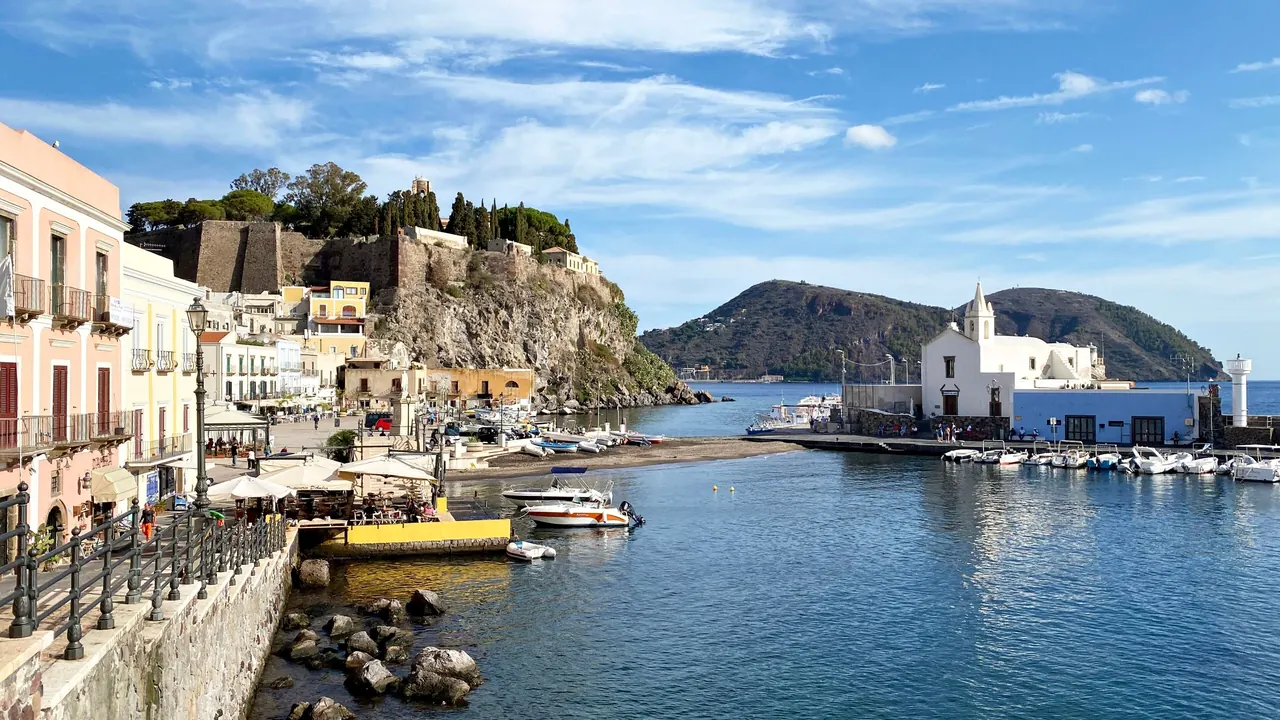
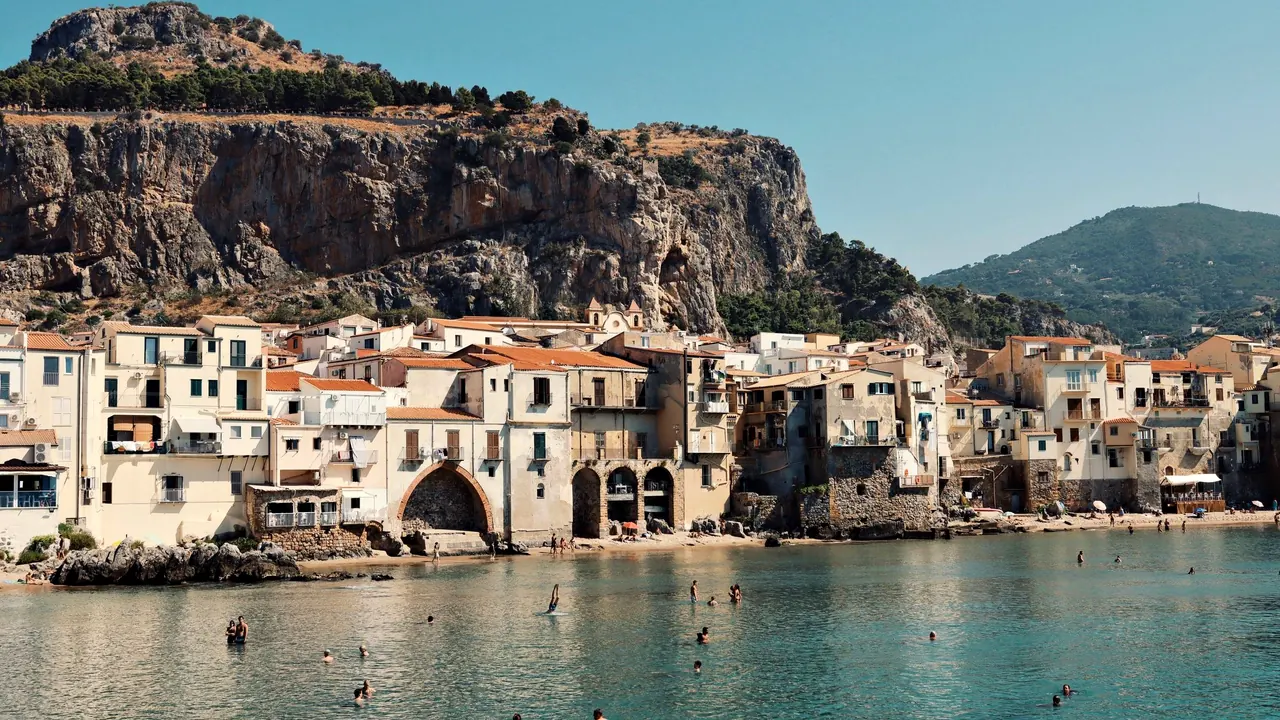
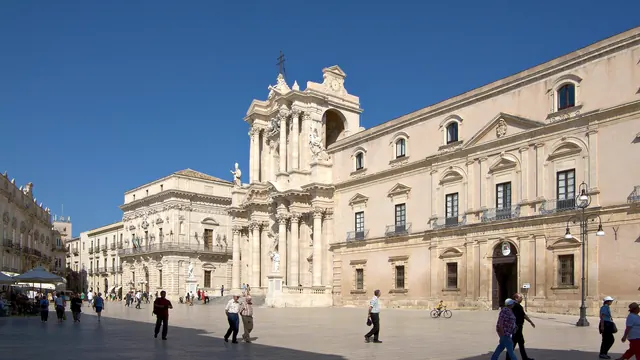
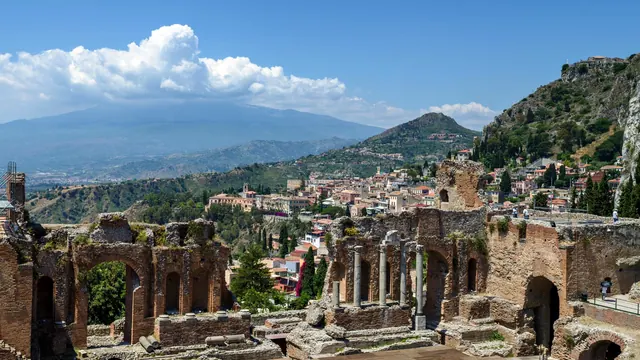
Photos: Aeolian Islands by Bernard Gagnon, CC BY 4.0, cropped; Sicily by Efrem Efre, Pexels License.
Aeolian Islands or Sicily?
Our verdict in twelve categories, each scored against the same fixed benchmark cities, and the climate month by month, so you can choose for your trip.
Choose Aeolian Islands for
- wellness
- getting around
- nature and the outdoors
The Aeolian Islands suit a traveller who wants the sea and the volcanoes and is happy to leave the rest behind: boat days among cliff coves, a night watching Stromboli throw up lava, long lunches among Salina's caper terraces. It is a narrower and dearer trip, with few monuments, stages or shops. As a place to slow right down it beats the larger island, especially if you stay on Salina, Filicudi or Alicudi.
Choose Sicily for
- live music and the arts
- culture and sights
- day trips
Sicily is the choice for range. It has Greek temples, Arab-Norman mosaics and baroque hill towns, a much deeper food culture led by Palermo's markets, sandy bays as well as rocky ones, opera and ancient drama, and lower costs almost everywhere. The price is effort: a hire car, long drives and two or three bases. The Aeolians are a hydrofoil ride from Milazzo, so a Sicily trip can still take in a few island days.
Scoreboard
Twelve categories on one fixed scale from 0 to 100. The shaded stretch is the gap between the two.
Your match
Pick a travel style or drag the sliders, and both match scores follow your weighting.
Wins on wellness and getting around with your weighting.
Wins on live music and the arts and culture and sights with your weighting.
What matters to you?
Category by category
What the scores mean for a trip.
Beaches & swimming
On the Aeolians all the swimming is volcanic: black sand on Vulcano's western bay, pebble at Canneto on Lipari, and the best water reached by boat in deep coves under the cliffs. It is superb for strong swimmers and snorkellers, but there is little shade and few sunbeds.
Sicily has this kind of coast and much more. You can choose the long white sand of San Vito Lo Capo, the wide beaches near Marina di Ragusa, the reserve beaches of Vendicari or the turquoise rock pools of Favignana. For lying on sand rather than diving off rock, the main island gives you far more choice.
Food & drink
The islands cook a short repertoire very well: fish caught that morning, Salina capers, pane cunzato for lunch and Malvasia from the terraced slopes. Outside summer many kitchens close, and the smaller islands have only a handful of places.
Sicily's table is far wider, shaped by Greek, Arab, Norman and Spanish roots. You can eat panelle and sfincione standing at the stalls of Ballarò and Capo, fish couscous around Trapani, Modica's grainy chocolate and Etna wines tasted at the wineries. Someone who travels to eat will find several regional cuisines on Sicily against one island kitchen on the Aeolians.
Culture & sights
The Aeolian heritage sits almost entirely on Lipari's citadel rock. Its archaeological museum, with obsidian tools, Greek pottery and theatrical masks, is a serious draw for anyone who loves prehistory. Elsewhere there are only Bronze Age hut villages and small churches.
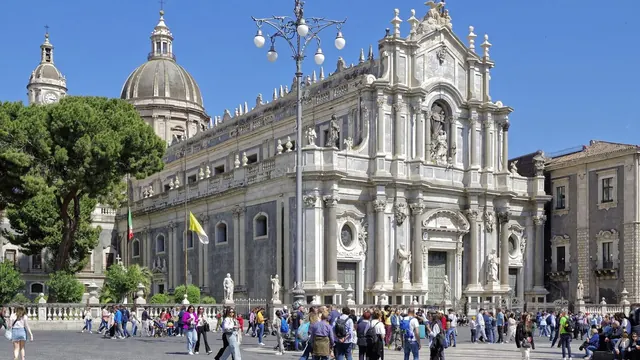
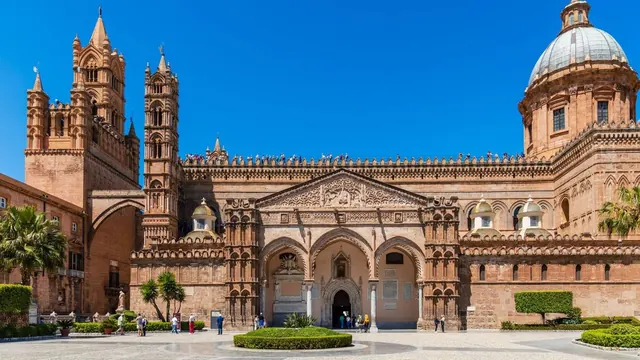
Sicily is on another scale. The Doric temples at Agrigento and Segesta, the Palatine Chapel and Monreale's mosaics, Syracuse's ancient theatre and the baroque towns rebuilt after 1693 could fill a week of sightseeing.
Nightlife
Nightlife on the Aeolians is really one thing: Panarea in July and August, with yachts in the bay and terraces dancing late, crowded and costly. Lipari's marina bars are the ordinary alternative, and the other islands end the evening with dinner.
Sicily gives you more, and more of it is in cities. Catania's historic centre fills with students and locals in its piazzas until late, and Palermo drinks in the street around the Vucciria. In summer there are open-air clubs at Mondello and below Taormina.
Nature & outdoors
Both are excellent but in different ways. The Aeolians pack their landscape into a small, sea-bound space: Stromboli's lava bursts seen after dark, the steaming rim of Vulcano's Gran Cratere, Salina's fern-covered summit, and kayaking past sea stacks and arches.
Sicily's nature covers much more ground. Etna's lava fields and summit craters, the Zingaro cliff path, the beech woods of the Madonie and Nebrodi, the basalt gorges of the Alcantara and the flamingos at Vendicari give mountains, forest and wetland that the islands cannot.
Day trips
From a base on Lipari, a day out means another island: Salina's wine villages, Panarea's whitewashed lanes, Alicudi's stone steps. On the Sicilian shore the only easy outings are Milazzo's castle and the Greek ruins at Tindari.
Sicily gives every base its own set of outings. Syracuse leads to Modica, Ragusa and Scicli, Catania to the Etna wine villages and Aci Trezza, and Palermo to Cefalù, Erice and Marsala. The Aeolians themselves make one of its day trips.
Good for families
The islands are a strong choice for older children who love boats and snorkelling, and a night trip under Stromboli stays with them for years. With toddlers it gets hard: rocky entries, black sand too hot to cross at midday, steep lanes and choppy hydrofoils.
Sicily is easier with small children. Shallow sandy bays such as Mondello and San Vito Lo Capo, agriturismi with pools, Palermo's puppet theatre and a theme park near Catania cover what the islands lack, though the long drives and the summer heat still take effort.
Getting around
The two are much the same on this, but they work very differently. On the Aeolians everything goes by hydrofoil and ferry, with scooters on Lipari and Salina and only carts and walking on Stromboli and Panarea. A car is useless there, but rough seas can wreck a schedule.
Sicily means driving. Motorways link the big cities, the inland roads are slow and winding, and Palermo and Catania are chaotic behind the wheel. Intercity buses are the fallback where the sparse trains fail.
Shopping & style
On the Aeolians shopping is mostly edible: Salina capers and Malvasia, plus pumice and obsidian trinkets on Lipari's main street and a few resort-wear boutiques on Panarea.
Sicily gives a shopper real crafts to look for. There are Caltagirone's majolica ceramics, Trapani's coral work and Palermo's puppet makers, along with Bronte pistachio cream and Modica chocolate. For fashion, there are Via Libertà in Palermo and Via Etnea in Catania.
Affordability
In summer the islands are an expensive corner of southern Italy. Rooms are few and fill early, everything arrives by boat, and Panarea and much of Salina are upmarket. Lipari and Vulcano are the sensible bases for a moderate budget.
Most of Sicily is good value. Street food and pastry cost little, and B&Bs in Palermo, Catania, the baroque south east and the countryside stay fairly priced even in summer. Costs rise mainly in Taormina and at the big beach resorts, and hire cars are dear in high season.
Live music & performing arts
The Aeolians have almost no stage. There are summer concerts in village squares and feast-day processions with band music, and the real evening show is Stromboli erupting.
Sicily has a proper season. There is opera and ballet at Palermo's Teatro Massimo, music at Catania's Teatro Bellini, Greek tragedy in the ancient theatre of Syracuse each spring and summer concerts in Taormina's Greek theatre. Its own speciality is the opera dei pupi, armoured marionettes fighting out tales of Charlemagne's paladins.
Wellness & relaxation
Here the islands come out ahead. Vulcano's sulphur mud pool and bubbling offshore vents give them a bathing ritual of their own. Days on Filicudi or Alicudi, with no traffic to speak of, are about as calm as the region gets.
Sicily's thermal waters are spread out, at Sciacca, near Segesta and in Pantelleria's crater lake, and most of its spas are in hotels around Taormina. On the main island, rest usually means a farmhouse among the olive groves rather than anything to bathe in.
When should you go?
Pick your month. The climate figures are measured averages, not a forecast.
Aeolian Islands in July
Sicily in July
Daytime high, °C
Rainfall in the month, mm
Where the figures come from
Aeolian Islands's temperatures are measured 60 km from the centre, at Messina.
Aeolian Islands has no rain gauge within 25 km of the centre, so its rainfall comes from a gridded climate dataset read at the destination rather than from a gauge further away.
Sicily's sunshine is measured 67 km from the centre, at Ustica.
Temperature and rainfall are climate normals, averaged over the years shown. Aeolian Islands: 1991-2020 normals, Messina (59.7 km from centre). Sicily: 1991-2020 normals, Palermo / Punta Raisi (24.1 km from centre).
The two follow the same pattern, which makes sense since the islands lie just off Sicily's north coast. Swimming runs from June to October in both, with the sea at about 27°C in August. Around the islands' main harbours July and August reach about 31°C, a little hotter than at Sicily's measuring point. In both places those are months for the water, with walking left to the early morning. April, May and October are the comfortable months for hiking, sightseeing and climbing volcanoes.
The rain comes back in September and stays through winter, but more falls on the main island. Sicily's measuring point gets about 138mm in December against 104mm on the islands, and it is slightly sunnier through the year. Winter is mild in both. On the islands, though, rough seas can cancel crossings in the cooler months, so mainland Sicily is the better off-season choice.
Which traveller are you?
On a culture and arts trip, Sicily wins easily. Agrigento's temples, the mosaics of Monreale and Piazza Armerina, the baroque towns of the south east and opera at the Teatro Massimo leave Lipari's citadel and museum looking like one fine morning.
For a relaxing and wellness trip, the Aeolian Islands are the better pick. Vulcano has its mud pool and warm sea vents, and green Salina and car-free Filicudi and Alicudi run on swimming, long lunches and early nights. Sicily's agriturismi ask more planning.
On a tight budget, Sicily is far easier. Street food, fairly priced B&Bs and inland guesthouses keep costs down, while on the Aeolians food is shipped in, rooms are scarce in summer, and boat hire and hydrofoil fares add up.
Before you go
| Measure | Aeolian Islands | Sicily |
|---|---|---|
| Official language | Italian | Italian |
| Currency | Euro (EUR) | Euro (EUR) |
| Sockets | CFL230 V, 50 Hz | CFL230 V, 50 Hz |
| Driving side | Right | Right |
| Time zone | UTC+1, UTC+2 in summer | UTC+1, UTC+2 in summer |
| Emergency number | 112 | 112 |
| Main airport | Catania-Fontanarossa Airport (CTA)96 non-stop destinations | Falcone–Borsellino Airport (PMO)106 non-stop destinations |
| Public holidays this year | 13 days | 13 days |
By the numbers
| Measure | Aeolian Islands | Sicily |
|---|---|---|
| Population | 15,419 | 4,983,478 |
| People per km² | 134 | - |
| Swim season, months above 21 °C | 5 months | 5 months |
Where else could you go?
Every comparison below shares a destination with this one, so you can follow Aeolian Islands or Sicily somewhere new.
- Caprivs Aeolian Islands
- Amalfi Coastvs Aeolian Islands
- Ischiavs Aeolian Islands
- Procidavs Aeolian Islands
- Caprivs Sicily
- Ischiavs Sicily