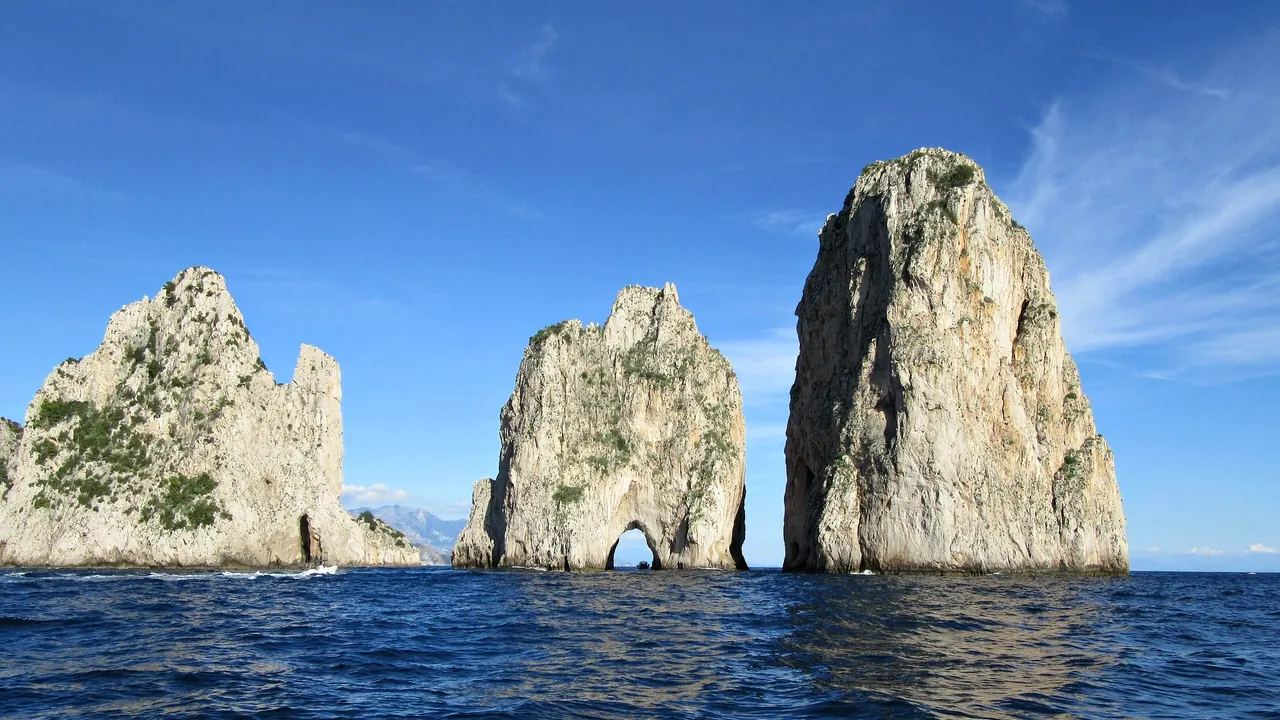
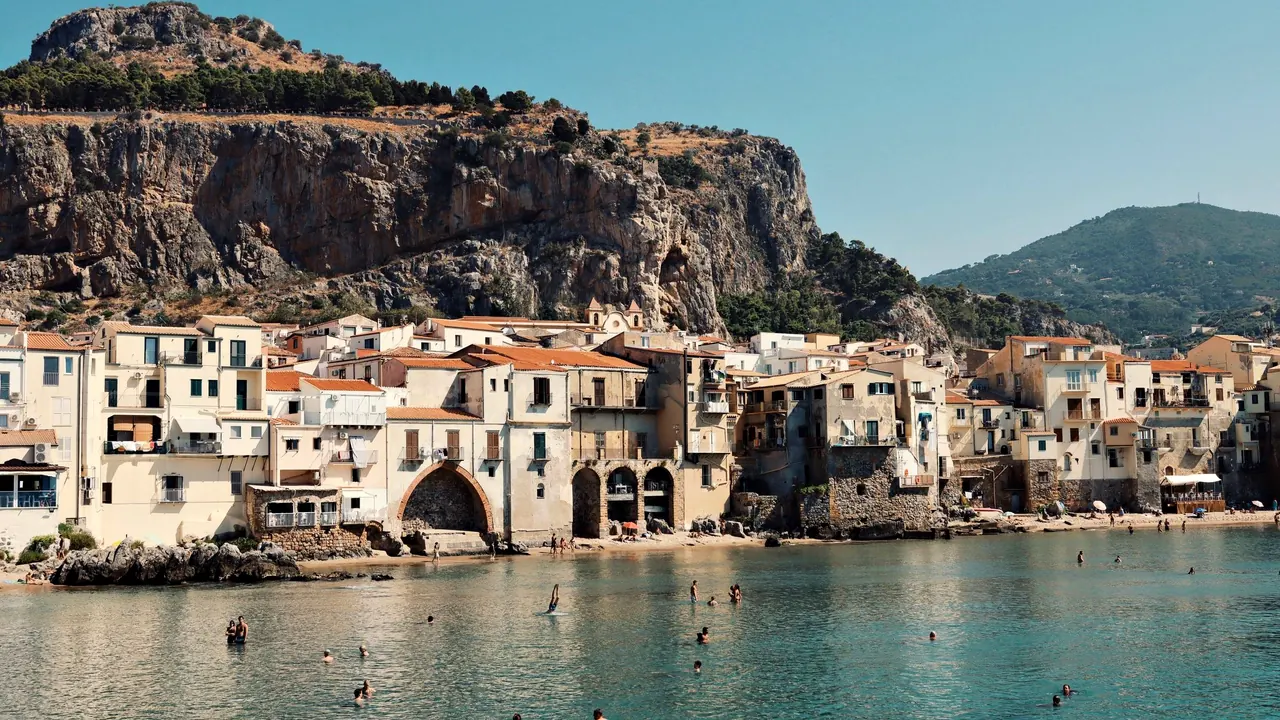
Photos: Capri by Sheeba Samuel, CC BY-SA 4.0, cropped; Sicily by Efrem Efre, Pexels License.
Capri or Sicily?
Our verdict in twelve categories, each scored against the same fixed benchmark cities, and the climate month by month, so you can choose for your trip.
Choose Capri for
- getting around
- shopping
Capri suits a short, polished stay where the sea and the scenery matter more than anything else. The island is small enough to manage without a car, the swimming off its rocks and from boats under the Faraglioni is superb, and the lanes off the Piazzetta give it a dressed-up evening life and its own luxury shopping. It is best for couples who are happy to pay well for a few beautiful days and stay overnight to enjoy the quiet hours.
Choose Sicily for
- prices
- live music and the arts
- culture and sights
Sicily is the better choice for a longer trip with real depth. Greek temples, Arab-Norman mosaics and baroque towns, one of the great food cultures of Italy, sandy bays alongside volcanic islands, and Etna to climb all come at much fairer prices than Capri. The cost is effort: it is a large island that needs a week or more, two or three bases and usually a hire car.
Scoreboard
Twelve categories on one fixed scale from 0 to 100. The shaded stretch is the gap between the two.
Your match
Pick a travel style or drag the sliders, and both match scores follow your weighting.
Wins on getting around and shopping with your weighting.
Wins on prices and live music and the arts with your weighting.
What matters to you?
Category by category
What the scores mean for a trip.
Beaches & swimming
Both islands have wonderfully clear water, but Sicily has far more ways to enjoy it. Capri has almost no sand: you swim from small pebble coves at Marina Piccola, from rock platforms at Punta Carena or off a boat, usually through a bathing club, and space is tight in summer.
Sicily has the long white sand of San Vito Lo Capo, the wide beaches near Marina di Ragusa, the reserve coves of Vendicari and Zingaro, and offshore the turquoise pools of Favignana and the black volcanic beaches of the Aeolians. Anyone who wants to walk along sand or lie on a beach will be much happier there.
Food & drink
Capri's kitchen is short but personal: insalata caprese, ravioli capresi with marjoram and the almond torta caprese, plus lemons in everything. The catch is that the tables around the Piazzetta and the marinas sell the view, so the good meals are in Anacapri's family trattorias.
Sicily is one of Italy's great places to eat. Palermo's Ballarò and Capo markets give you arancine, panelle and sfincione standing at the stalls, and every corner of the island has its own speciality, from Trapani's fish couscous to Modica chocolate, Bronte pistachios and the wines of Etna. It also costs much less to eat well.
Culture & sights
Capri offers a few memorable sites rather than a historic city: Tiberius's Villa Jovis on its headland, Villa San Michele in Anacapri, the Certosa and the Gardens of Augustus. They are lovely and two days covers them.
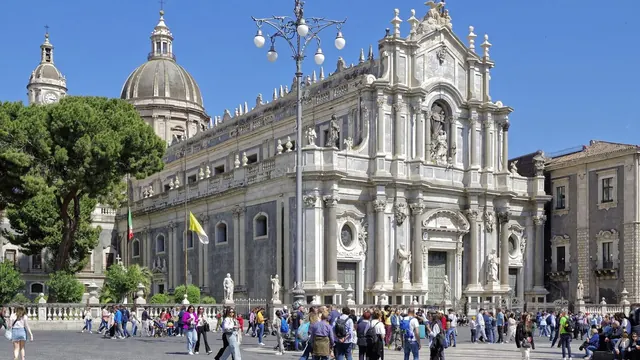
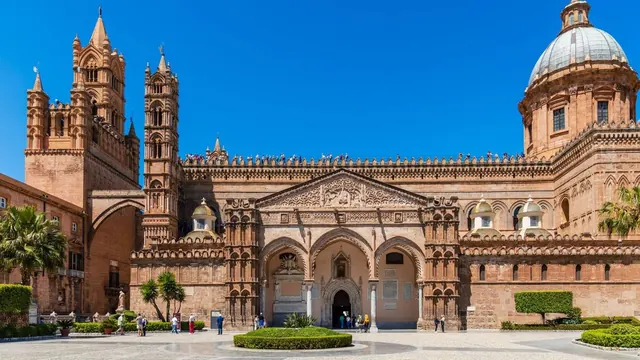
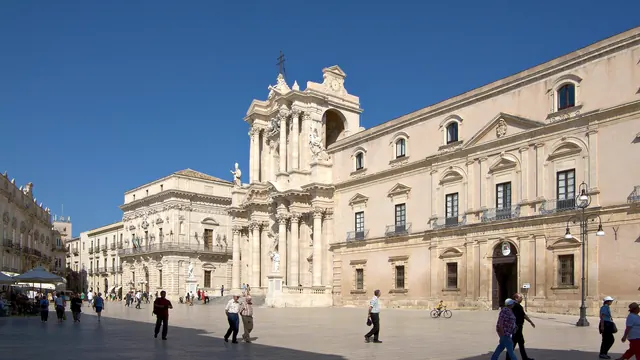
Sicily is in another league, with layers from Greeks, Romans, Arabs, Normans and Spaniards. The Valley of the Temples, Segesta, Ortigia's cathedral built around a Greek temple, the mosaics of Piazza Armerina and Monreale, and the baroque towns of Noto and Ragusa Ibla need about a week and two or three bases.
Nightlife
Neither is a party island, but Sicily gives you more to do after dark. A Capri evening is aperitivo on the Piazzetta once the last ferries leave, then a piano tavern with Neapolitan songs: glamorous and dressed-up, with no clubs and little left after a night or two.
Sicily's going out is more varied and more local, with Catania's student bars filling the piazzas of the old centre, street drinking around Palermo's Vucciria, and beach bars and open-air clubs at Mondello and below Taormina in summer.
Nature & outdoors
Capri's scenery is famous and compact: the Faraglioni, the Arco Naturale, the chairlift up Monte Solaro and the Sentiero dei Fortini along the wild western coast, all walkable in a few days, with snorkelling and kayaking in the clear water.
Sicily works on a far bigger scale. You can walk on Etna's lava fields, climb Stromboli in the evening to watch it erupt, follow the Zingaro cliff path or explore the beech woods of the Madonie and Nebrodi, and dive around the Egadi and Aeolian Islands. Plan the hiking for spring or autumn, as the interior is too hot in high summer.
Day trips
Capri's day trips all go by boat across the Bay of Naples: Sorrento in half an hour, Naples, Positano and Amalfi in season, Ischia, and a long day to Pompeii. They are superb, but rough seas cancel sailings and the summer boats are crowded.
Sicily offers more, and from every base. The baroque towns of Modica and Scicli lie near Syracuse, the Etna wine villages near Catania, and Cefalù, Erice and Marsala within reach of Palermo, with ferries out to Favignana and Lipari. Most of it is easier with a car.
Good for families
Capri is hard work with children. The bathing spots are rocks and ladders into deep water, the lanes are steps, and the buses and funicular are packed in summer. Older children who swim well will love the Blue Grotto and the boat round the island, but little more.
Sicily is noticeably easier. Families are welcome at any hour, shallow sandy bays like San Vito Lo Capo and Mondello suit small children, and an agriturismo with a pool makes a comfortable base. The long drives and the July heat are the main drawbacks.
Getting around
Here Capri has the clear advantage. Ferries land at Marina Grande, the funicular climbs to town in minutes, small orange buses link Capri town, Anacapri and the marinas, and almost nobody needs a car. The only real trials are the steep paths and the summer queues.
Sicily is a hire-car island for most trips. Trains are sparse and slow, intercity buses do better between main towns, inland roads wind slowly, and driving in Palermo and Catania is chaotic. Two city bases without a car is possible but shows you much less.
Shopping & style
Capri has the more concentrated shopping. Via Camerelle and Via Vittorio Emanuele pack in a remarkable number of luxury boutiques for such a small place, and the island's own crafts, sandals made to measure while you wait and perfumes from local flowers, are distinctive, if never cheap.
Sicily's best buys are crafts and food spread across the island: Caltagirone ceramics, Trapani coral, Palermo's puppets, Modica chocolate and Bronte pistachio cream. Fashion is limited to Via Libertà, Via Etnea and Taormina's Corso Umberto.
Affordability
Sicily is far easier on the wallet. Street food, pastry, simple trattorie and B&Bs or agriturismi in Palermo, Catania, the south east and the countryside are all fairly priced, with costs rising mainly in Taormina, the Aeolians and the big resorts in August.
Capri is among the most expensive places to stay in Italy, from hotel rooms to sunbeds and Piazzetta cocktails. The cheap buses, free walks and Anacapri bakeries help a little, and staying in Sorrento saves money but means missing the island's evenings.
Live music & performing arts
Capri has almost nothing on stage: occasional summer concerts in the Certosa or at Villa San Michele and late-night Neapolitan song in the piano taverns. For opera you take the boat to Naples.
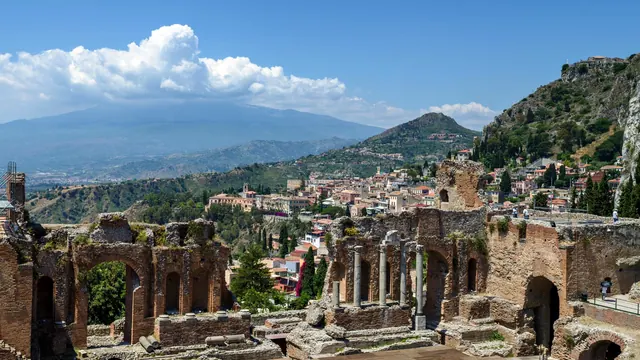
Sicily has a real season. Palermo's Teatro Massimo stages opera, ballet and concerts, Catania has the Teatro Bellini, Greek tragedy returns to Syracuse's ancient theatre each spring, and Taormina's Greek theatre hosts summer concerts with Etna behind it. The marionette knights of the opera dei pupi in Palermo and Catania are a uniquely Sicilian evening.
Wellness & relaxation
Neither island has a true bathing culture, and both are restful in a similar measure, but in different ways. On Capri the calm comes in the mornings and evenings, once the day-trippers have gone, with hotel spas and lemon-scented gardens, and Ischia's thermal pools are a boat ride away.
Sicily offers natural springs at Sciacca and Segesta, volcanic mud on Vulcano and the crater lake on Pantelleria, though most visitors unwind instead with long lunches at a countryside agriturismo or on slow islands like Salina.
When should you go?
Pick your month. The climate figures are measured averages, not a forecast.
Capri in July
Sicily in July
Daytime high, °C
Rainfall in the month, mm
Where the figures come from
Capri has no rain gauge within 25 km of the centre, so its rainfall comes from a gridded climate dataset read at the destination rather than from a gauge further away.
Capri's sunshine is measured 58 km from the centre, at Grazzanise.
Sicily's sunshine is measured 67 km from the centre, at Ustica.
Temperature and rainfall are climate normals, averaged over the years shown. Capri: 2005-2025 (sunshine 1991-2020, rainfall 1991-2020) normals, Capri (3.6 km from centre). Sicily: 1991-2020 normals, Palermo / Punta Raisi (24.1 km from centre).
The two islands follow much the same Mediterranean year. On Capri the sea is warm enough to swim from June to early October, and the summer is dry and sunny. June and September are the best months, with warm water and easier conditions on the steep paths than in July and August, when afternoons reach 30°C. May is pleasant for walking, but the sea is still cool. The rain comes back hard in autumn and is heaviest in November, at about 146mm, so late autumn and winter suit only a quiet visit on foot.
Sicily is a shade warmer in spring, autumn and winter, sunnier all year, and almost dry in July, with the sea reaching about 27°C in August. Swimming lasts from June to October. High summer is too hot for the temple sites and for walking inland, so April, May, late September and October are best for culture and hiking, with June and September the best mix of beach and touring. Winter is mild on both islands but wet, and Sicily's December is its rainiest month.
Which traveller are you?
For a short break of a few days, Capri makes more sense. You never hire a car or change base, so three nights cover the boat round the island, the Faraglioni walk and the quiet evenings after the day-trippers leave. A few days in Sicily show only one corner of it.
On a food and nightlife trip, Sicily is the stronger choice, and Catania lets one base do both: the fish market and pasta alla Norma by day, then late bars in the old centre. Capri's dinners and Piazzetta evenings are polished, but they soon start to repeat themselves.
For an outdoors trip, Sicily has enough for a week or more. There are the forests on Etna's lower slopes, with some skiing in winter, the basalt gorges of the Alcantara, flamingos at Vendicari in spring and autumn, and gentle trails on Salina. On Capri you will have walked all the paths within a few days.
Before you go
| Measure | Capri | Sicily |
|---|---|---|
| Official language | Italian | Italian |
| Currency | Euro (EUR) | Euro (EUR) |
| Sockets | CFL230 V, 50 Hz | CFL230 V, 50 Hz |
| Driving side | Right | Right |
| Time zone | UTC+1, UTC+2 in summer | UTC+1, UTC+2 in summer |
| Emergency number | 112 | 112 |
| Main airport | Naples International Airport (NAP)131 non-stop destinations | Falcone–Borsellino Airport (PMO)106 non-stop destinations |
| Public holidays this year | 13 days | 13 days |
By the numbers
| Measure | Capri | Sicily |
|---|---|---|
| Population | 12,903 | 4,983,478 |
| People per km² | 1,241 | - |
| Swim season, months above 21 °C | 5 months | 5 months |
Where else could you go?
Every comparison below shares a destination with this one, so you can follow Capri or Sicily somewhere new.
- Positanovs Capri
- Amalfi Coastvs Capri
- Amalfi Coastvs Sicily
- Naplesvs Sicily
- Sardiniavs Capri
- Sardiniavs Sicily