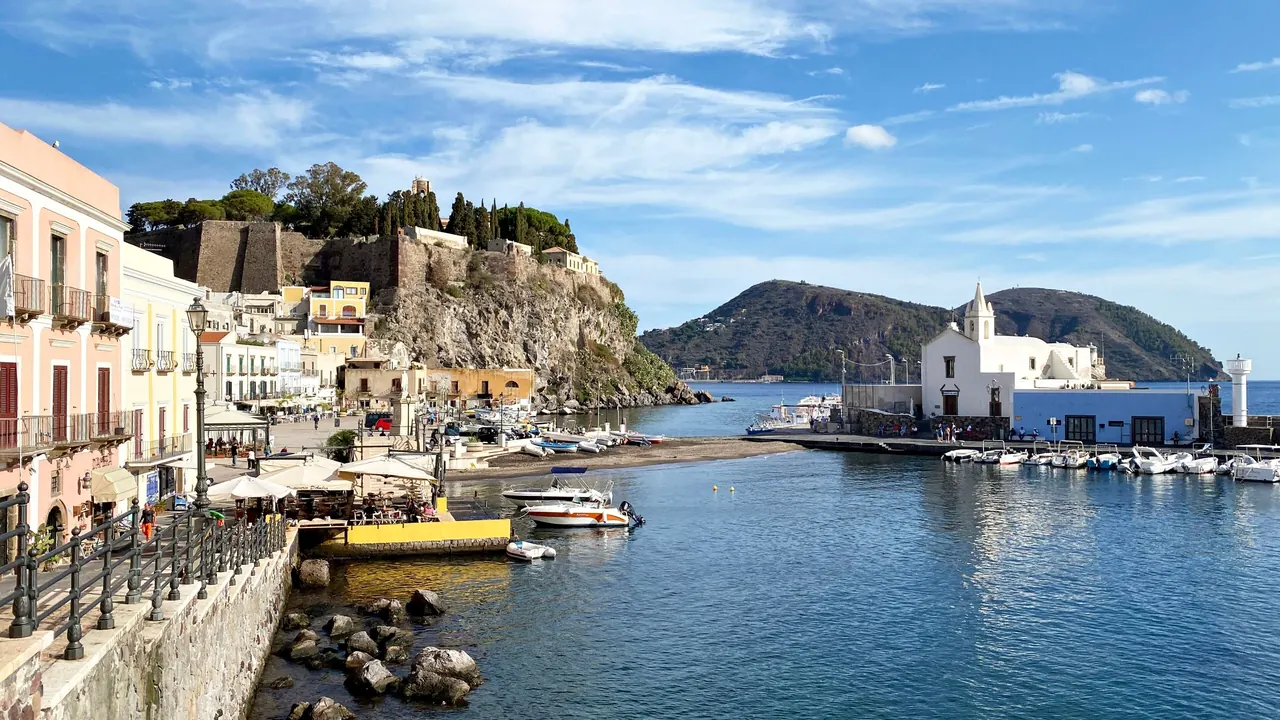
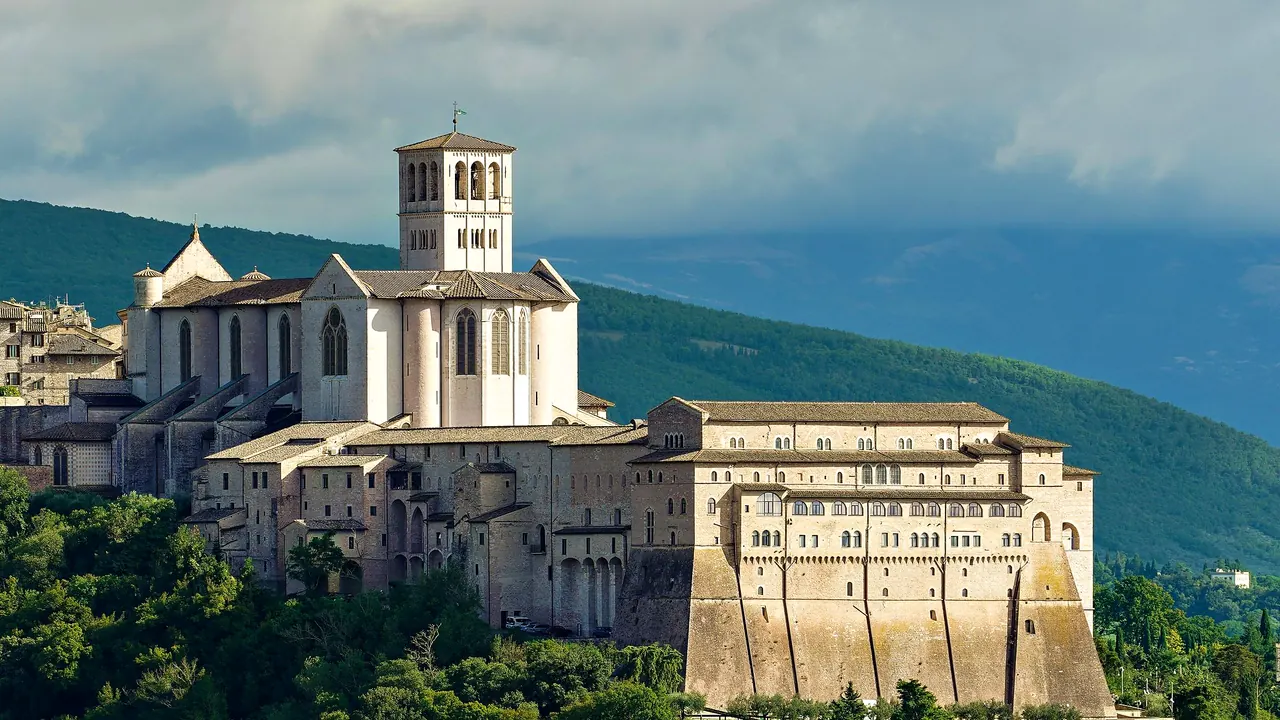
Photos: Aeolian Islands by Bernard Gagnon, CC BY 4.0, cropped; Umbria by Tagooty, CC BY-SA 4.0, cropped.
Aeolian Islands or Umbria?
Our verdict in twelve categories, each scored against the same fixed benchmark cities, and the climate month by month, so you can choose for your trip.
Choose Aeolian Islands for
- beaches
- nature and the outdoors
- nightlife
Choose the Aeolian Islands if the sea and the volcanoes are the point of the trip. Days here go on swimming from boats in deep, clear coves, climbing to the steaming rim on Vulcano and watching Stromboli throw up lava after dark, then ending the evening over fish and Malvasia on Salina or out late on Panarea. In return you accept a short, expensive season, hydrofoils that rough weather can cancel, and very little heritage beyond Lipari's citadel and museum.
Choose Umbria for
- culture and sights
- day trips
- live music and the arts
Umbria is the better pick for travellers who want art, food and a different hill town every day. Giotto in Assisi, Signorelli in Orvieto, truffles and Sagrantino in the hills, and Tuscany or Rome within easy reach make it a rich base for a touring vacation. It also costs less and has a real summer festival season. What it cannot give you is the sea: swimming means a farmhouse pool or a shallow lake.
Scoreboard
Twelve categories on one fixed scale from 0 to 100. The shaded stretch is the gap between the two.
Your match
Pick a travel style or drag the sliders, and both match scores follow your weighting.
Wins on beaches and nature and the outdoors with your weighting.
Wins on culture and sights and day trips with your weighting.
What matters to you?
Category by category
What the scores mean for a trip.
Beaches & swimming
This is where the islands are strongest and Umbria is weakest. The Aeolian coast is volcanic, with dark pebble at Canneto on Lipari, black sand on Vulcano's western bay, rocky ledges on Salina and Panarea, and the best water of all in deep blue coves reached by hired boat. Shade and sunbeds are scarce, but the swimming is superb.
Umbria has no coastline at all. Lake Trasimeno's lidos at Castiglione del Lago and Passignano are warm and safe for paddling, but the water is often murky, with reeds and soft mud underfoot. Most visitors swim in their farmhouse pool, and the sea is a drive of two hours or more away.
Food & drink
Umbria has the deeper table. Black truffle over strangozzi, Norcia's pork butchery, Castelluccio lentils and porchetta from market vans make a hearty hill cuisine, and Sagrantino tastings around Montefalco and the whites of Orvieto make wine a real reason to go. Village trattorie keep cooking all year.
The islands answer with what Umbria lacks, which is seafood: fish landed that morning, Salina capers, pane cunzato at lunch and granita with brioche for breakfast, with Malvasia from Salina's terraces. Salina eats best and Lipari offers the most choice, but outside summer many kitchens close and the smaller islands have only a handful of places.
Culture & sights
Umbria is in another league for art and monuments. Assisi's basilica holds Giotto, Cimabue and Simone Martini, Orvieto's cathedral rises from its volcanic cliff with Signorelli's Last Judgement inside, and Perugia's Galleria Nazionale is rich in Perugino and Piero della Francesca. Gubbio, Spoleto, Todi, Spello and Montefalco each add a set piece of their own.
On the islands the heritage is concentrated in Lipari's walled citadel, where the archaeological museum's obsidian tools, Greek pottery and theatrical masks reward anyone drawn to prehistory. Beyond that there are Bronze Age hut villages on Panarea and Filicudi and quiet village churches, pleasant but not why people come.
Nightlife
Neither is a clubbing destination, but the islands have more of a night out, at least in July and August. Panarea is the glamorous one, with yachts in the bay, sunset aperitivo and dancing on terraces until late, while Lipari's marina and main street stay busy into the night. Everywhere else the evening ends with dinner.
Umbria's after-dark life is Perugia's: students fill the Corso and the cathedral steps on warm evenings, and wine bars and a few late bars line the old lanes. Assisi and the countryside go quiet soon after dinner, and there are no clubs.
Nature & outdoors
The islands have the more extraordinary landscape. Stromboli erupting every few minutes, best seen at night from its flanks or from a boat below the Sciara del Fuoco, and the steaming Gran Cratere on Vulcano are sights few places can match. Salina's chestnut woods, the mule tracks of Filicudi and Alicudi, and kayaking or diving among sea stacks fill out the outdoor days.
Umbria is gentler and more varied on land: olive groves and oak woods, the Monti Sibillini above 2,000m, the Castelluccio plain flowering in early summer, rafting and canyoning in the Valnerina, and the 165m Marmore Falls. Hikers, paragliders and cyclists on the old Spoleto to Norcia railway path will find plenty, but nothing to rival a live volcano.
Day trips
Umbria is built for excursions. From a base near Perugia or Spoleto, each day can bring another hill town, from Gubbio and Todi to Spello, Bevagna, Trevi and Norcia, and the Tuscan towns of Cortona, Montepulciano and Siena are close. From Orvieto, Rome is just over an hour by train.
On the Aeolians a day trip means a hydrofoil to the next island, which is rewarding because each has its own character, from Salina's wine villages to car-free Alicudi on its stone steps. The mainland offers Milazzo's castle and the Greek theatre at Tindari, but the great Sicilian sites are too far for a day.
Good for families
Both work for families who are happy with simple pleasures, but they suit different ages. The islands are an adventure for older children who like boats, snorkelling and seeing Stromboli erupt at night, while rocky entries, midday-hot black sand, steep lanes and choppy crossings make toddlers and pushchairs hard work.
Umbria is easier with little ones: a farmhouse with a pool and animals, the warm shallows of Lake Trasimeno, the Marmore Falls and an amusement park near Perugia. The catch is that the main sights are frescoed churches in steep, cobbled towns, which older children may tire of quickly.
Getting around
Umbria is the easier place to move about. Short distances, good roads and light traffic make driving simple, with parking below the walls and escalators or funiculars up into Perugia, Orvieto and Spoleto. Without a car, the rail line through Assisi, Spello and Spoleto and the Rome to Florence line at Orvieto cover the main towns, though the countryside needs wheels.
On the islands everything depends on the sea. Hydrofoils and ferries make hopping easy in summer, but rough weather cancels crossings, so plans need slack. On land it is scooters on Lipari and Salina, and on foot or electric cart on car-free Stromboli and Panarea.
Shopping & style
Umbria has more to buy, though neither is a fashion destination. Deruta's majolica workshops, the ceramics of Gubbio and Orvieto, hand-loomed linen in Montefalco and Bevagna, and cashmere outlets near Perugia make for worthwhile craft shopping, along with Norcia's hams and truffles and Sagrantino bought at the estate.
On the islands the best things to take home are edible: Salina capers and Malvasia, plus linen and pumice or obsidian souvenirs on Lipari's main street. Panarea's resort-wear boutiques serve the summer crowd, and there is little else.
Affordability
Umbria is clearly the cheaper trip. Farmhouse stays and small hotels cost less than across the Tuscan border, set lunches and local wine are good value, and most sights are churches. A hire car and summer rooms in Assisi or Orvieto are the main costs, and truffle dishes push up a bill.
The islands are an expensive corner of southern Italy in season, with few rooms, food that has to be shipped in, and hydrofoils, boat hire and volcano guides adding up. Panarea is the costliest; Lipari or Vulcano make the sensible base, and June or September is gentler than high summer.
Live music & performing arts
Umbria has a real festival summer, and the islands have almost nothing. In July Umbria Jazz fills Perugia's arena and its streets with free bands, and from late June the Festival dei Due Mondi brings opera, theatre and dance to Spoleto's Roman theatre and piazzas. Teatro Morlacchi and small 19th-century theatres keep a quieter season the rest of the year.
On the Aeolians, live culture amounts to the odd concert in a village square or church and band music at religious feasts. The evening show there is Stromboli.
Wellness & relaxation
Both are good for slowing down, but in different ways. The islands offer volcanic bathing: Vulcano's sulphurous mud pool, when gas levels allow, sea vents that warm the water, and spa hotels on Vulcano and Lipari. Real calm, though, comes on green Salina or traffic-free Filicudi and Alicudi, not on Lipari's harbour or Panarea in August.
Umbria's restfulness is rural and contemplative: long lunches, olive-grove views, yoga or massage at country houses, and the hermitages of Monte Subasio above Assisi for silence. Its spas at San Gemini and Nocera Umbra are modest, known more for mineral water than for warm pools.
When should you go?
Pick your month. The climate figures are measured averages, not a forecast.
Aeolian Islands in July
Umbria in July
Daytime high, °C
Rainfall in the month, mm
Where the figures come from
Aeolian Islands's temperatures are measured 60 km from the centre, at Messina.
Aeolian Islands has no rain gauge within 25 km of the centre, so its rainfall comes from a gridded climate dataset read at the destination rather than from a gauge further away.
Umbria's temperatures are measured 53 km from the centre, at Frontone.
Umbria has no rain gauge within 25 km of the centre, so its rainfall comes from a gridded climate dataset read at the destination rather than from a gauge further away.
Temperature and rainfall are climate normals, averaged over the years shown. Aeolian Islands: 1991-2020 normals, Messina (59.7 km from centre). Umbria: 1991-2020 normals, Frontone (52.9 km from centre).
The Aeolian Islands are a summer place. June to August is dry and very sunny, and the sea is warm enough for long swims from June into October, reaching about 27°C in August. Midsummer highs of around 31°C make midday walks on the volcanoes hard going, so May and early October are better for hiking, though the sea is still cool in May and October brings showers. September is when the rain comes back, with about 77mm, and it keeps building through a winter that stays mild but is grey and wet.
Umbria has proper seasons. Winters in the hills are cold, with January highs of about 7°C, and the valleys reach around 30°C in midsummer, which makes the steep town streets tiring in the afternoon. Late spring and September are the best times for walking the towns and the countryside. Autumn is the wettest stretch here too, peaking in November. Across the year the islands are warmer than Umbria in winter but also wetter, and in high summer both are hot, with the islands the drier of the two.
Which traveller are you?
On a beach and sun trip, the Aeolian Islands win easily. Clear, warm water from June to October, coves reached by boat and black sand on Vulcano beat anything landlocked Umbria offers, where swimming means a pool or the cloudy shallows of Lake Trasimeno.
For a culture and arts trip, Umbria is the clear choice. Giotto's frescoes in Assisi, Orvieto's cathedral, the Galleria Nazionale in Perugia and a chain of medieval hill towns outclass the islands, whose heritage rests mostly on Lipari's citadel and archaeological museum.
On a trip on a tight budget, Umbria goes further. Farmhouse stays, set trattoria lunches, cheap local wine and churches that cost little to enter keep spending down, while the islands' summer rooms, shipped-in food, hydrofoils and boat hire make every day expensive.
Before you go
| Measure | Aeolian Islands | Umbria |
|---|---|---|
| Official language | Italian | Italian |
| Currency | Euro (EUR) | Euro (EUR) |
| Sockets | CFL230 V, 50 Hz | CFL230 V, 50 Hz |
| Driving side | Right | Right |
| Time zone | UTC+1, UTC+2 in summer | UTC+1, UTC+2 in summer |
| Emergency number | 112 | 112 |
| Main airport | Catania-Fontanarossa Airport (CTA)96 non-stop destinations | Perugia San Francesco d'Assisi – Umbria International Airport (PEG)17 non-stop destinations |
| Public holidays this year | 13 days | 13 days |
By the numbers
| Measure | Aeolian Islands | Umbria |
|---|---|---|
| Population | 15,419 | 852,085 |
| People per km² | 134 | 101 |
| Swim season, months above 21 °C | 5 months | - |
Where else could you go?
Every comparison below shares a destination with this one, so you can follow Aeolian Islands or Umbria somewhere new.
- Tuscanyvs Umbria
- Sicilyvs Aeolian Islands
- Elbavs Umbria
- Caprivs Aeolian Islands
- Amalfi Coastvs Aeolian Islands
- Cinque Terrevs Umbria